Pleasant Devices

Miniature and Moving Works from the Staples Collection and Beyond

The Robert Staples Metamorphic Collection added over 1,300 movable, transformative, novelty, and tactile works to the Library Company’s existing holdings of miniature and “moving” materials. On the cusp of popular art, these “pleasant” devices, pictorial predecessors of the digital ephemera of today – GIFs and memes, digital ads, thumbnails and AI videos – appeared as moving small-scale imagery not only literally but also more figuratively.

Metamorphic Know How

Contemporaries, scholars, and collectors have described visual works that morph through physical engagement with the devices in multiple ways. While Robert Staples used the term Metamorphic, others have referred to the pieces as:

  • Mechanical work
  • Metamorphic picture
  • Movable book/toy/paper
  • Novelty
  • Novelty print
  • Tactile image
  • Transformation picture
  • Turn-up book

The paper mechanisms of pop ups, pull tabs, wheels, folds, fold outs, and flaps formed the base of the construction of most metamorphic works. The pieces on display in this section are examples of these various constructions produced as tactile devices to communicate messages about the social, cultural, and political world in which their makers created them. Moments of recreation and leisure, household/consumer goods found in rural and urban dwellings, and one’s experiences at home and work became subject matter for these moving pictures of daily life.

Wheel

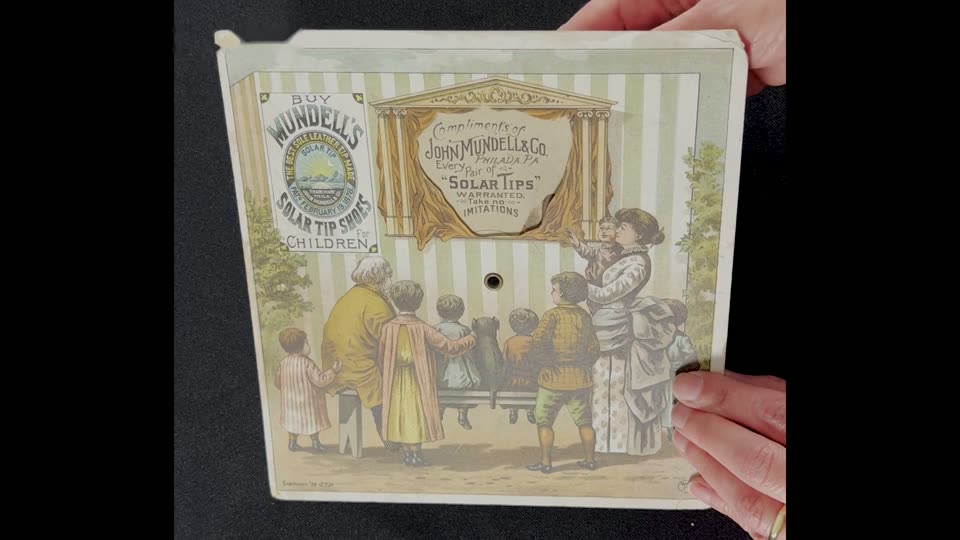
Buy Mundell’s Solar Tip Shoes for Children. Compliments of John Mundell & Co. (Philadelphia: J.T.P, 1888). Chromolithograph. Wheel. Robert Staples Metamorphic Collection.

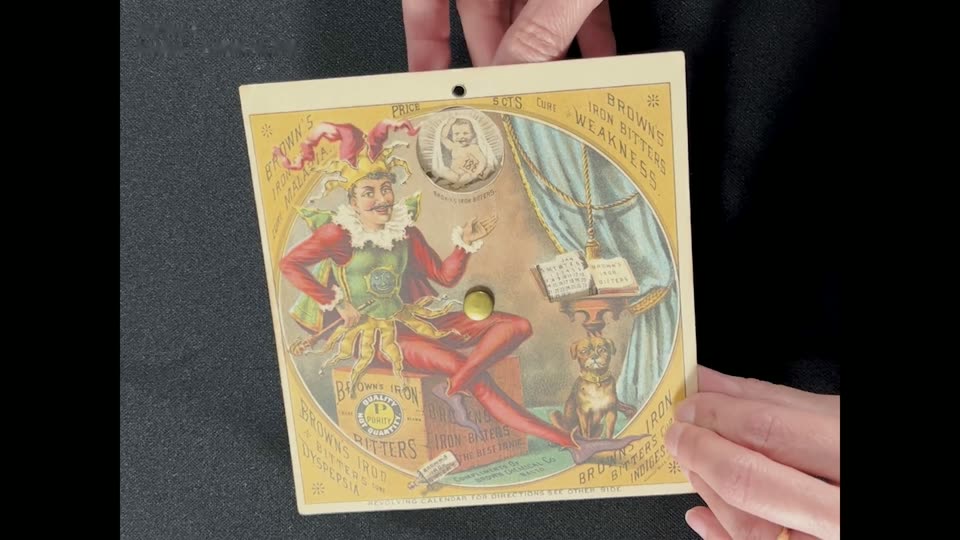
Brown’s Iron Bitters. Compliments of Brown Chemical Co. Balto. (New York: Burrow-Giles Lith. Co., 1882). Chromolithograph. Wheel. Robert Staples Metamorphic Collection.

Wheel mechanisms activate these 1880s metamorphic customer souvenirs/advertisements composed with exquisitely designed graphics. Both depict the popular sentimental marketing devices of children and animals, as well as reference characters associated with commedia dell’arte. Punch and Judy appear in manufacturer John Mundell & Co.’s turn-dial print and a Harlequin jester again makes his metamorphic appearance in the calendar card of patent medicine dealer Brown Chemical Co.

Fold Out

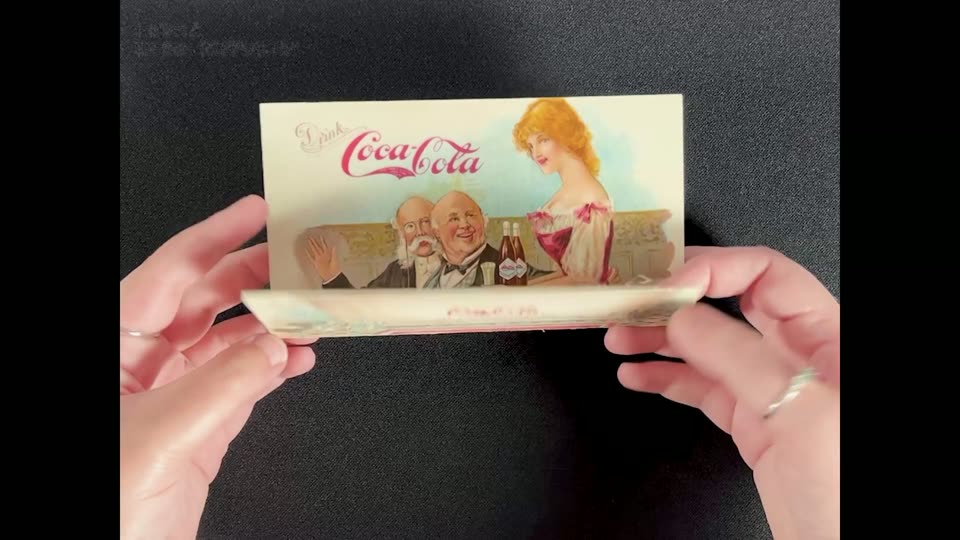
Drink Coca-Cola (Chicago: Western Coca Cola Bottling Co., ca. 1904). Chromolithograph. Fold out. Robert Staples Metamorphic Collection.

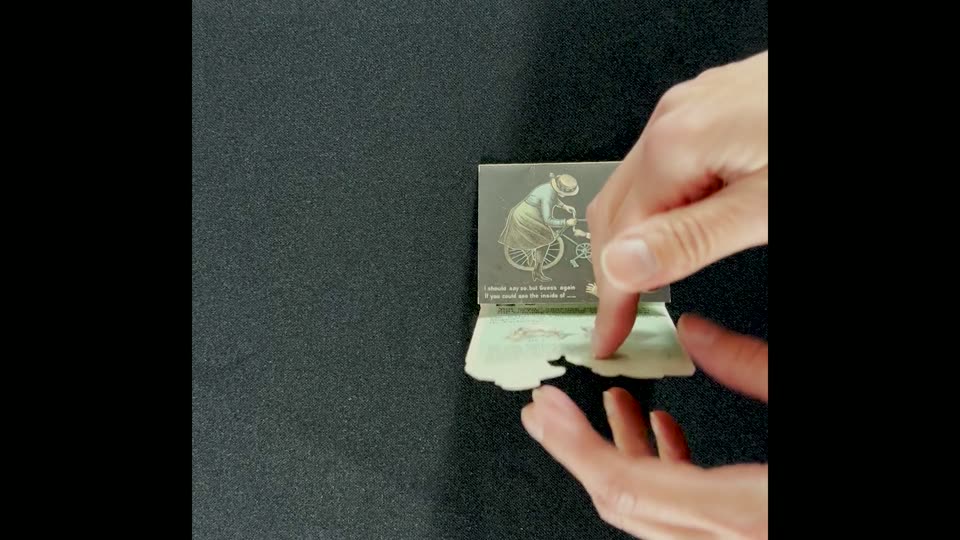
The Racycle Crank Hanger. Guess something attractive is going on … (Middletown, OH: The Miami Cycle & Mfg. Co., ca. 1910). Chromolithograph. Fold out. Robert Staples Metamorphic Collection.

“Appearances are sometimes deceiving” advises the early 1900s Coca-Cola advertisement. Fold-out mechanical works often depict scenarios with this theme. Double entendres in combination with representations of women as sexualized objects or independent in addition to homemakers have comprised advertising for centuries. While a turned-down tub reveals not a nude woman but a server of the “Nourishing. Refreshing. Invigorating” beverage, a “rear-view” of a troop of women in pants reveals another version of “something attractive” in the form of a “Racycle” accident. A “meet-cute” moment, it also documents a marketable kind of autonomy the bicycle provided to turn-of-the-twentieth century women.

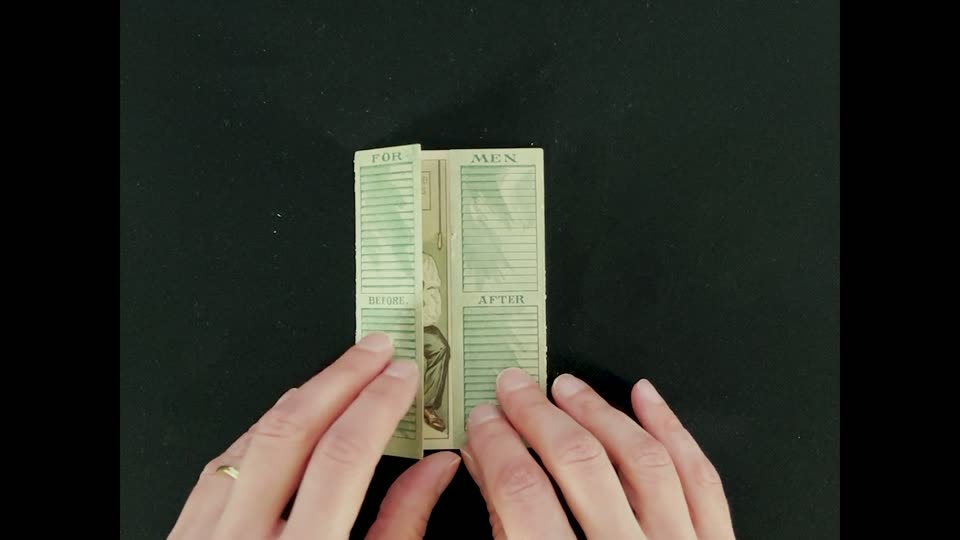
Candy Cathartic Cascarets. Ideal Laxative. For Men. Before. After. (Chicago and New York: Sterling Remedy Co., ca. 1900). Chromolithograph. Fold out. Robert Staples Metamorphic Collection.

At the forefront of mass advertising in the 19th century, the patent medicine industry continued in this role in the twentieth century. When Sterling Remedy Co. started advertising their “ideal” laxative, Cascarets, in 1894, they were likely the first to ingenuously advertise medicine as candy. By the time of this ad juxtaposing an image viscerally conveying “troubles” on the toilet with prose claiming a cure “to lighten the ills of humanity,” Sterling sold 5,000,000 boxes of Cascaret per year. The firm could claim to be one of the top-selling proprietary medicines in the U.S. promising to “cure the whole family.”

Pop Out

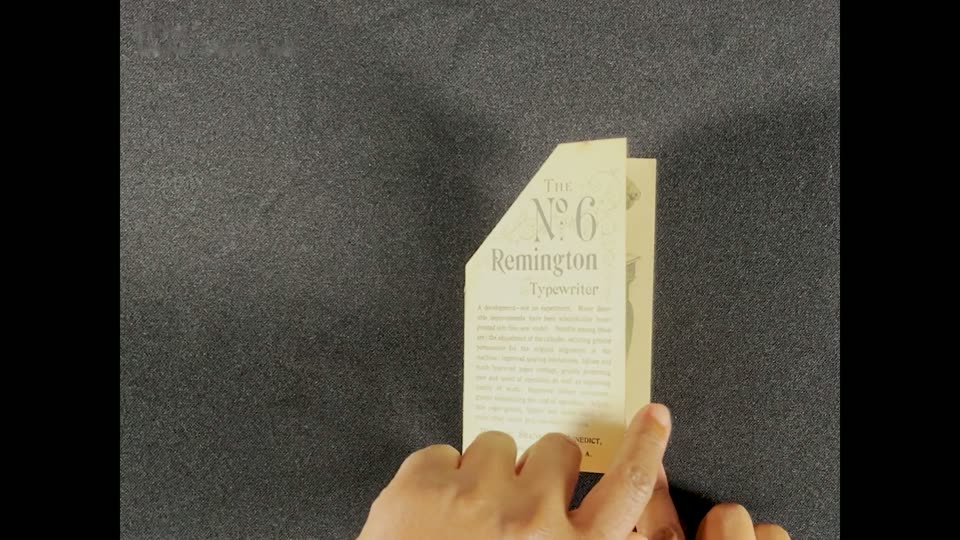
The No. 6 Remington Typewriter (New York: Wyman, Seamans & Benedict, ca. 1895). Printed by Donaldson Bros. Patented by Albert Operti. Lithograph. Pop up. Robert Staples Metamorphic Collection.

A design patented as a “folding picture” by scenery designer and natural history artist Alpert Operti (1852-1927) in 1892, this circa 1895 pop-up advertisement for typewriter manufacturers Wyman, Seamans & Benedict opens to a finely rendered iconic portrayal of a turn-of-the-twentieth-century woman clerical worker. The 1890s saw a continuing increase in the number of women employed in an office who may have referred to themselves as a “new woman.” The period also saw the beginning of the scientific management of their work. The tone of the card’s advertising text appeals to their male managers and the goal of a structured and efficient workplace.

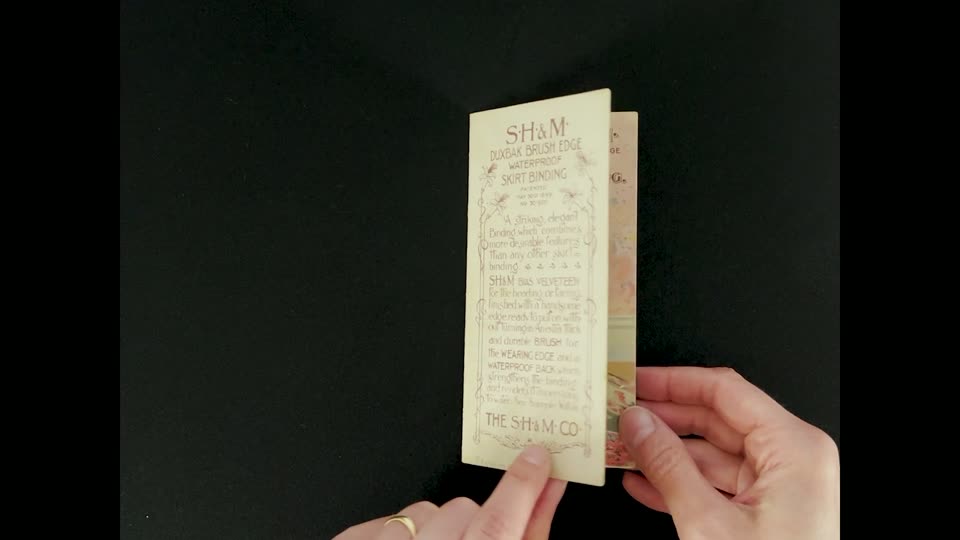
S.H. & M. Duxbak Brush Edge Waterproof Skirt Binding. The S.H. & M. Co. The Joel Baily Davis Co. Philadelphia (New York: American Lithographic Co., 1899). Chromolithograph. Pop up. Robert Staples Metamorphic Collection.

A fashionable woman figure is again employed in this pop up. Set in a stylish domestic interior, the promotion with an attached sample of S.H. & M skirt binding uses an arm mechanism. Opening to a young woman in her street costume, she lifts her skirt and reveals her petticoat to point to the firm’s advertised product meant to curtail the everyday wear and tear on her ensemble. Marketed by the company to the “New Woman” and for “travelling and sea side gowns,” S.H. & M. appealed to the young woman who need not work outside of the home as a means of independence.

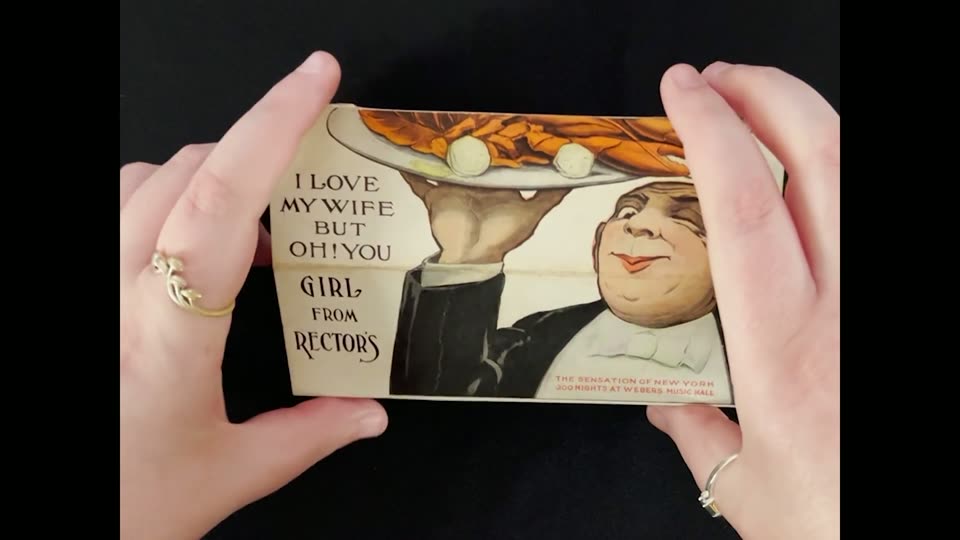
I Love My Wife But Oh! You Girl From Rector’s (New York: Walcutt Bros. Co., 1909). Color photomechanical. Pop up. Robert Staples Metamorphic Collection.

Instructions about how to operate a metamorphic can often be found on mechanical pieces such as with this mailing card and the Brown Chemical Co. calendar above. Publicizing the Philadelphia run of Paul M. Potter’s (1853-1921) successful sex farce Girl From Rectors, the piece incorporates themes and references from the play, including an alluringly clad (adulterous) woman and New York fine dining at Rector’s “lobster palace” restaurant. The pop up also plays on a popular and censured catchphrase for 1909, “I love my wife, but oh you kid,” to lure attendees to the play many critics dubbed indecent.

Pull-Tab

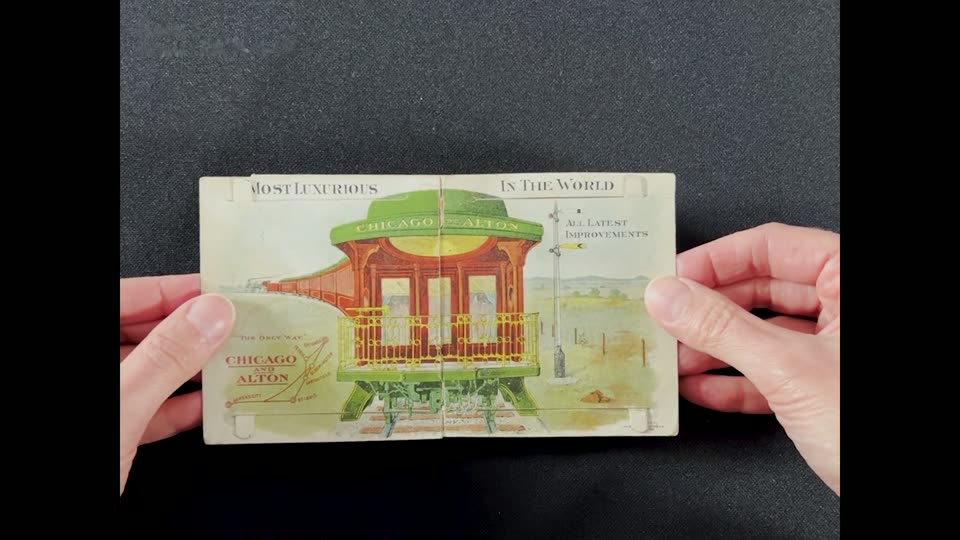
Most Luxurious [Trains] in the World. All Latest Improvements. “The Only Way.” Chicago and Alton (Milwaukee: The Gugler Litho. Co., 1899). Color photomechanical. Pull tab. Robert Staples Metamorphic Collection.

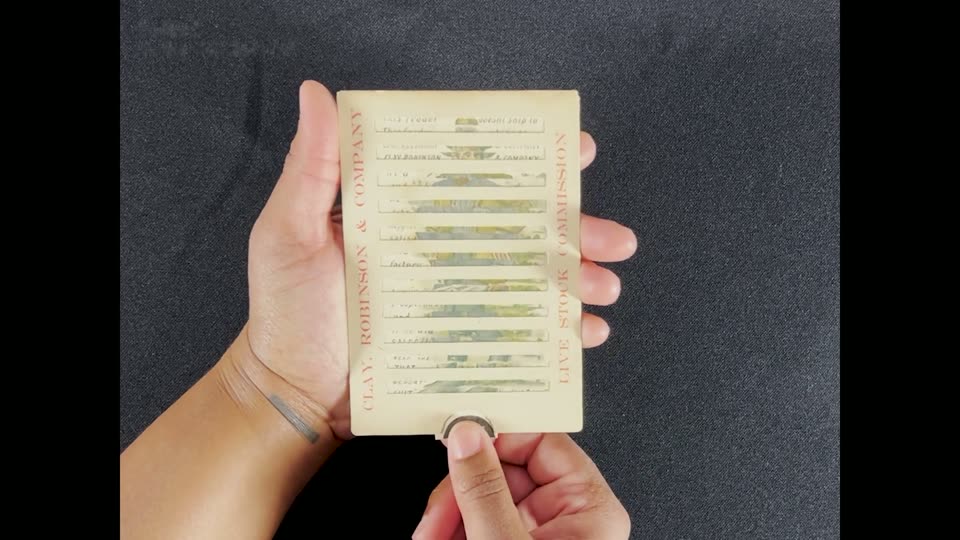
Clay, Robinson & Company. Live Stock Commission (Chicago: J.L. Bieder Co., 1909). Color photomechanical. Pull tab. Robert Staples Metamorphic Collection.

Pull tab mechanisms crafted a decade apart provide the changes of scene(ry) for these advertisements for leading Chicago industries. Although one was issued at the tail end of the Gilded Age and the other during the era of conservation and consumer protection from Theodore Roosevelt’s Square Deal, both provide a window onto the socioeconomics of the Midwest and the country. While the Chicago and Alton Railroad pioneered luxury travel for individuals of means, Clay, Robinson & Company modernized the livestock industry for ranchers and farmers.

See section The Engineers: Paper and Propaganda for a reproduction of the patent application for a similar design to the Clay, Robinson, & Co. advertisement.

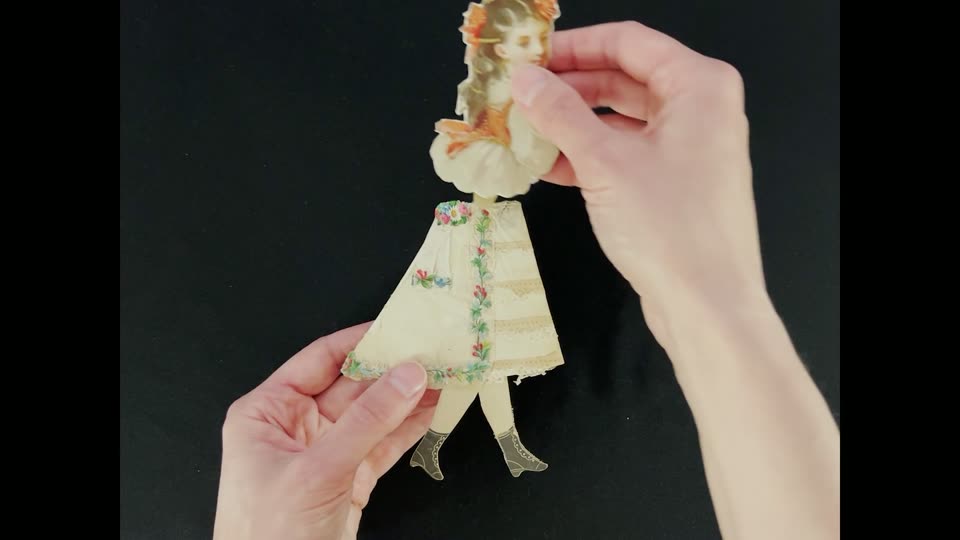
[Miss Flora and her Paris dresses] ([Philadelphia]: [William Hart, Jr.], 1874). Chromolithographs, tissue paper, lace paper, and foil. Pull tab.

Movable paper dolls (in book form) issued to child consumers began in the early 1800s. In October 1874, Philadelphia lithographer William J. Hart (1846-1906) applied for a patent for an invention that “consist[ed] in constructing the body of a doll of separated parts or sections, … and various dresses … and “that … may be made to oscillate and assume the appearance of walking.” This version of Hart’s movable doll and her various dresses is likely based on the Miss Flora McFlimsey character from the 1857 poem Nothing to Wear by William Allen Butler (1825-1902). It begins “Miss Flora McFlimsey, of Madison Square, has made three separate journeys to Paris …”

Puzzle

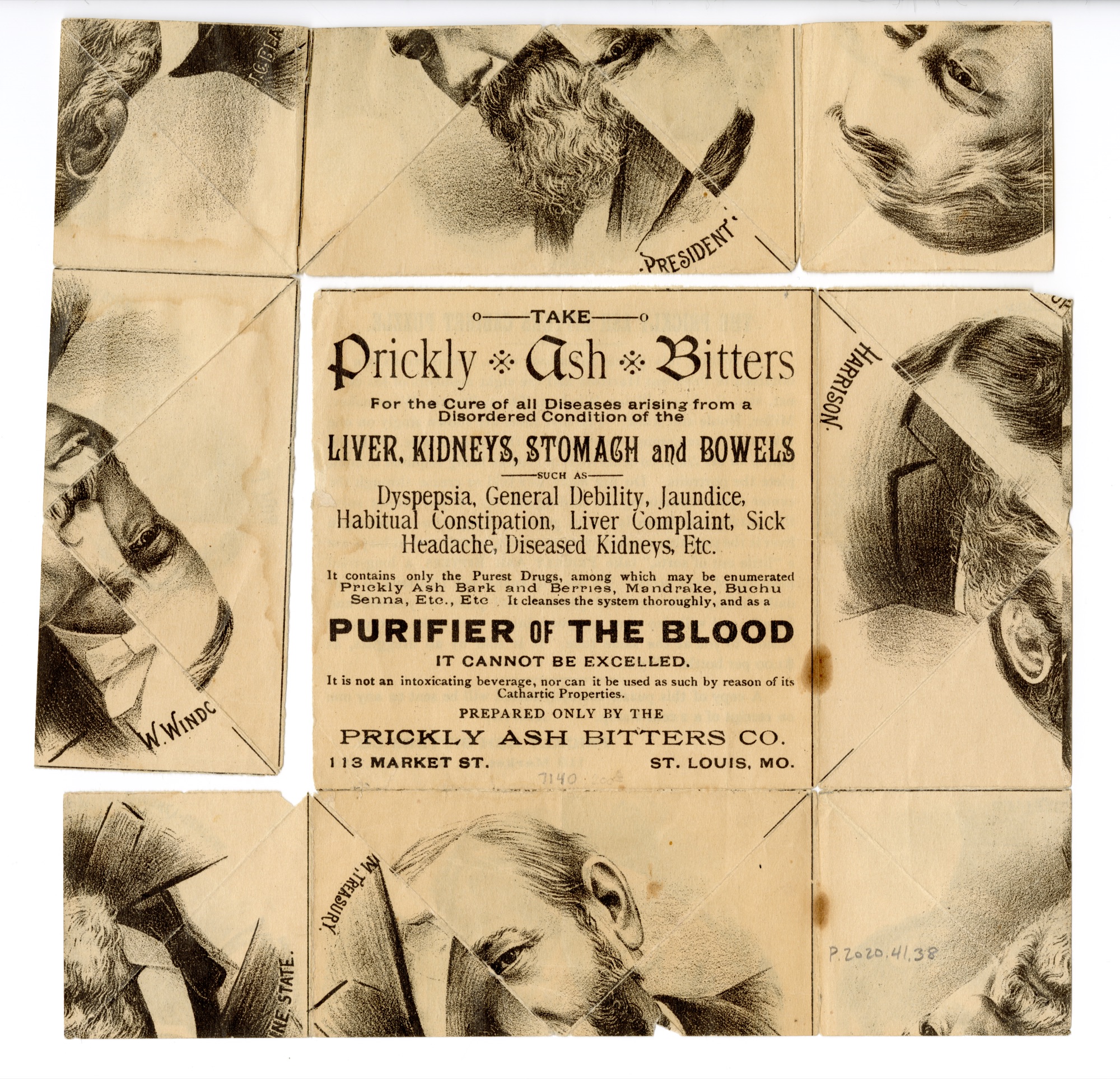
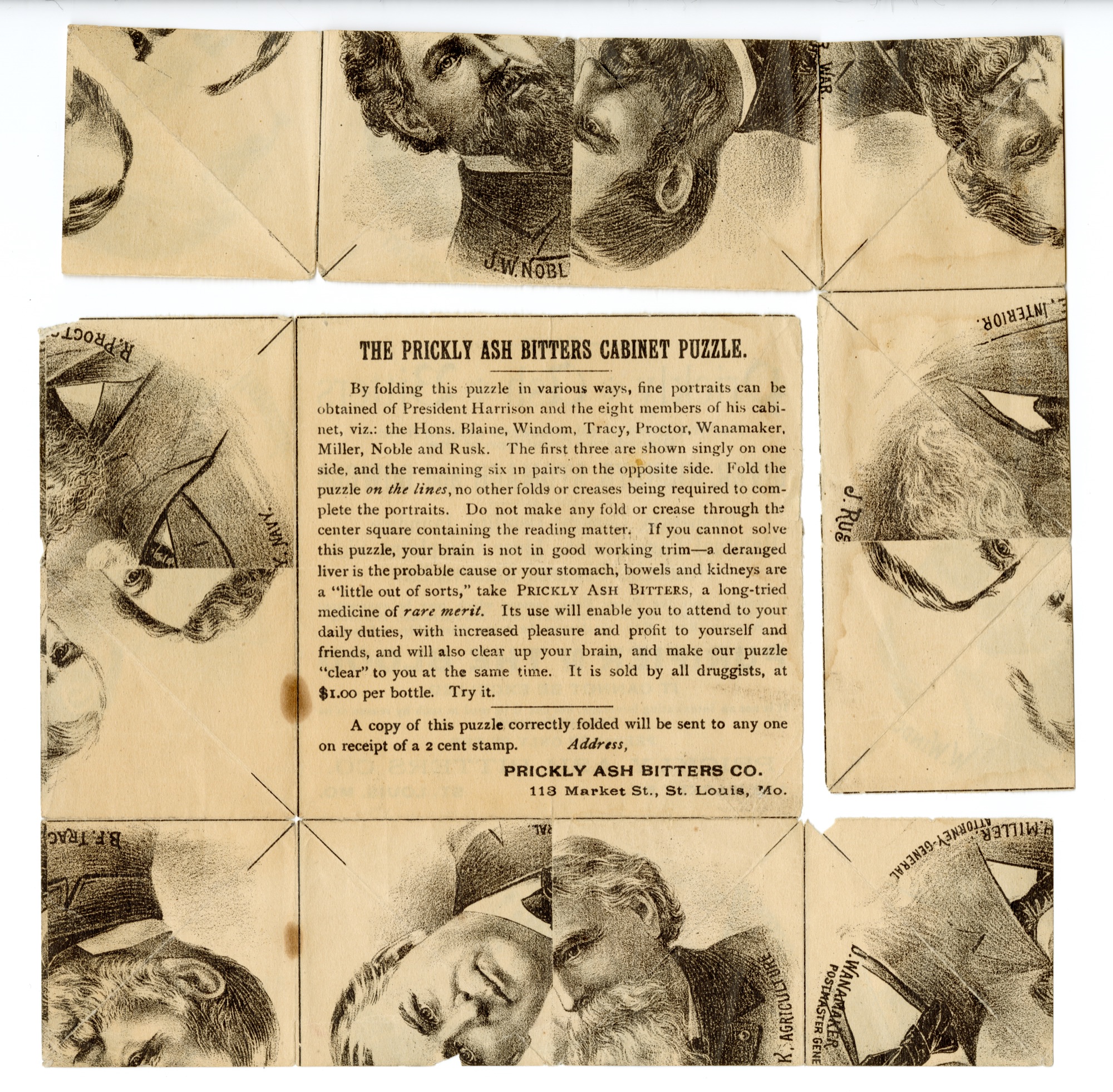
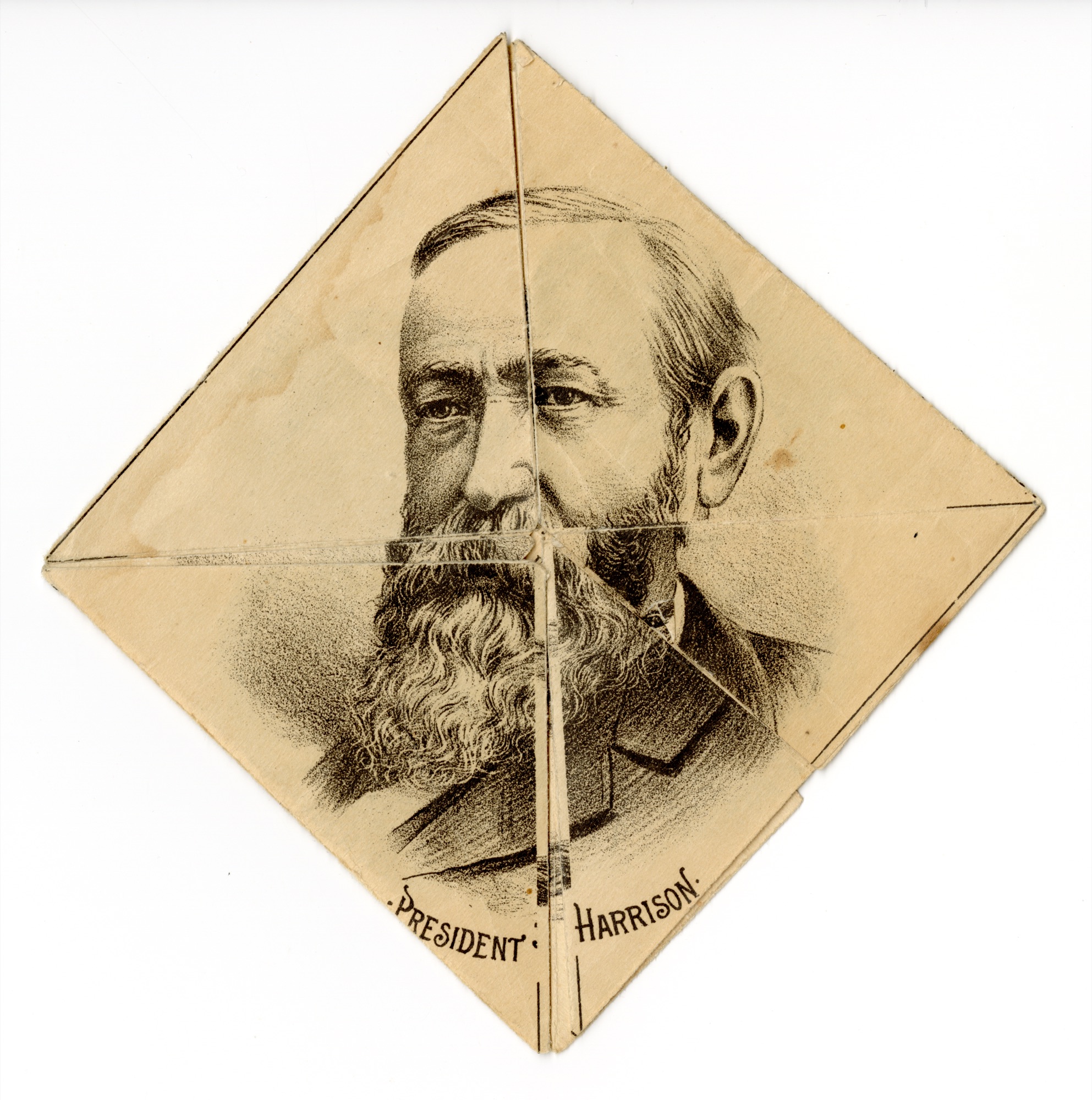
Take Prickly Ash Bitters. Prepared Only by the Prickly Ash Bitters Co. (St. Louis, Mo.: Meyers Brother Drug Co., ca. 1890-91). Lithograph. Puzzle. Robert Staples Metamorphic Collection.

This piece is meant to be folded in a certain order and formation to reveal President Benjamin Harrison (1833-1901) and his Cabinet’s full faces. Advised to fold the print “on the lines,” the consumer was warned that “If you cannot solve this puzzle, your brain is not in good working trim” and the cure is Prickly Ash Bitters. Made with almost 20% alcohol and before the passage of the Pure Food and Drug Act of 1906, the firm used their puzzle advertisement as a test of not only the possible consumer’s mind but also of their health.

Pictorial details perceived as or implying motion informed the composition of 19th- and early 20th-century banknotes, souvenirs, and vignette advertisements found in periodicals, trade journals, and newspapers as well.
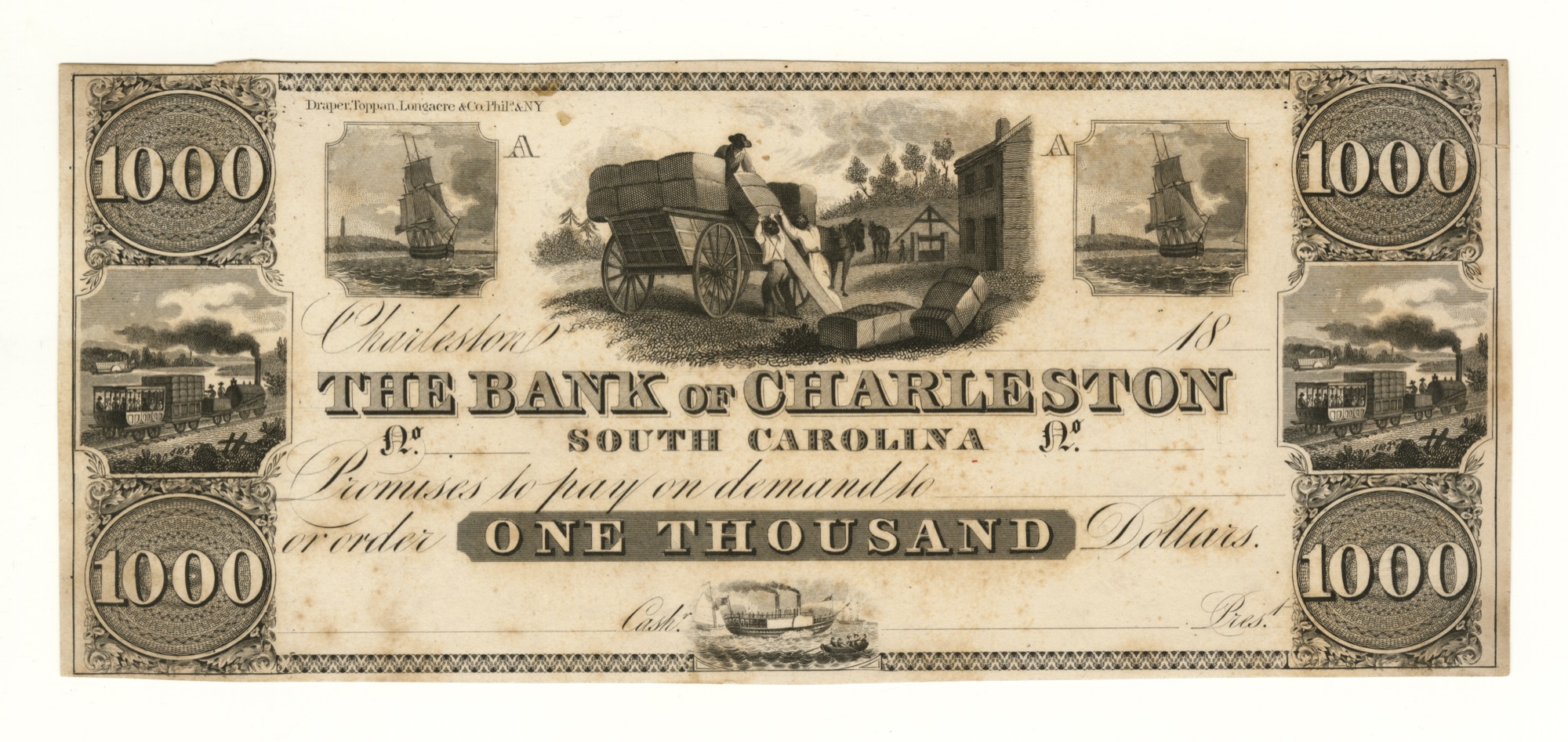
The Bank of Charleston, South Carolina (Philadelphia and New York: Draper, Toppan & Longacre, ca. 1837-ca. 1840). Engraving. James Barton Longacre Collection.

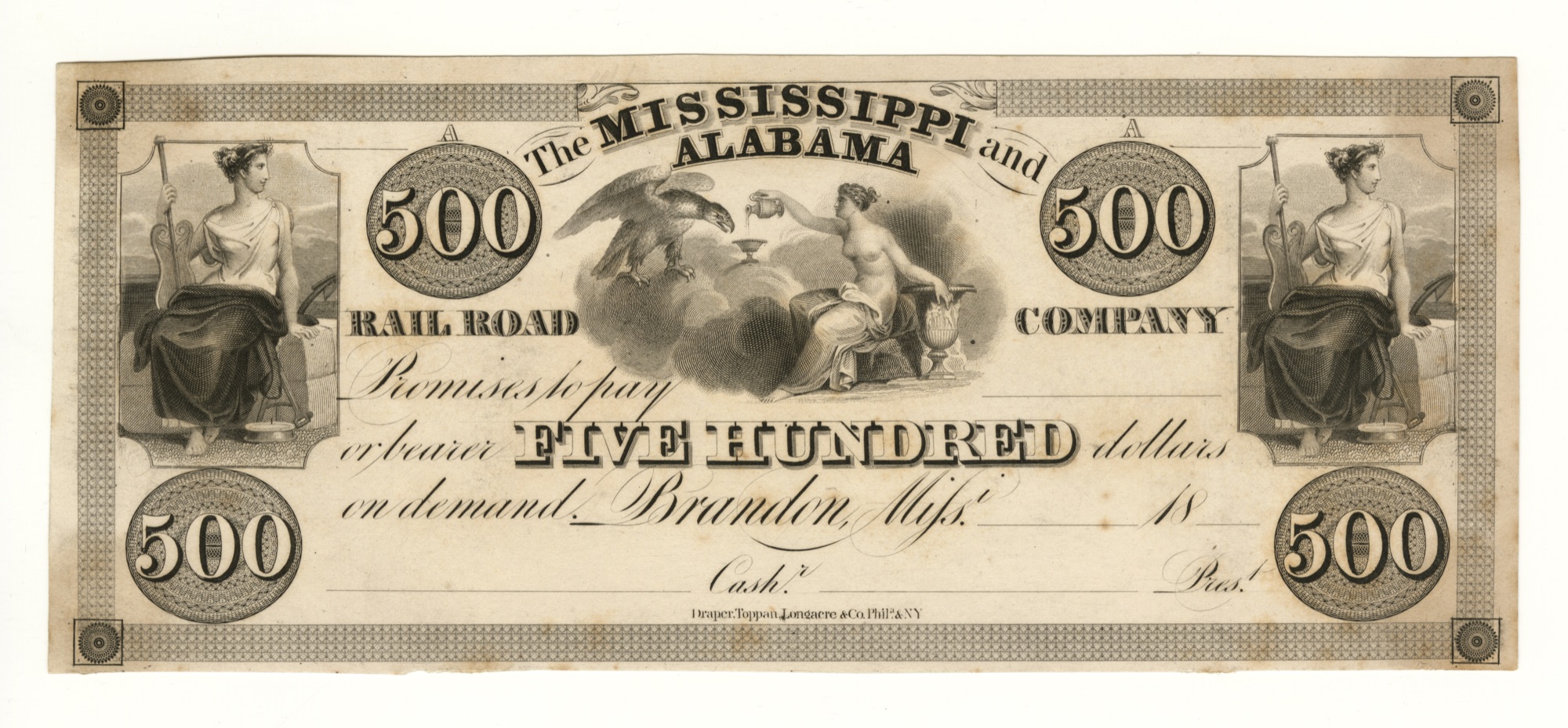
The Mississippi and Alabama Railroad Company (Philadelphia and New York: Draper, Toppan & Longacre, ca. 1837-ca. 1840). Engraving. James Barton Longacre Collection.

Some of the smallest vignette imagery on prints of the 19th-century proliferated on financial material. Artists, engravers, and printers of commercial ephemera interchangeably used thousands of stock images between different genres of prints. During the antebellum-era, this ephemera included bank notes issued by state-chartered corporations. The notes also served as marketing devices with a layout resembling a home page to a website. The scenes, portraits, and views often depict figures in suggested motion. A business model can be discerned where visual investment promotes financial investment as suggested in the Humphrys correspondence with Longacre displayed in the “Movable Books” section.

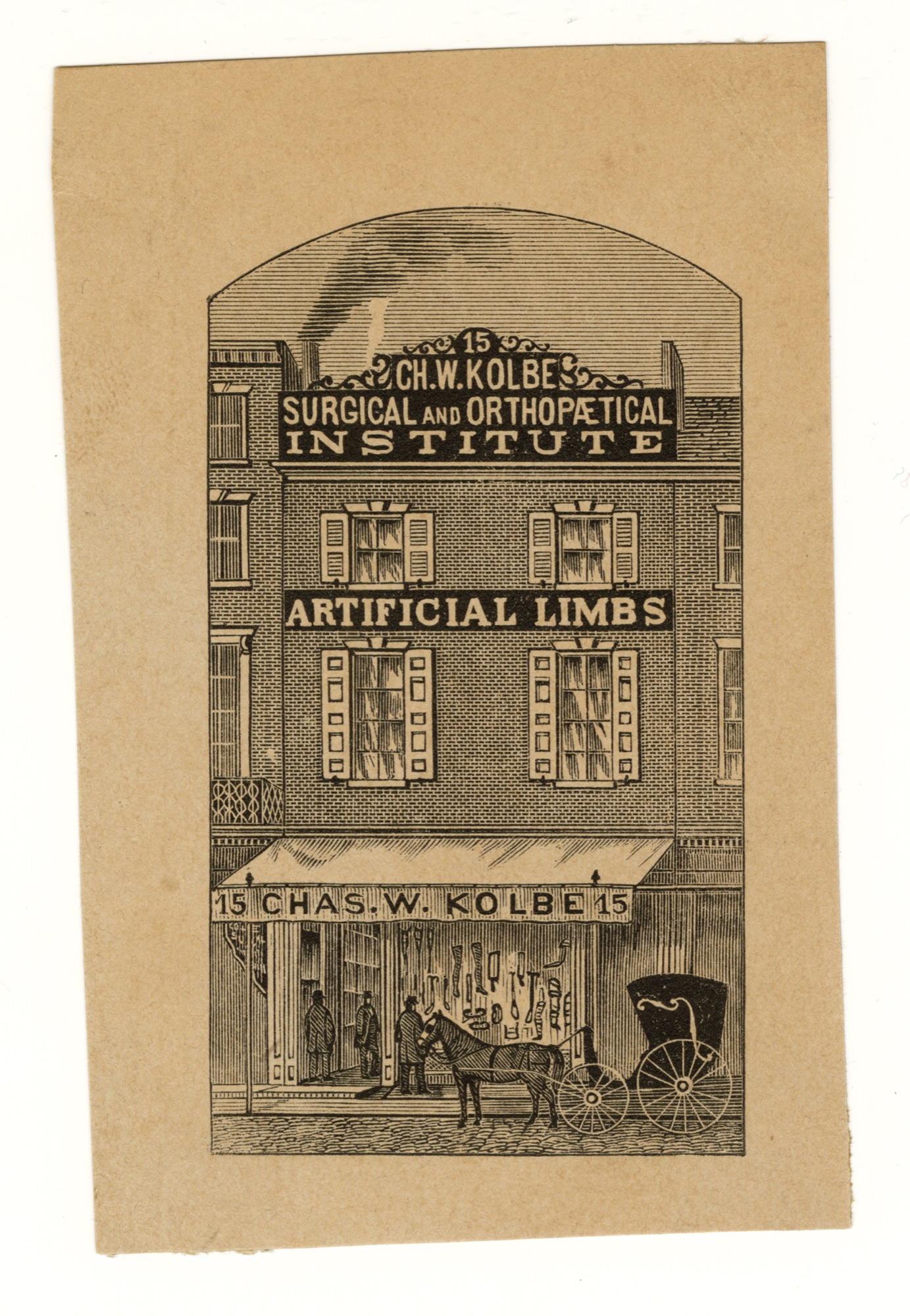
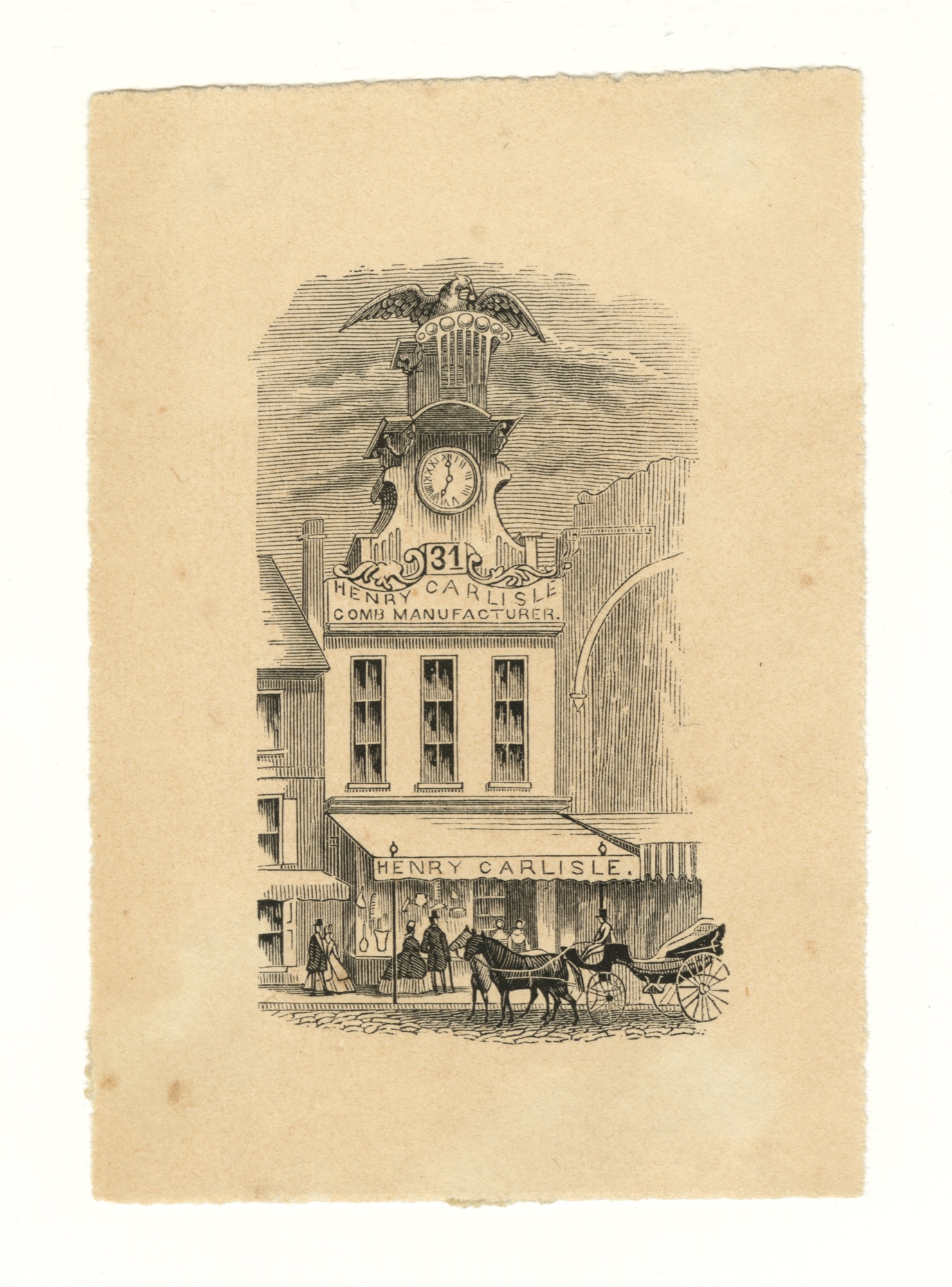
Prints depicting vignette illustrations from the Hugo Sebald Collection, ca. 1870. Relief prints. Gift of David Doret and Linda G. Mitchell in memory of her mother Annelise Ball Heine.

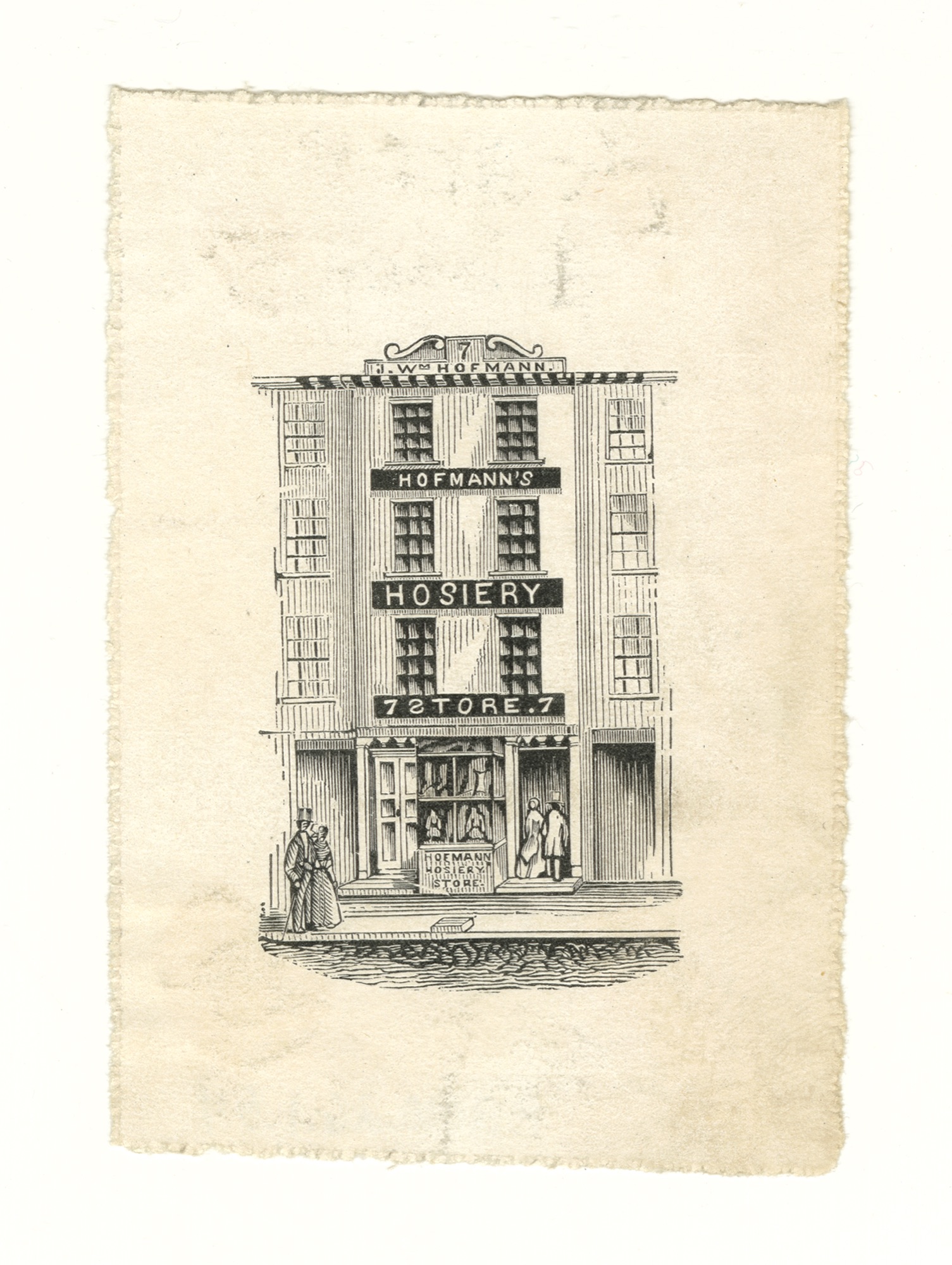
Hugo Sebald (1825-1903), a Philadelphia wood engraver active in the 1870s and 1880s excelled in vignette imagery for advertisements. Incorporating details often associated with poster-size imagery such as products in the window, signage, patrons, and movement in his pictures, the viewer becomes engrossed by seeing the consumer world in miniature. His work exemplifies the effectiveness of concise compositions to draw the concentrated attention of the viewer (and intended consumer). The consumer of the past was drawn to go the physical building as today’s online viewer is drawn to go to the next screen represented by a thumbnail. Both are gateways to experience the interior world suggested by an exterior façade.

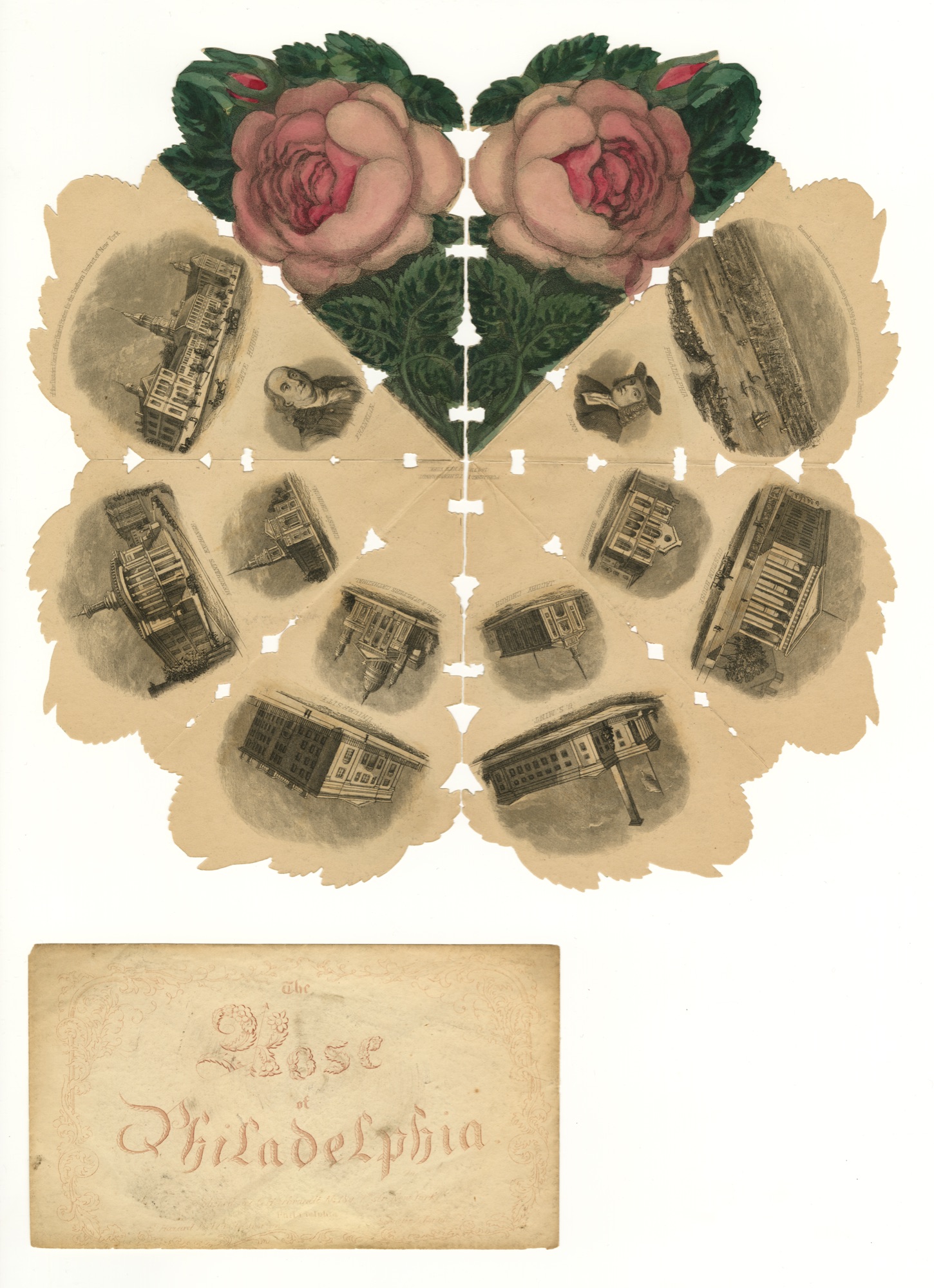
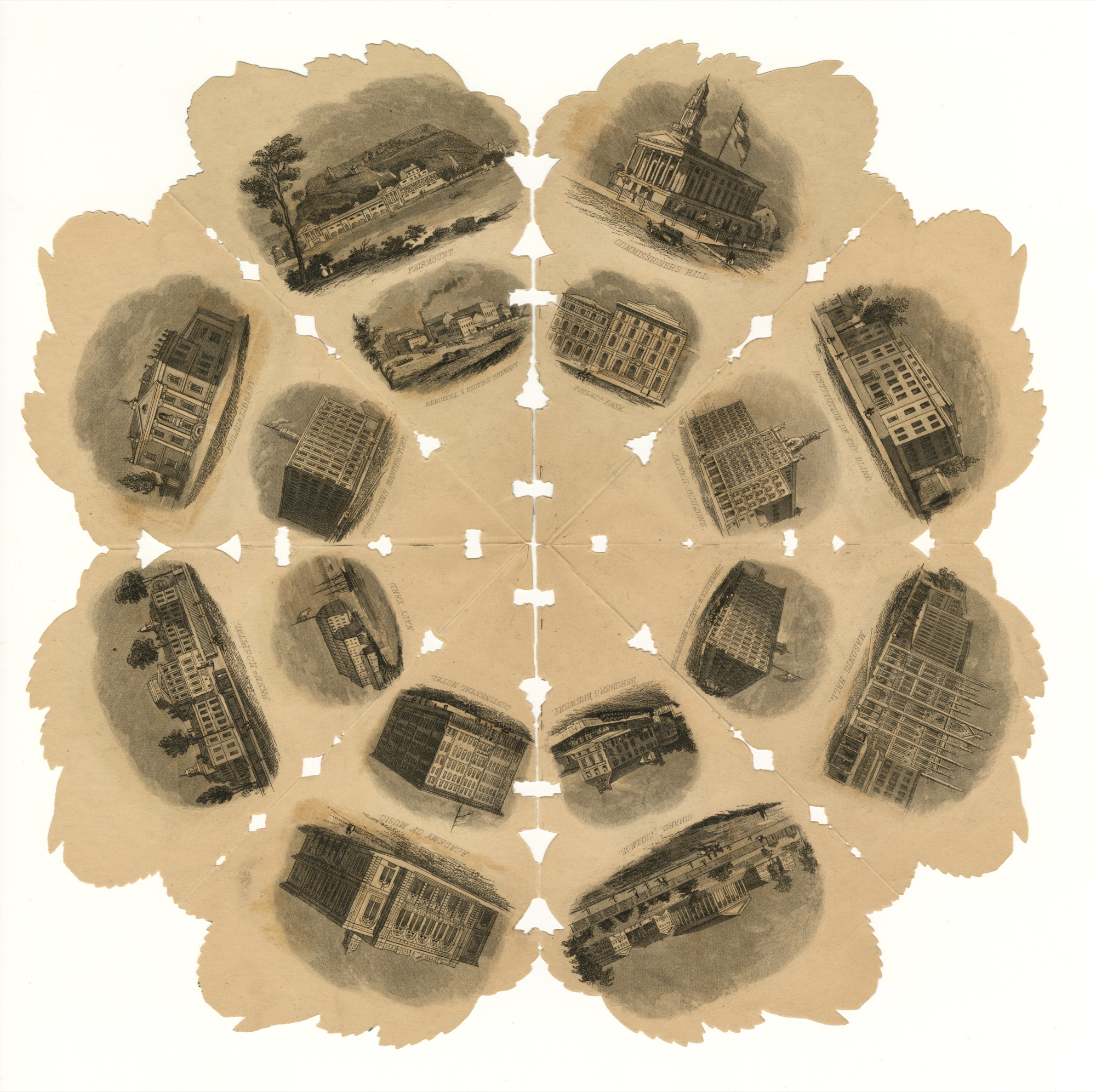
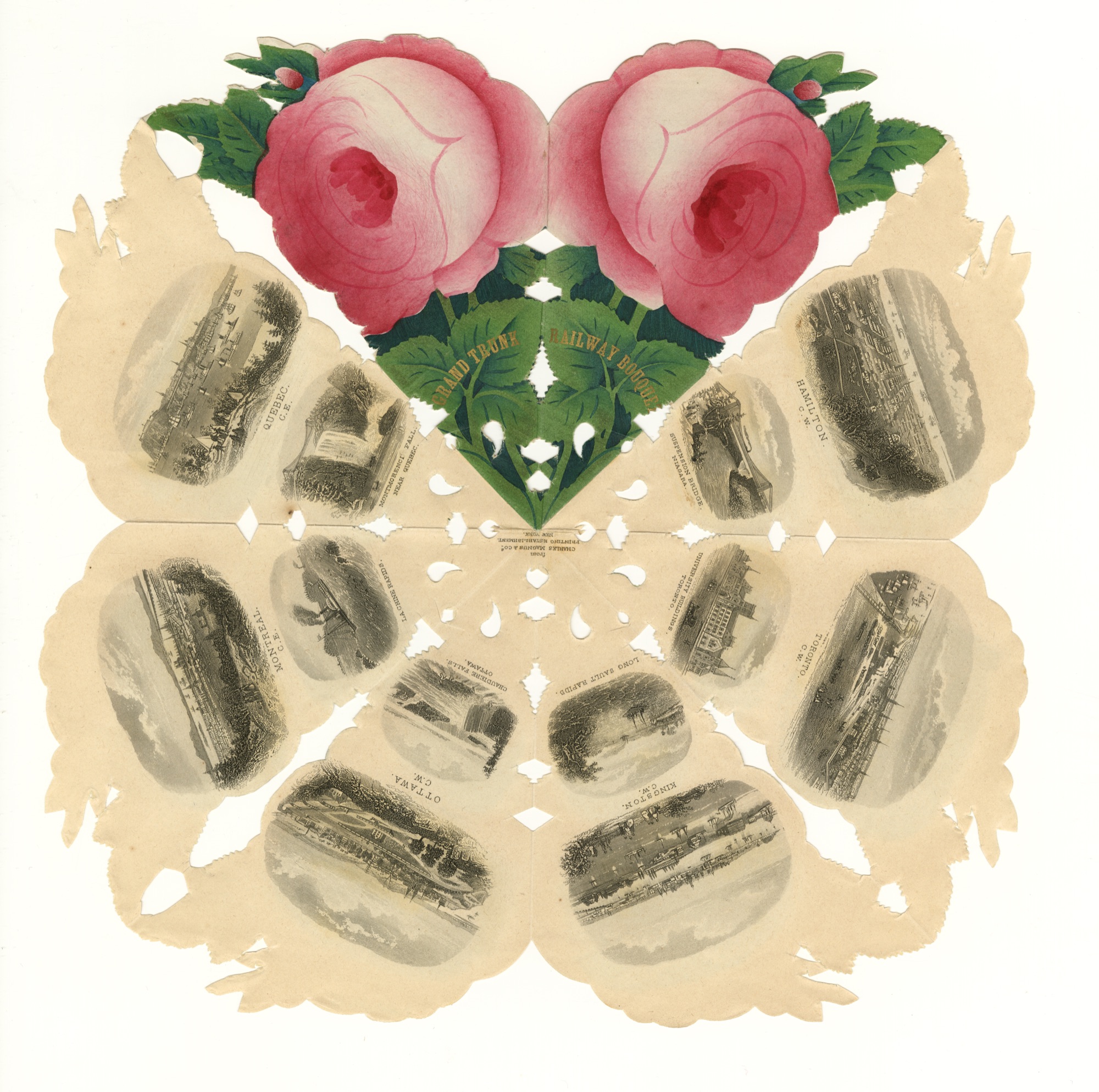
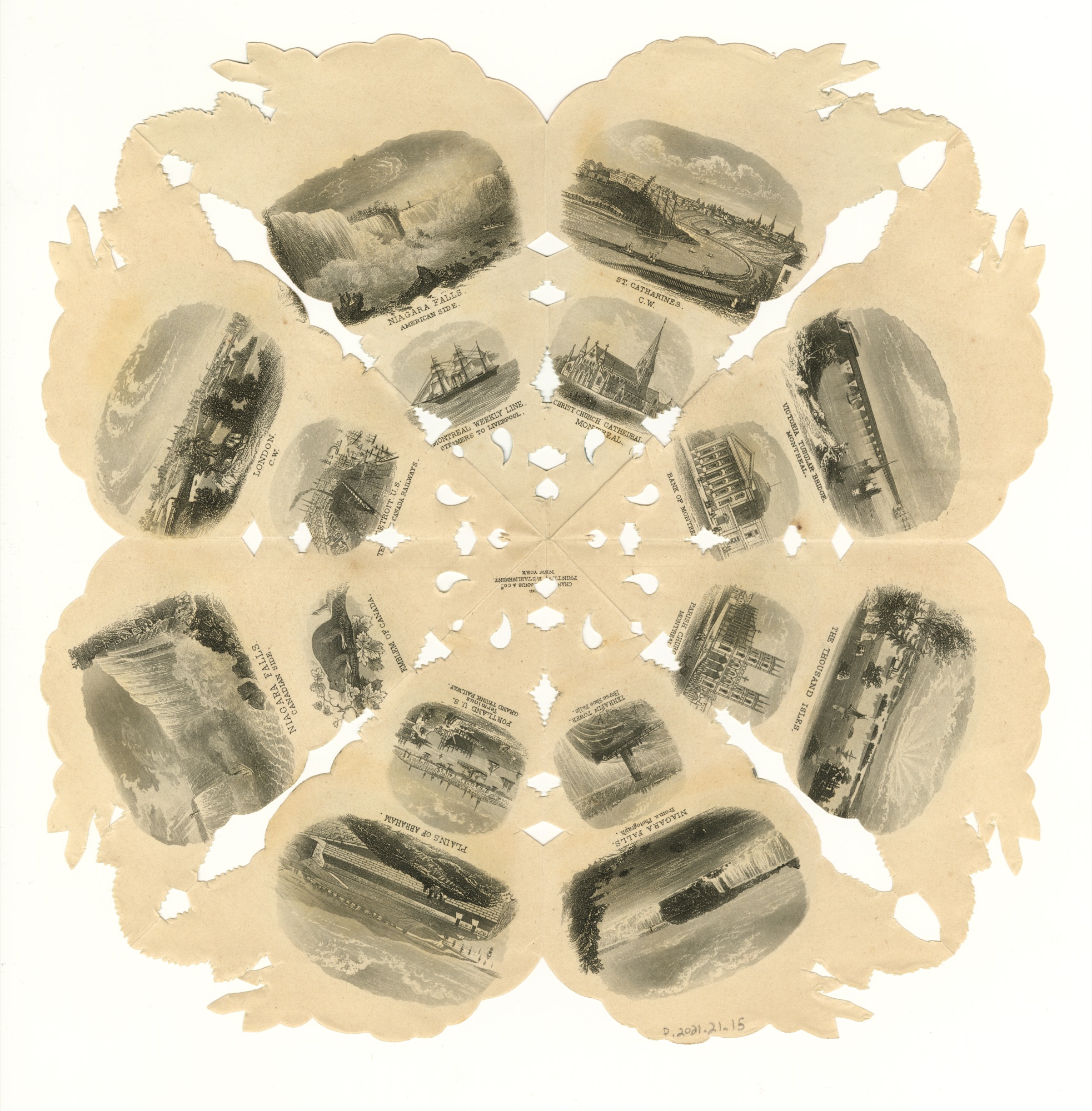
Schaefer & Korudi, Rose of Philadelphia (Philadelphia: G. Heerbrandt, 1859). Color lithographs. Fold out. Robert Staples Souvenir Rose Collection.

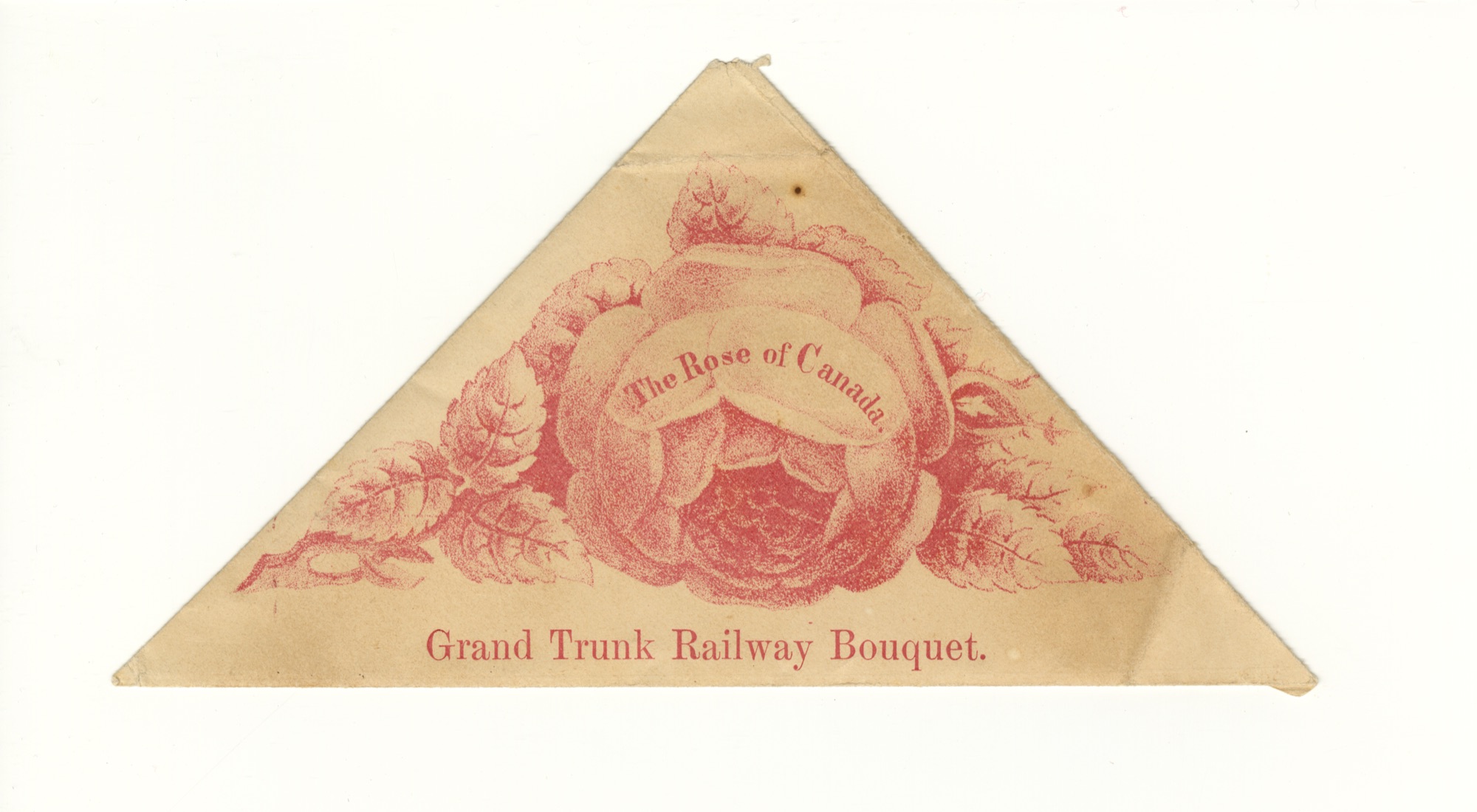
Rose of Canada (New York: Charles Magnus & Co., ca. 1852). Color lithograph. Fold out. Robert Staples Souvenir Rose Collection.

First produced in Germany in the mid-19th century, souvenir roses enclosed in an illustrated envelope became a novelty keepsake of travel tourism by 1860. Comprised of a foldable, die-cut, rose-shaped print typically designed with up to thirty-two vignette views showing city sites, the delicate souvenir remained in distribution until the era of the postcard. When viewed in their entirety, the prints depict a small-scale overview of different types of city landmarks from around the world. One travels to cultural attractions that still resonate, such as tourist must-sees like Independence Hall, interspersed with those of a commercial nature seemingly “lost” to history, like the Bergdoll & Psotta Brewery in Philadelphia.