The Engineers

Paper and Propaganda

Engravers, lithographers, and printers of metamorphic works in consultation with their commercial and political patrons employed a range of compositions and narratives on the devices. Transformative scenes; emblematic imagery; animated views of domestic, rural, and commercial life; and satirical portrayals enlivened the mundane worlds of their consumers. Crafted by paper engineers or graphic designers and purveyors of social, political, and cultural propaganda, the movable advertisements, political souvenirs, and cultural mementoes produced relayed multiple meanings. The movable and moving devices, whose creators can sometimes be identified through a patent, trademark, or copyright, but who often remain anonymous, shaped individuals’ behavior to purchase, vote, and engage in personal and civic social movements. Their themes and motifs from over a century before the first GIFs entered our sensory world continue to have a presence in the social messaging and truthful fictions read in today’s social media.
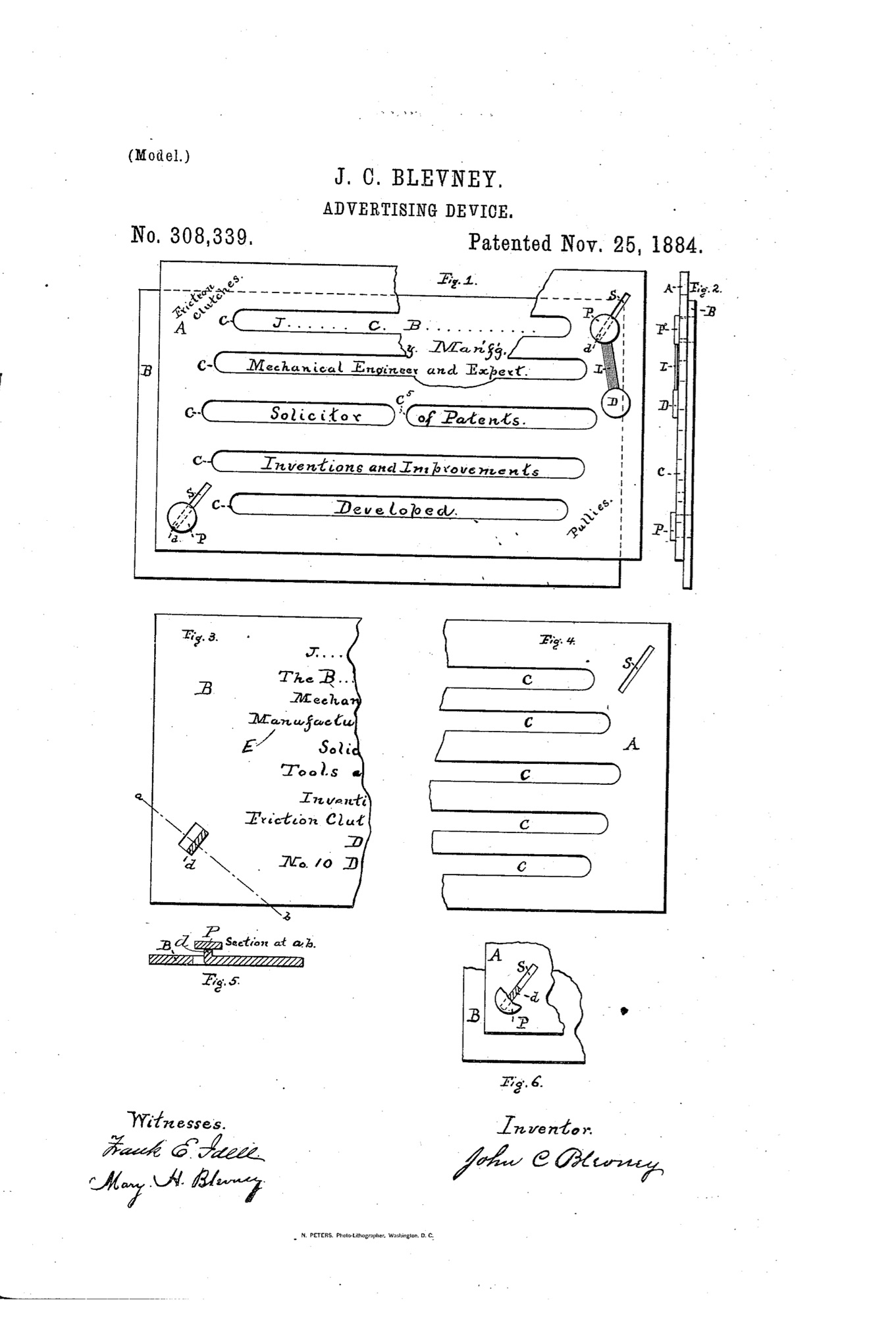
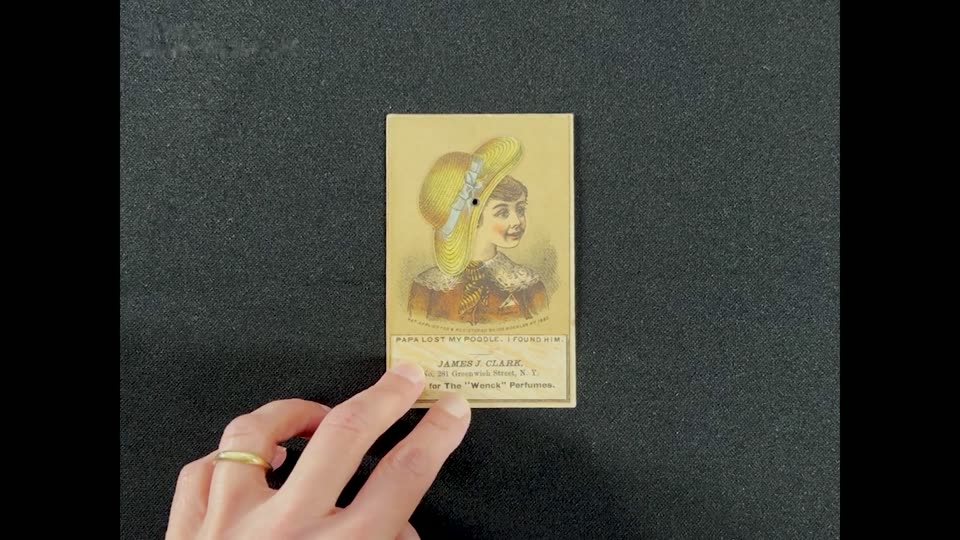
Diagram for Patent Application No. 308,339, J.C. Blevney, Advertising Device. Patented Nov. 25, 1884.

“Each firm of course, desires to have the newest and nicest card, circular, or device, and extravagant prices are often paid. For instance, if a choice plaque is ordered we may have to pay an artist $100 or $200 …”

“Quaint Devices in Trade,” New York Times, June 18, 1882

“‘From what dealers do the largest orders for picture cards come?’ ‘Well, I should say from the dry goods, clothing, and grocery dealers. The fancy goods trade uses a great many, and milliners, shoemakers, and confectioners also have them in general use. Hatters are always on the alert to pick up novelties in the way of advertising.’”

“Quaint Devices in Trade,” New York Times, June 18, 1882

Papa Lost My Poodle. I Found Him. James J. Clark, No. 281 Greenwich Street, N.Y. Ask for the “Wenck” Perfumes (New York: Jos. Koehler, 1882). Chromolithograph. Wheel. Robert Staples Metamorphic Collection.

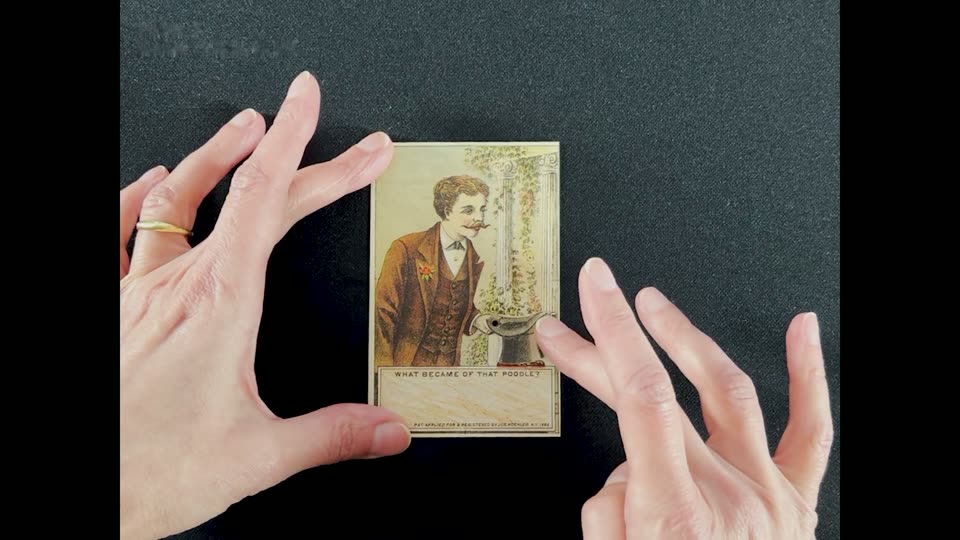
What Became of That Poodle? (New York: Jos. Koehler, 1882). Chromolithograph. Wheel. Robert Staples Metamorphic Collection.

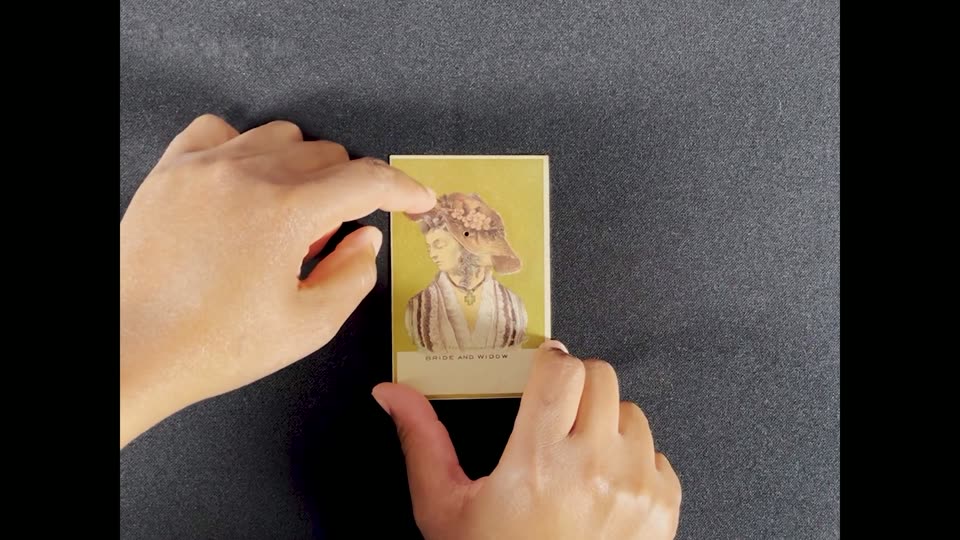
Bride and Widow (New York: Jos. Koehler, 1882). Chromolithograph. Wheel. Robert Staples Metamorphic Collection.

Part of a series of “turn-dial” cards creating a time-lapse effect, these metamorphic works are marked “Pat. Applied for & Registered by Joe Koehler, N.Y. 1882.” Containing blank spaces for advertising text, the graphics seem patent made to sell hats as opposed to perfume as printed on the one. Their patent assignee Joseph Koehler (1842-1933) led a multi-faceted career. He operated a lithography, printing, and stationery business, as well as imported tobacco paraphernalia and sold patent medicine. Koehler also became entangled with the Comstock Act of 1873 when in 1876 he was indicted and later discharged of the offense of selling lewd and lascivious pictures.

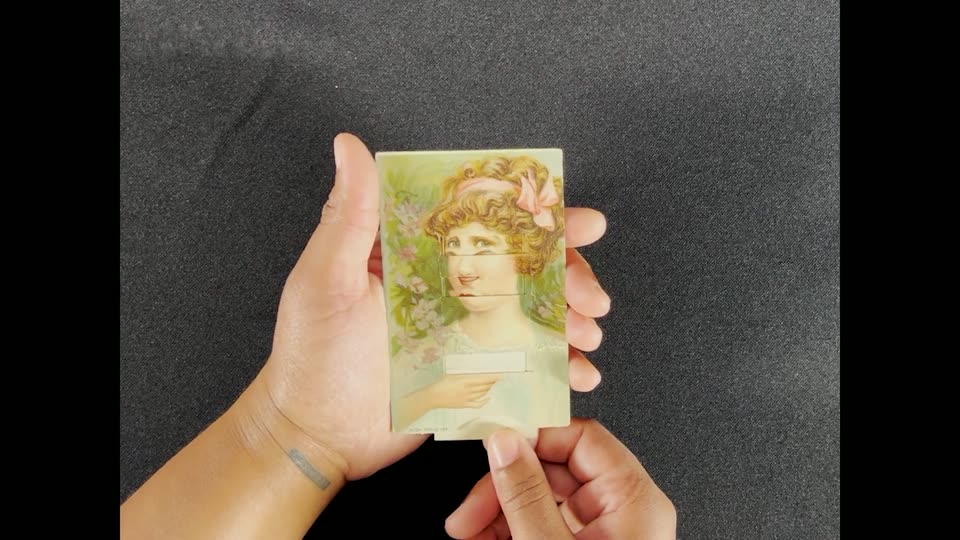
Call It “Checkers” The Best and Purest Pop Corn Confection (Chicago: Adv. Nov. Co., ca. 1900). Color photomechanical print. Pull tab. Robert Staples Metamorphic Collection.

Marked “Pat. Registered for” and issued by the Advertising Novelty Company, this pull-tab device contains graphics that resemble the side eye expressions seen in memes employed today to express displeasure in a glance. By 1922, the president of the Chicago company served as an expert about ad specials and novelties at a newsworthy panel of a meeting of the Association Advertising Clubs in Milwaukee. The presentation proved so popular a larger hall needed to be found.

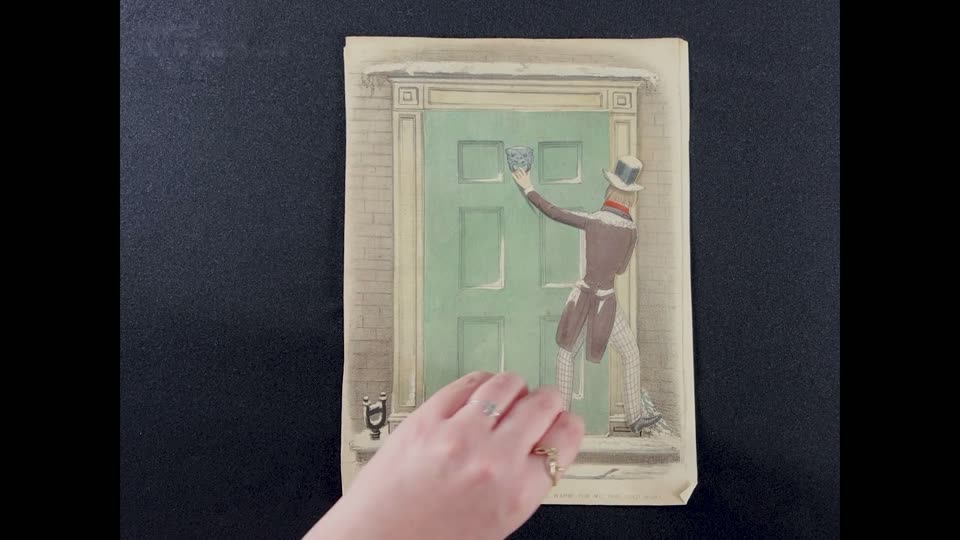
No Doubt My Wife Has Got Something Nice and Warm for Me This Cold Night (London: G.A.H. Dean & Co., ca. 1844). Hand-colored lithograph. Fold out. Robert Staples Metamorphic Collection.

Innovative British publishers Dean & Co., later Dean & Son, known for their early movable books, first capitalized on their use of the new printing process of lithography through their publication of novelty prints. Between the late 1830s and 1840s, their movable hand-colored “flap” prints dominated this niche of the market. Their inventive illustrators and paper engineers often used visual and verbal puns in conjunction with domestic scenes to elicit a moment of play for all ages as seen in this lithograph previously saved in a scrapbook.

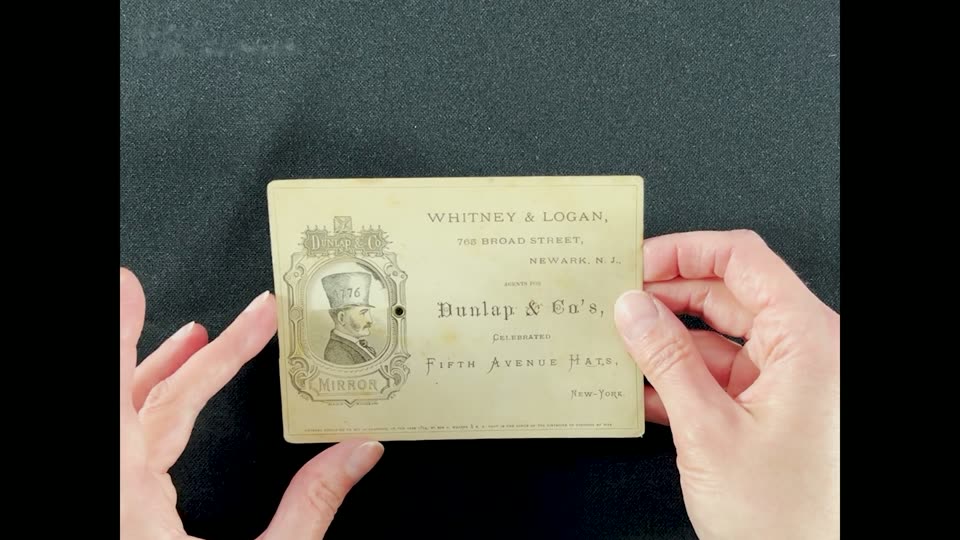
Meeder & Chubb after Asa C. Warren, Dunlap & Co.’s, Celebrated Fifth Avenue Hats, New-York (Washington, D.C.: Asa C. Warren & R.C. Hoyt, 1874). Relief print. Wheel. Robert Staples Metamorphic Collection.

Containing an 1874 copyright statement in the names of artist and engraver Asa C. Warren (1819-1904) and R.C. Hoyt, this metamorphic promotes in a most charming manner the merchandise of the New York hat manufacturer Dunlap & Co. A wheel device illustrated with a rotating selection of hats upon the head of a stylish man reflected in a mirror, the piece appears to contain all of its creators’ names. However, the identity of R.C. Hoyt remains unknown. He might be the paper engineer of this promotion for the premier New York hat business. Established in 1871 by Robert Dunlap (1834-1900), the firm gained a national reputation and made one million dollars a year within its first decade of business.

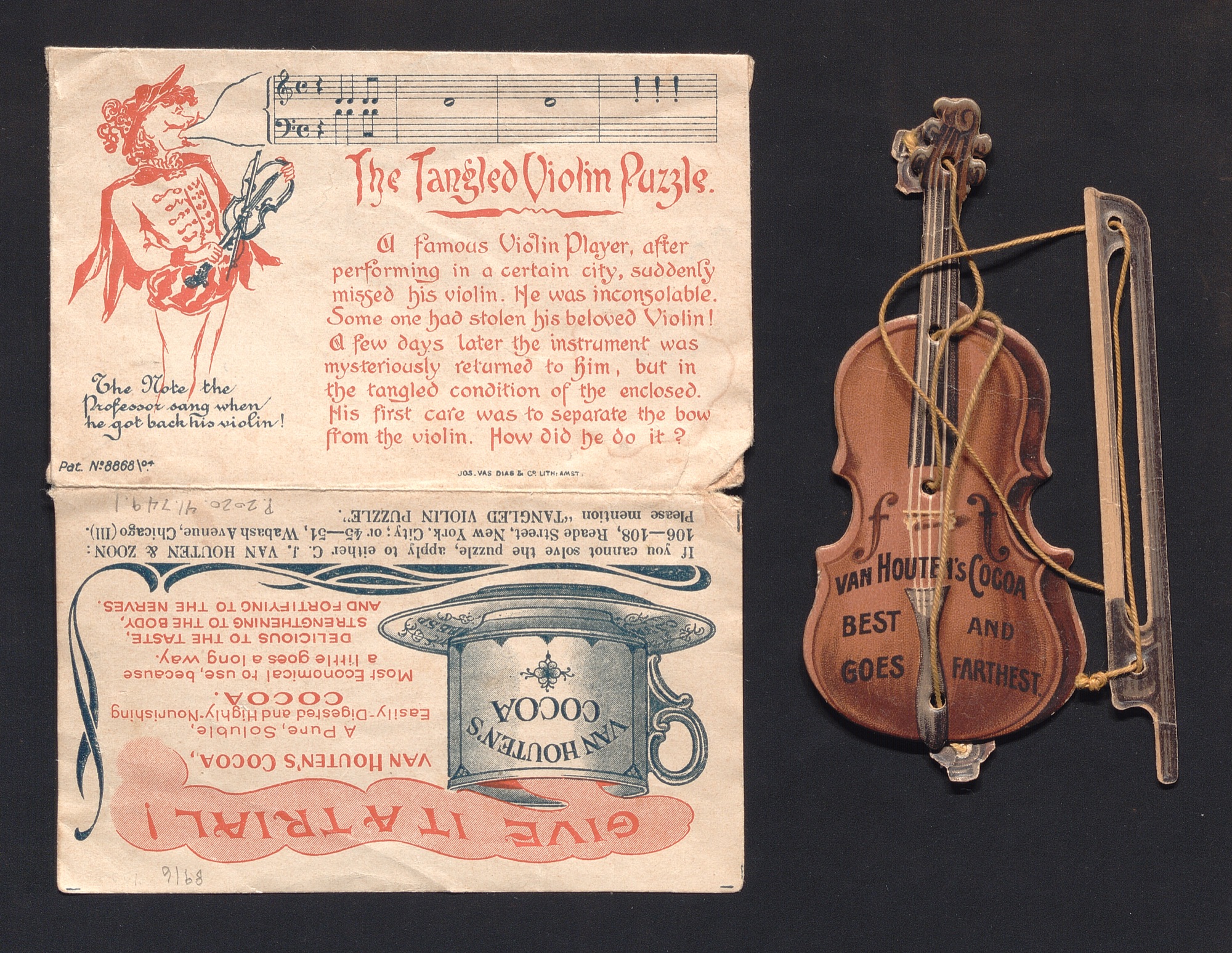
The Tangled Violin Puzzle. Give It a Trial! Van Houten’s Cocoa (Amsterdam: Jos. Vas Dias & Co., ca. 1890). Chromolithograph. Puzzle. Robert Staples Metamorphic Collection.

Labeled with European “Pat. No.8868,” this novelty toy advertisement marked the entrance into the US market in 1889 of the near century-old Dutch cocoa company. Imploring the consumer to give the cocoa and puzzle, “A Trial,” the promotional headline found on the enclosure of the finely printed puzzle is comprised of an engaging montage of narrative images, text, and a line of music. Those unable to untangle the toy instrument, an ode to the dual Dutch excellence in making cocoa and violins, could acquire the solution by writing to the American branches of the company.

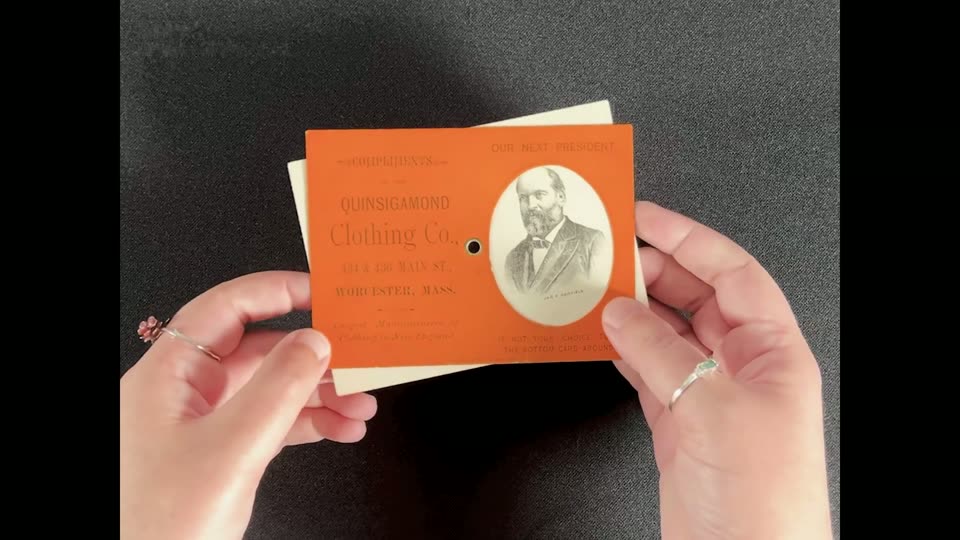
Our Next President. Compliments of the Quinsigamond Clothing Co., 434 & 436 Main St., Worcester, Mass. ([Boston]: A. Thompson, 1880). Lithograph. Wheel. Robert Staples Metamorphic Collection. Demonstrated in video.

Our Next President. Presented by F. E. Nourse & Co. The Only One Price Clothiers in Middletown. (Boston: A. Thompson, 1880). Lithograph. Wheel. Robert Staples Metamorphic Collection.

The 1880 U.S. presidential campaign continued the use of mechanical political novelties begun with David Claypoole Johnston’s 1840 rendering of Martin Van Buren. Commercially issued, this card advises the handler and potential male voter with the instructions “If Not Your Choice, Turn the Bottom Card Around.” Regardless of whether Republican James Garfield (1831-1881) or Democrat Winfield Scott Hancock (1824-1886) won, the win/lose mechanism of the Van Buren metamorphic had been replaced by a win/win mechanism. The wheel could be turned in perpetuity to show President Garfield. Voters in Massachusetts and Connecticut, the home states of men’s clothing retailers Quinsigamond and Nourse, voted in the majority for the Republican.

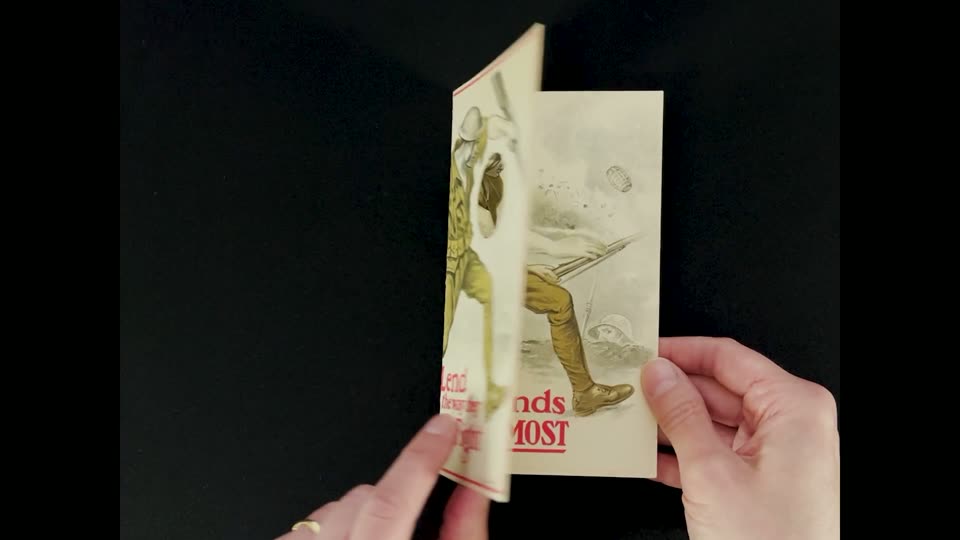
Lend the way they Fight. Buy Bonds to your Utmost (United States, 1918). Photomechanical prints. Pop up. Robert Staples Metamorphic Collection.

Devised after the World War I poster by illustrator Edmund E. Ashe (1867-1941), this mechanical work helped to raise over seventeen billion dollars in funds for the war through the purchase of bonds by children and adults. Portraying a soldier in battle demonstrating “unflinching courage,” the animated work of war propaganda presented a patriotic model of sacrifice to be emulated in sentiment and action. The handler of the piece, similar to interactions with toy soldiers and later action figures, could touch, and feel, and fight like a service member.

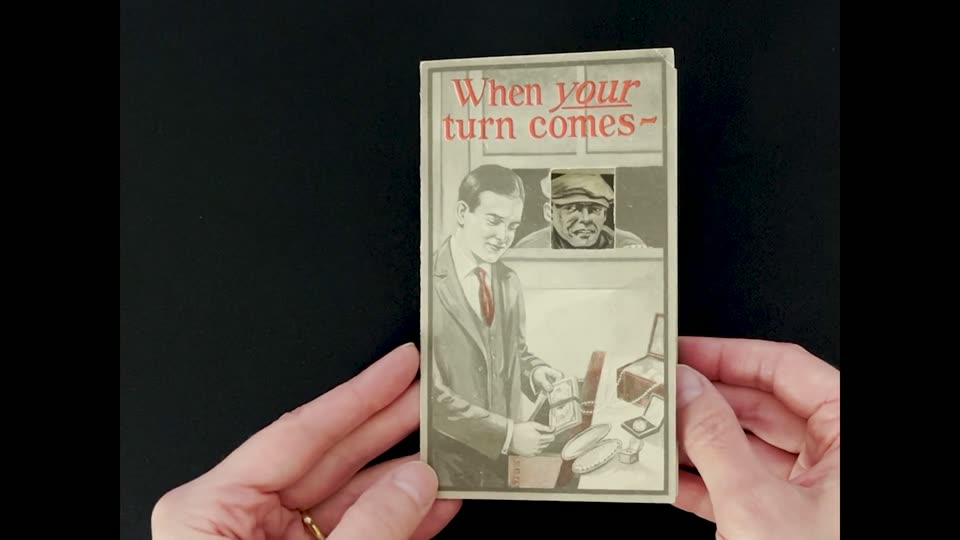
When Your Turn Comes Be Prepared to Protect Yourself and Property with a Colt Revolver or Automatic Pistol (Hartford, CT: Colt’s Patent Fire Arms Mfg. Co., ca. 1924). Printed by Breuker & Kessler Co. Color photolithograph. Pop up. Robert Staples Metamorphic Collection.

Printed by long-established, Philadelphia lithographic firm Breuker & Kessler, the circa 1924 pop up work opens with the ominous statement “When Your Time Comes.” During the 1920s, following the passage of several state legislations regulating firearms, firearm manufacturers began campaigns advocating guns in the home as deterrents against crime. This message is certainly advanced in this advertisement for the firearm manufactory opened in Connecticut in 1855. The jarring print is a snapshot in time of America’s fraught relationship with guns that has evolved, and reverted over the centuries in terms of control, rights, and civil policing.

Advertising with Legs

“Advertising with legs” became a catchphrase for successful marketing campaigns with the rise of late 19th-century print advertising agencies. Rooted in flexibility, growth, and change, the maxim had started a few decades earlier with trade cards that often included the full depictions, legs and all, of children, animals, and women in genre, comic, and fantastical scenes. Figurative and literal legs intertwine in metamorphic advertisements that can provide smiles, consternation, and dismay.

“The custom of using picture cards and curious printed devices for advertising purposes in this country has been one of a few years growth. … The motive [is] … not rivalry alone, but the desire on the part of dealers to put some sort of card into the hands of buyers that … will be kept in sight and talked about.”

“Quaint Devices in Trade,” New York Times, June 18, 1882

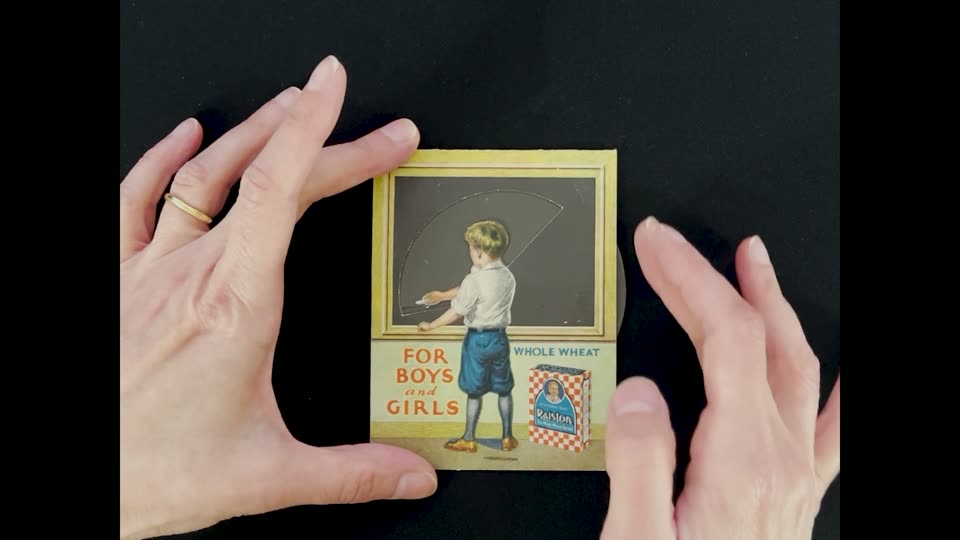
Whole Wheat Ralston for Boys and Girls (St. Louis, Mo.: Ralston Purina Co., ca. 1920). Color photomechanical print. Wheel. Robert Staples Metamorphic Collection.

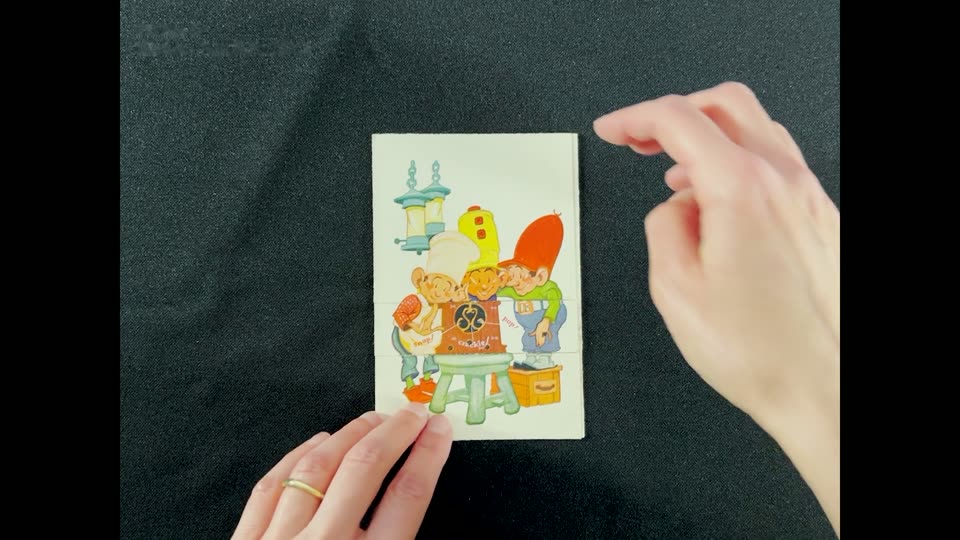
Vernon Grant, Snap. Crackle. Pop. Listen! get hungry (Battlecreek, MI: Kellogg Co., 1934). Printed in U.S.A. Flap book. Robert Staples Metamorphic Collection.

After 1920, modern businesses primarily engaged advertising agencies to promote their “brand.” Over the decade between when Ralson Purina and Kellogg marketed their products, the novelty of movable works still found a place as an “advertisement with legs,” but a shift in the aesthetics of the visuals and texts is evident. Although both advertisements target children through their parents, illustrator Vernon Grant’s (1902-1909) artistry snaps, crackles, and literally pops through gnomish characters and quick quips compared to the unnamed artist of our delightfully dutiful student writing and erasing “Ralston Healthy” on a chalkboard. Grant’s design soon led him on a world tour to promote Kellogg cereals.

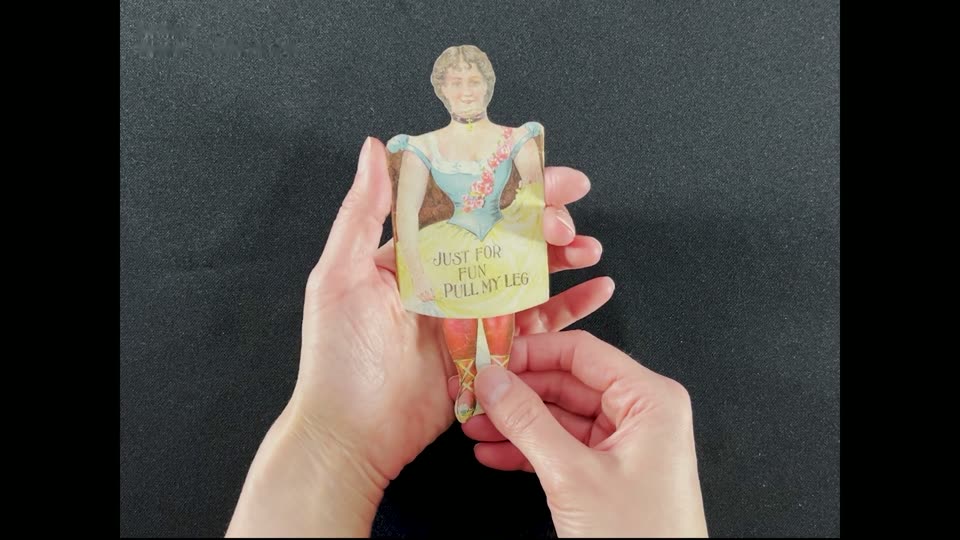
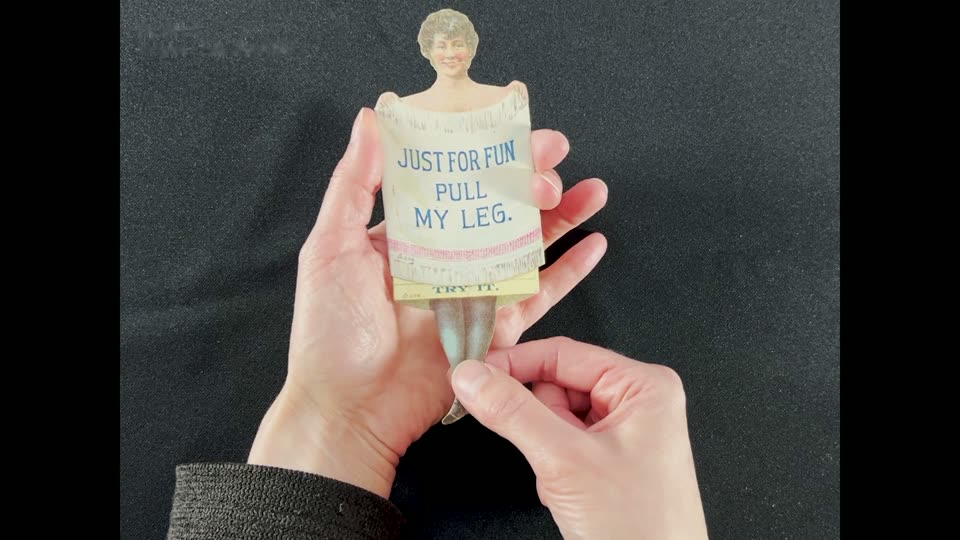
Just For Fun Pull My Leg. Chew Polar Bear. 3 oz. 5 cts. ([Middleton, OH]: [American Tobacco Company], ca. 1900). Color photomechanical print. Pull tab. Robert Staples Metamorphic Collection.

Just For Fun Pull My Leg. Chew—Smoke Polar Bear. 3 oz. 5 cts. ([Middleton, OH]: [American Tobacco Company], ca. 1900). Color photomechanical print. Pull tab. Robert Staples Metamorphic Collection.

Portrayals of women in suggestive and revealing poses and situations predominate the visuals of metamorphic works advertising tobacco products. During the turn-of-the-twentieth century, cultural practices still identified men as the acceptable consumers of tobacco, particularly chewable. American Tobacco Company, known as the “Tobacco Trust,” capitalized on this gendered market with these pull-tab dolls and the voyeuristic potential to view a woman in a state of undress.

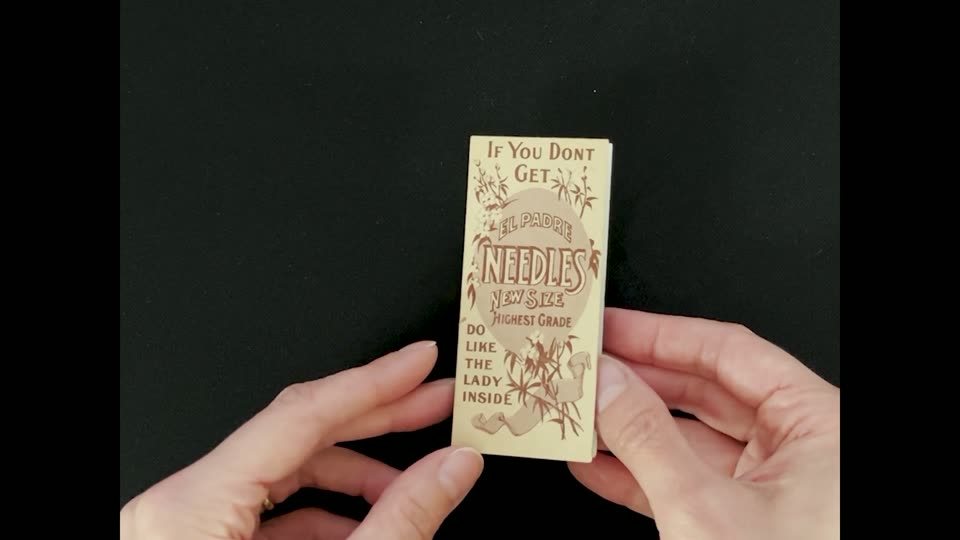
If You Dont [sic] Get El Padre Needles New Size Highest Grade. Do Like the Lady Inside. Kick If You Don’t Get El Padre Needles. S. Davis & Sons, Montreal ([Montreal]: [S. Davis & Sons], ca. 1895). Color photomechanical print. Pop up. Robert Staples Metamorphic Collection.

Tobacco and alcohol manufacturers often used the bawdy figure of a woman entertainer in a revealing high kick pose when using a pop-up advertisement to market their products to their presumed consumer base of men. Montreal’s largest tobacco firm S. Davis & Sons was no exception in their promotion of their El Padre cigars. In 1895, American Tobacco Company absorbed the firm into their monopoly of the trade which ended in 1911 with the passage of anti-trust laws.

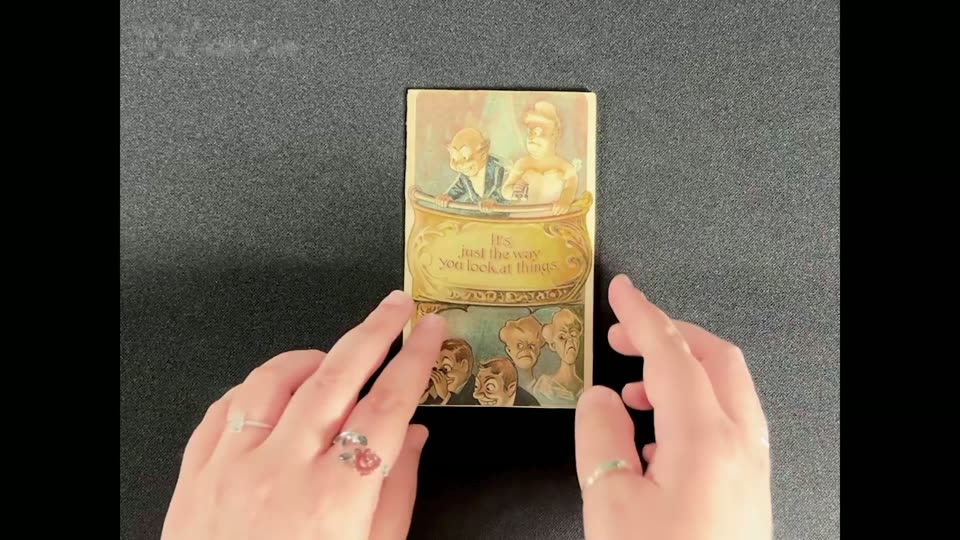
It’s just the way you look at things. What Mrs. Smith saw on a Rainy Day. What Mr. Smith saw! (United States, ca. 1905). Color photomechanical print. Fold out. Robert Staples Metamorphic Collection.

“A Full House” is not always a desirable thing to hold/ A good Pair to hold/ You can’t always catch “A Queen.” Ess Tee Dee Stops the Dandruff (Chicago: S.T. Dustin, ca. 1905). Color photomechanical print. Fold out. Robert Staples Metamorphic Collection.

Commentaries on the private and public roles of women and gender dynamics during the Progressive era are on full display with these two-fold out mechanical works intended as marketing devices. It’s just the way foreshadows the “Distracted Boyfriend” meme first made popular in 2015. A Full House presents a (card) game of life in form and content. Both represent a man’s perspective and signify the social and cultural tensions of a younger generation of women seeking more autonomy in society, work, and the home.