Getting Under Way

In the 1830s, the oceanic charts available to mariners were dangerously incomplete. Rocks, shoals, and reefs would regularly destroy ships, despite efforts by navies and commercial mariners to record and share the dangers they encountered. After many mishaps led to the loss of lives as well as cargoes, Congress commissioned the United States Exploring Expedition. Lieutenant Charles Wilkes, with little command experience, was placed at its head.

The Wilkes Expedition (often called the “Ex. Ex.”) would return with thousands of artifacts and specimens, forming the nucleus of what would become the Smithsonian Institution. It also led to the creation of 241 charts that would map over 2,000 miles of coastline and identify 280 Pacific islands. The results of this expedition dwarfed any that had been conducted by a European power to this point, and added much to the argument for American exceptionalism.
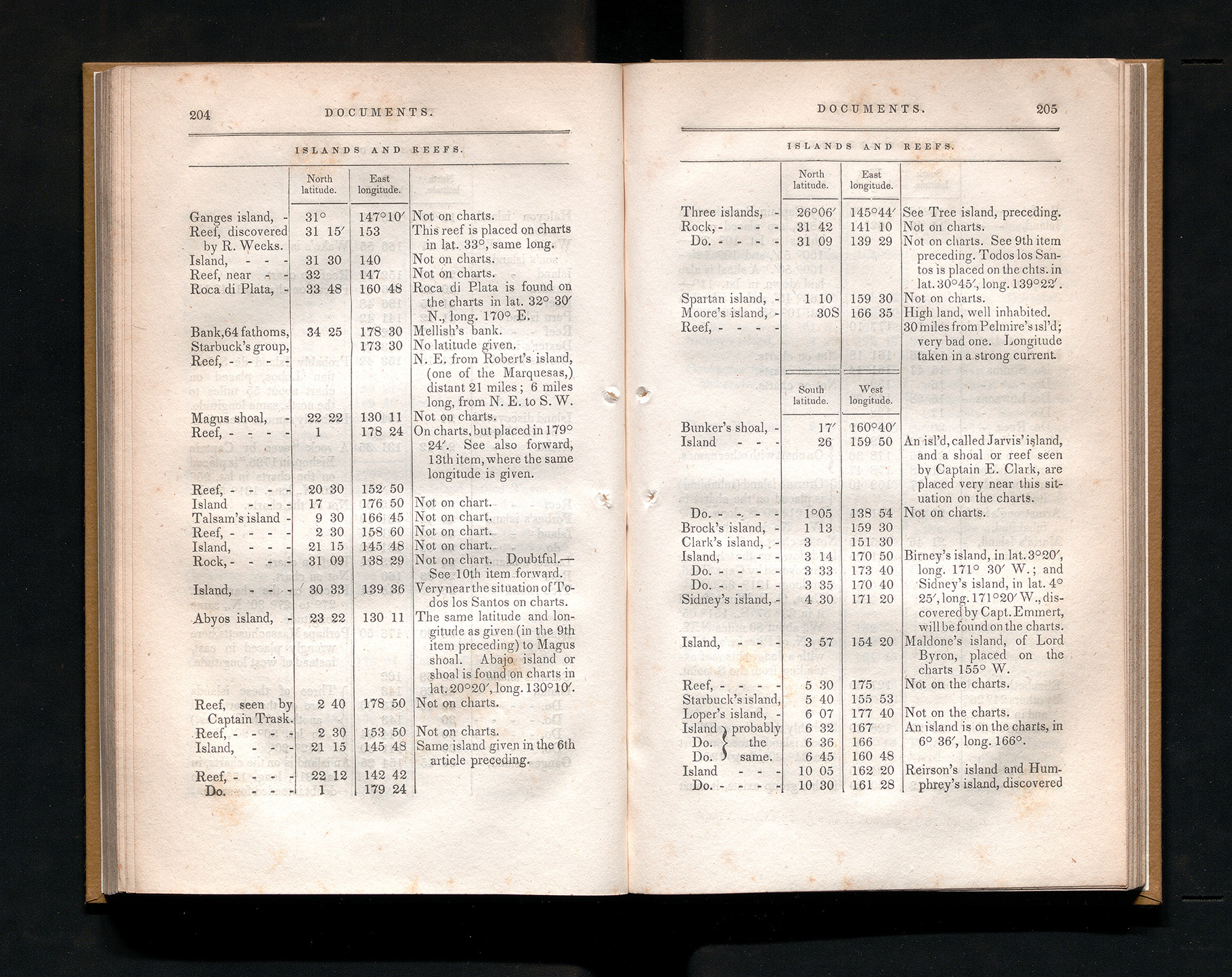
J.N. Reynolds, Address on the Subject of a Surveying and Exploring Expedition to the Pacific Ocean and South Seas (New York, 1836).

Jeremiah N. Reynolds (1799-1858) was the embodiment of America’s youth, energy, and ambition when he began his campaign for naval exploration. Though primarily interested in the scientific value of exploration, Reynolds understood that he would need to emphasize its commercial value to find support. To that end, he attempted to quantify the dangers in unexplored seas and shared his concerning findings in this work. The threat to American commerce ultimately proved compelling enough to Jacksonian Democrats to justify the cost, and led to the commissioning of the U.S. Exploring Expedition.

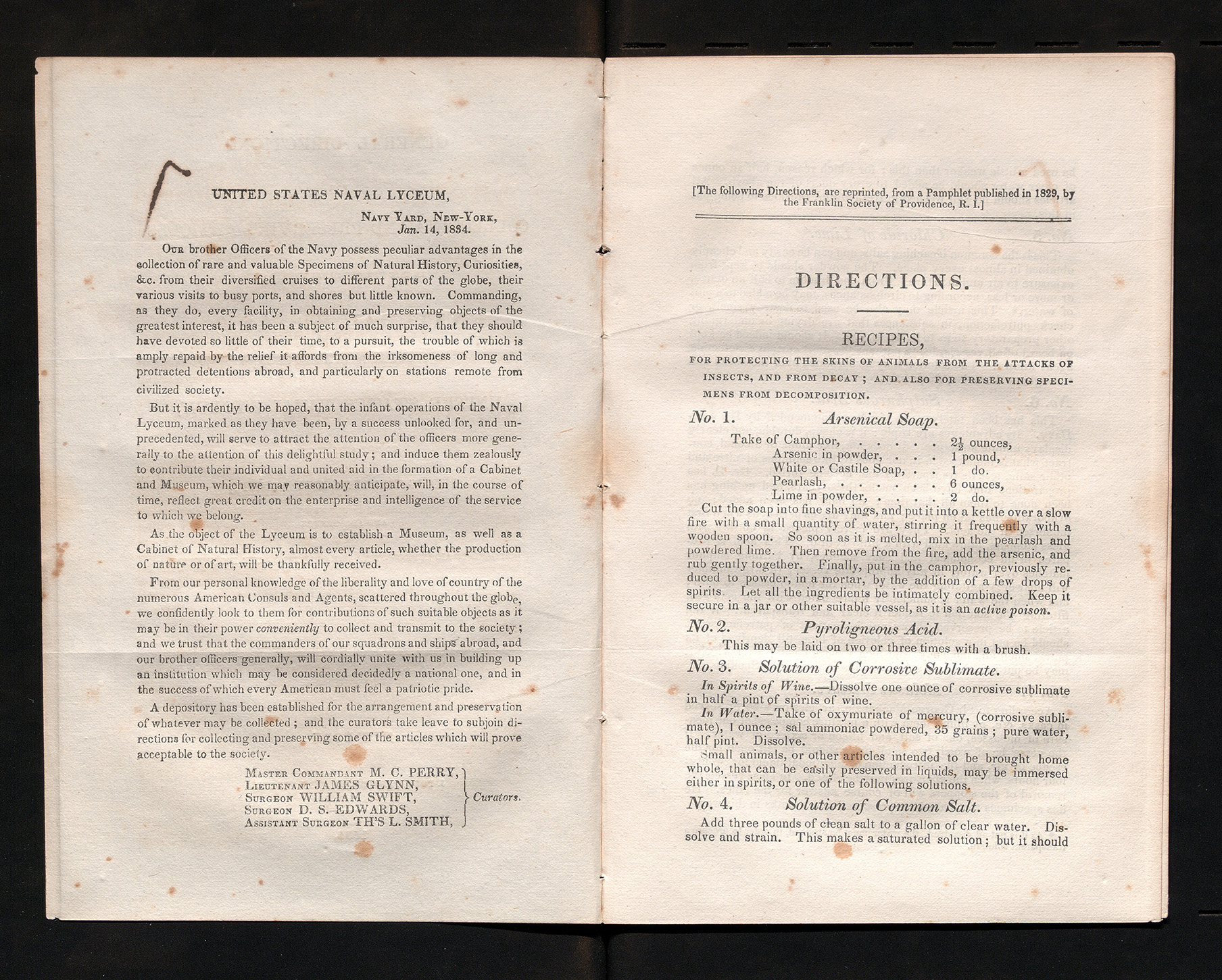
United States Naval Lyceum, General Directions for Collecting and Preserving Articles in the Various Departments of Natural History (New York, 1834).

To safely transport specimens of flora and fauna from around the world, expeditions would need the proper materials and expertise. Guidance was provided by pamphlets like this one, produced by the Naval Lyceum under the leadership of a young Matthew C. Perry.

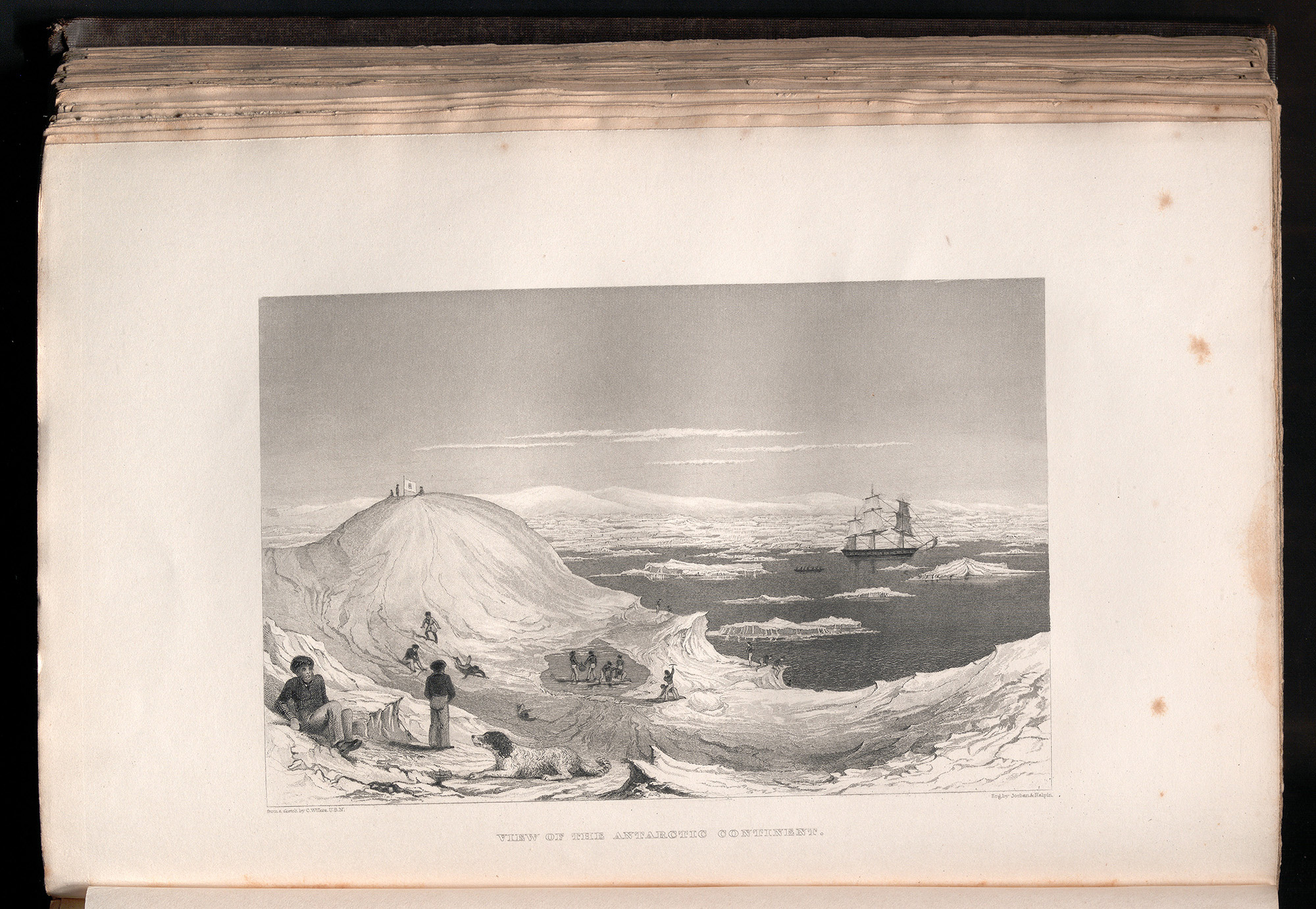
“View of the Antarctic Continent” in Charles Wilkes, Narrative of the United States Exploring Expedition during the Years 1838, 1839, 1840, 1841, 1842 (Philadelphia, 1845). Engraving.

Despite the hardships of naval exploration, crew members still found opportunities for recreation. Here, in a sketch by Charles Wilkes, we see man and beast enjoying a romp in the ice and snow.

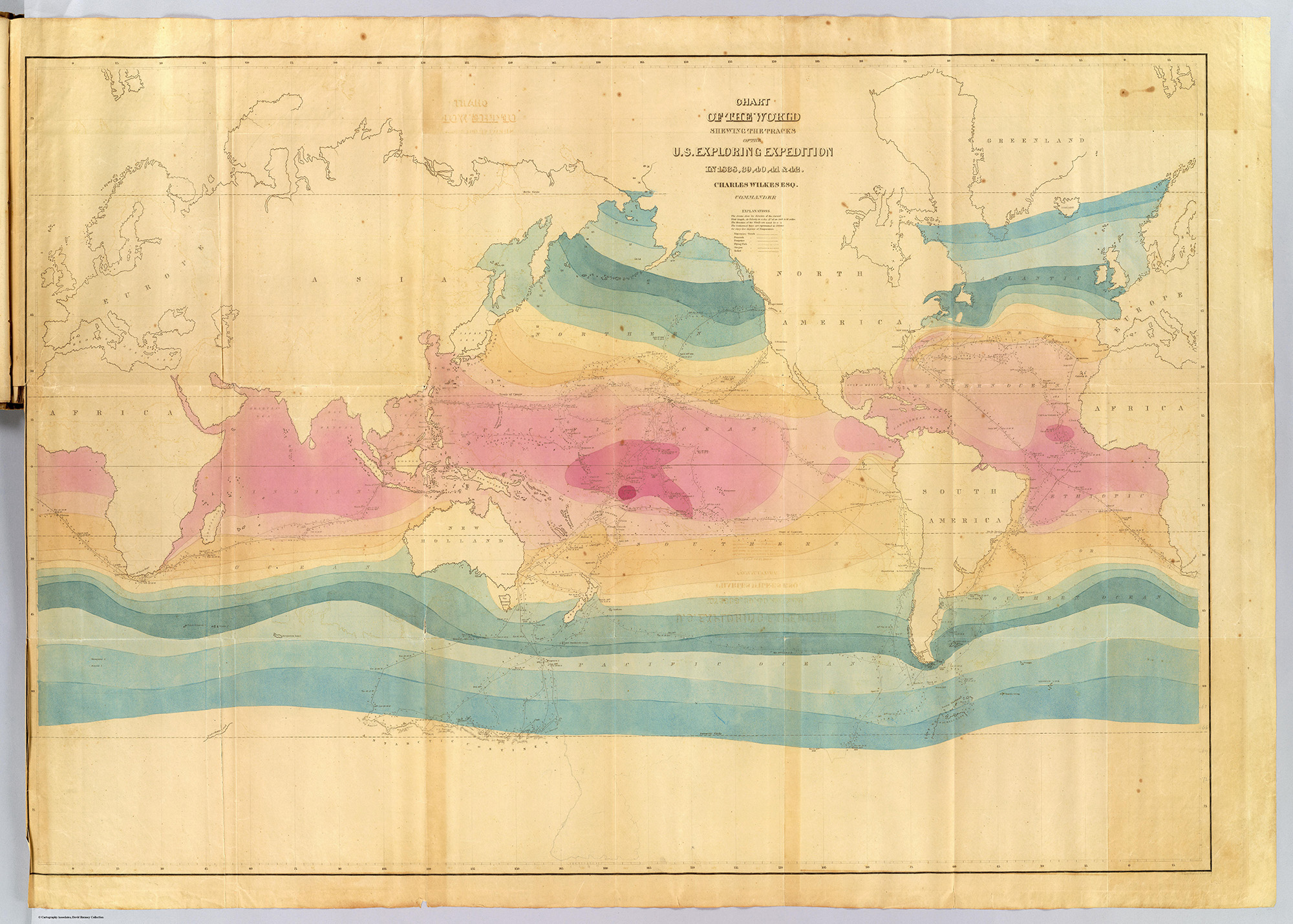
“Chart Of the World Shewing the Tracks of the U.S. Exploring Expedition” in Charles Wilkes, Narrative of the United States Exploring Expedition during the Years 1838, 1839, 1840, 1841, 1842 (Philadelphia, 1845). Reproduction from the David Rumsey Historical Map Collection. The Library Company also holds an original copy of this work.

This map from Henry Wilkes’ Narrative meticulously details ocean currents and winds, as well as the expedition’s routes. Isothermal zones are shown in vibrant color. The map also traces a significant portion of the coastline of the Antarctic Continent, first identified by the U.S. Exploring Expedition. The Library Company holds an original copy of this map, still bound within the Narrative as issued.

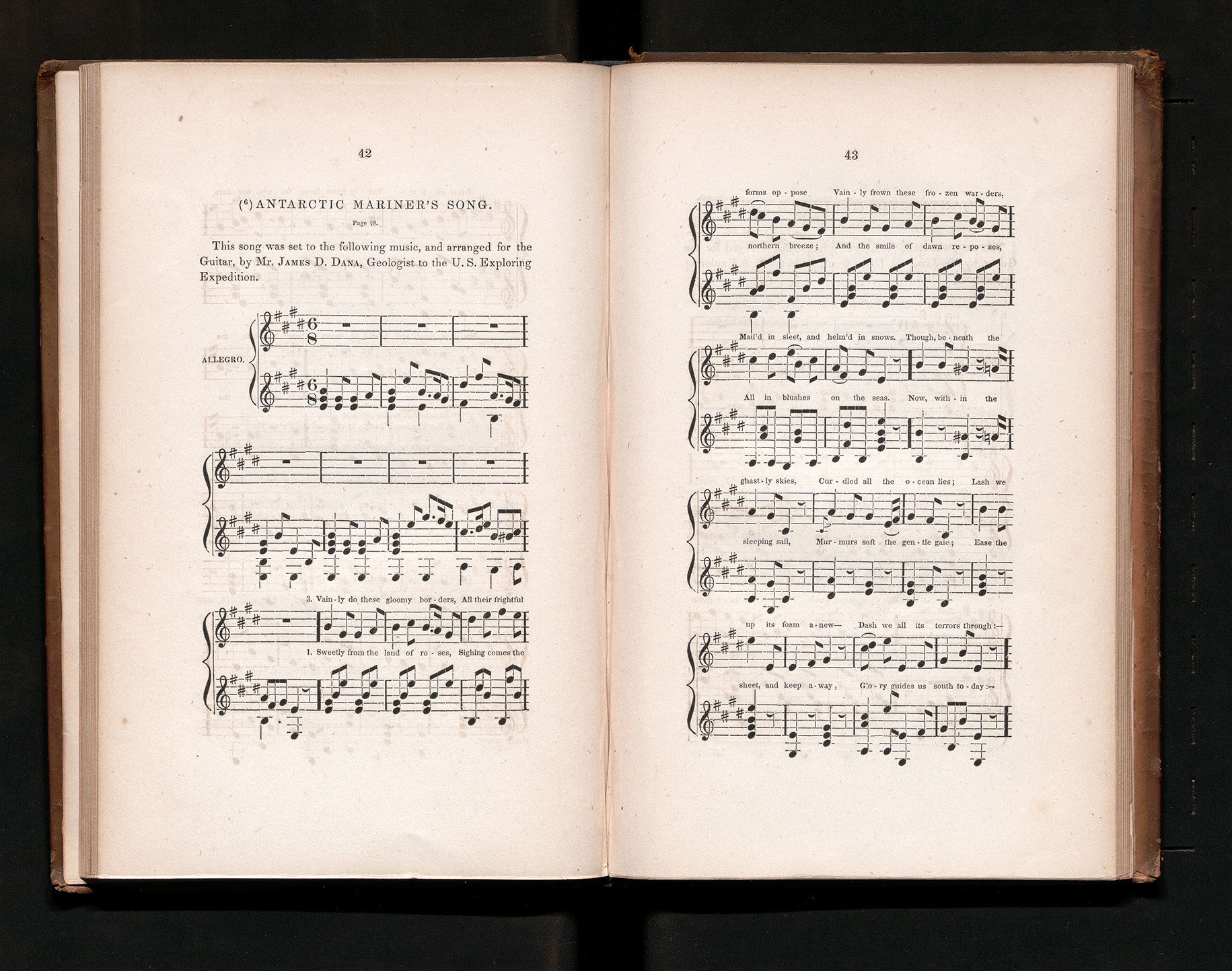
“Antarctic Mariner’s Song” in James C. Palmer, Thulia, a Tale of the Antarctic (New York, 1843). Arranged by James C. Dana, geologist.

Among the many achievements of the Exploring Expedition was the discovery—established by charting 1,500 miles of coastline—that Antarctica was a continent. This book of verse is a “true story” of events on the Flying-Fish, written by a naval surgeon on the journey. The song shown here was written by James Palmer (1811-1883) and arranged by expedition geologist James C. Dana (1813-1895).

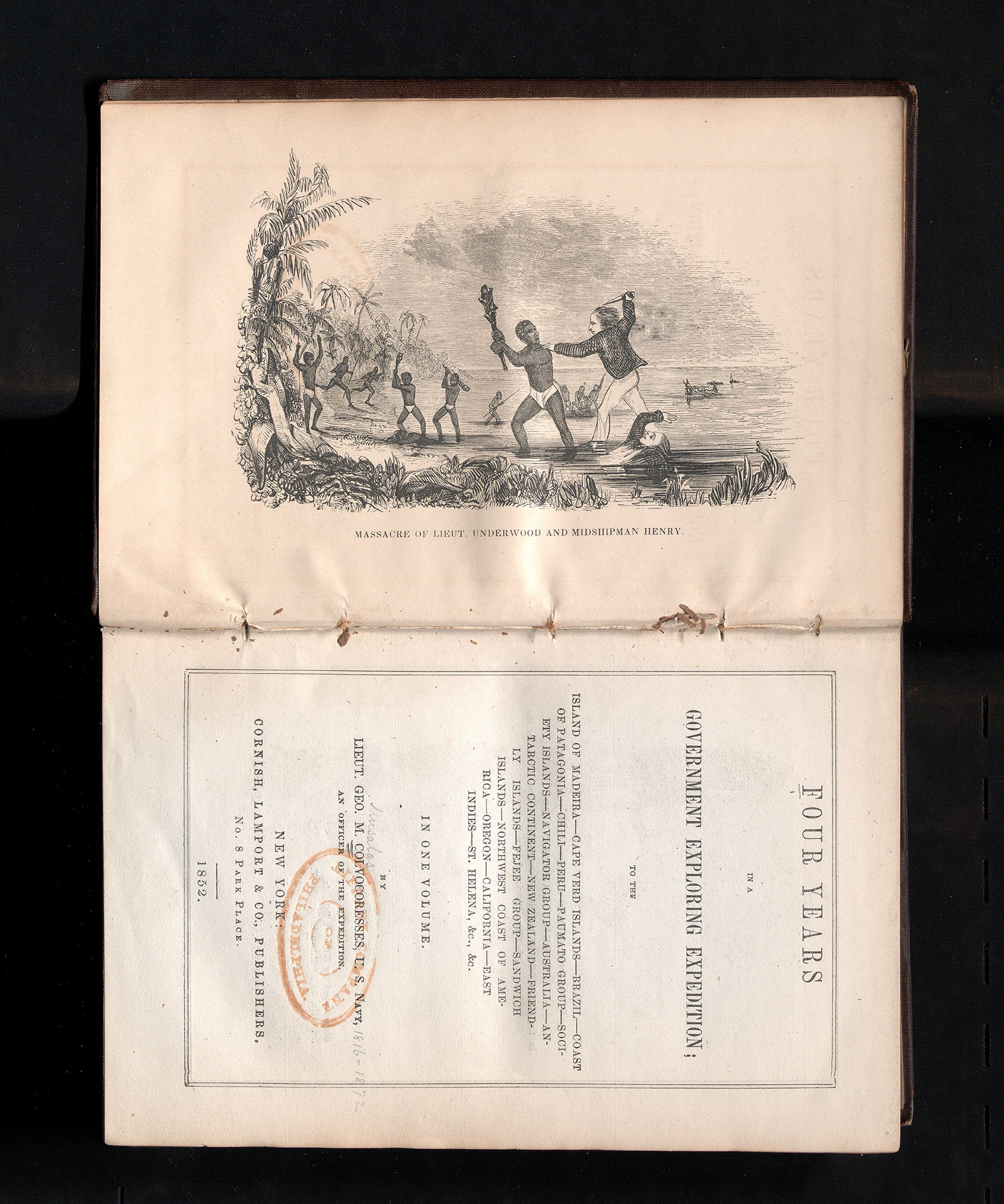
George M. Colvocoresses, Four Years in a Government Exploring Expedition (New York, 1852).

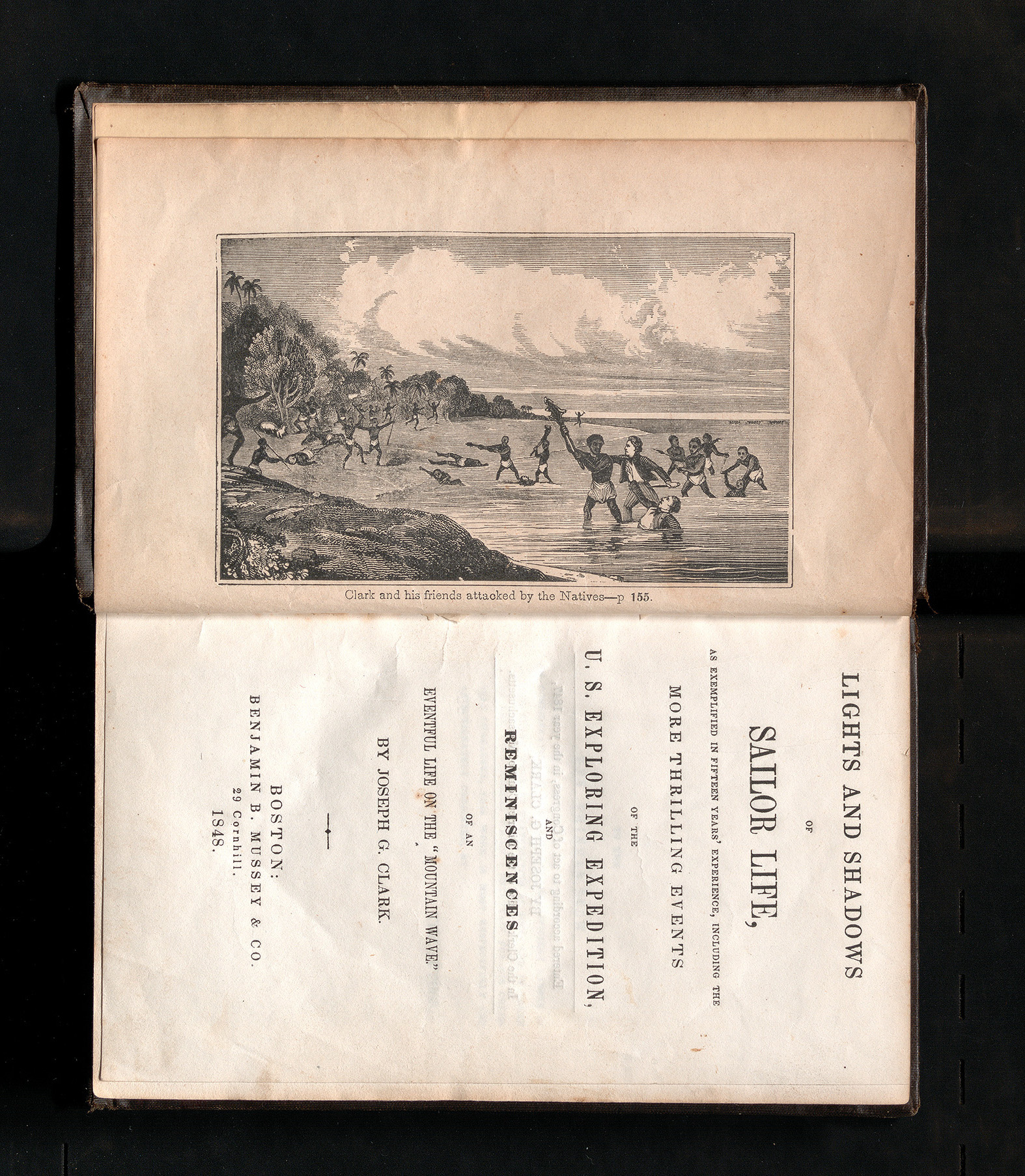
Joseph G. Clark, Lights and Shadows of Sailor Life (Boston, 1848).

Americans were eager for tales from the Exploring Expedition, particularly those featuring encounters with non-Westerners. One popular story recounted the 1840 attack on members of the expedition on the Fijian island of Malolo, and the subsequent massacre of villagers. In the initial attack, Lieutenant Joseph A. Underwood and Passed Midshipman Wilkes Henry, the commander’s nephew, were killed. Versions of the illustration shown here circulated widely at the time.

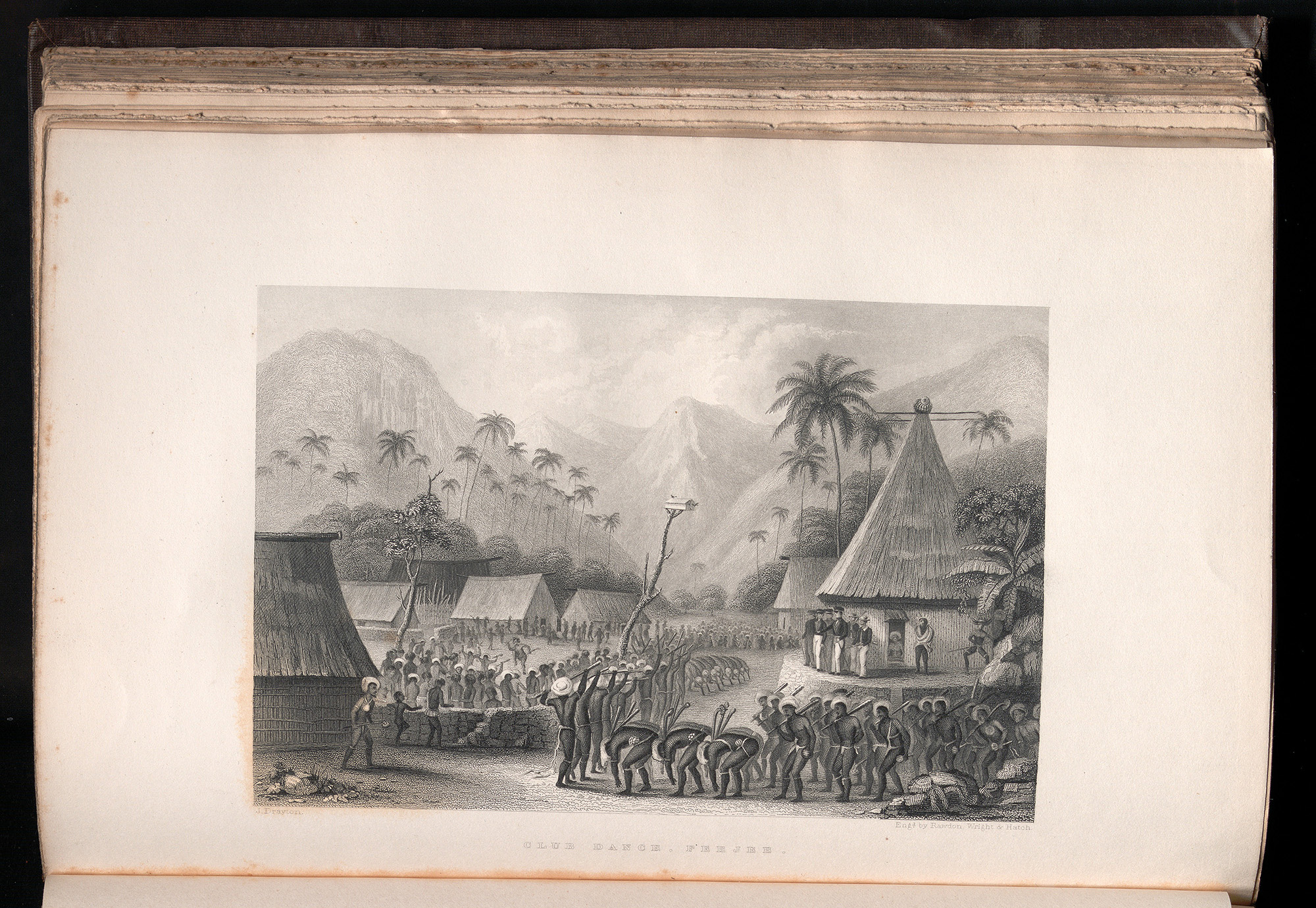
“Club Dance. Feejee.” in Charles Wilkes, Narrative of the United States Exploring Expedition during the Years 1838, 1839, 1840, 1841, 1842 (Philadelphia, 1845). Engraving.

Although the Exploring Expedition came into conflict with some indigenous communities during its travels, it also experienced positive interactions that helped foster relationships. One of these is shown here, as Navy officers are entertained by the elaborate production of a “Club Dance” in Fiji. According to Charles Wilkes, it took several days to prepare this entertainment for the men.

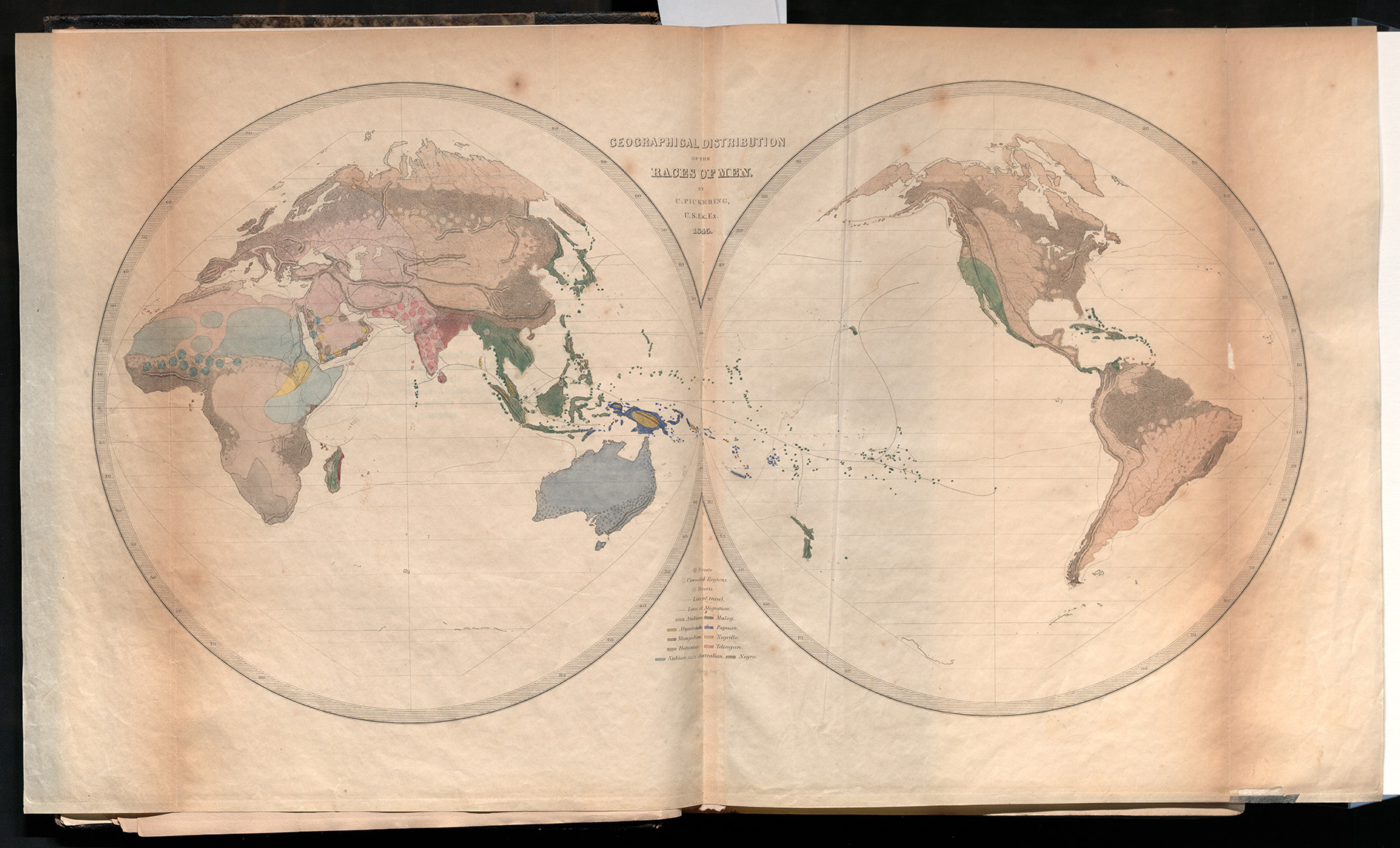
“Geographical Distribution of the Races of Man” in Charles Pickering, United States Exploring Expedition. The Races of Man and Their Geographical Distribution (Philadelphia, 1848).

Charles Pickering (1805-1878) served as a naturalist in the U.S. Exploring Expedition. In 1848, he published his findings, including this map tracing the migration routes of the eleven races that he identified.

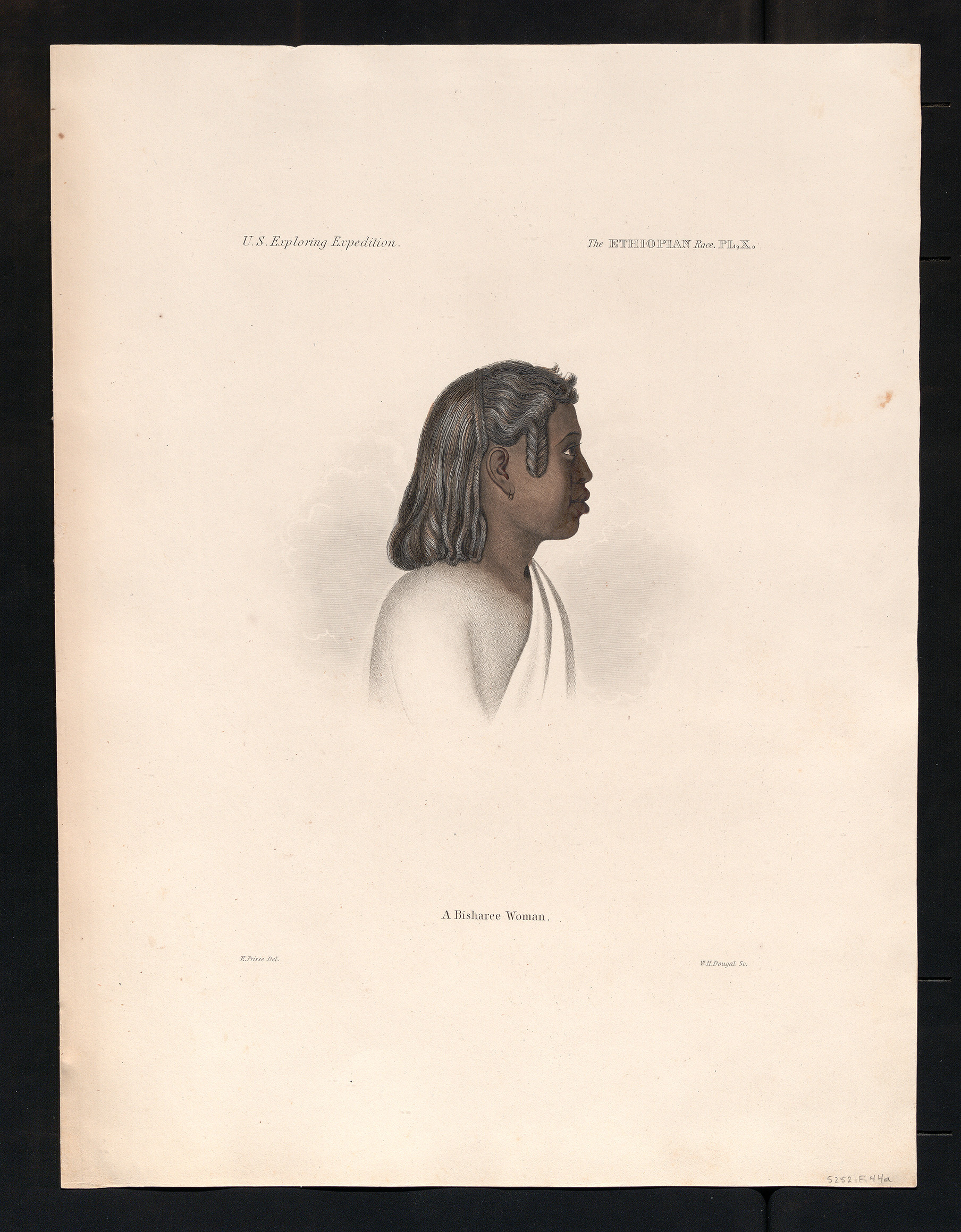
“A Bisharee Woman” from Charles Pickering, United States Exploring Expedition. The Races of Man and Their Geographical Distribution (Philadelphia, 1848).

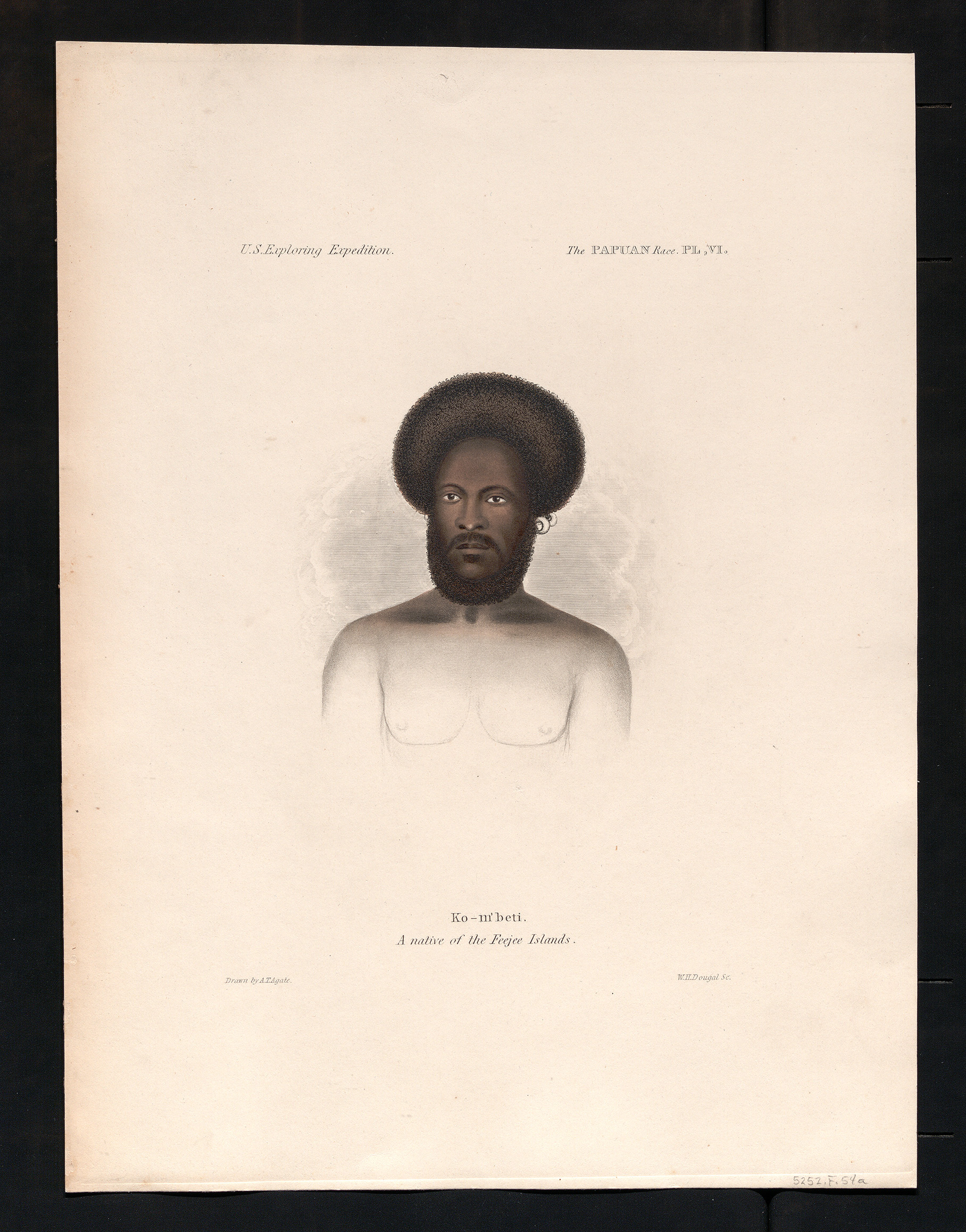
“Ko-m’beti, a Native of the Feejee Islands” from Charles Pickering, United States Exploring Expedition. The Races of Man and Their Geographical Distribution (Philadelphia, 1848).

These two illustrations from the work of Charles Pickering (1805-1878) were preserved in a scrapbook belonging to Samuel George Morton (1799-1851). Like Morton, Pickering was a proponent of polygenism, a tenant of scientific racism. His work has been criticized by modern scholars for flaws, biases, and general incoherence. Contemporaries, too, took issue with it. Boston physician and poet Oliver Wendell Holmes, Sr. (1809-1894) described Pickering’s 1848 volume as “amorphous as a fog, unstratified as a dumpling and heterogeneous as a low-priced sausage.”

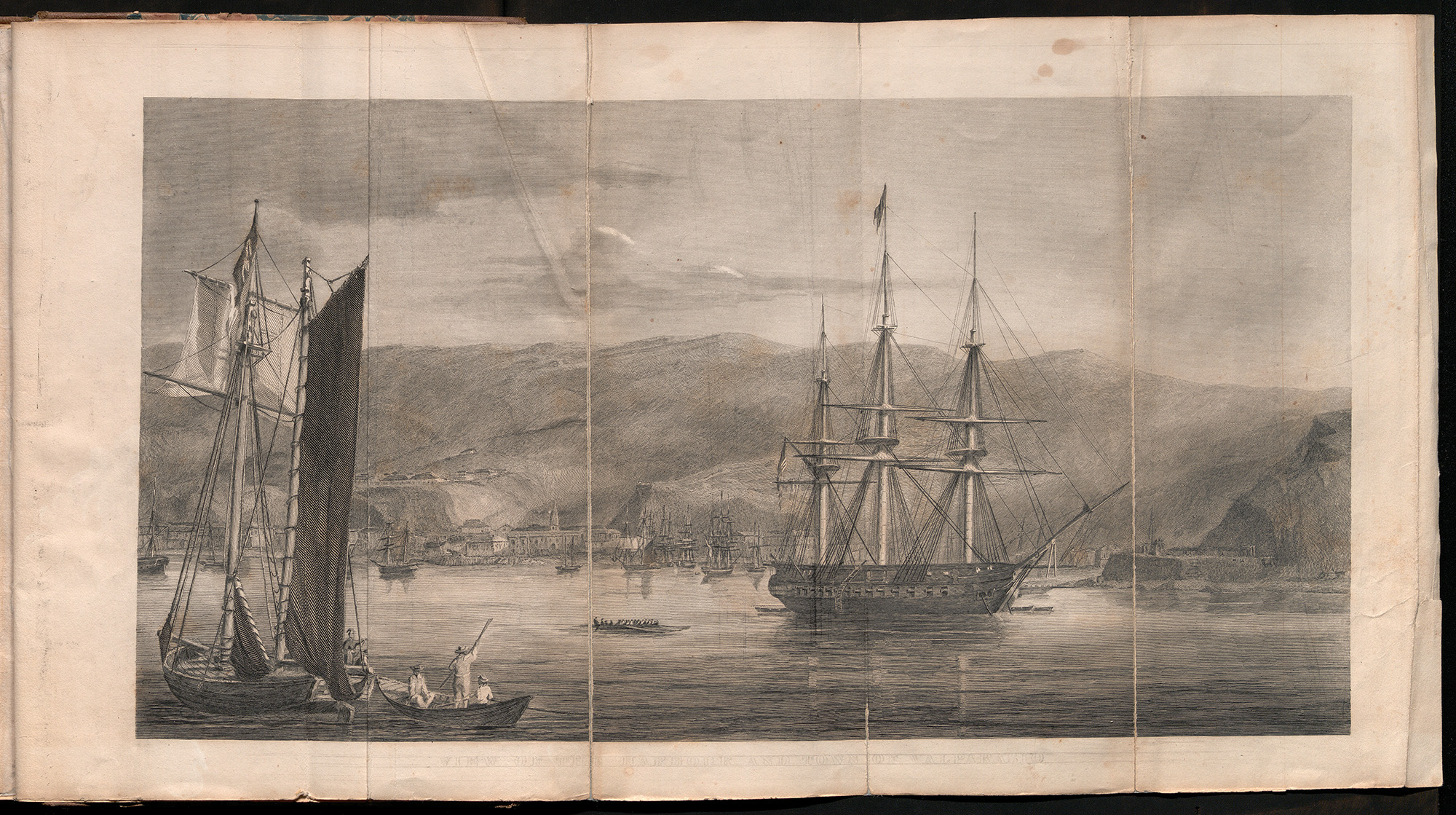
“View of the Harbor and Town of Valparaiso” in specimen of J. N. Reynolds, Voyage of the United States Frigate, Potomac ... During the Circumnavigation of the Globe, in the Years 1831, 1832, 1833, and 1834 (New York, 1834). Engraving.

This item is a specimen, or salesman’s sample, of Reynold’s book detailing a punitive expedition to Indonesia, in which the U.S. Navy took retribution on the inhabitants of Kuala Batee for an earlier attack on an American merchant ship. The massacre of hundreds of villagers at Kuala Batee demonstrated America’s intention to protect its interests at all costs, even far from home.

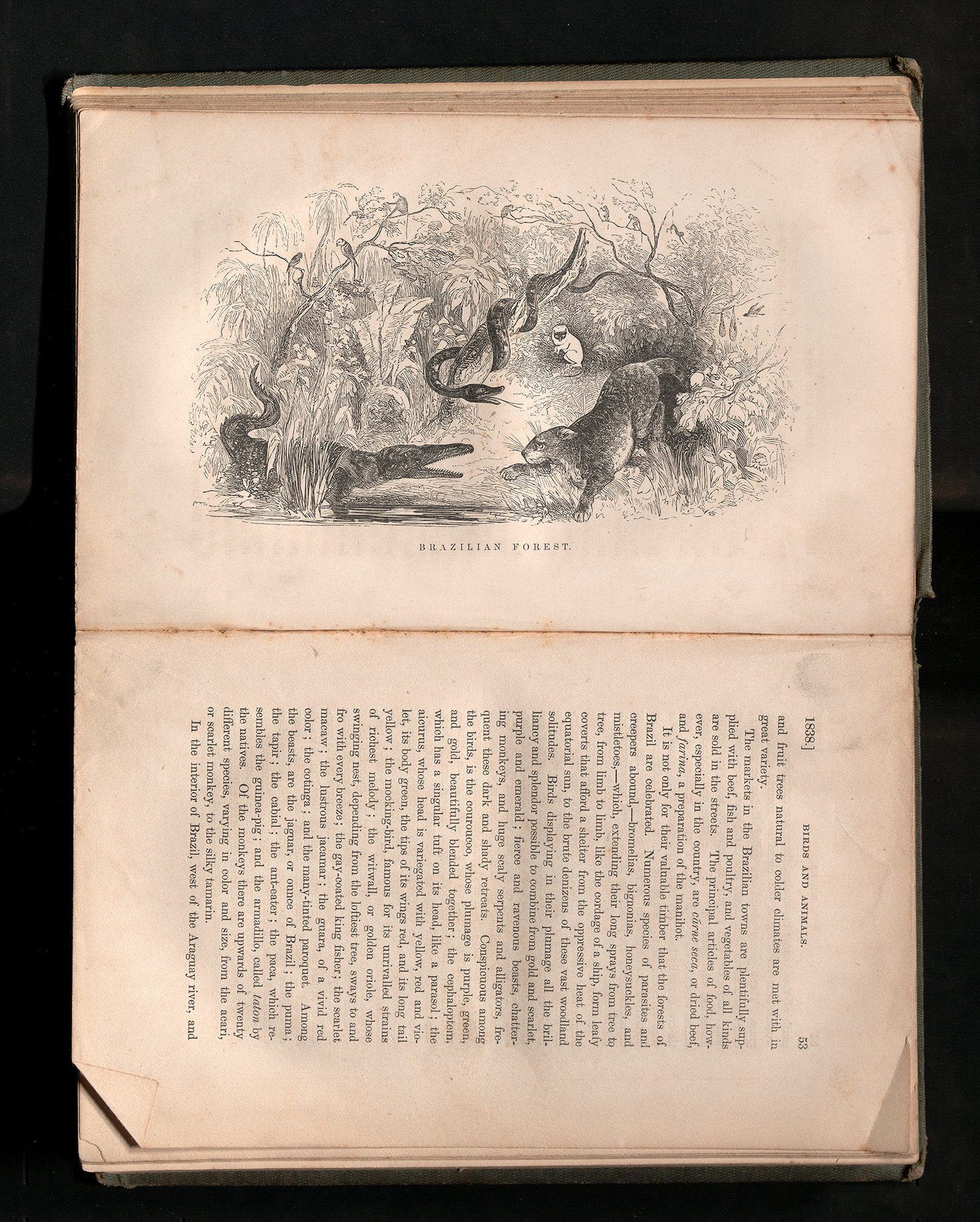
John S. Jenkins, Voyage of the U.S. Exploring Squadron, Commanded by Captain Charles Wilkes, of the United States Navy, in 1838, 1839, 1840, 1841, and 1842 (Auburn, N.Y., 1850).

Naval exploration did not end at the coast. Accounts from the Exploring Expedition and other expeditions described journeys into the interior regions of lands that were largely unfamiliar to Americans. In this abridgement of Charles Wilkes’ Narrative, the author describes the variety of wild beasts one might encounter in the forests of Brazil.

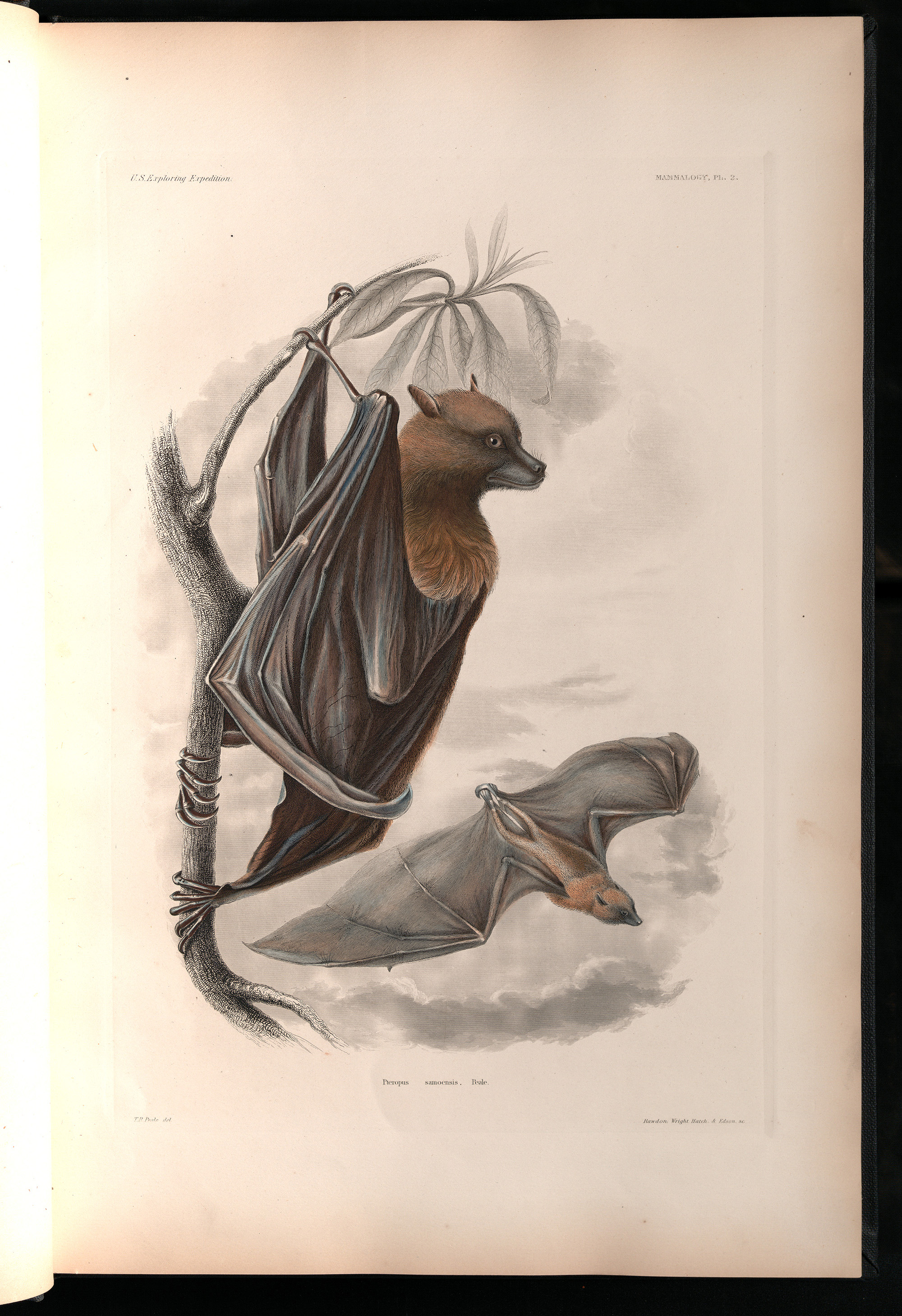
Titian R. Peale, “Pteropus Samoensis” in John Cassin, United States Exploring Expedition. Atlas. Mammalogy and Ornithology (Philadelphia, 1858).

Naturalist and artist (and Library Company shareholder) Titian R. Peale (1799-1885) served on the U.S. Exploring Expedition and shared his observations in a beautifully illustrated volume in 1848. Expedition leader Charles Wilkes, reportedly dissatisfied with Peale’s work, suppressed the book and reassigned the task to ornithologist John Cassin (1813-1869), who had not participated in the expedition. Cassin reused Peale’s illustrations and revised his classifications—some of which were later disproven, lending credibility to Peale’s original work.