In the Popular Imagination

Expeditions, whether for exploration or expansion, were a topic of great interest to the public. Manifest Destiny–the driving principle behind many expeditions–particularly appealed to white Americans at the turn of the twentieth century. The U.S. Navy and its history became a significant part of the narrative justifying the United States as a major global power. Merchants would use naval imagery and make dubious claims of naval affiliations to sell their wares. Little children would play with toy sailors, marines, and ships; sailor suits were popular children’s apparel. At the Library Company, new books on the USN and USMC were purchased routinely and proved very popular among our members.
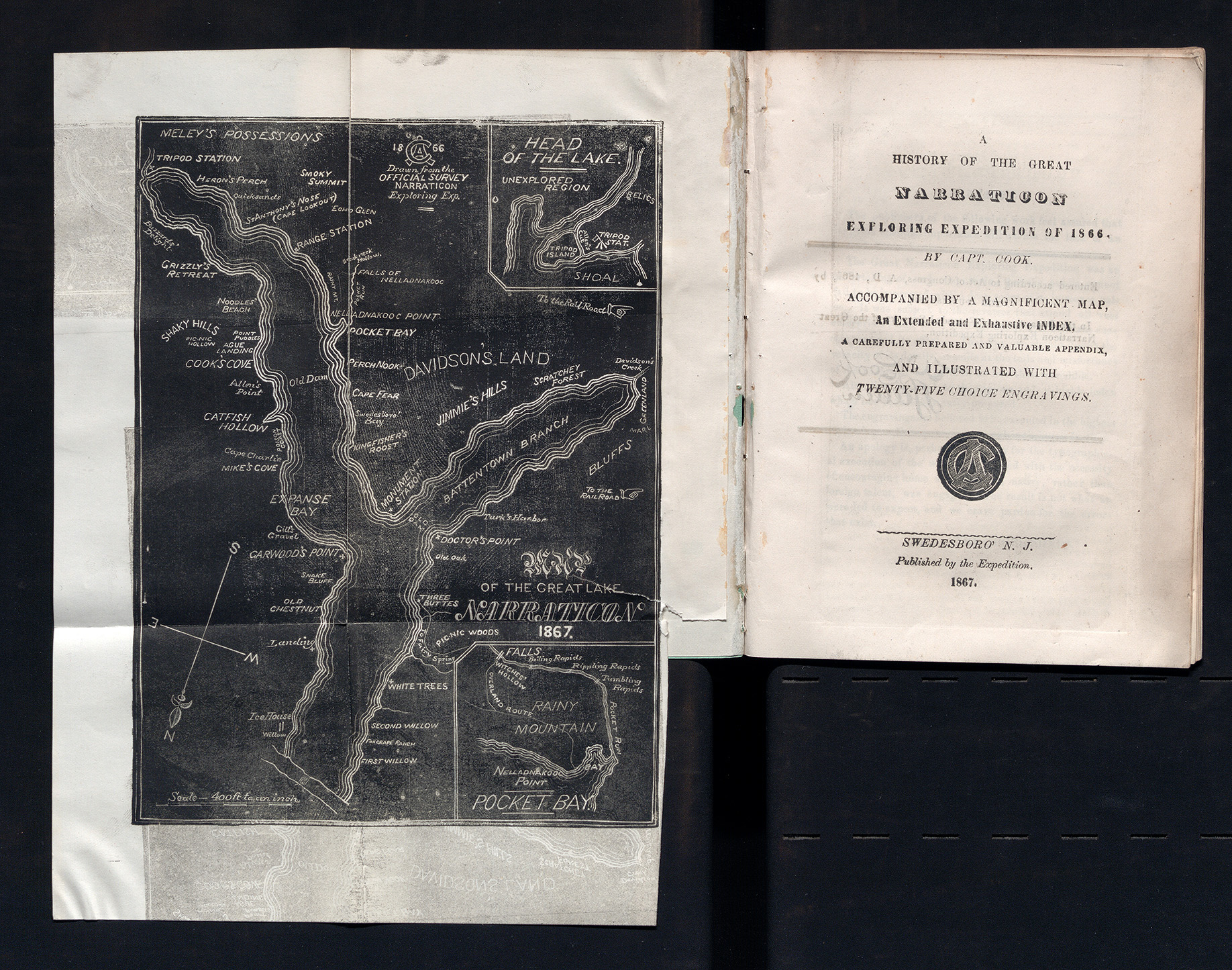
Capt. Cook (pseud.), A History of the Great Narraticon Exploring Expedition of 1866 (Swedesboro, N.J, 1867).

As demonstrated throughout this exhibition, exploration was followed by publication. So ingrained in our culture did these narratives become that a parody narrative appeared in 1867. This pamphlet told the story of a survey conducted on a lake in Swedesboro, New Jersey, not far from Philadelphia. Chronicling the “most important achievement of our age,” it included all the common conventions of expedition narratives: illustrations of flora and fauna, descriptions of local foods and crafts, and, of course, criticism of “the natives.”

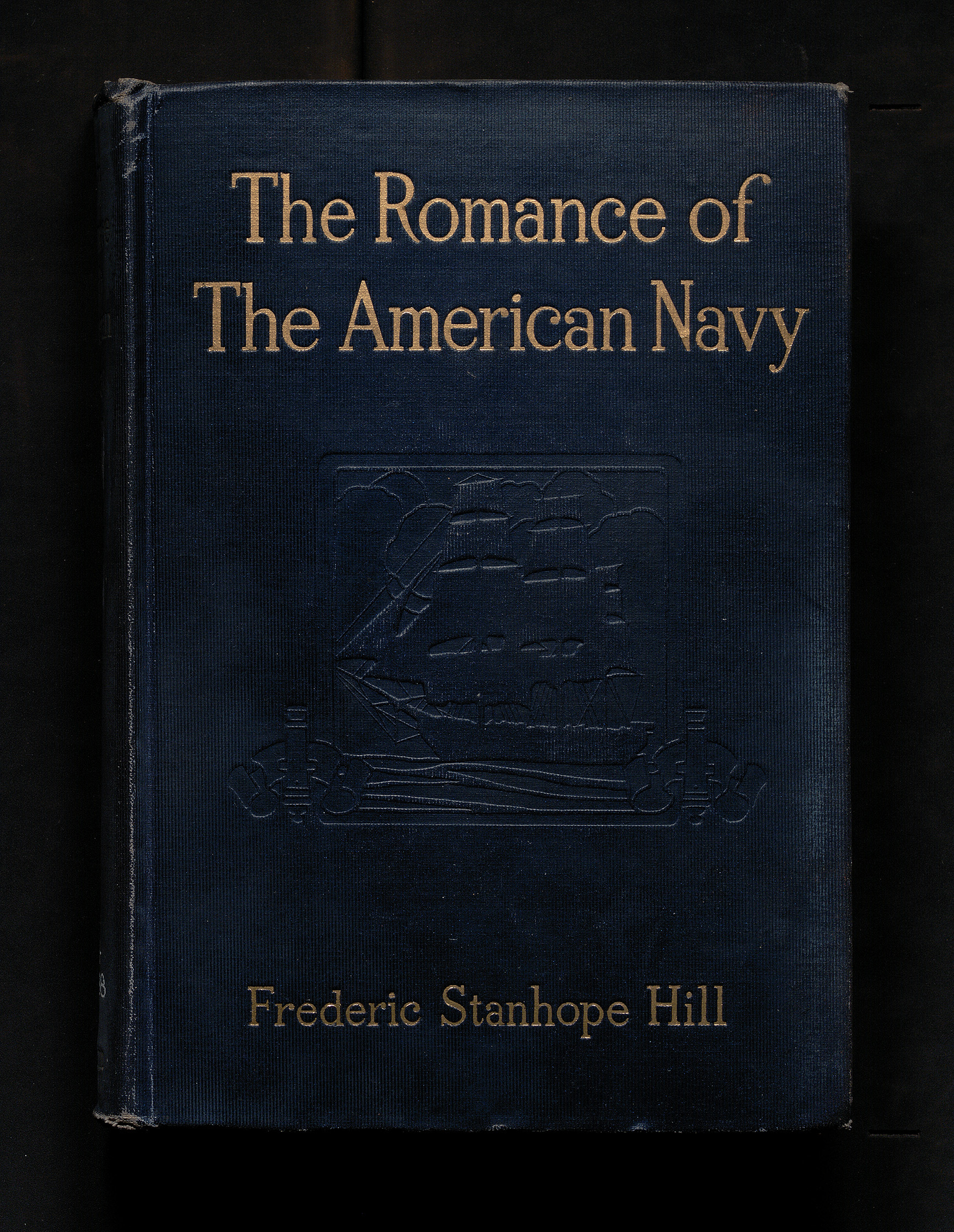
Frederic Stanhope Hill, The Romance of the American Navy (New York, 1910)

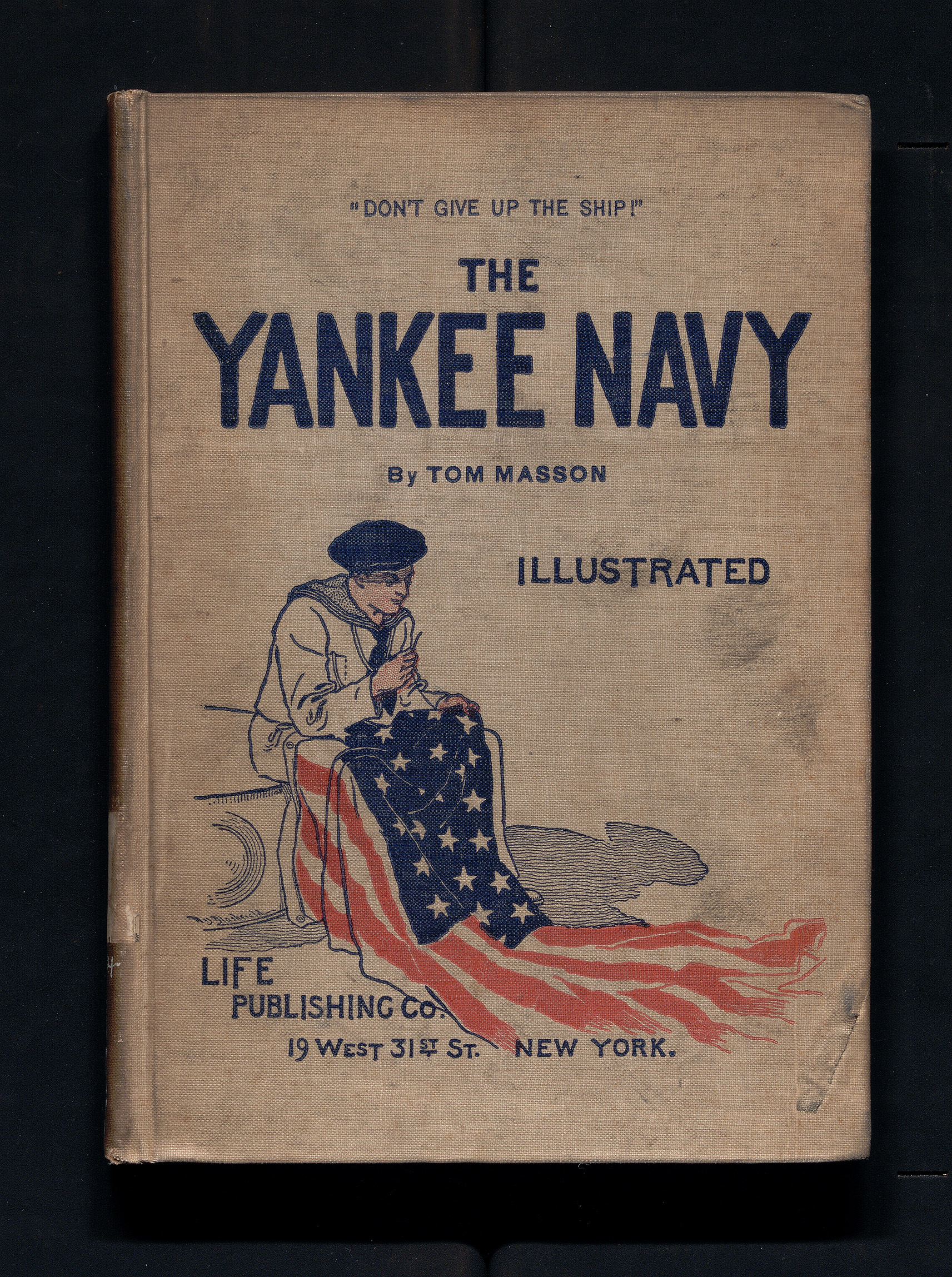
Tom Masson, The Yankee Navy (New York, 1898).

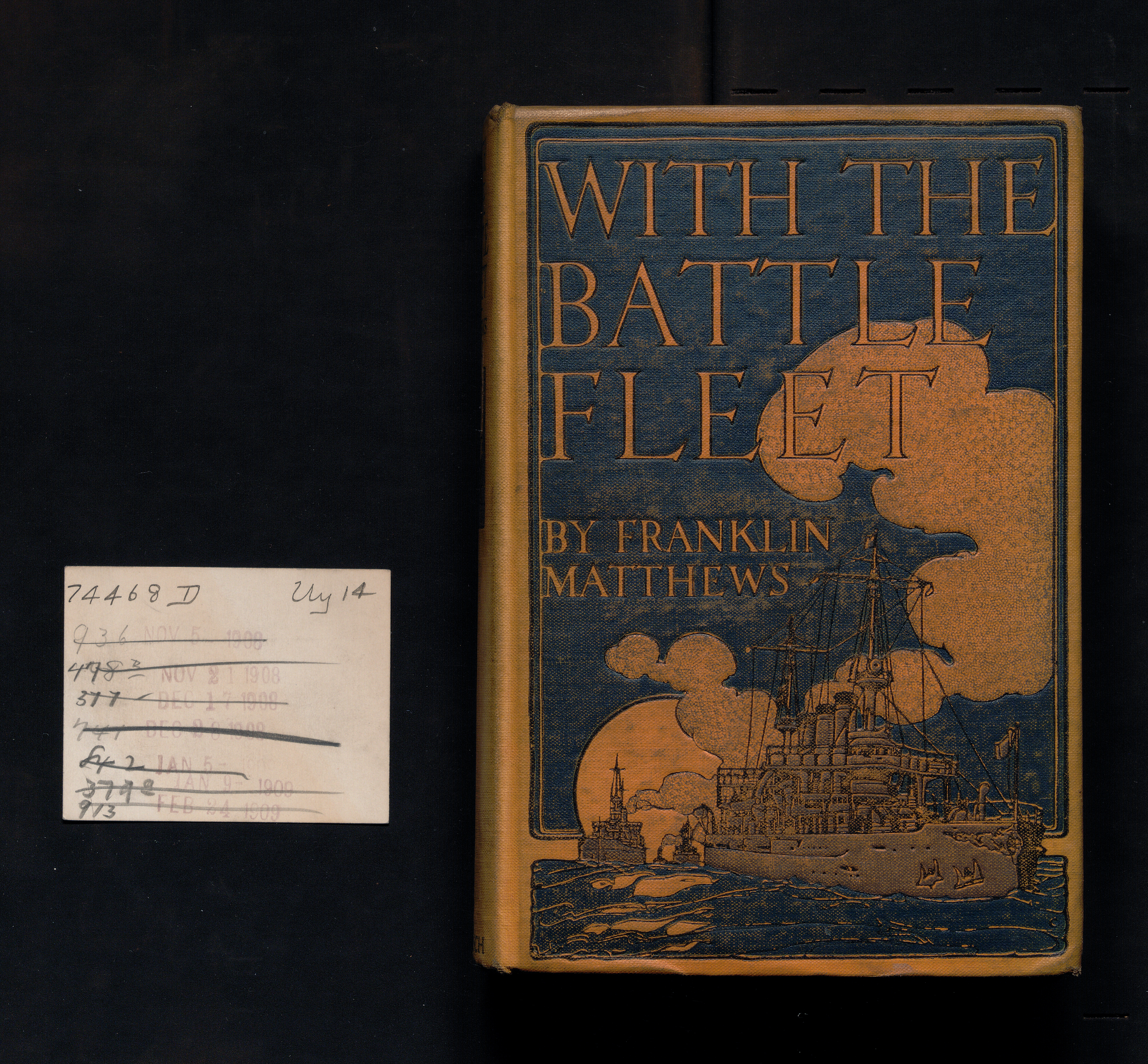
In the early 20th century, the Library Company was an active lending library with two branches. We regularly purchased popular works of both fiction and non-fiction. We bought these two books about the U.S. Navy the year they were published. Though geared toward different audiences, they both found their reader at the Library Company.
Franklin Matthews, With the Battle Fleet: Cruise of the Sixteen Battleships of the United States Atlantic Fleet from Hampton Roads to the Golden Gate, December 1907–May 1908 (New York, 1908)

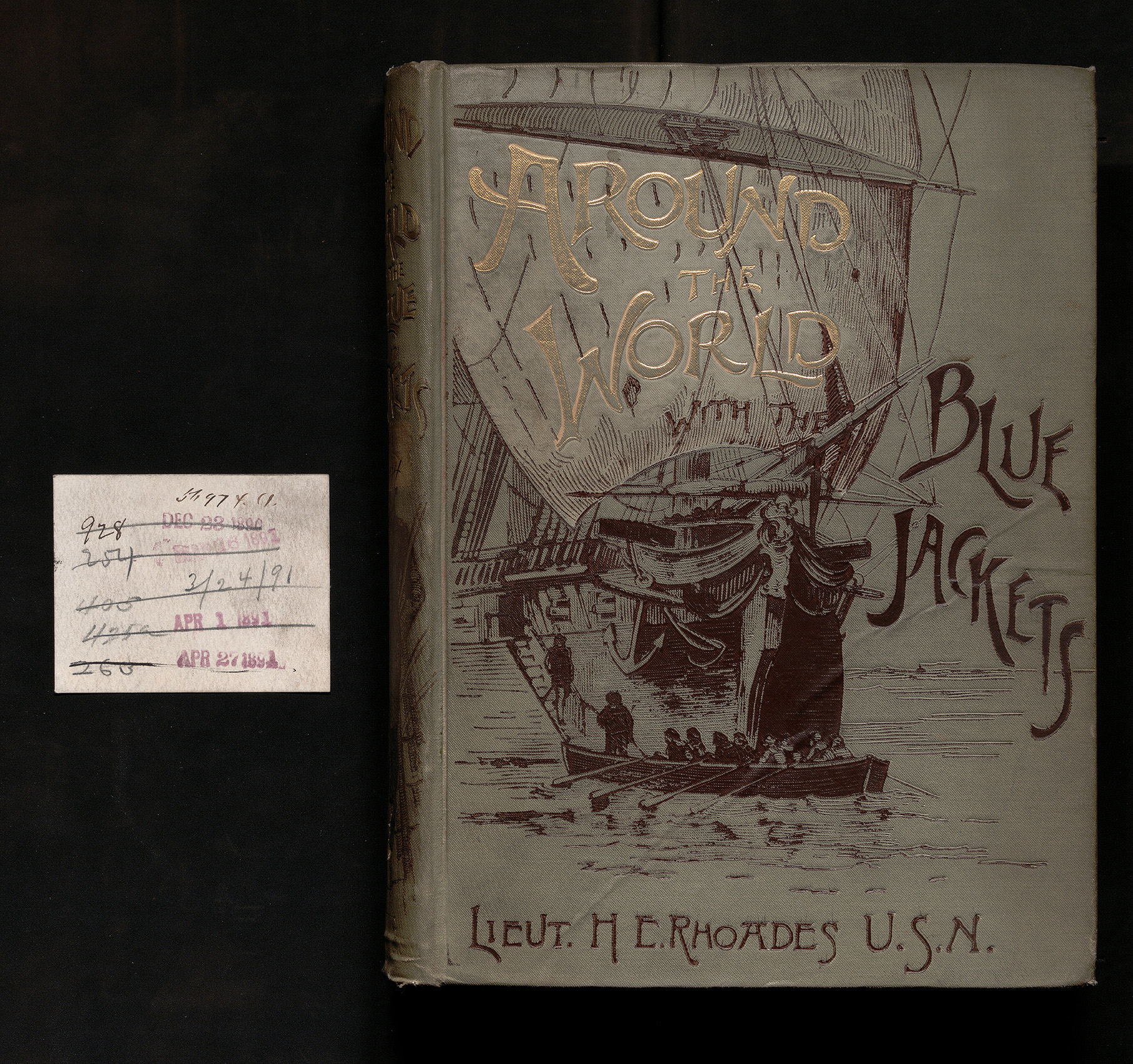
Henry E. Rhoades, Around the World with the Blue Jackets, or, How We Displayed the American Flag in Foreign Waters (Boston, 1890).

Like other books in this section, these two volumes were purchased by the Library Company the year they were published. Both were immediately popular with our readers, as evidenced by little squares of paper tucked into the back of each. These slips served as early checkout cards. Each slip recorded unique numbers that identified both the book and the borrower, and were stored inside each book’s cover. These slips can still be found in many of our books, though they fell out of active use near mid-century.

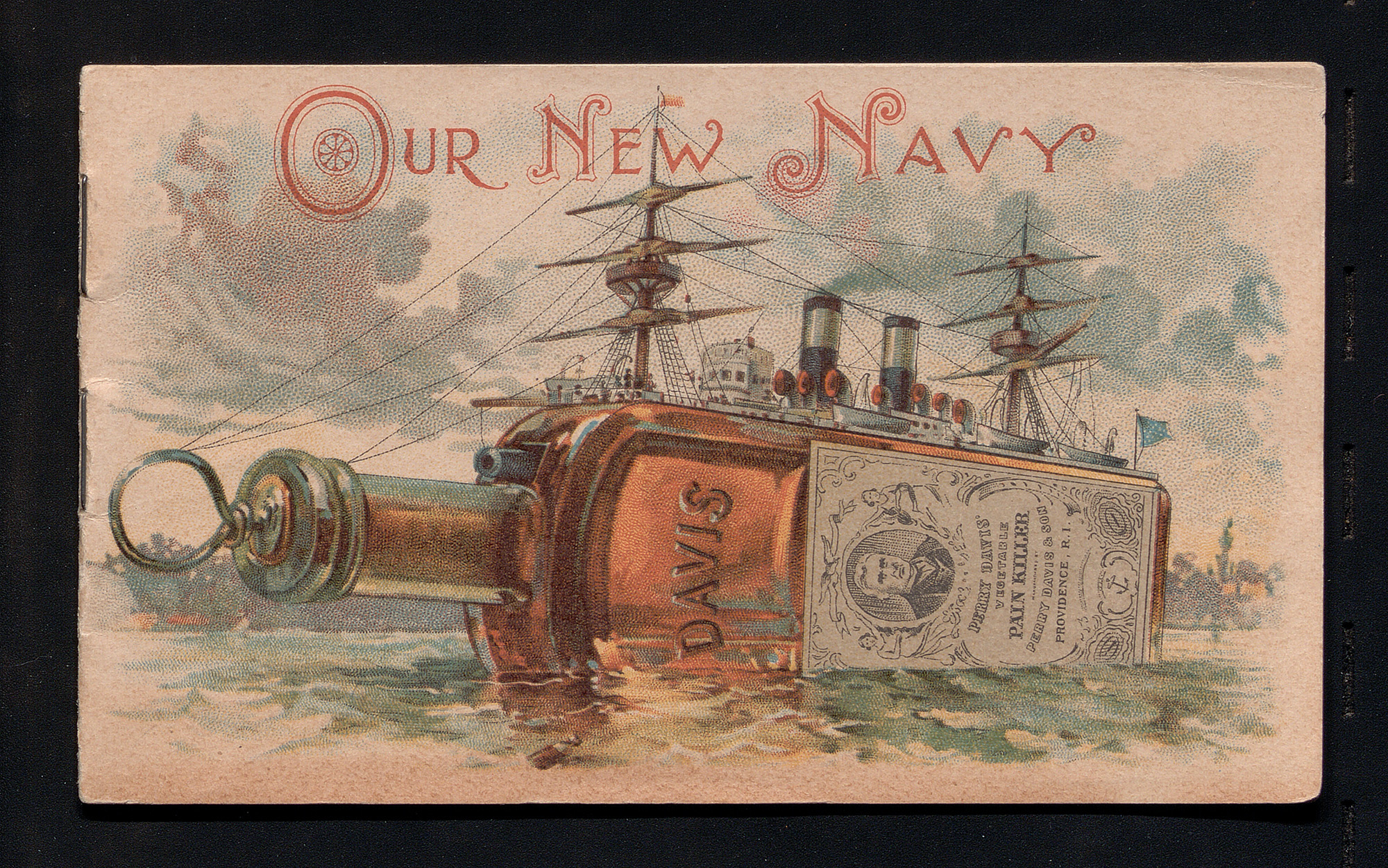
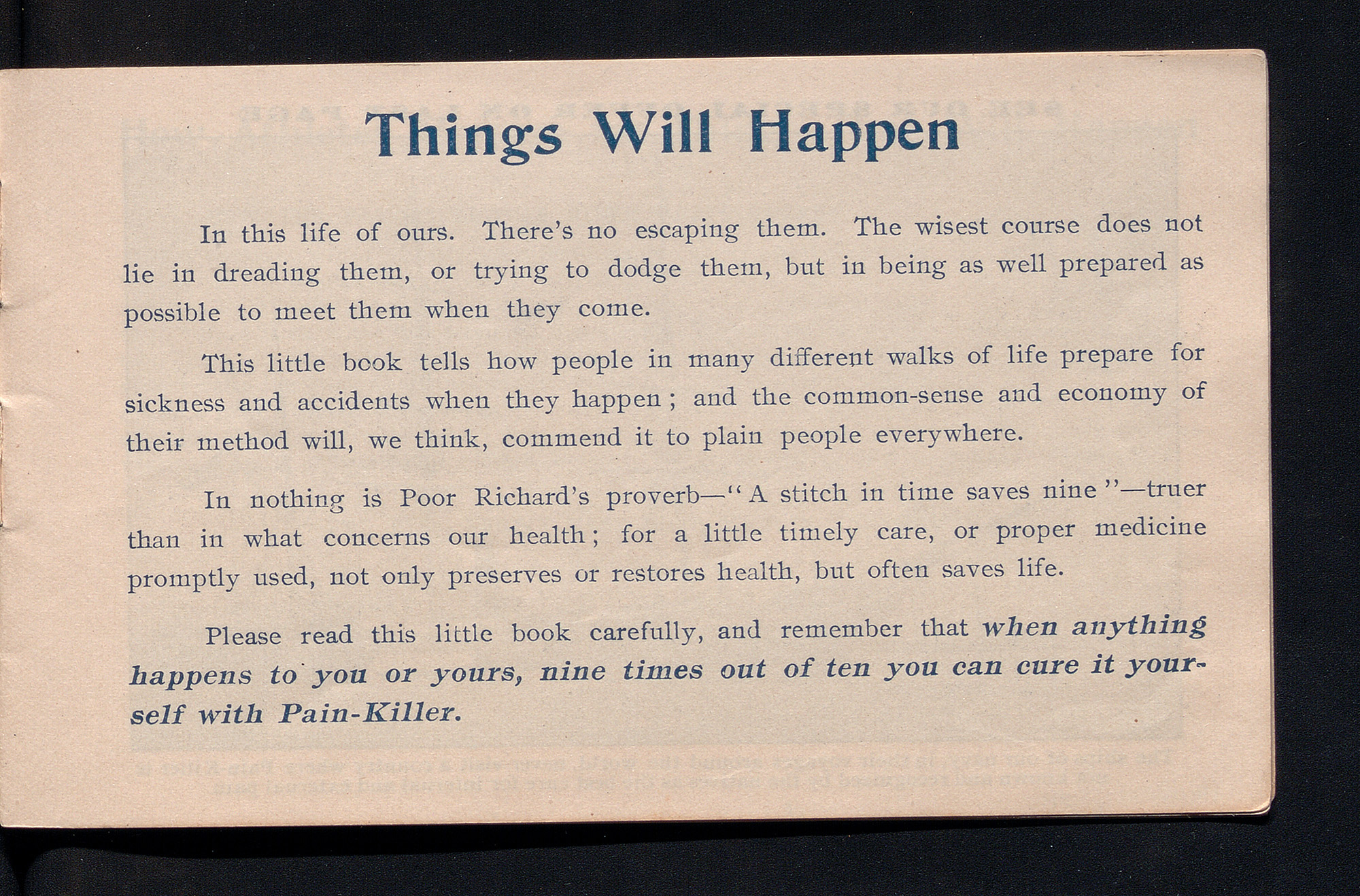
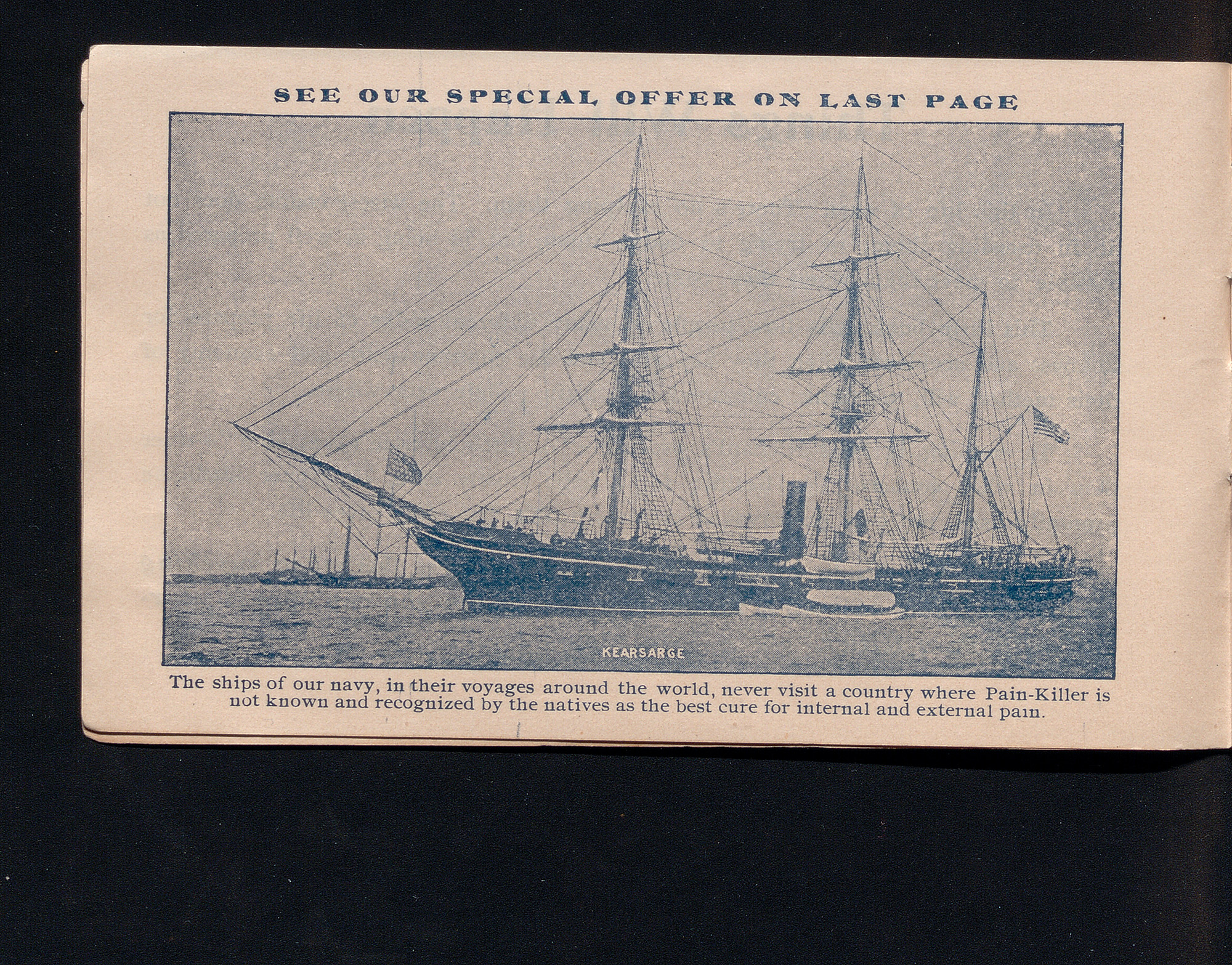
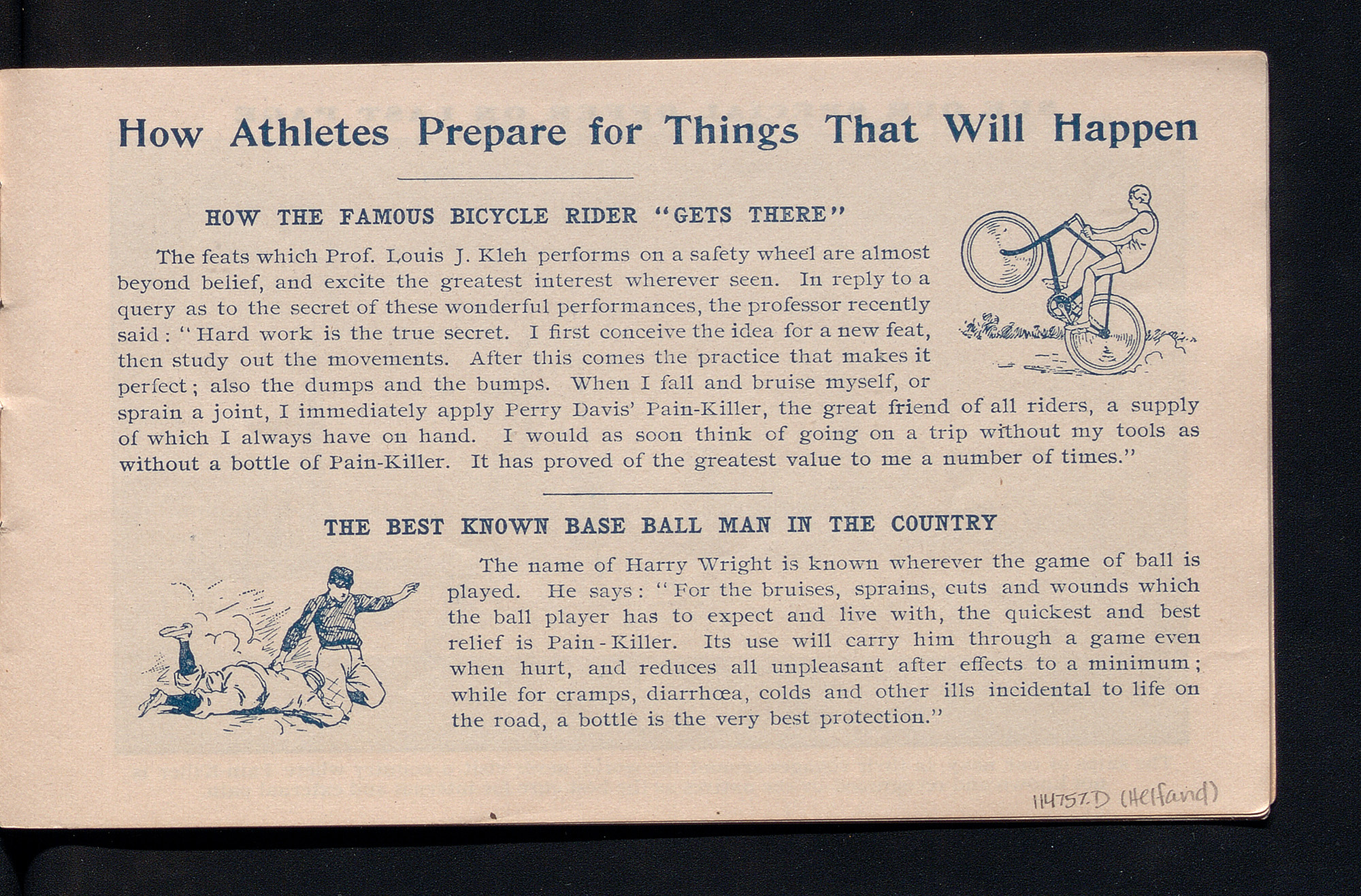
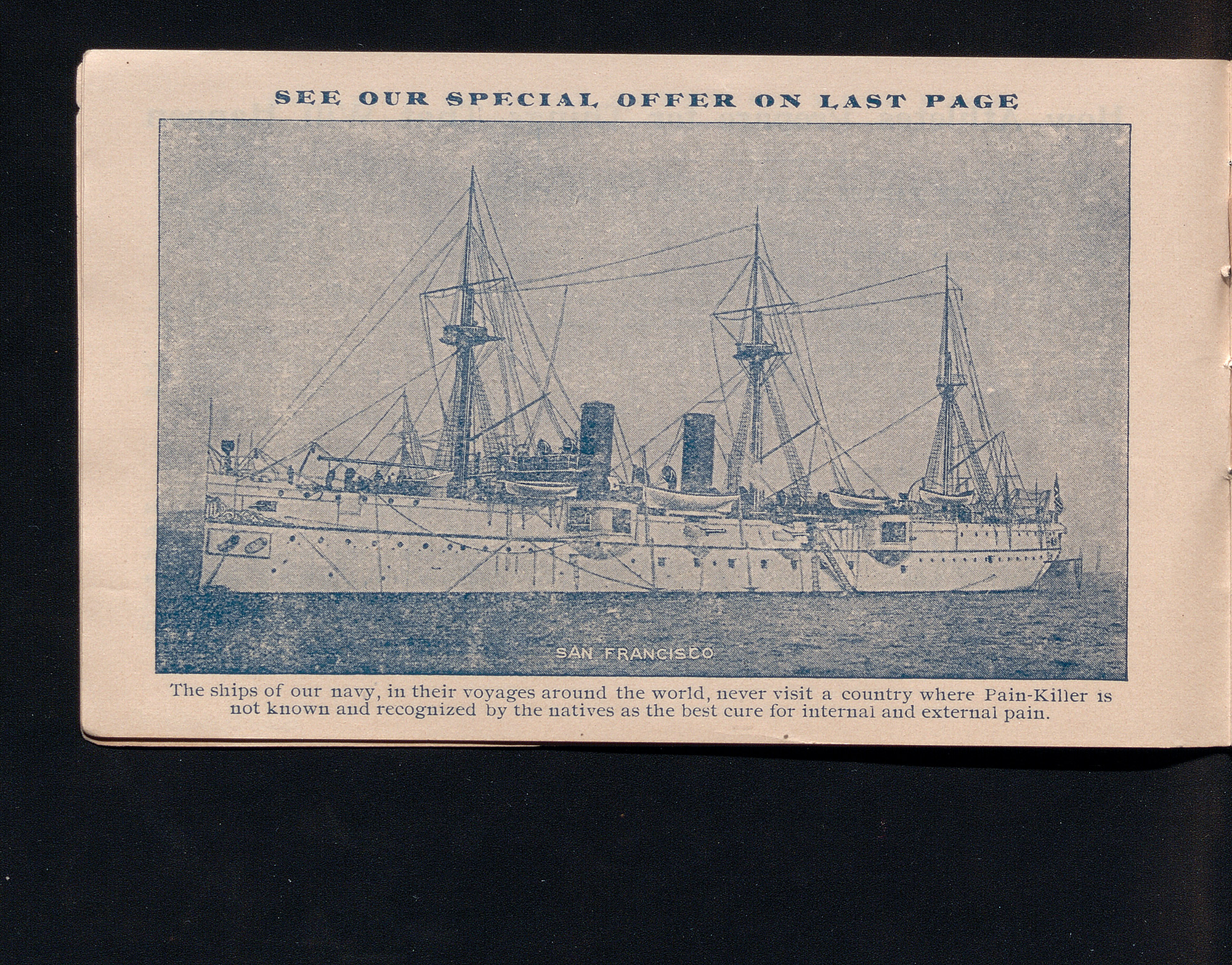
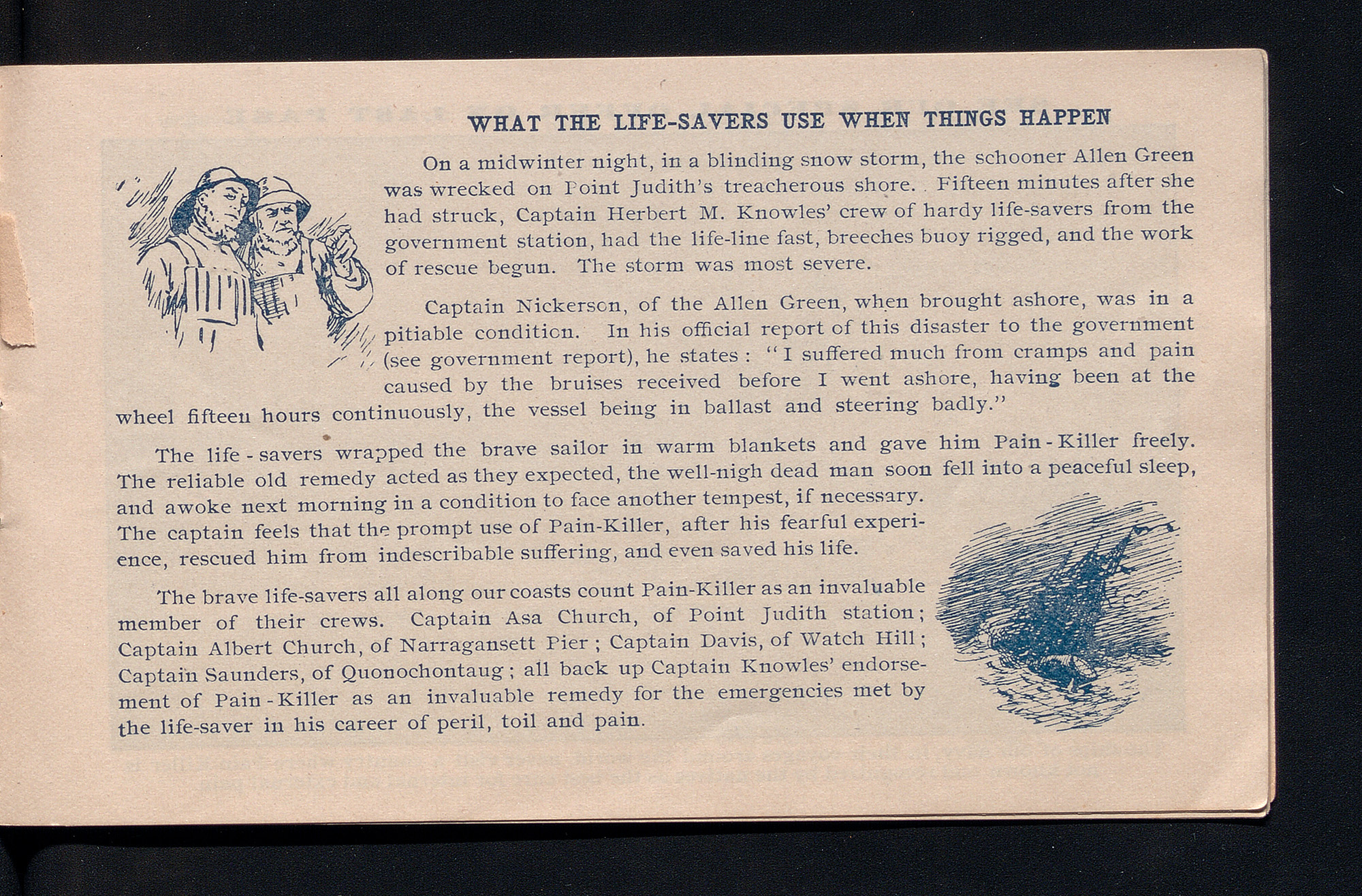
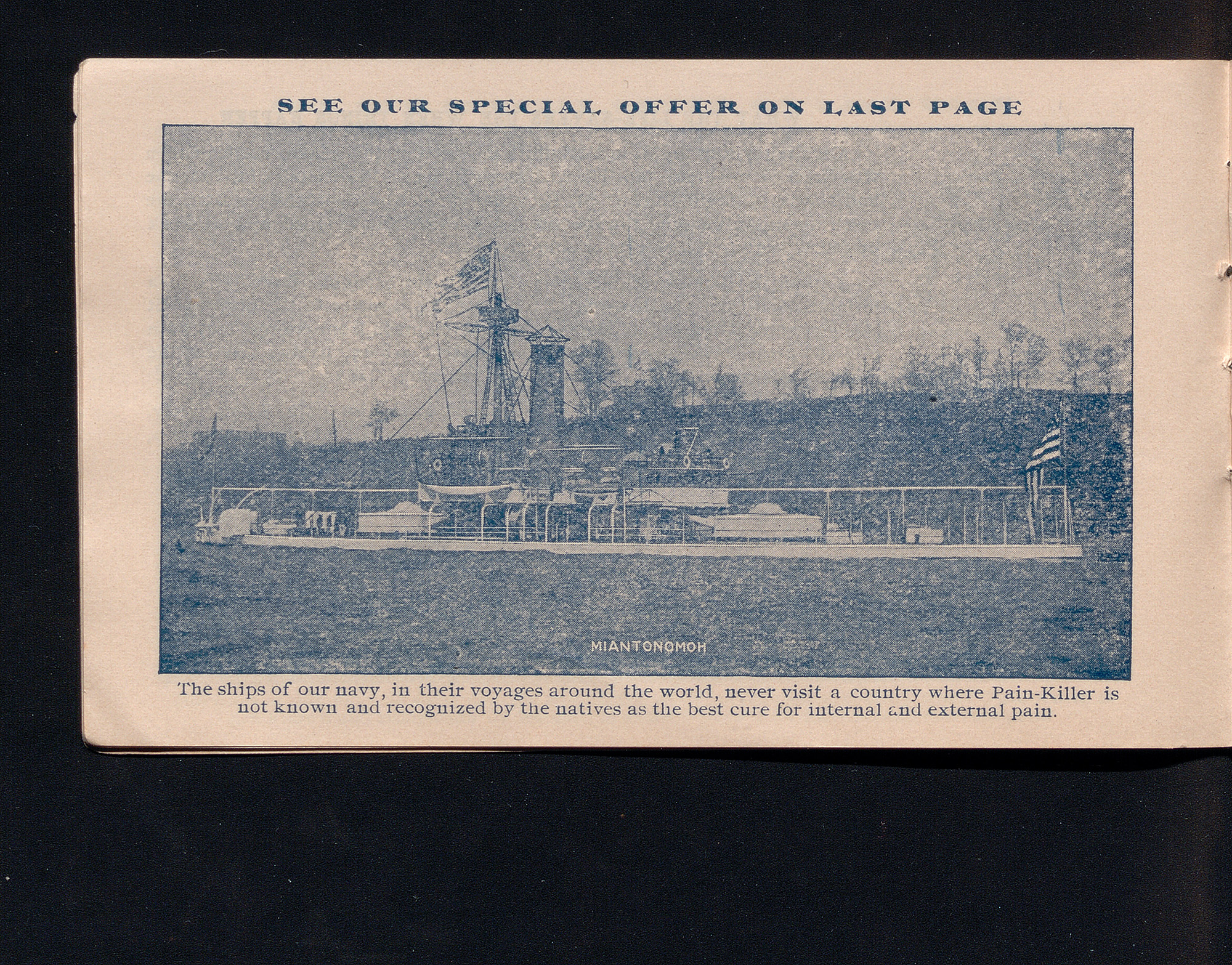
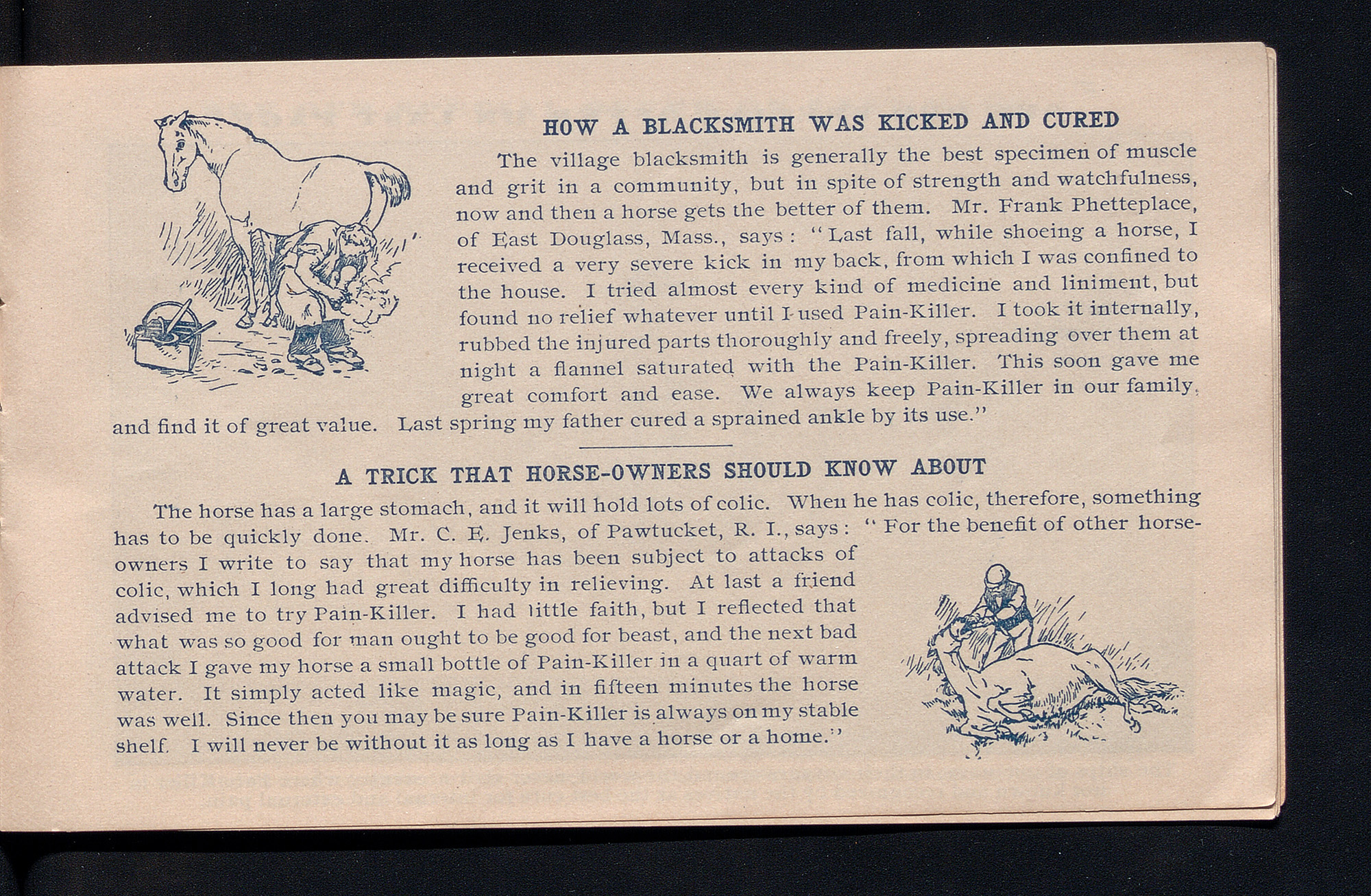
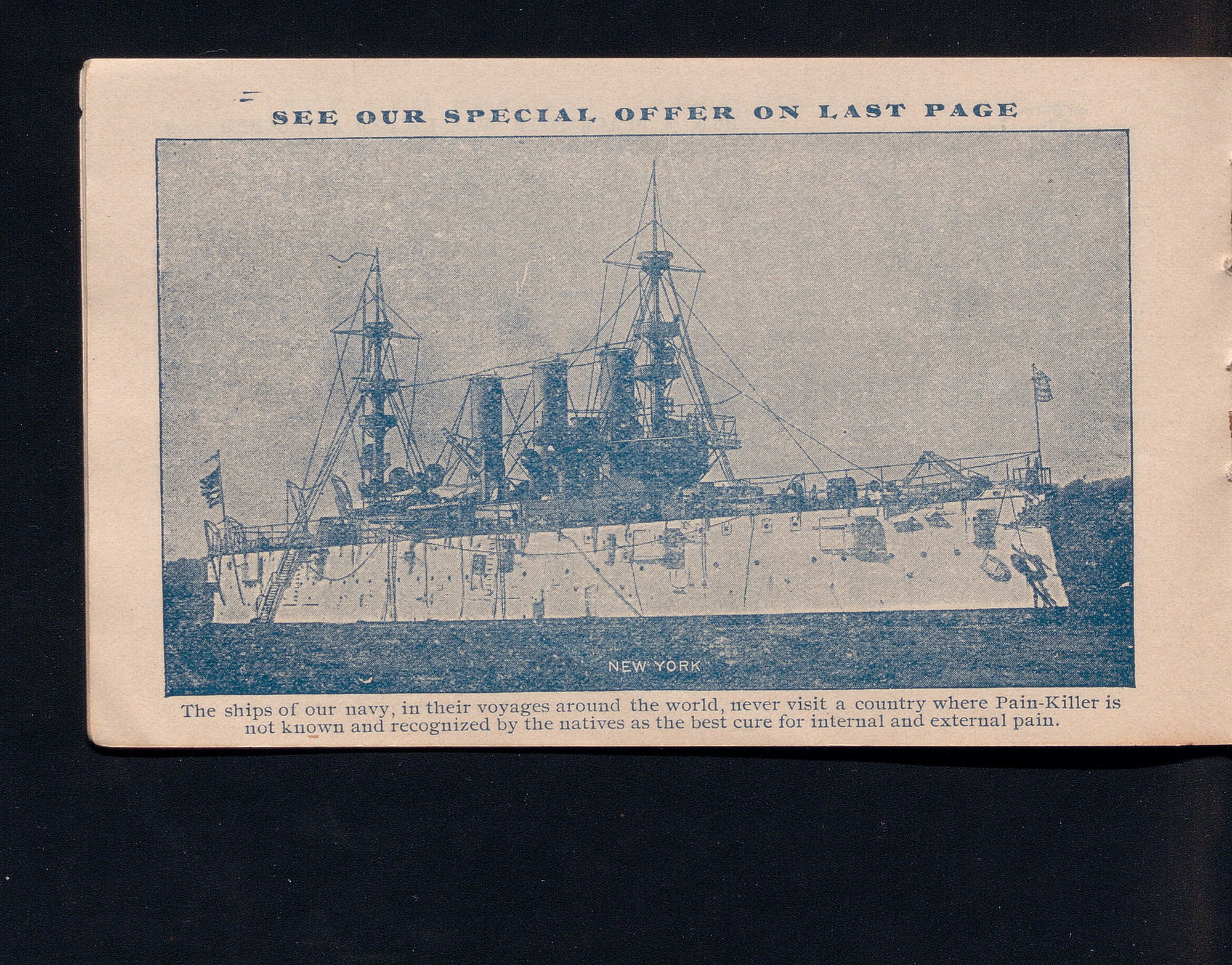
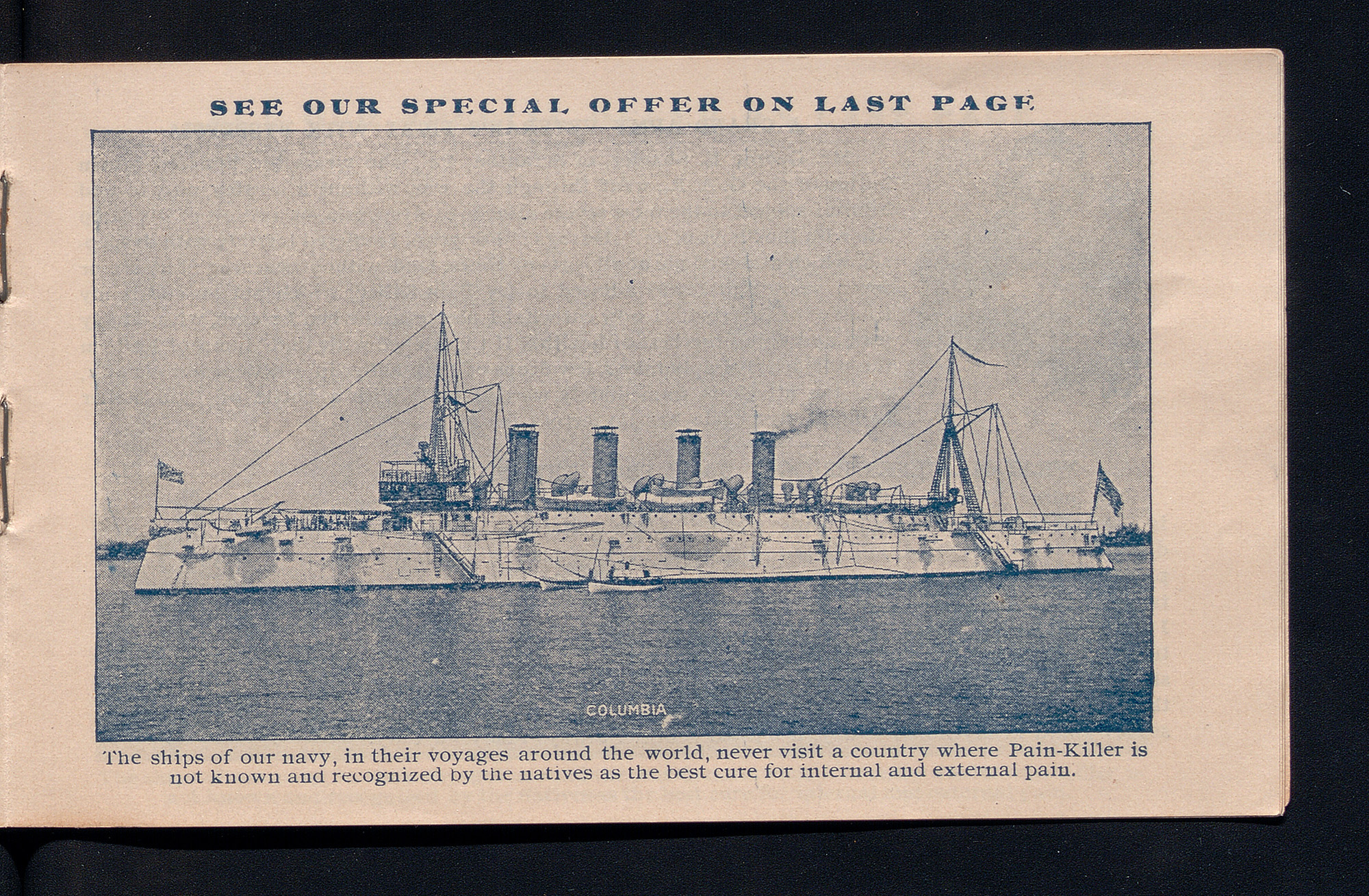
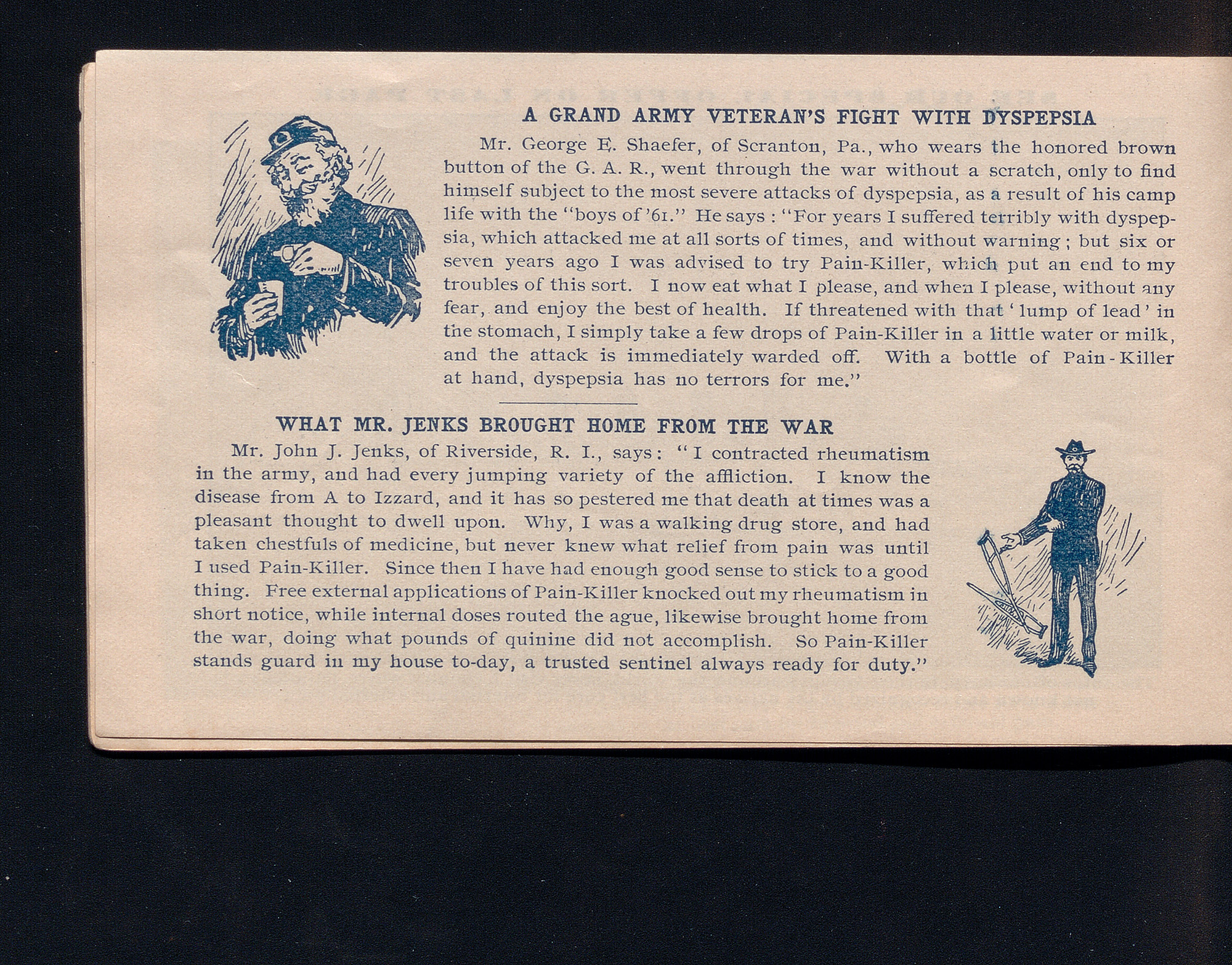
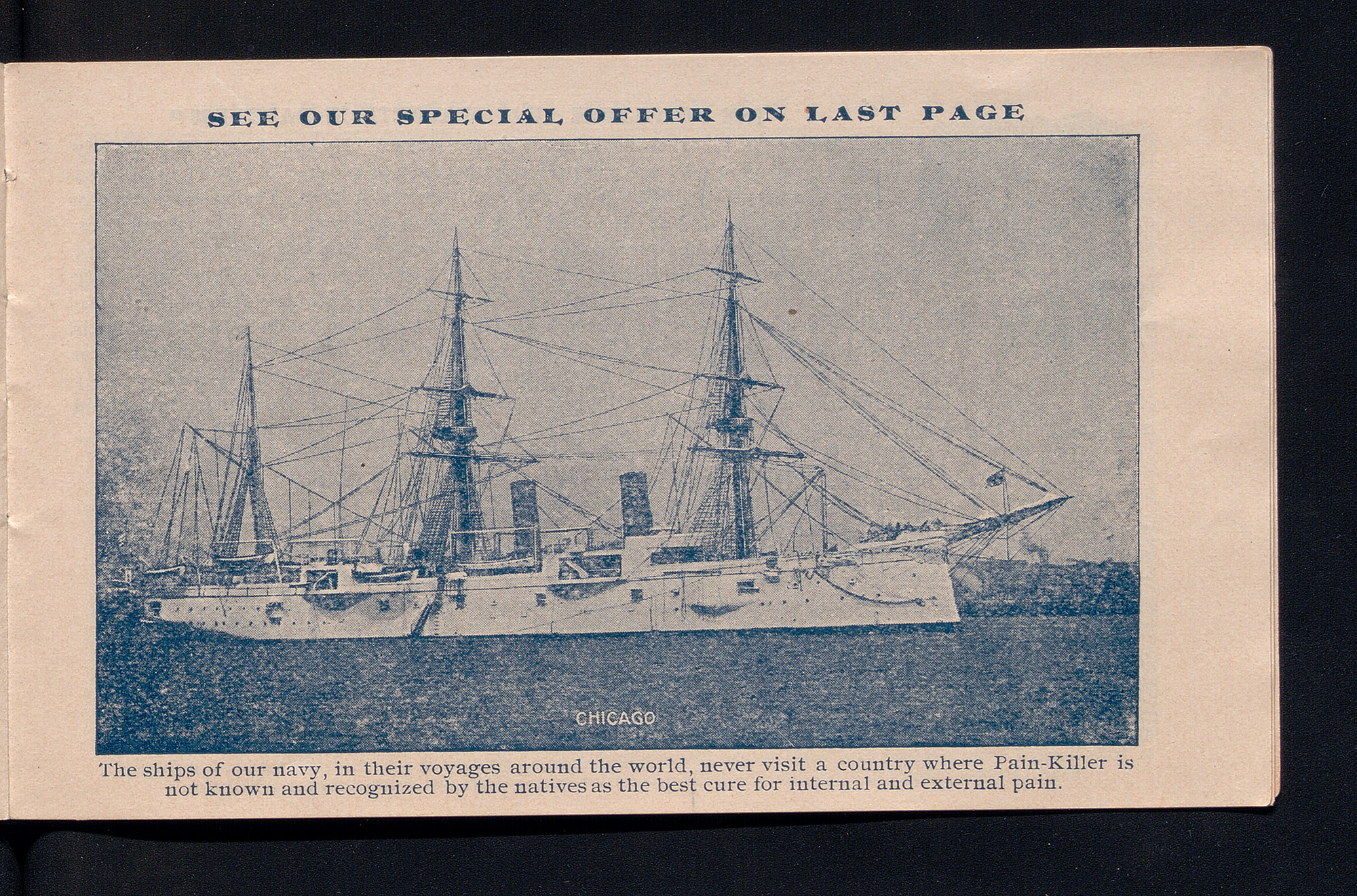
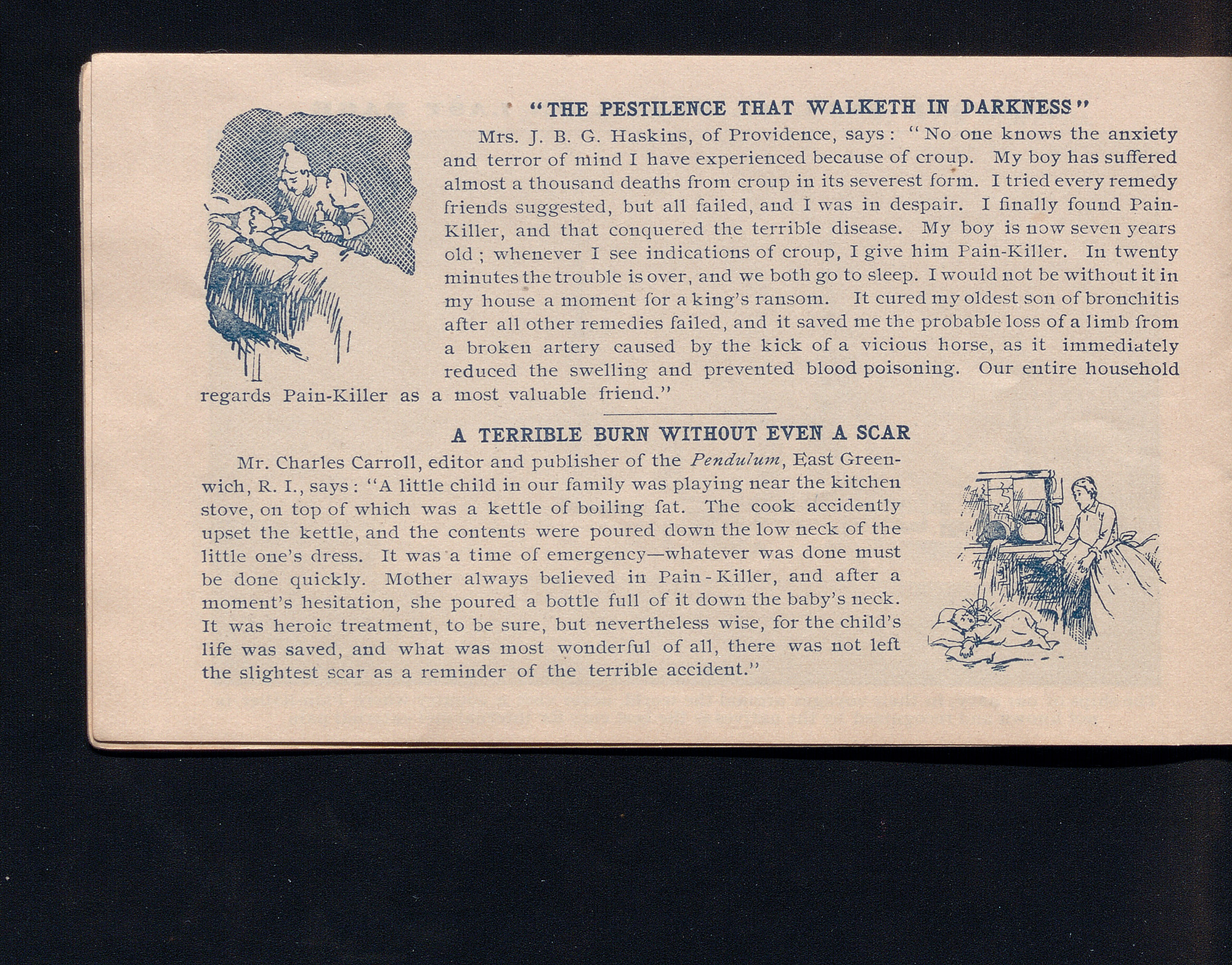
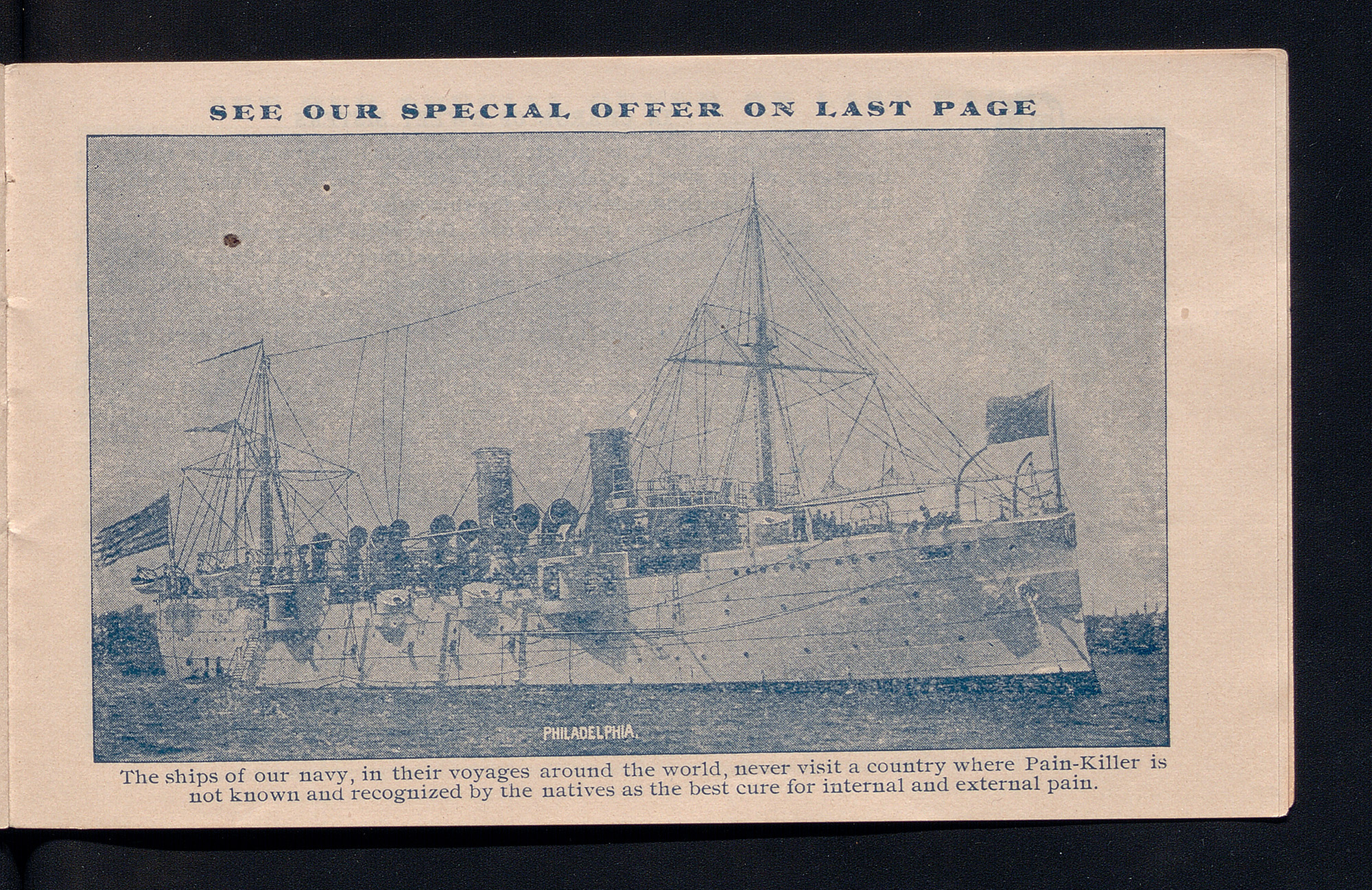
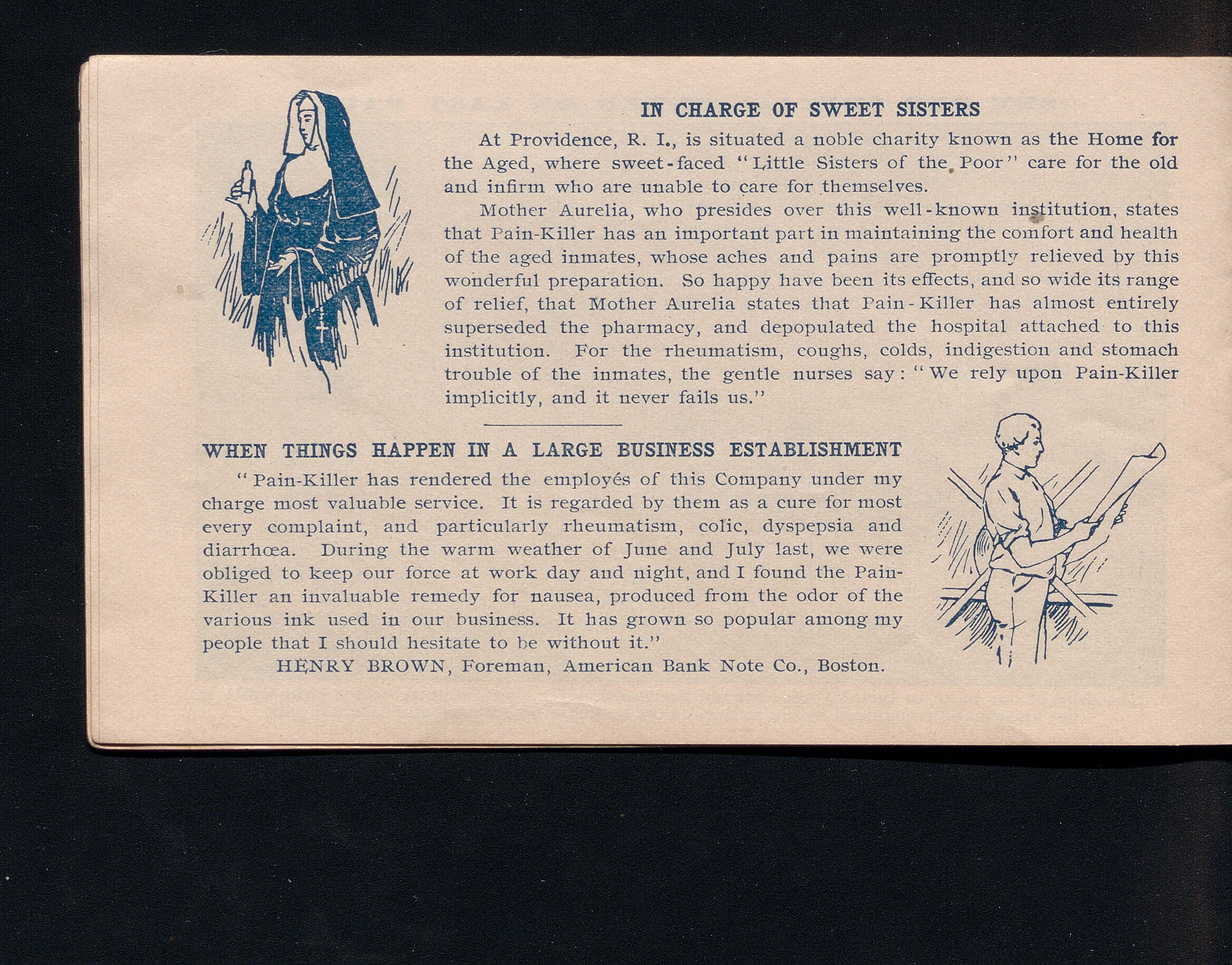
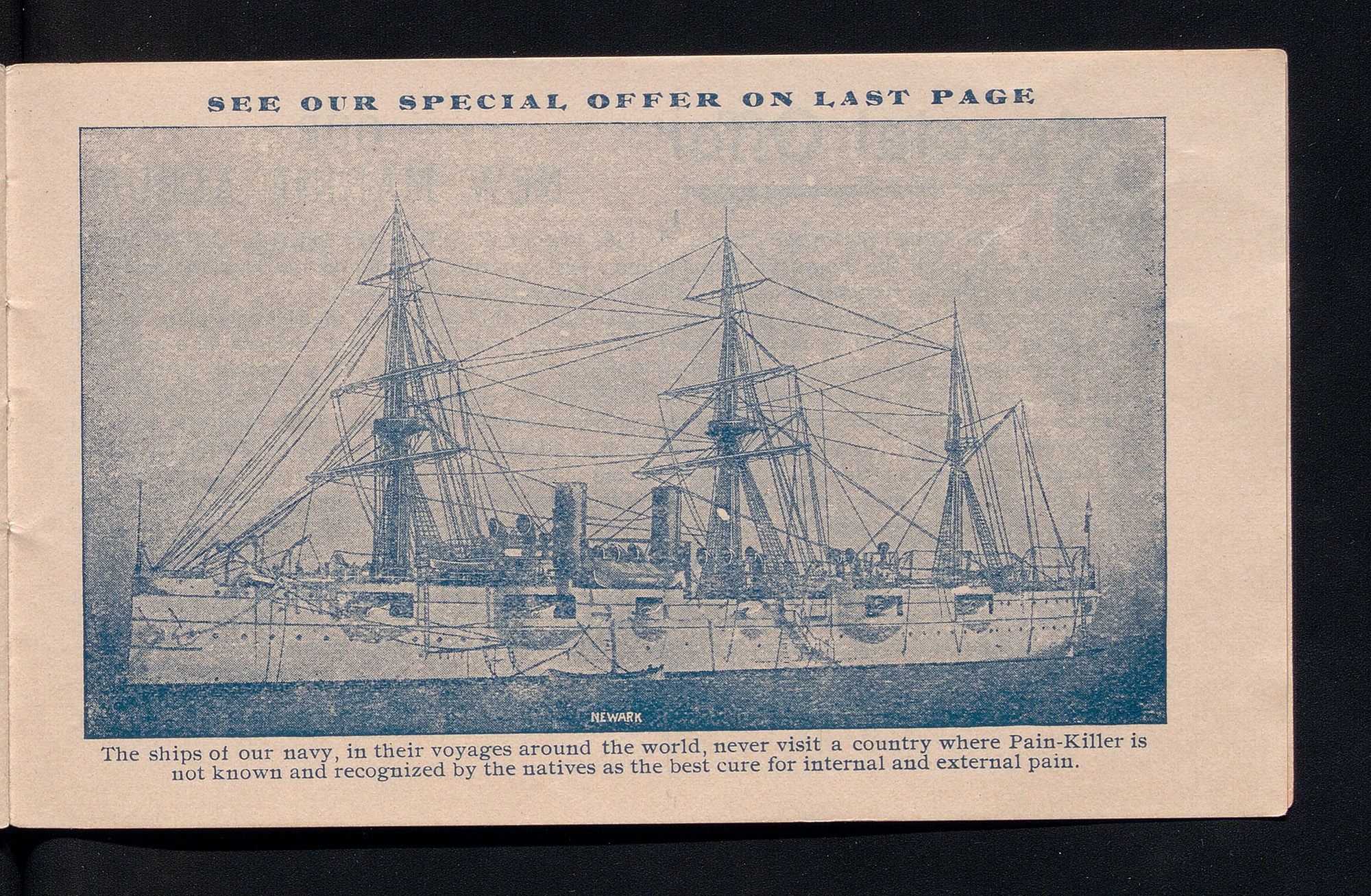
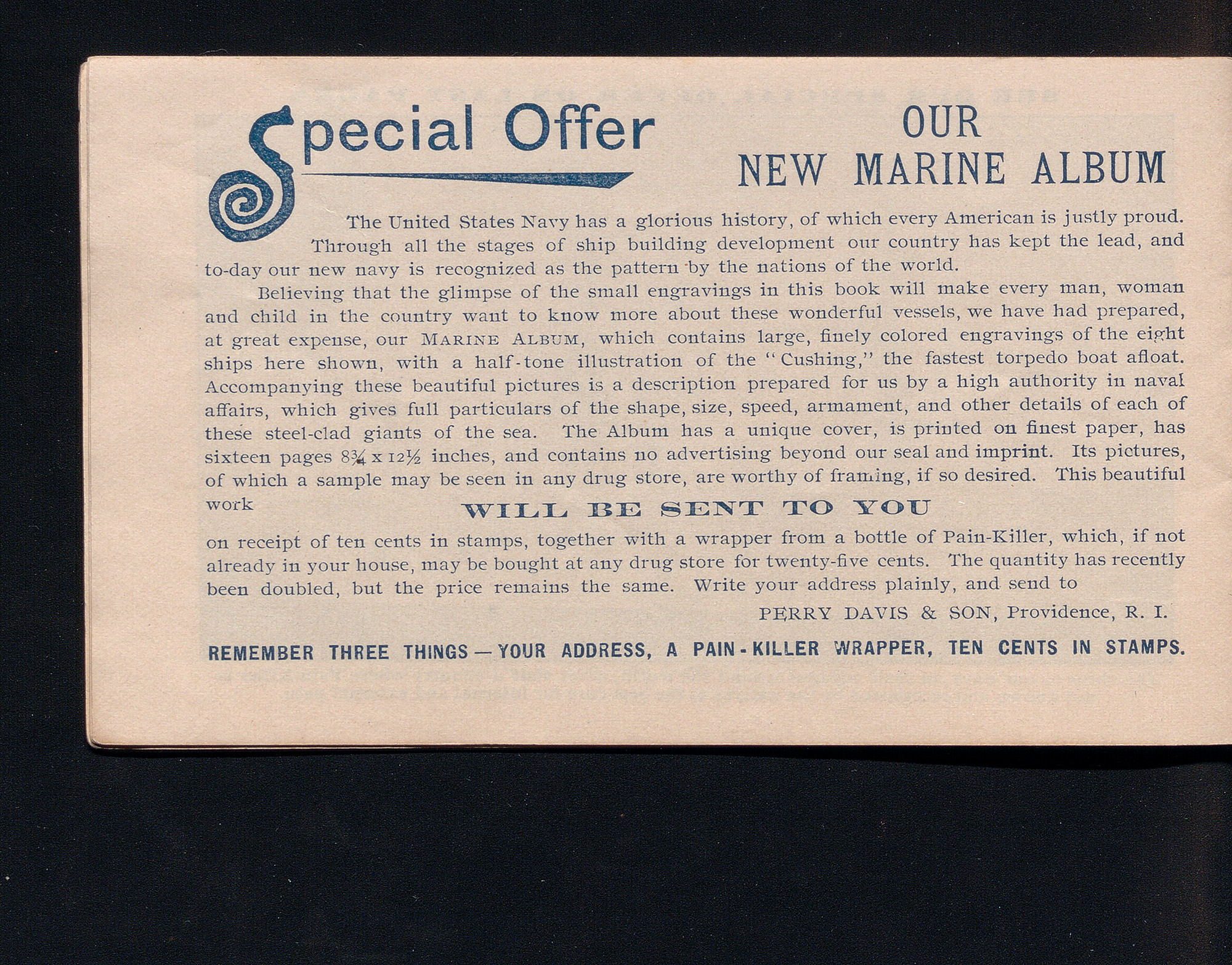
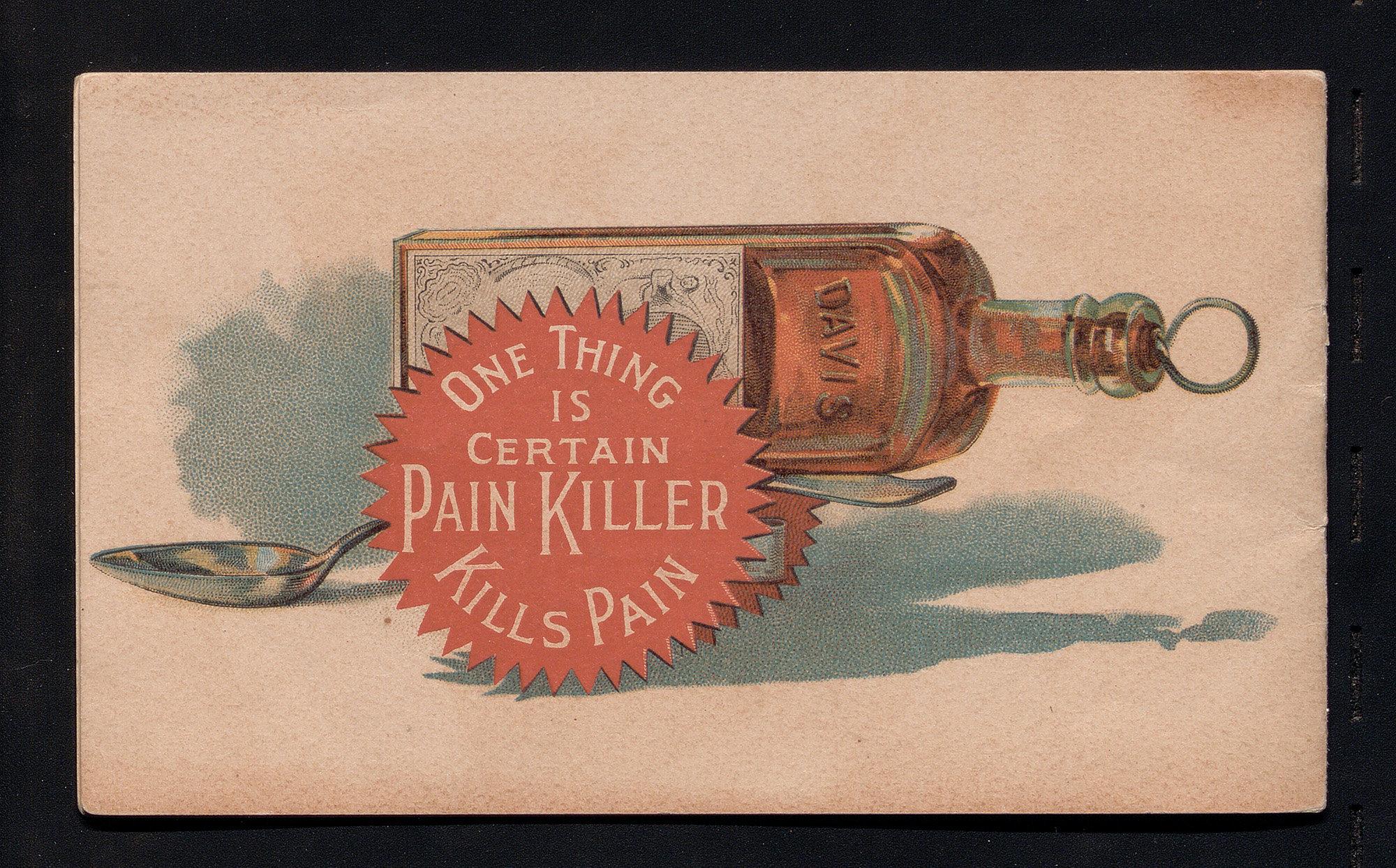
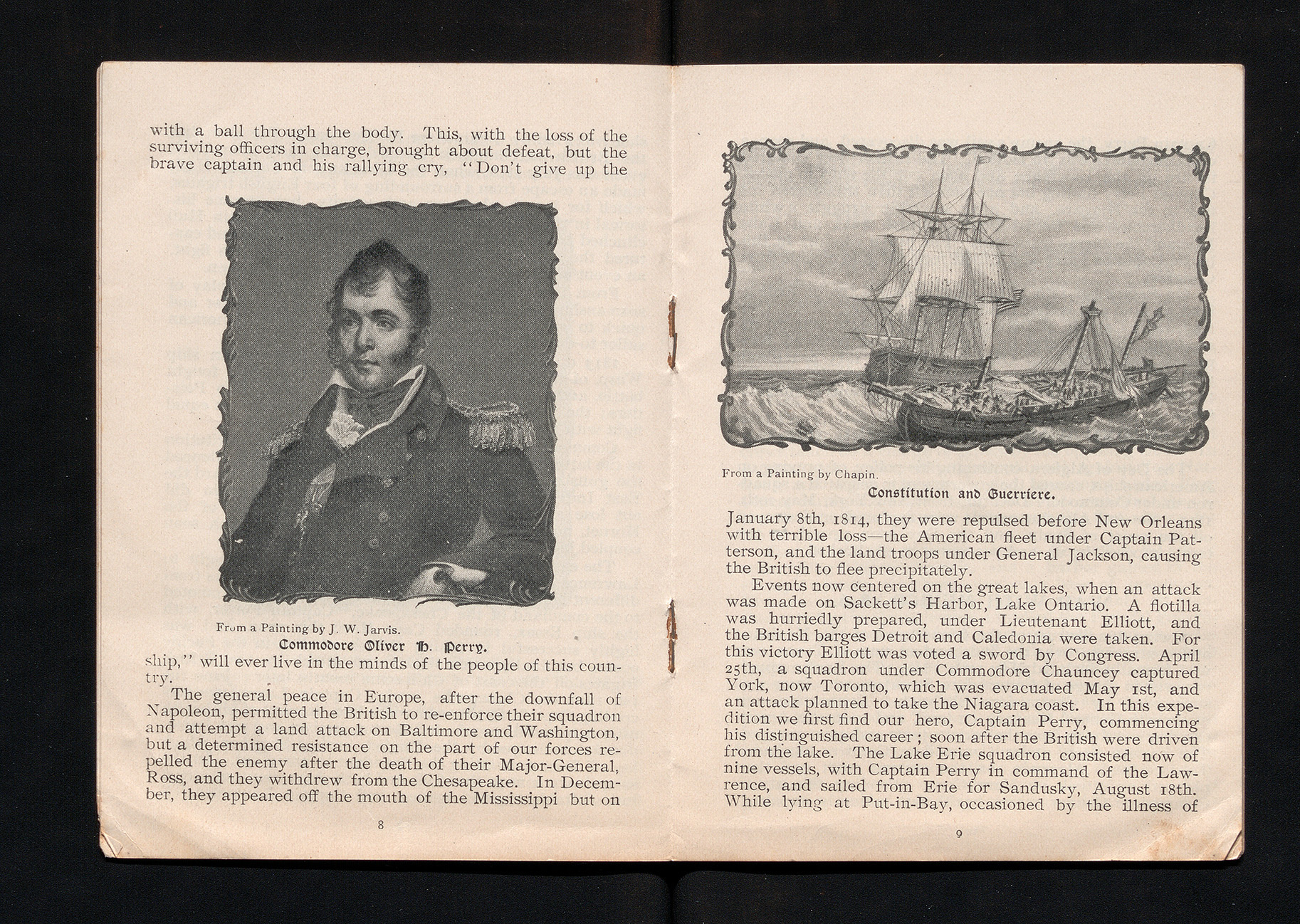
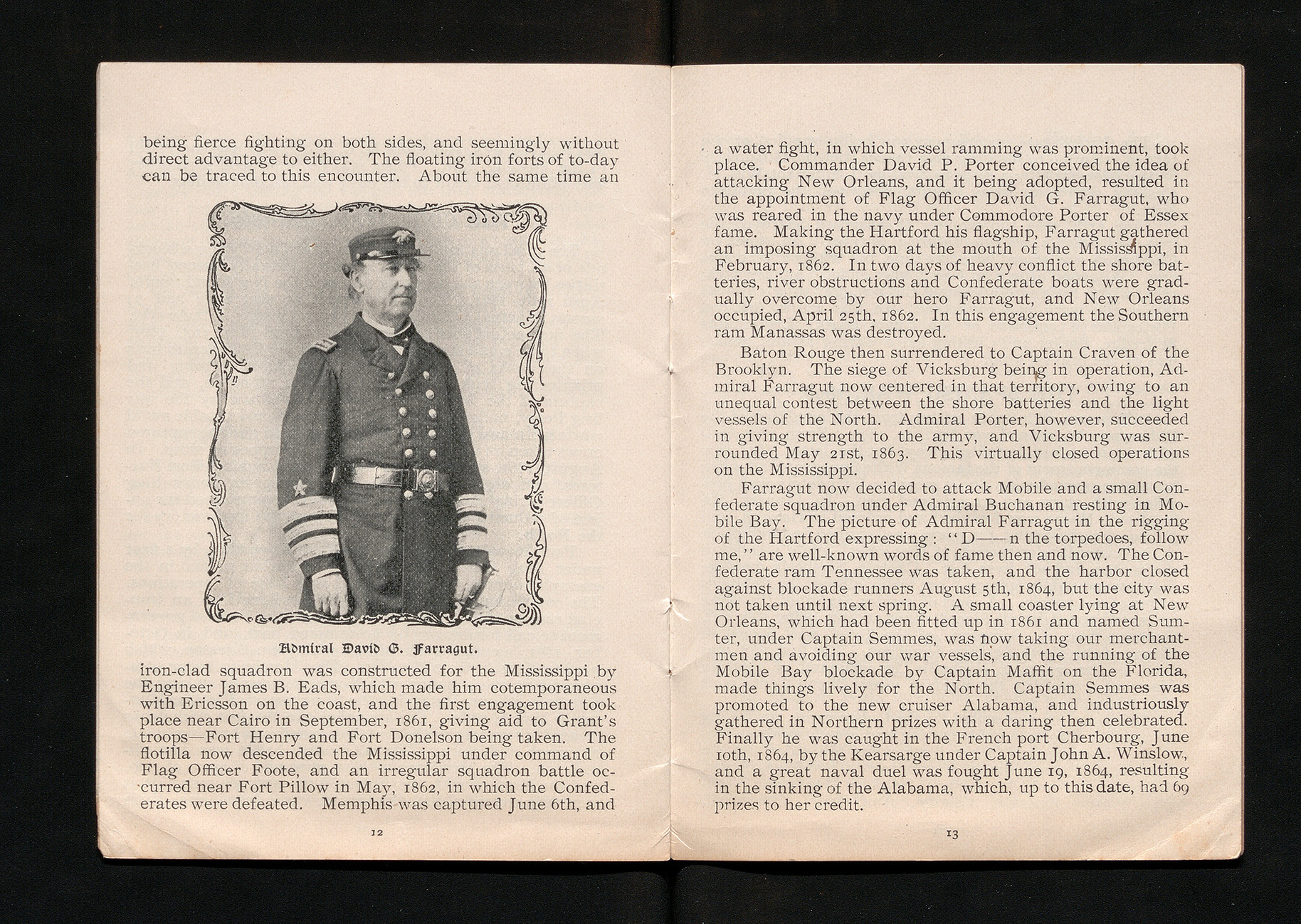
Perry Davis & Son, Our New Navy (ca. 1893). Gift of William H. Helfand.

“The ships of our navy, in their voyages around the world, never visit a country where Pain-Killer is not known and recognized by the natives as the best cure for internal and external pain.” This certainly fallacious statement is printed beneath each of the eight ships pictured within this brochure advertising Perry Davis & Son’s Pain-Killer.

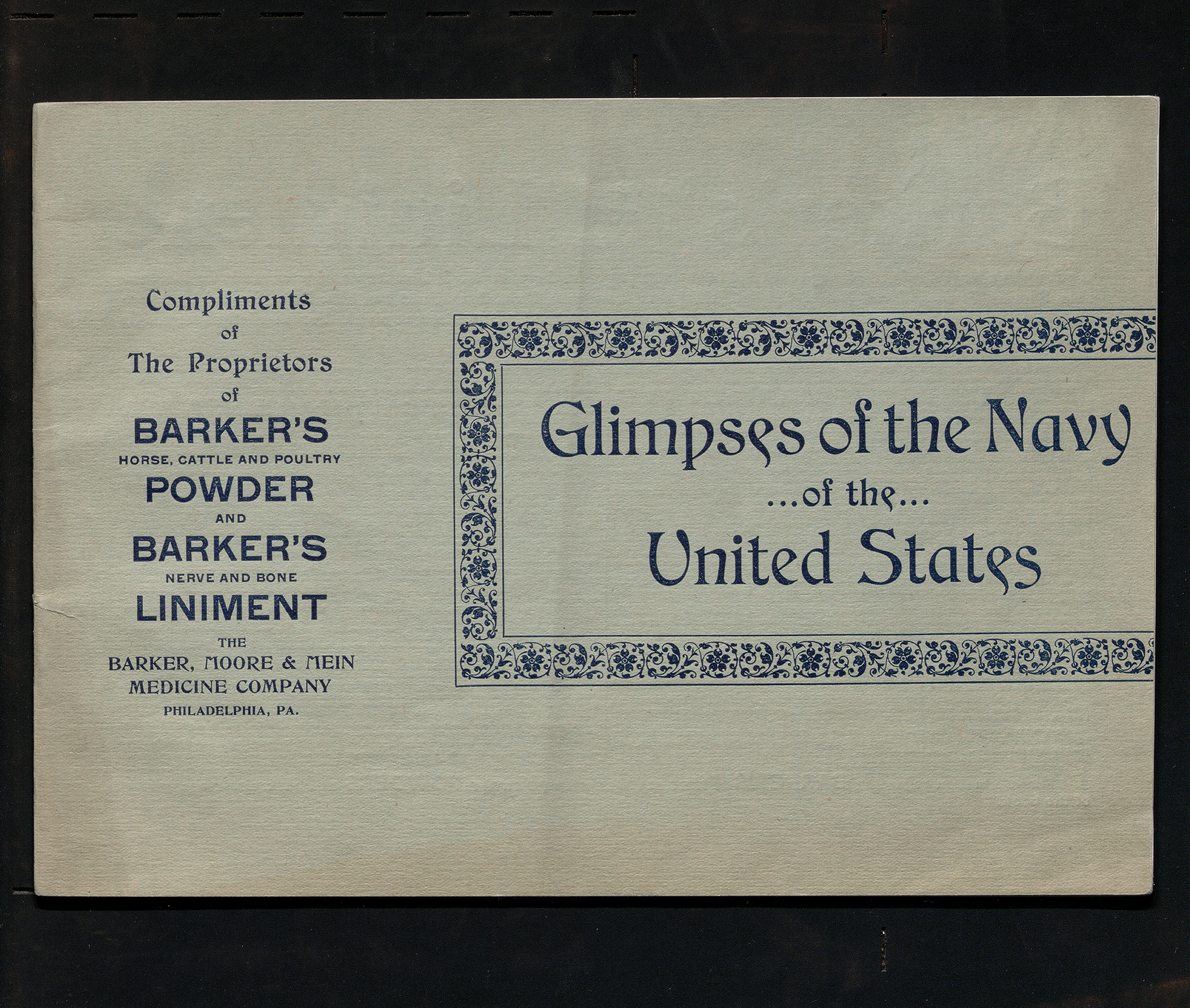
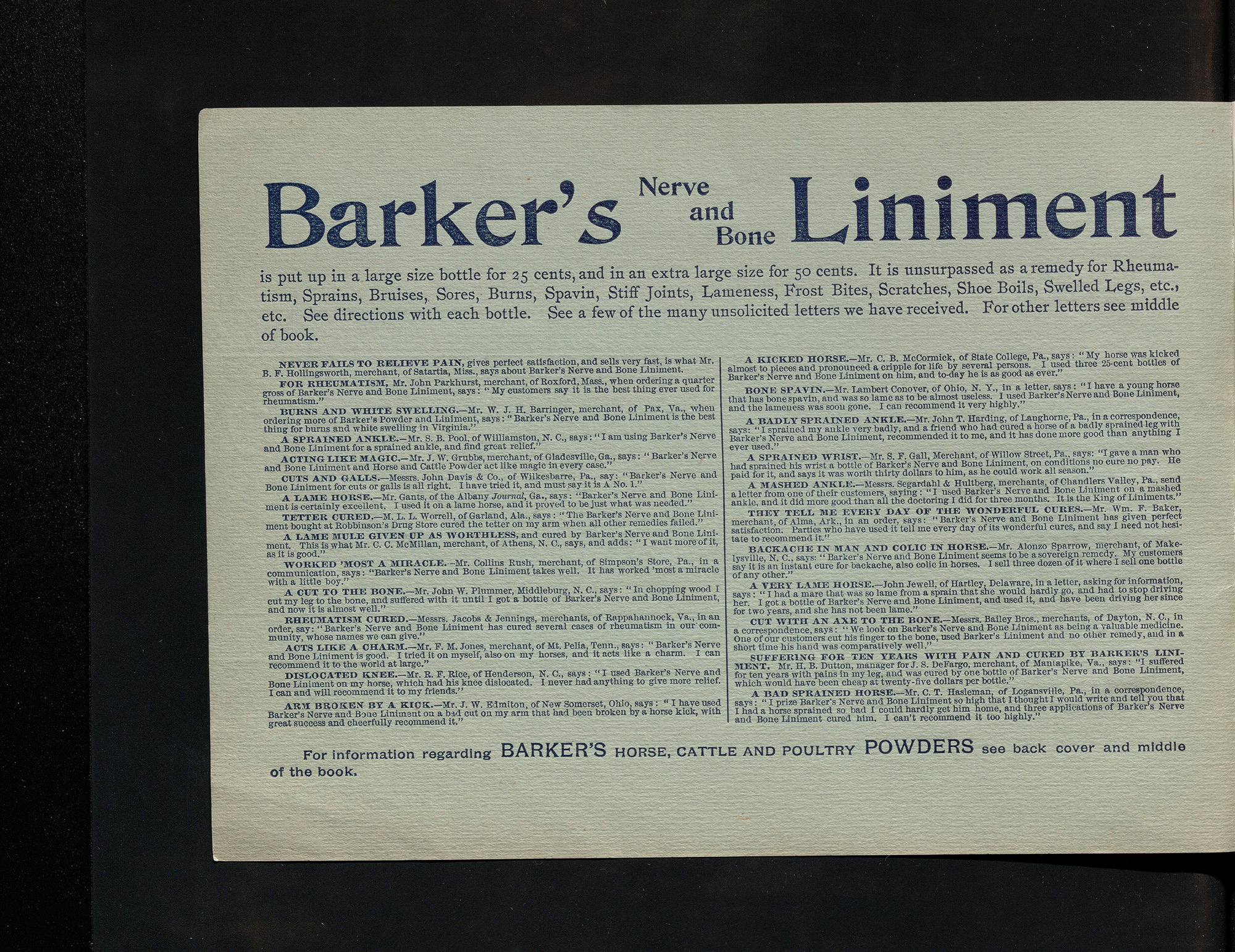
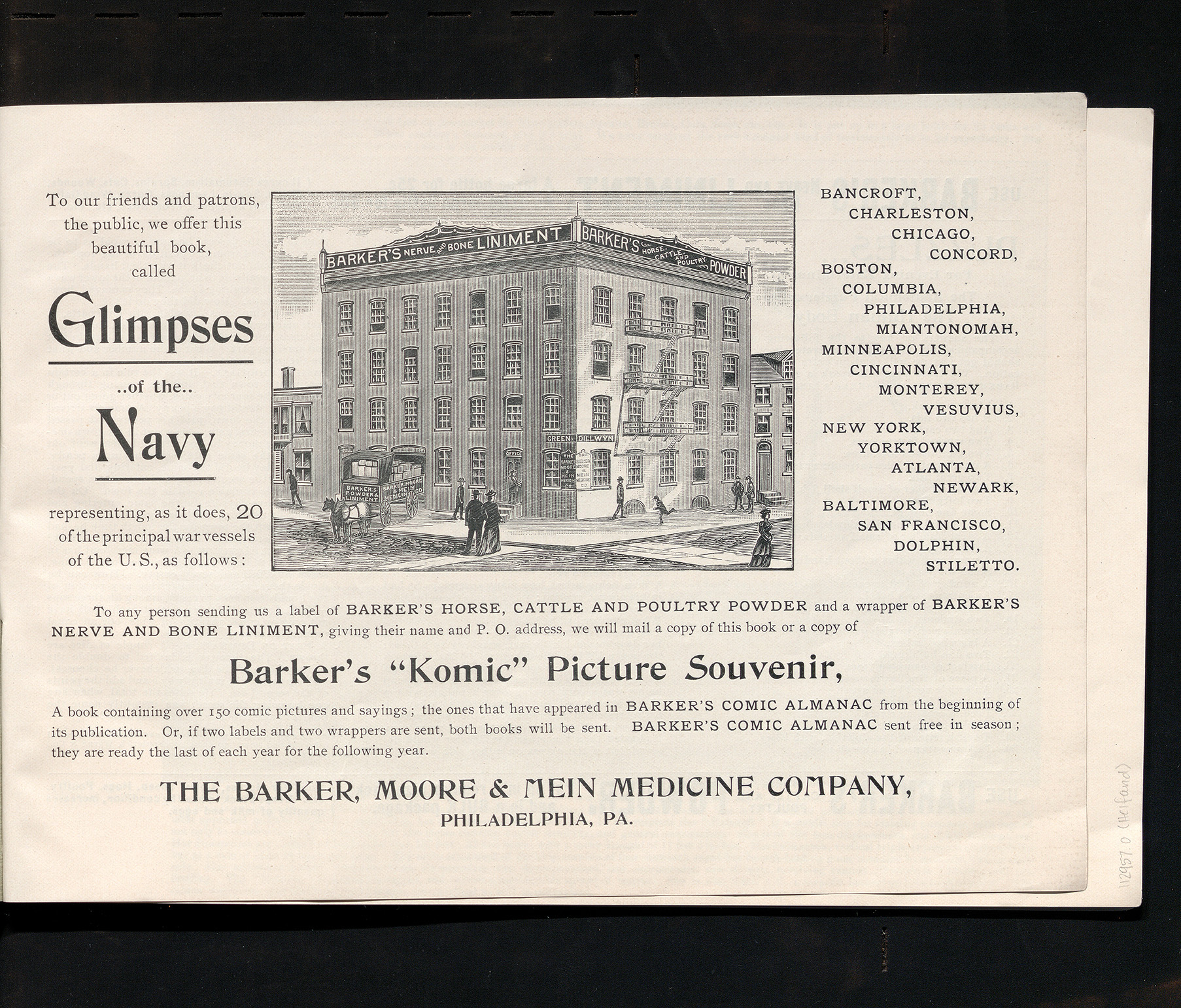
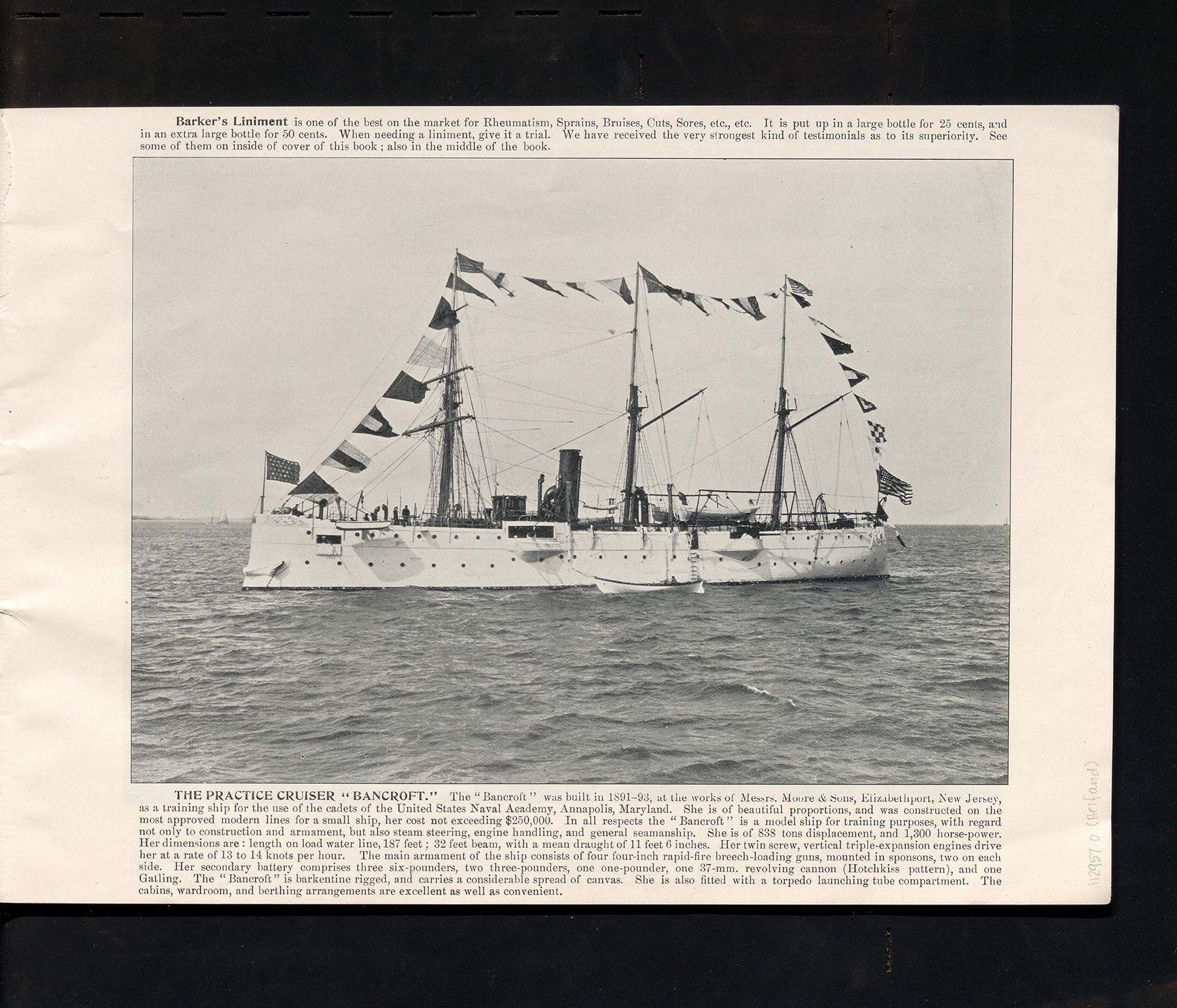
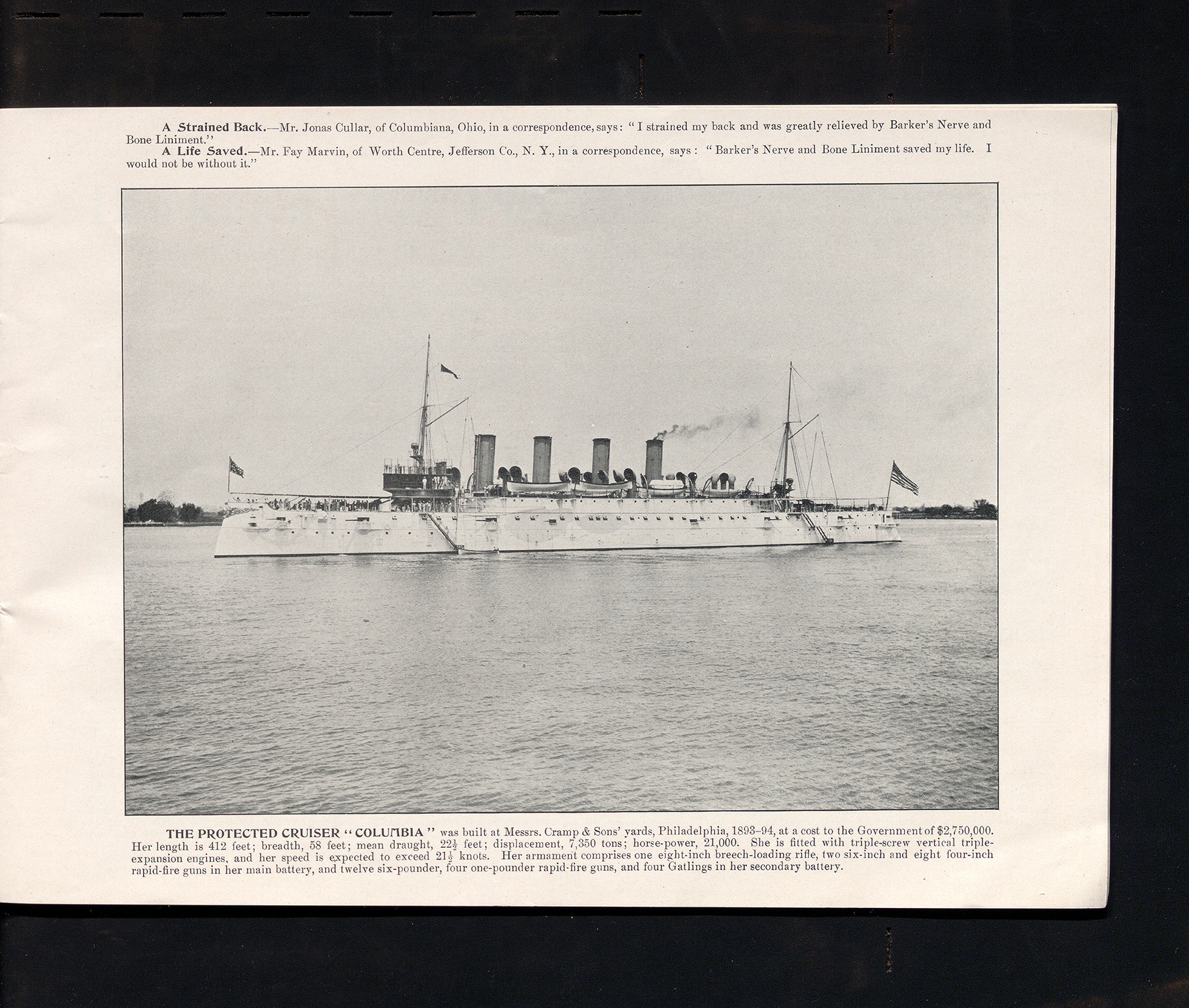
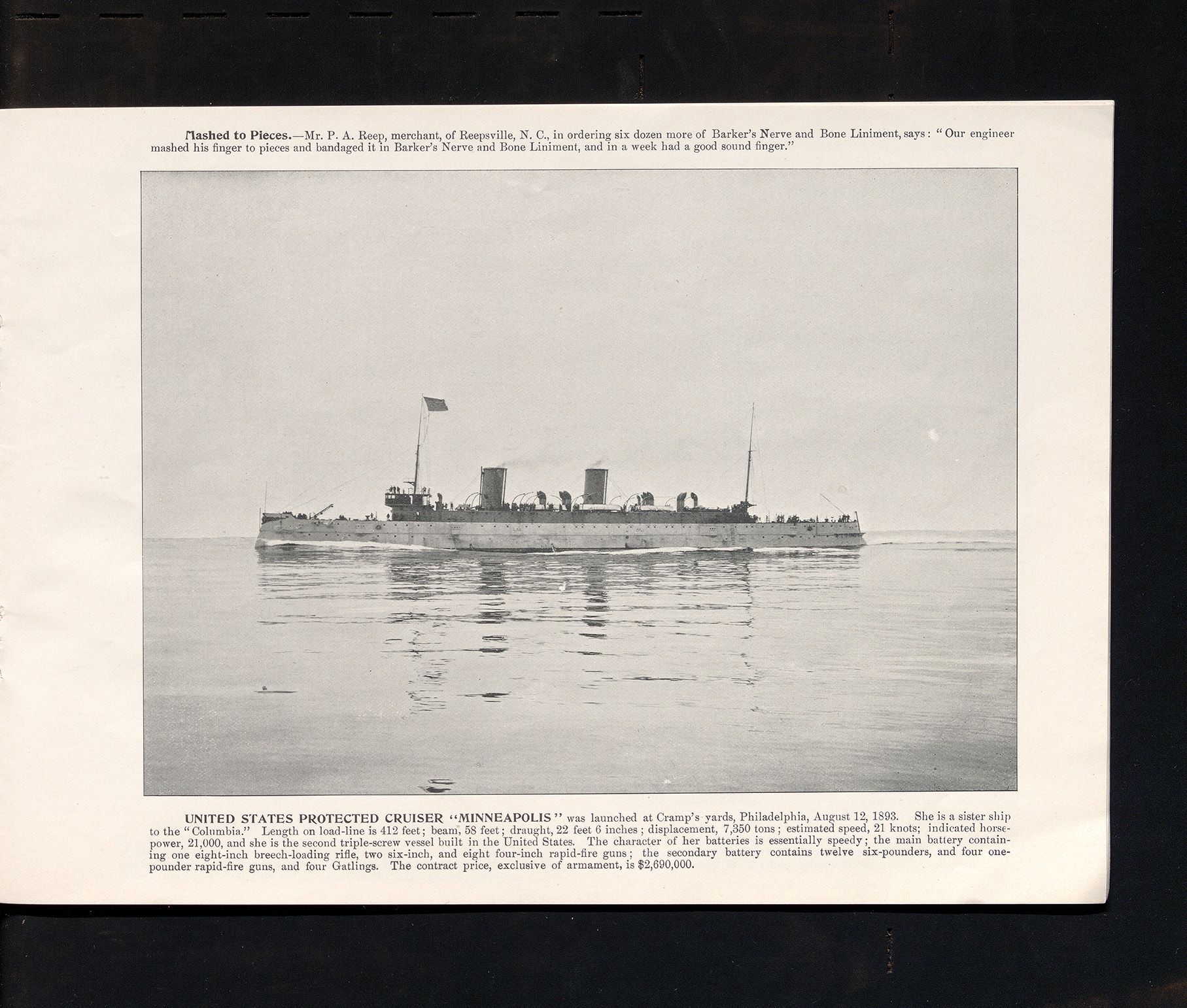
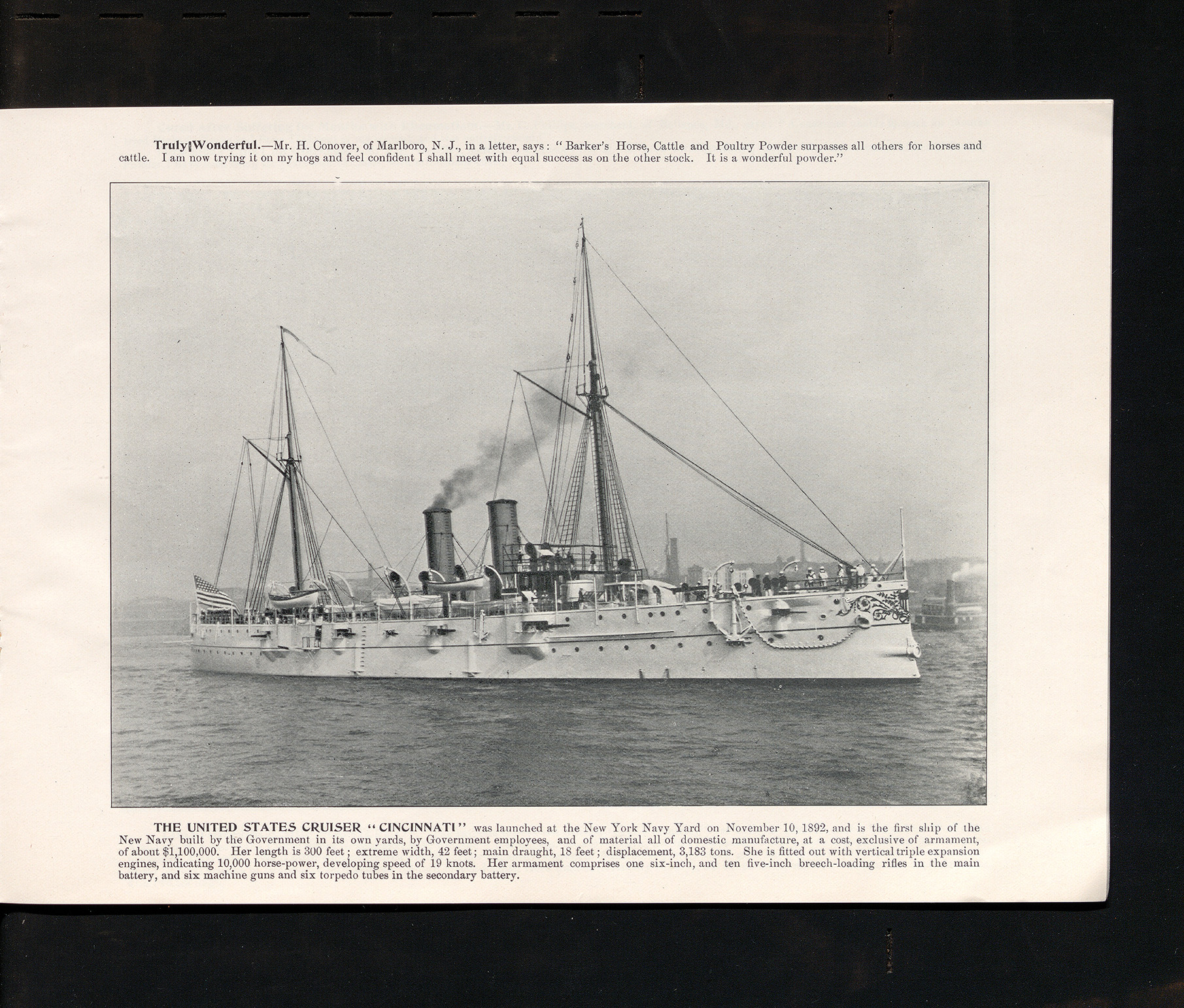
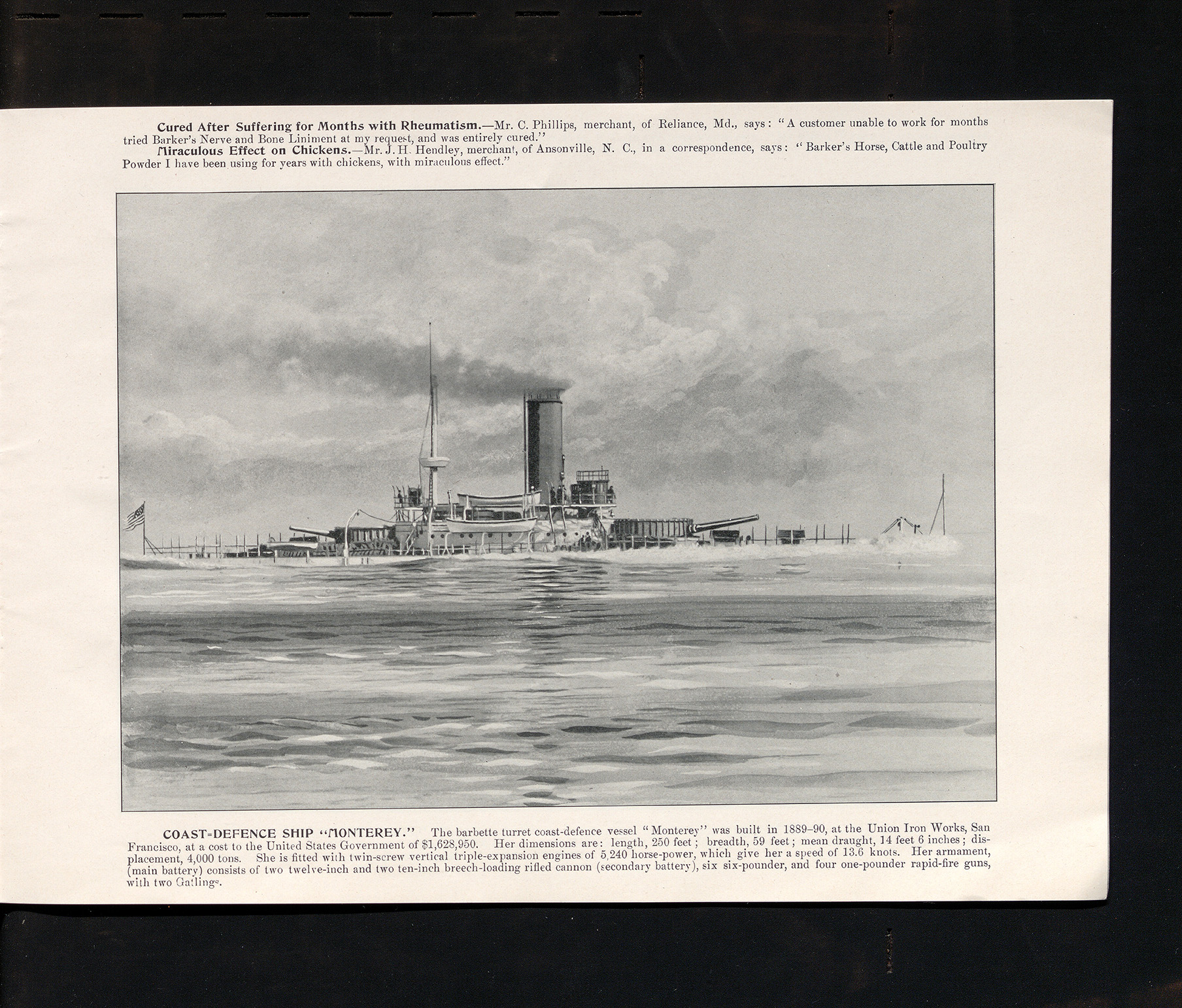
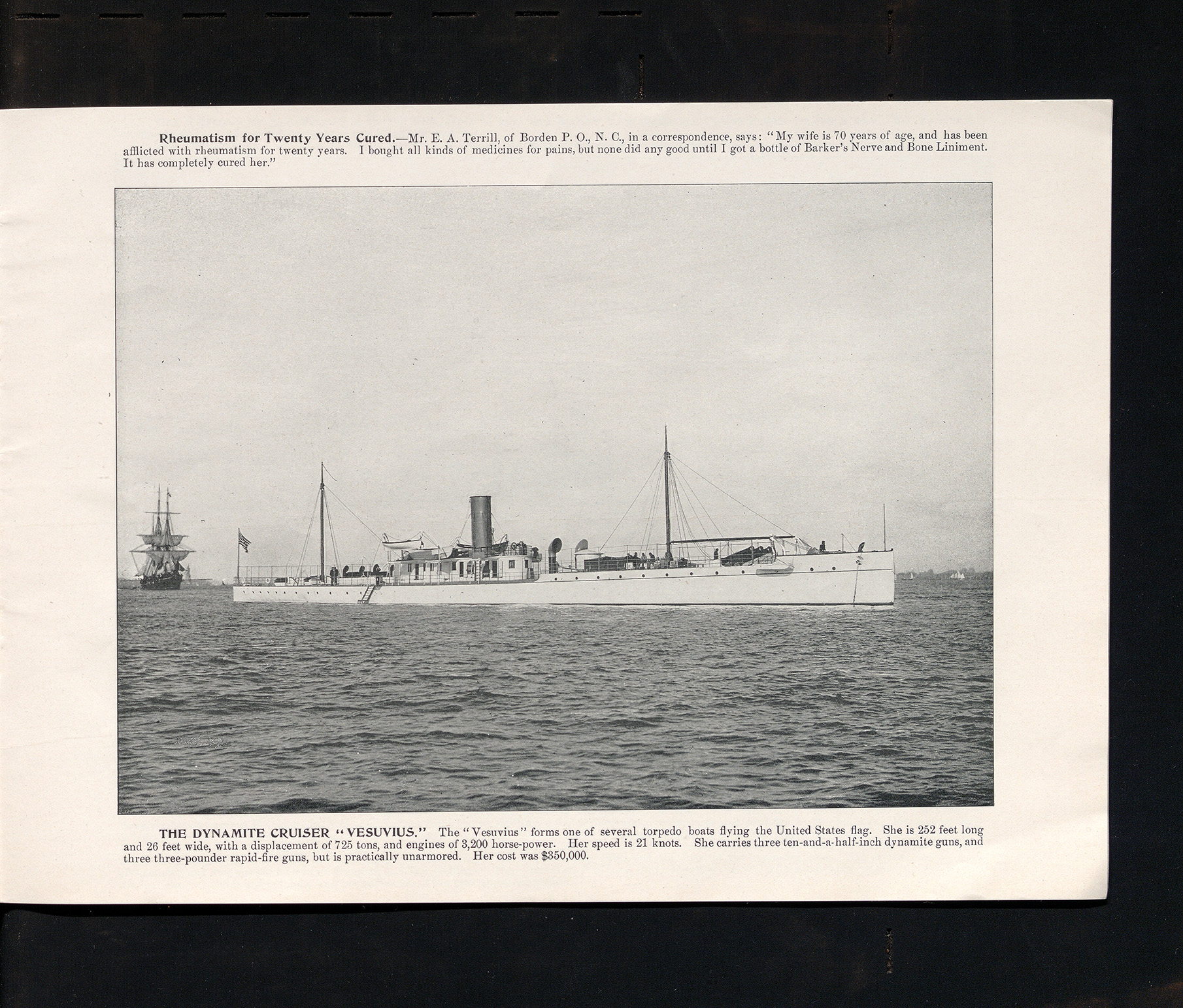
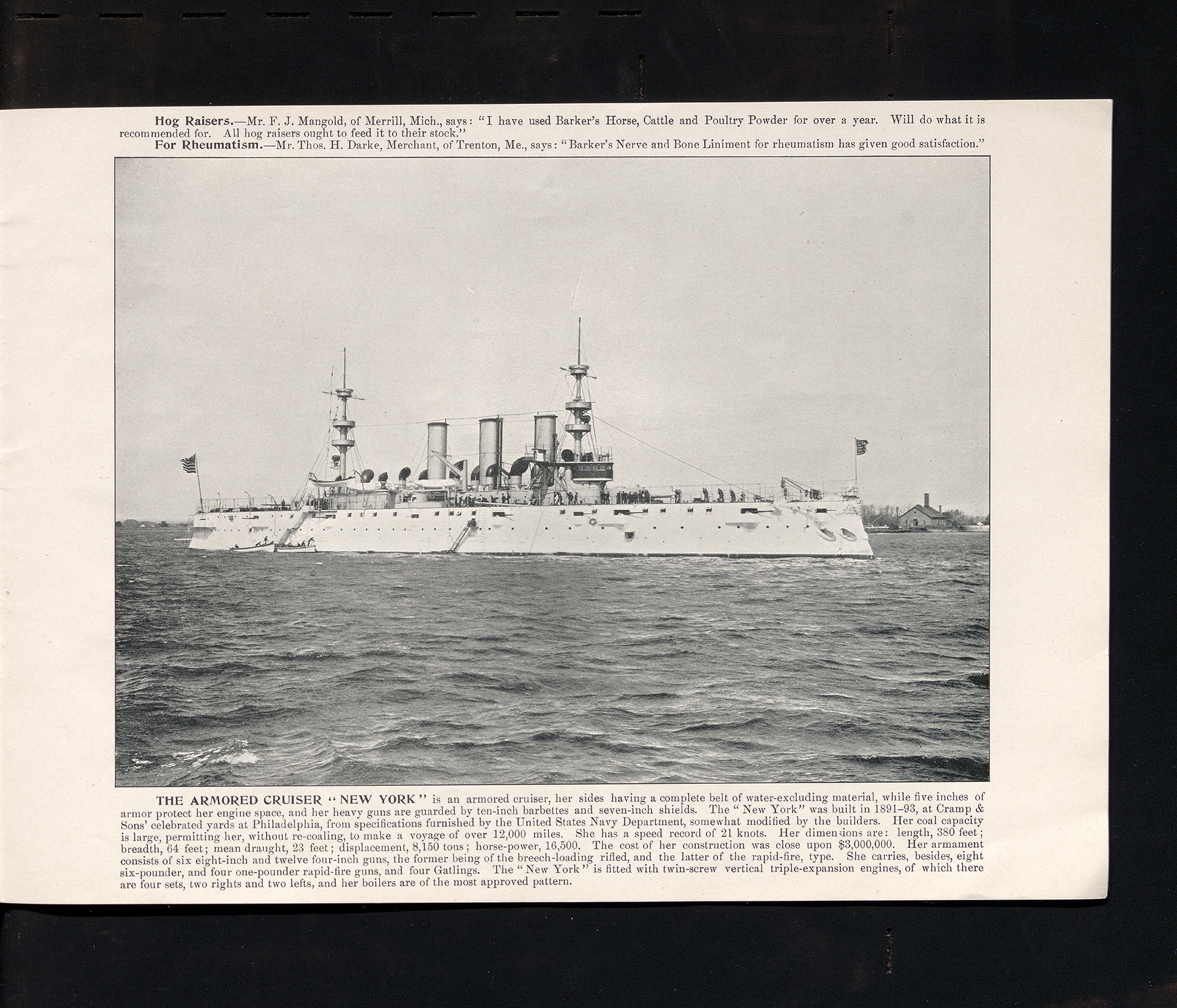
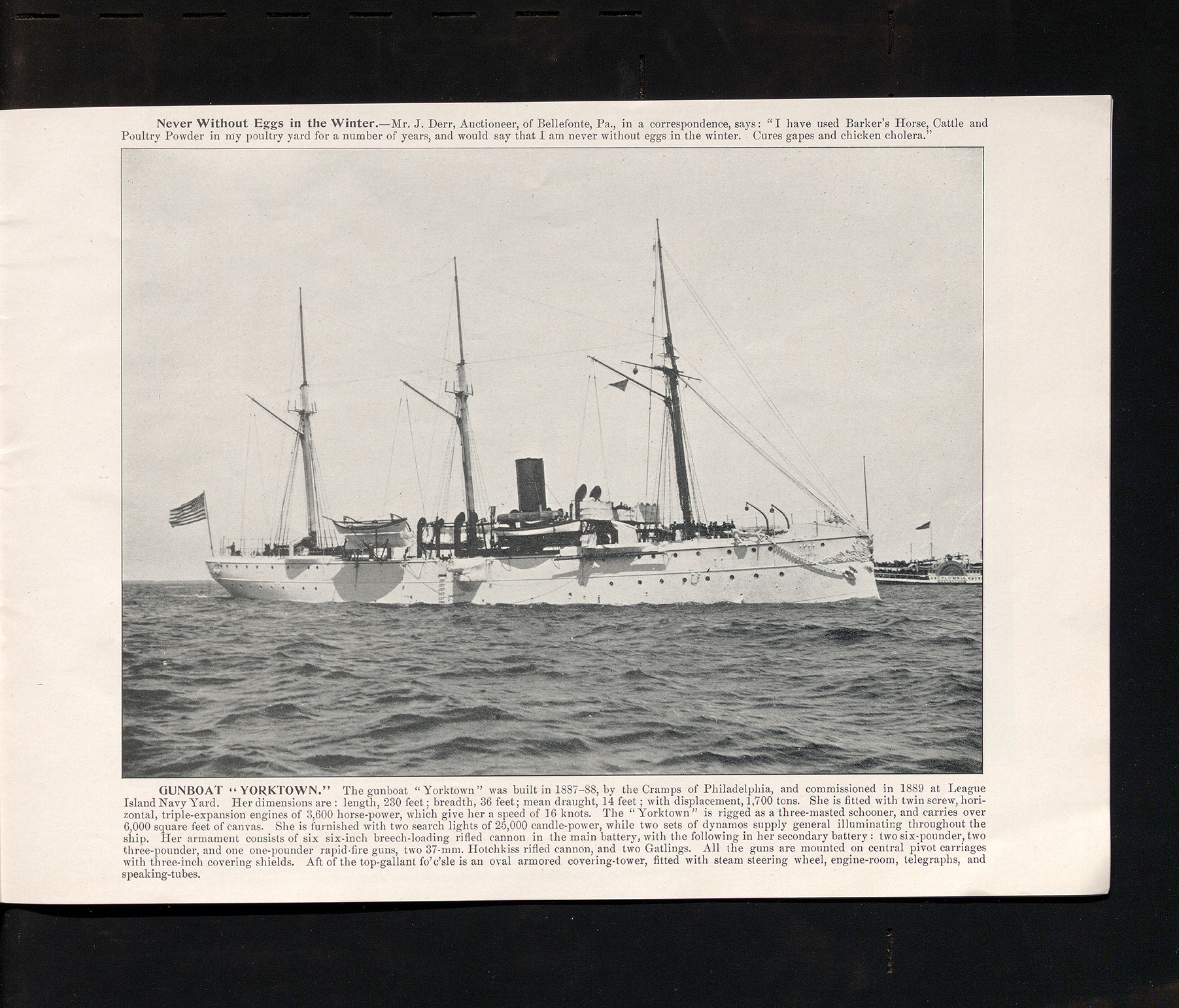
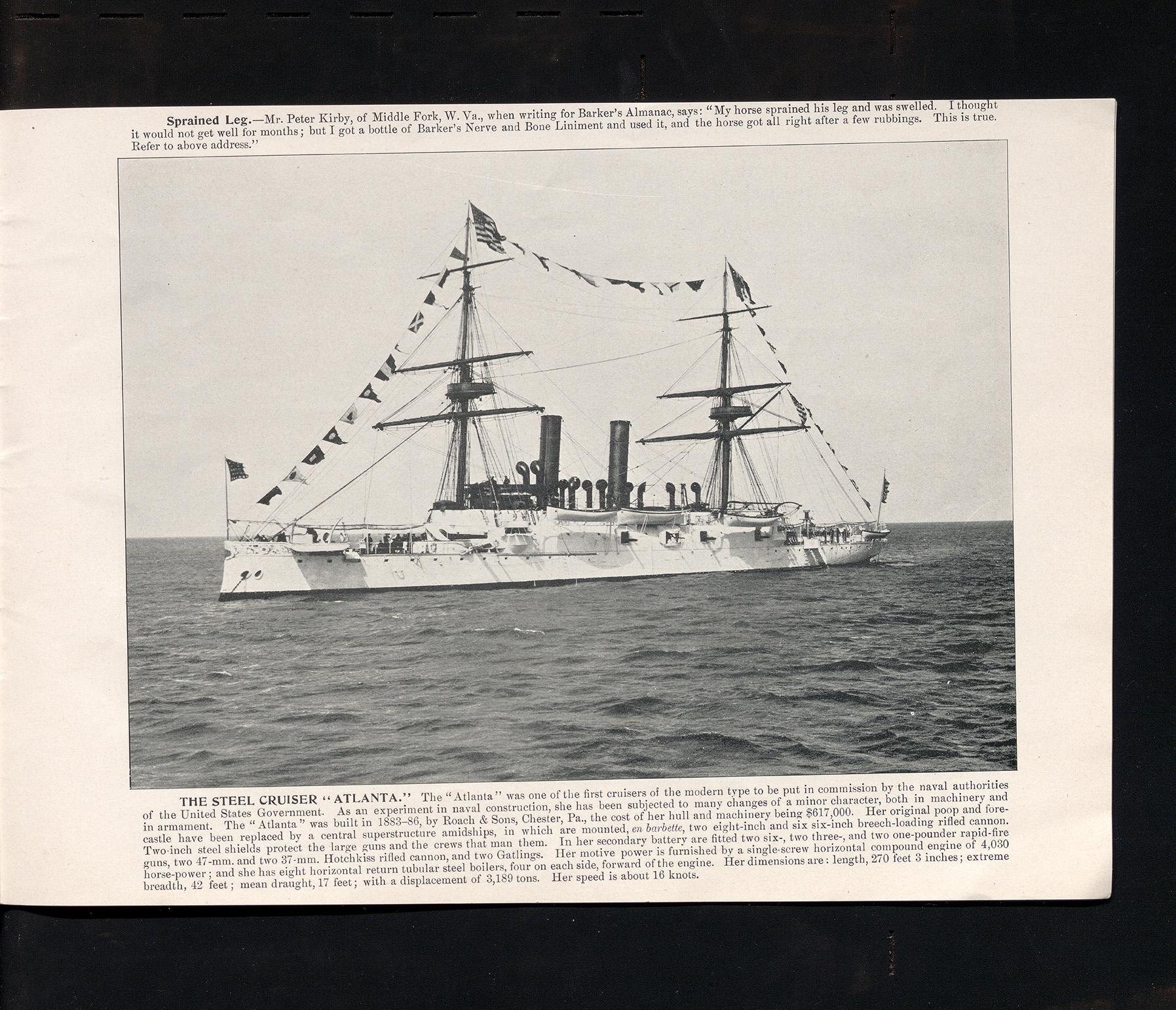
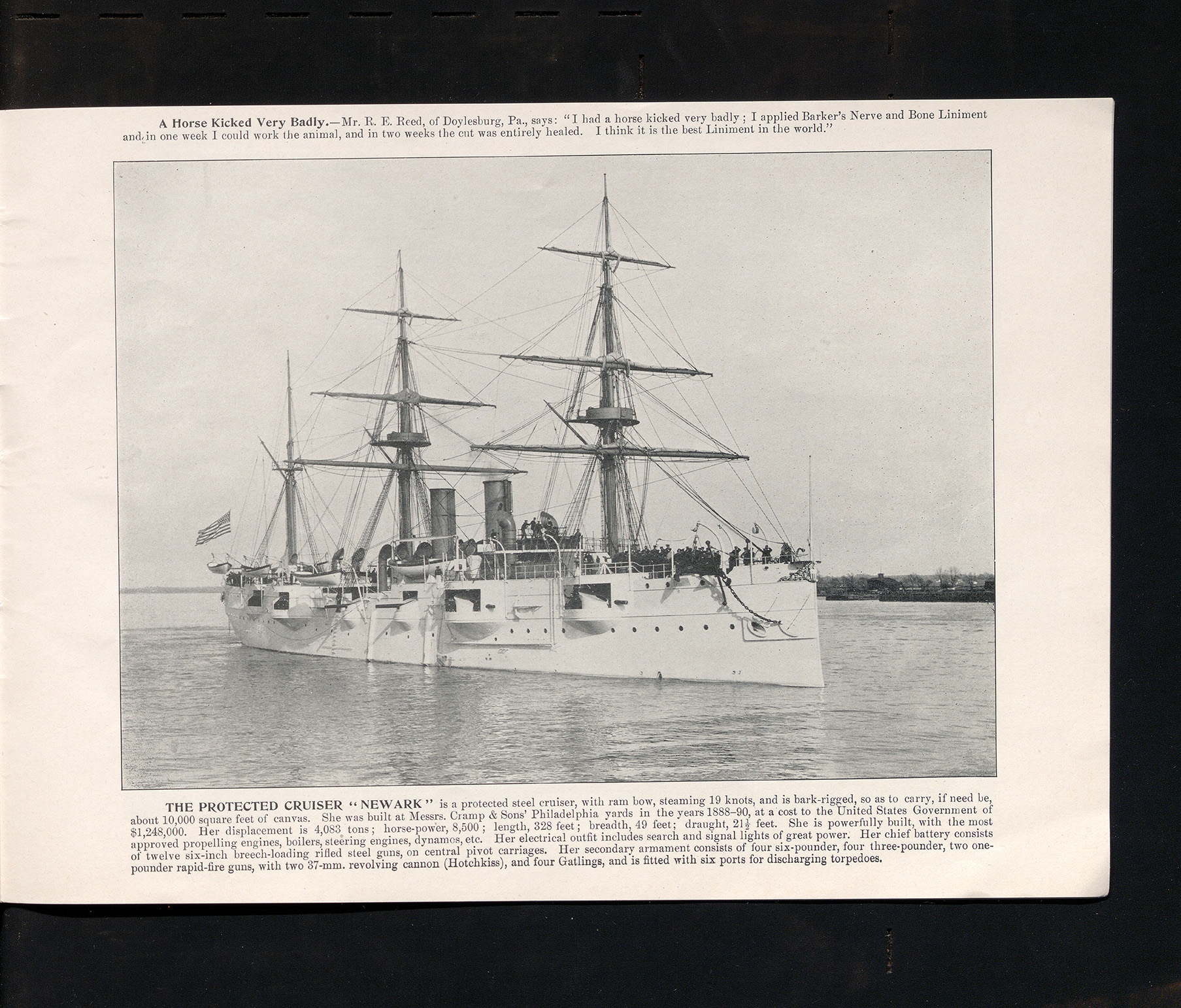
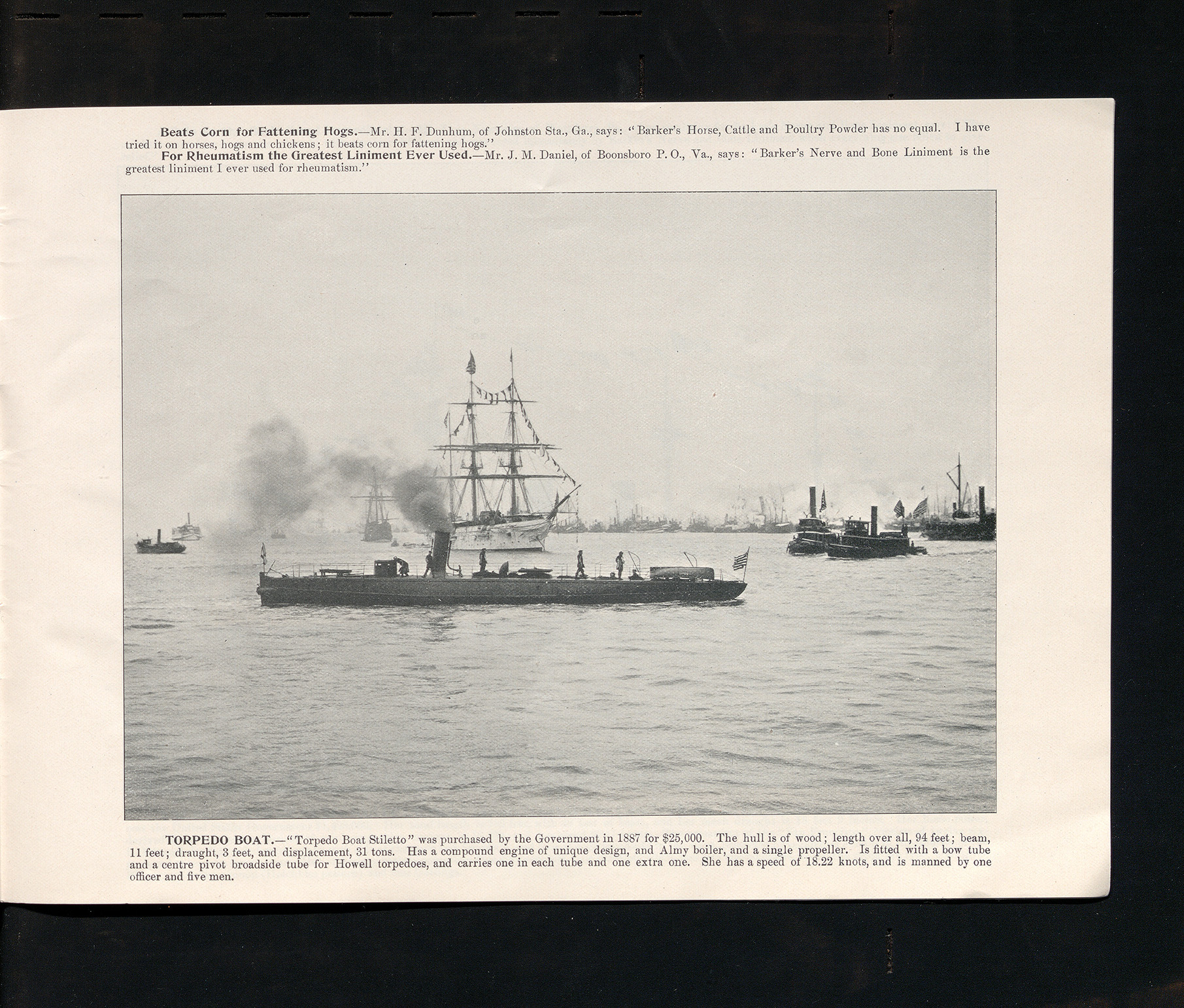
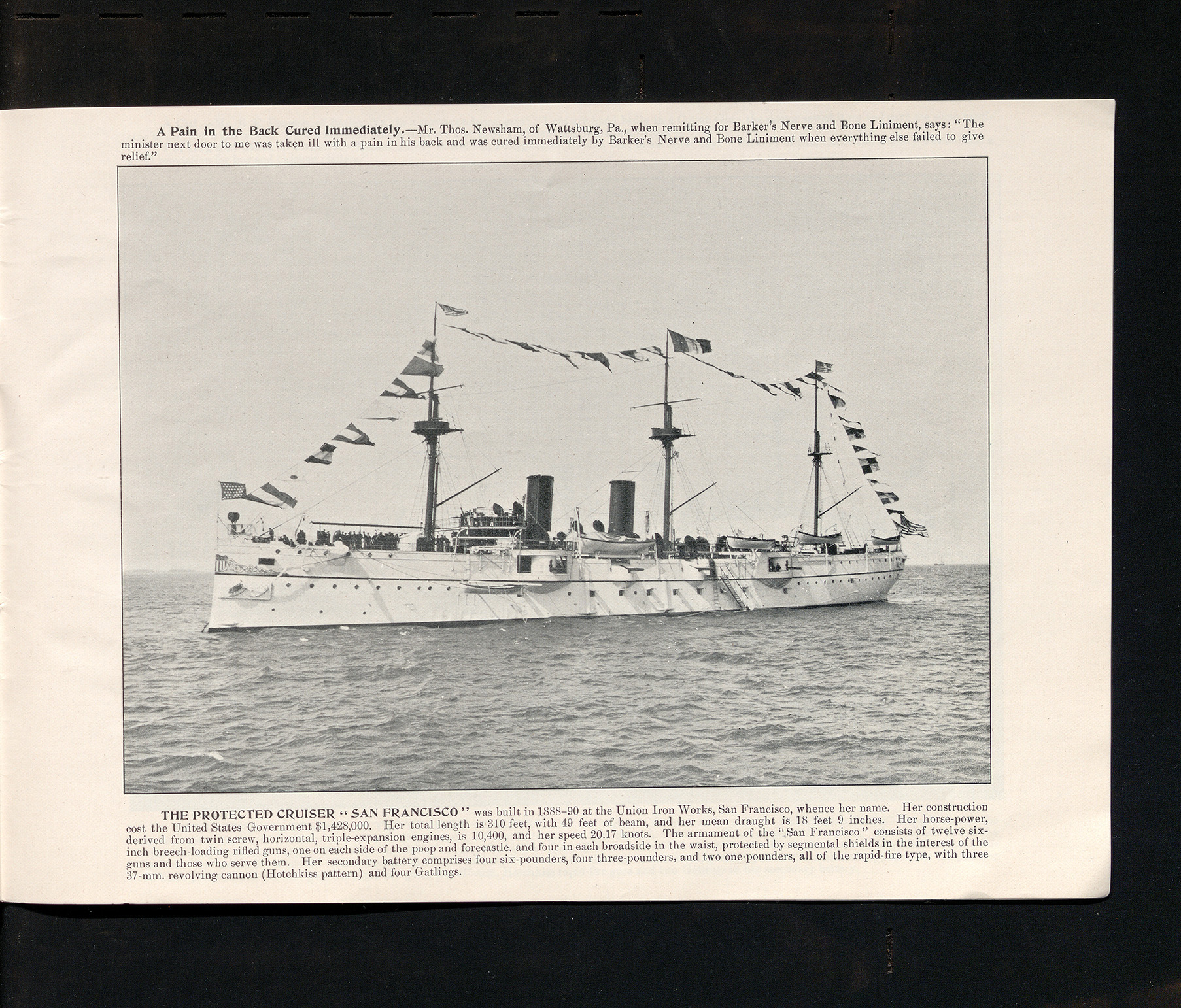
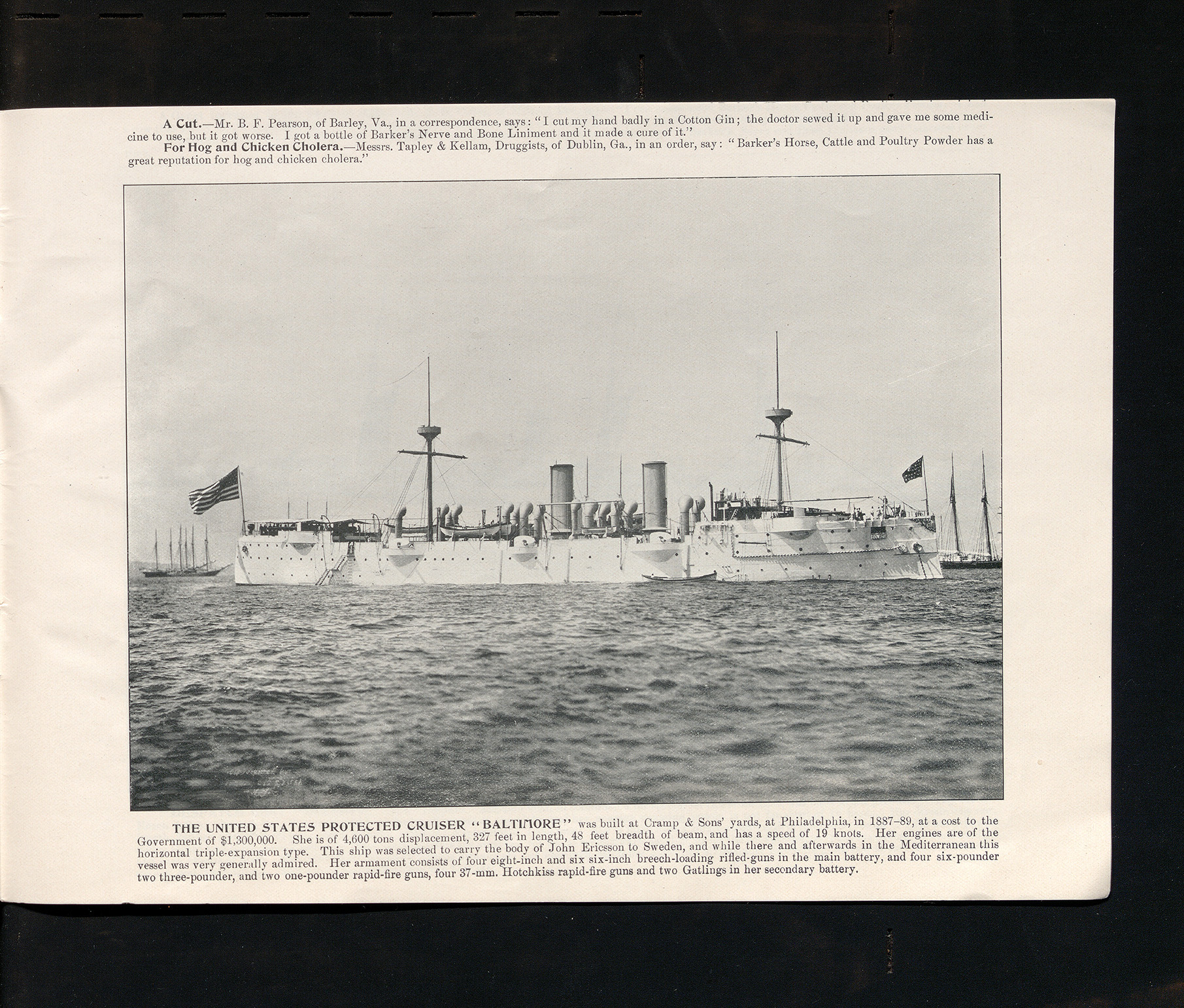
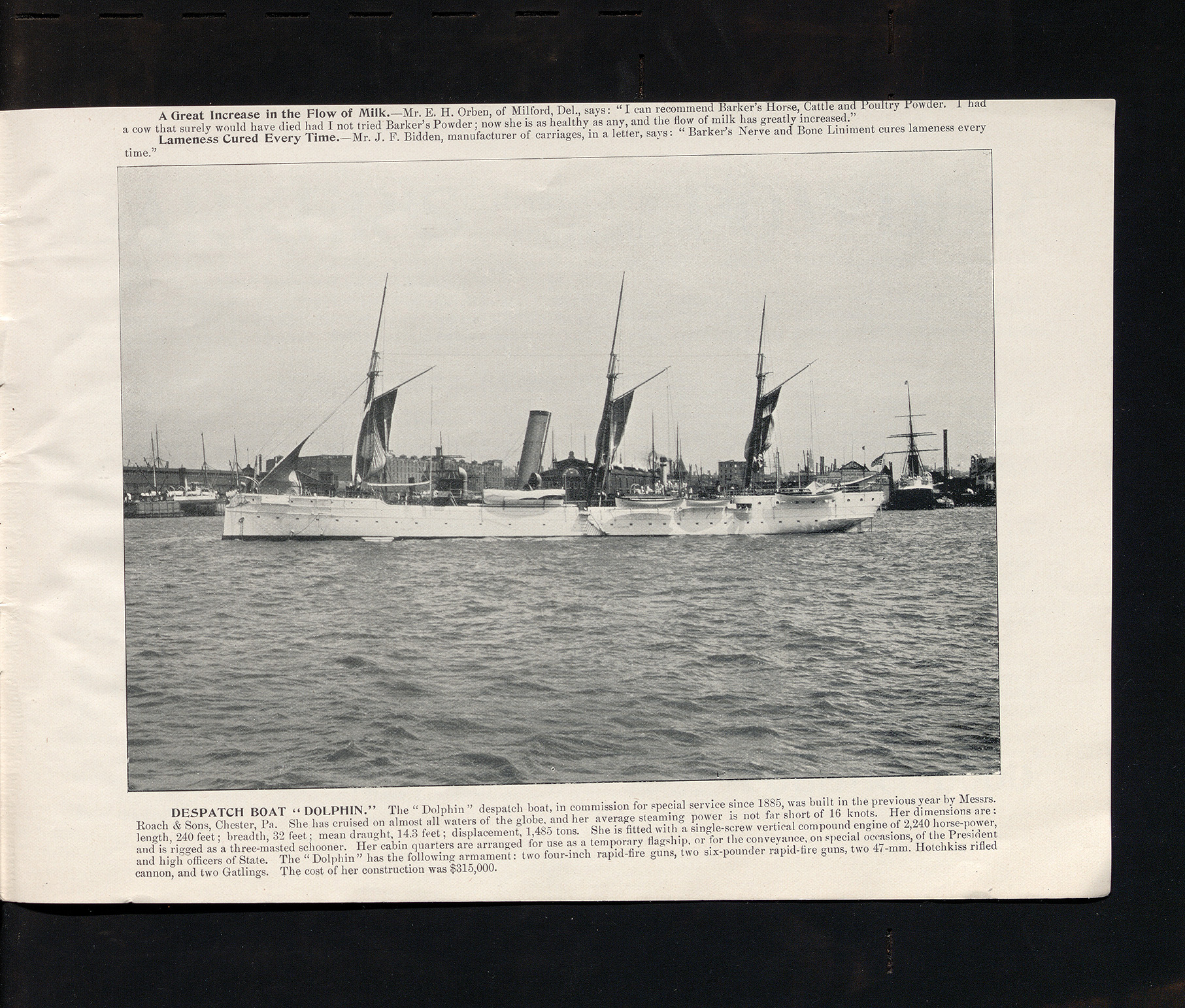
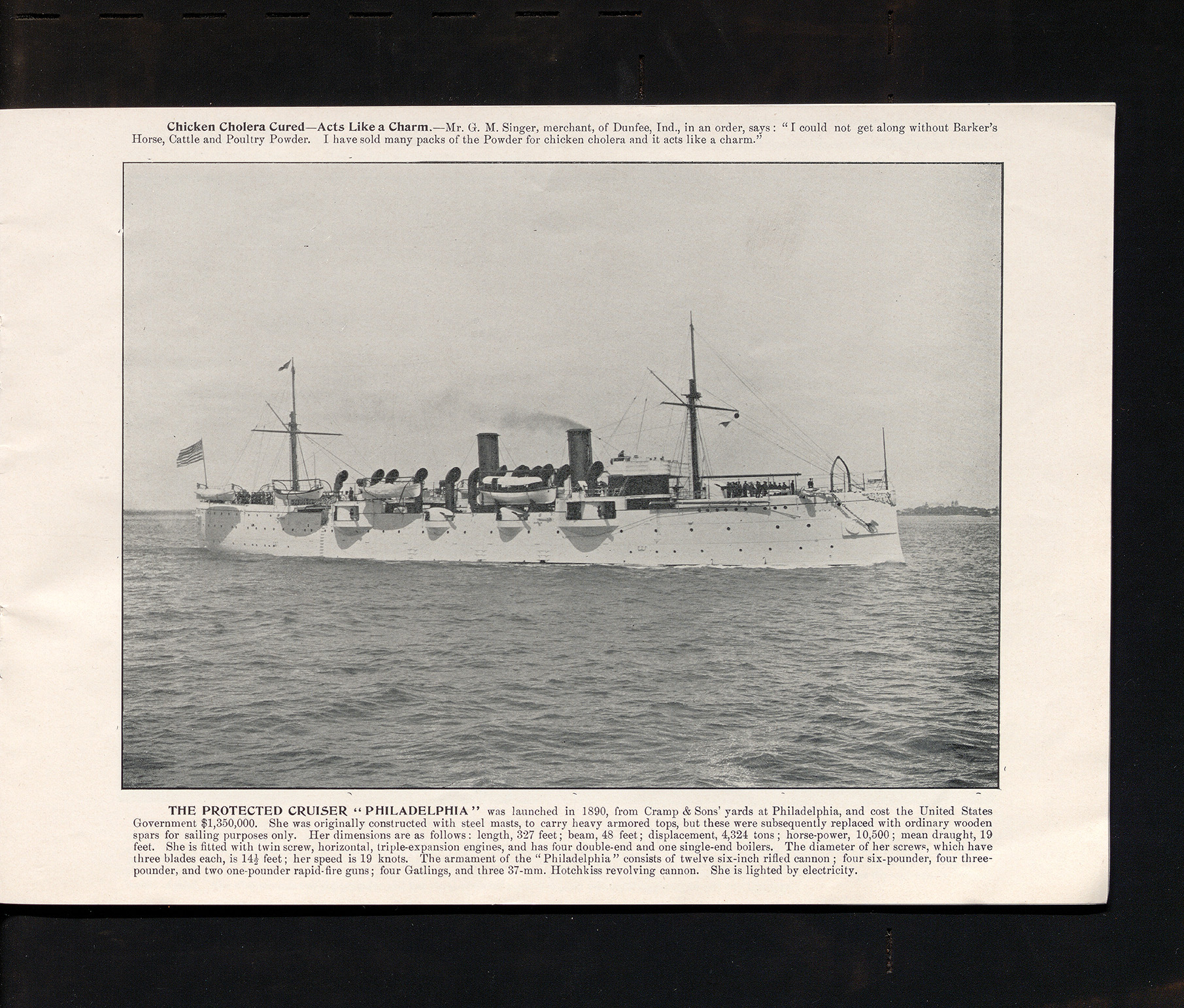
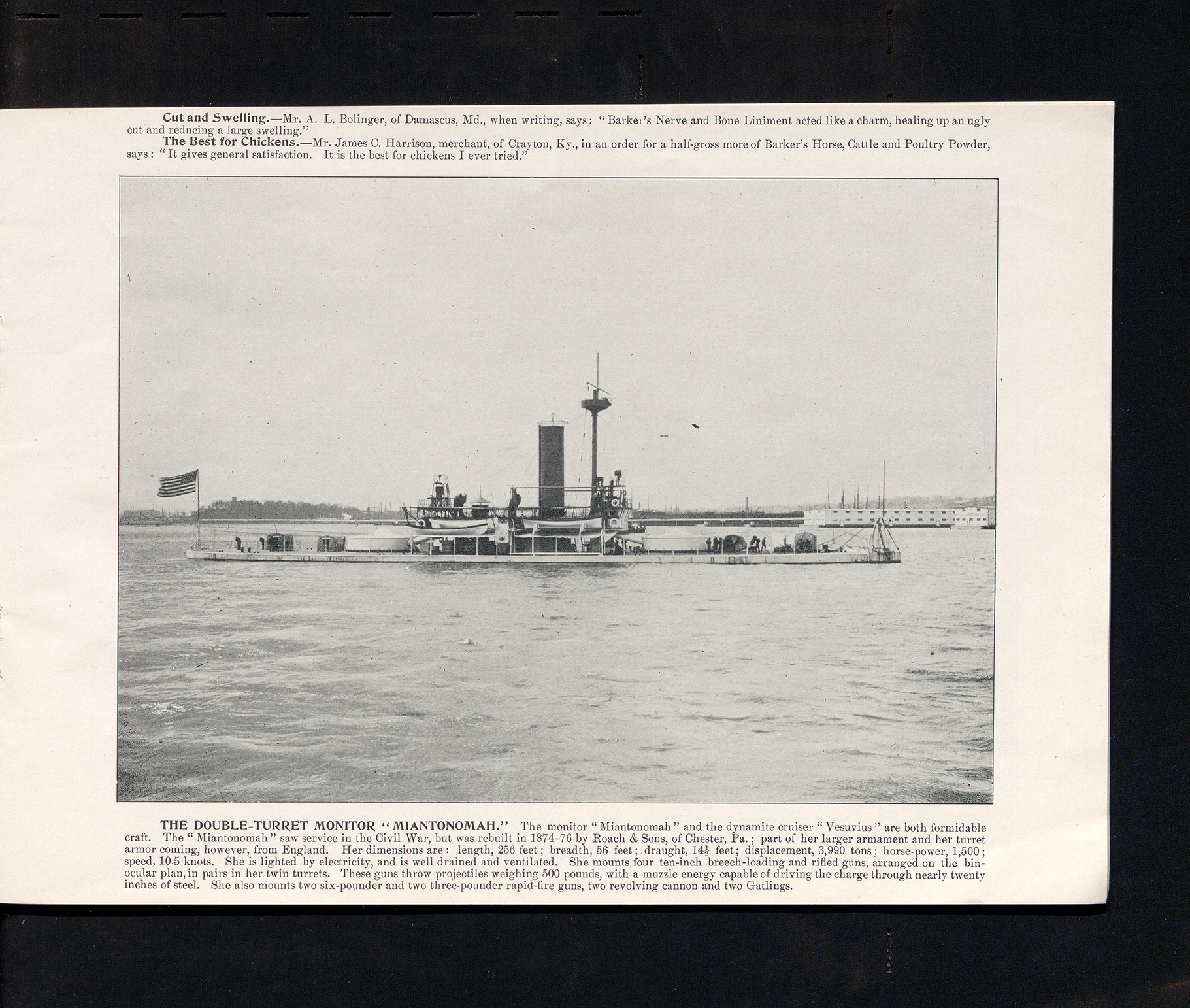
Barker, Moore, & Mein Medicine Company, Glimpses of the Navy of the United States (ca. 1894). Gift of William H. Helfand.

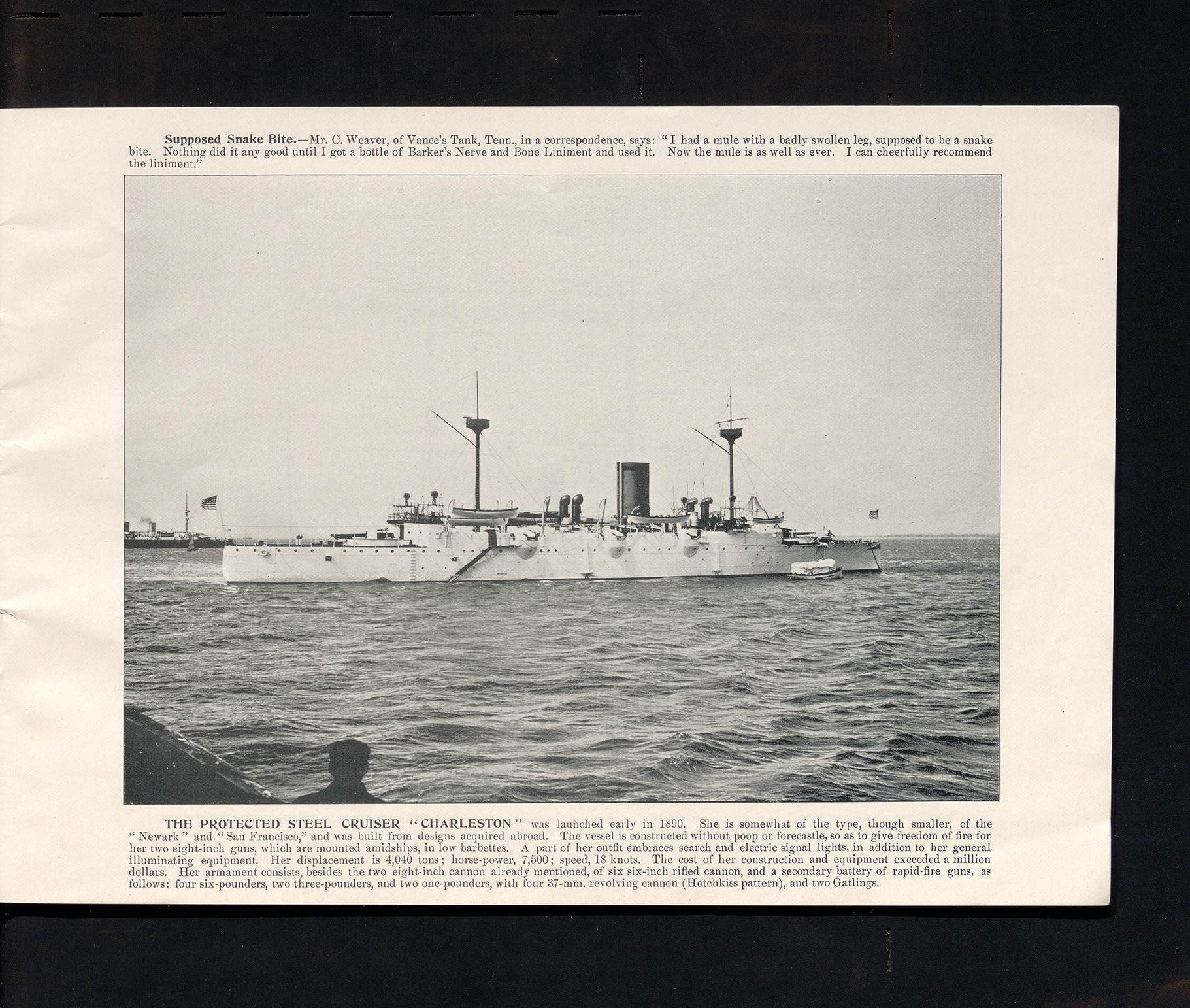
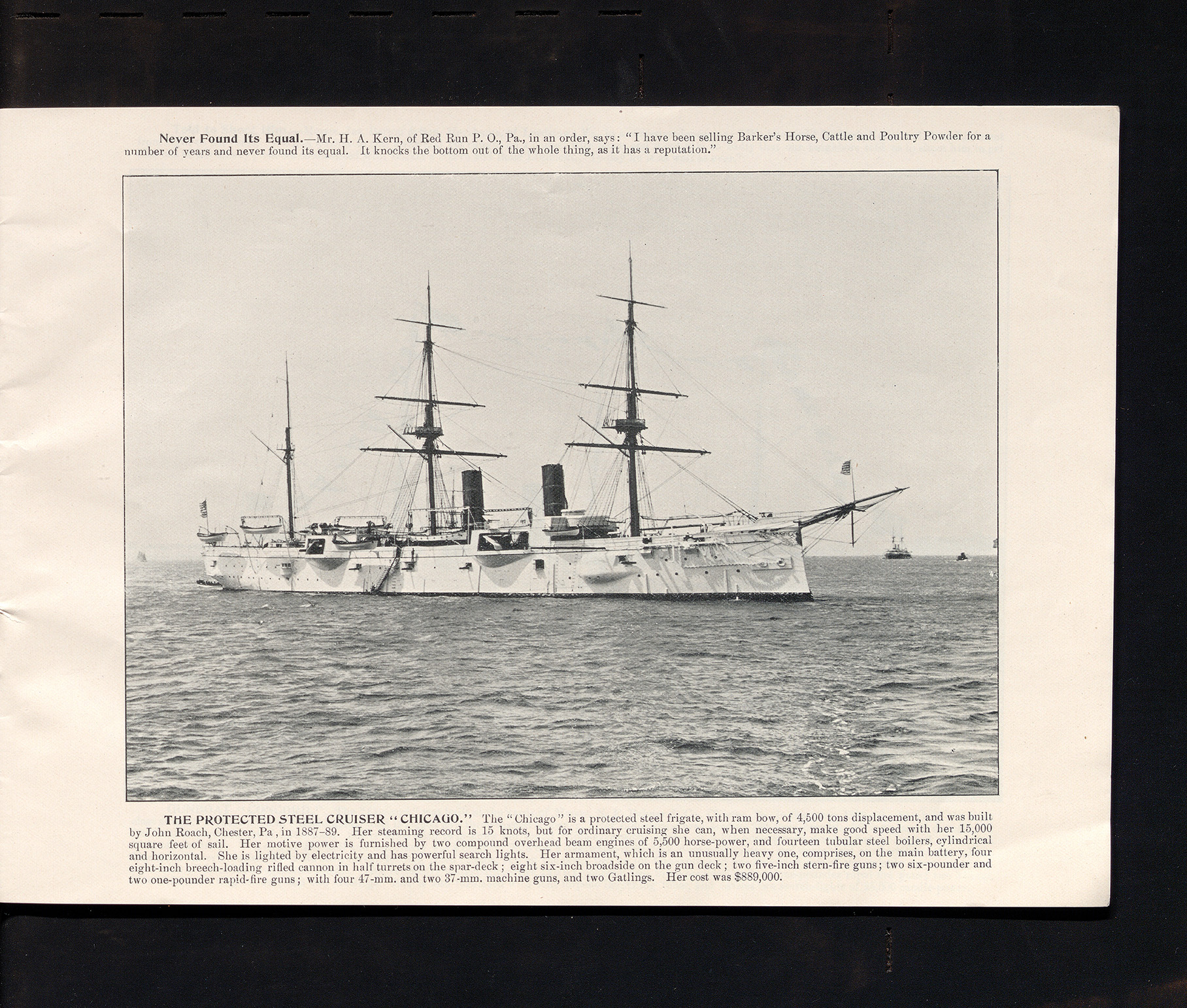
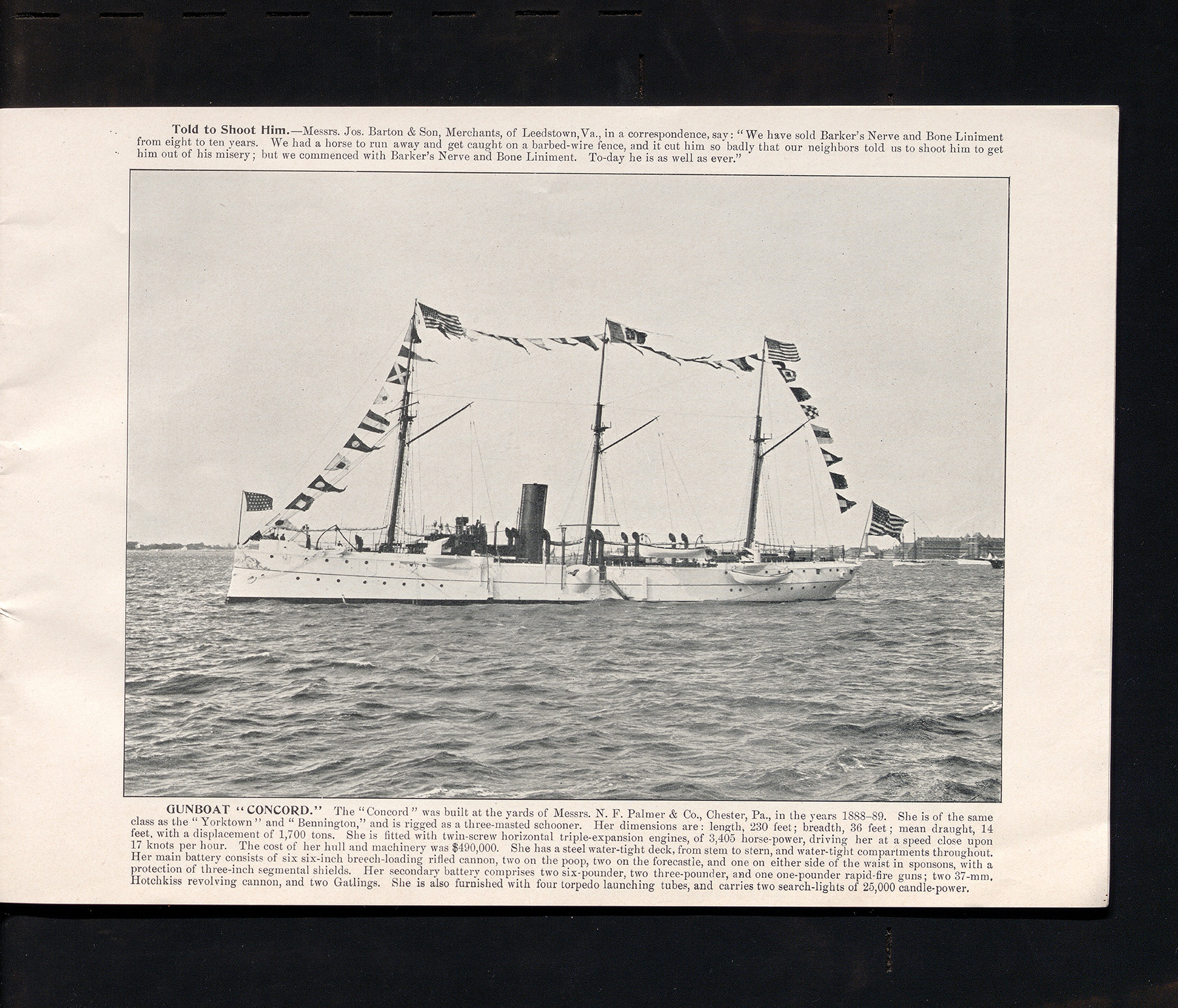
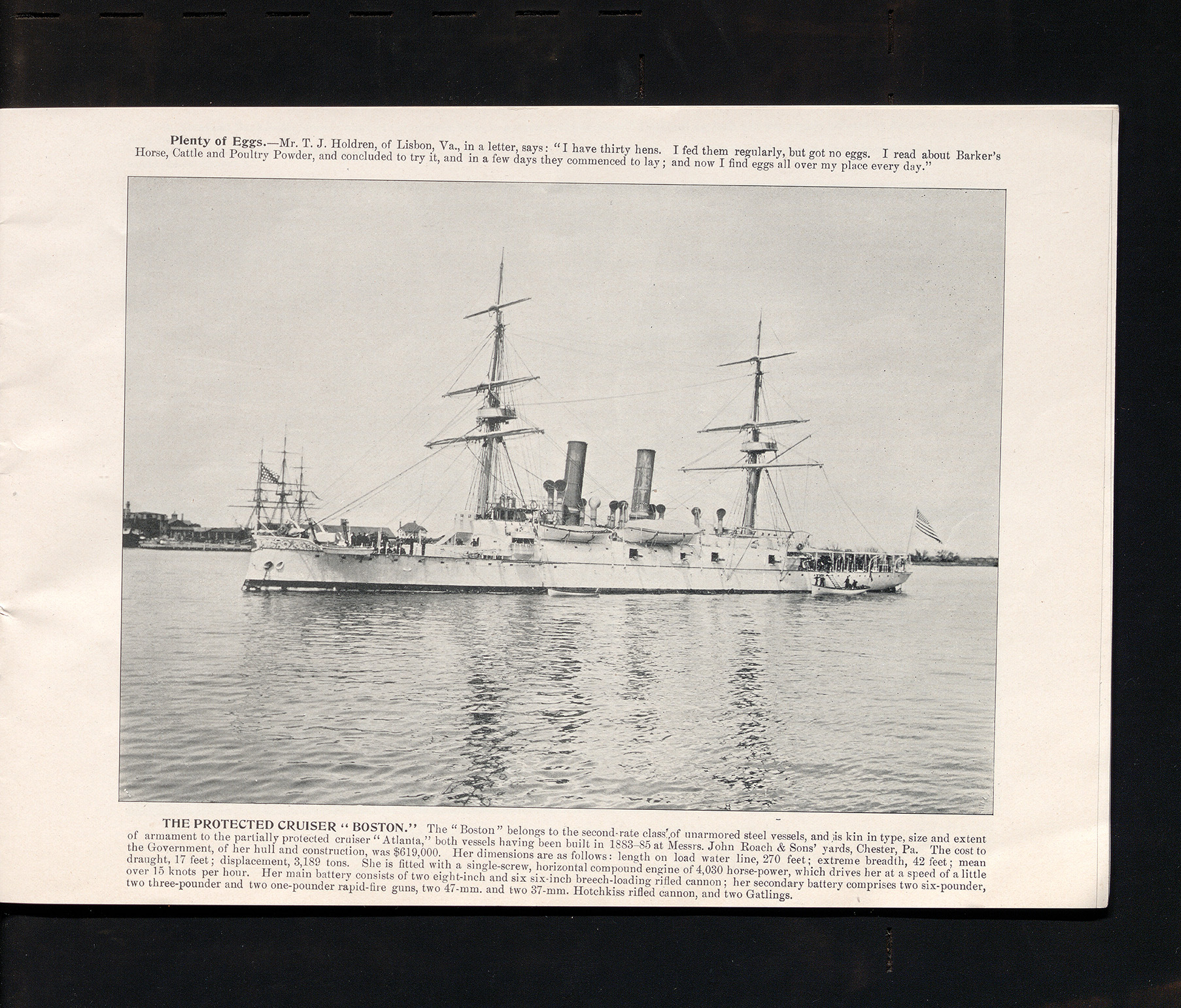
This advertising booklet contains photographs of twenty ships representing the “new navy,” all built in the late 1880s or early 1890s. Associating their own product with the Navy, the company printed above each photo a testimonial to the miraculous effectiveness of Barker’s Nerve and Bone Liniment. Apparently, it could cure everything from rheumatism to infertility (in hens, at least).

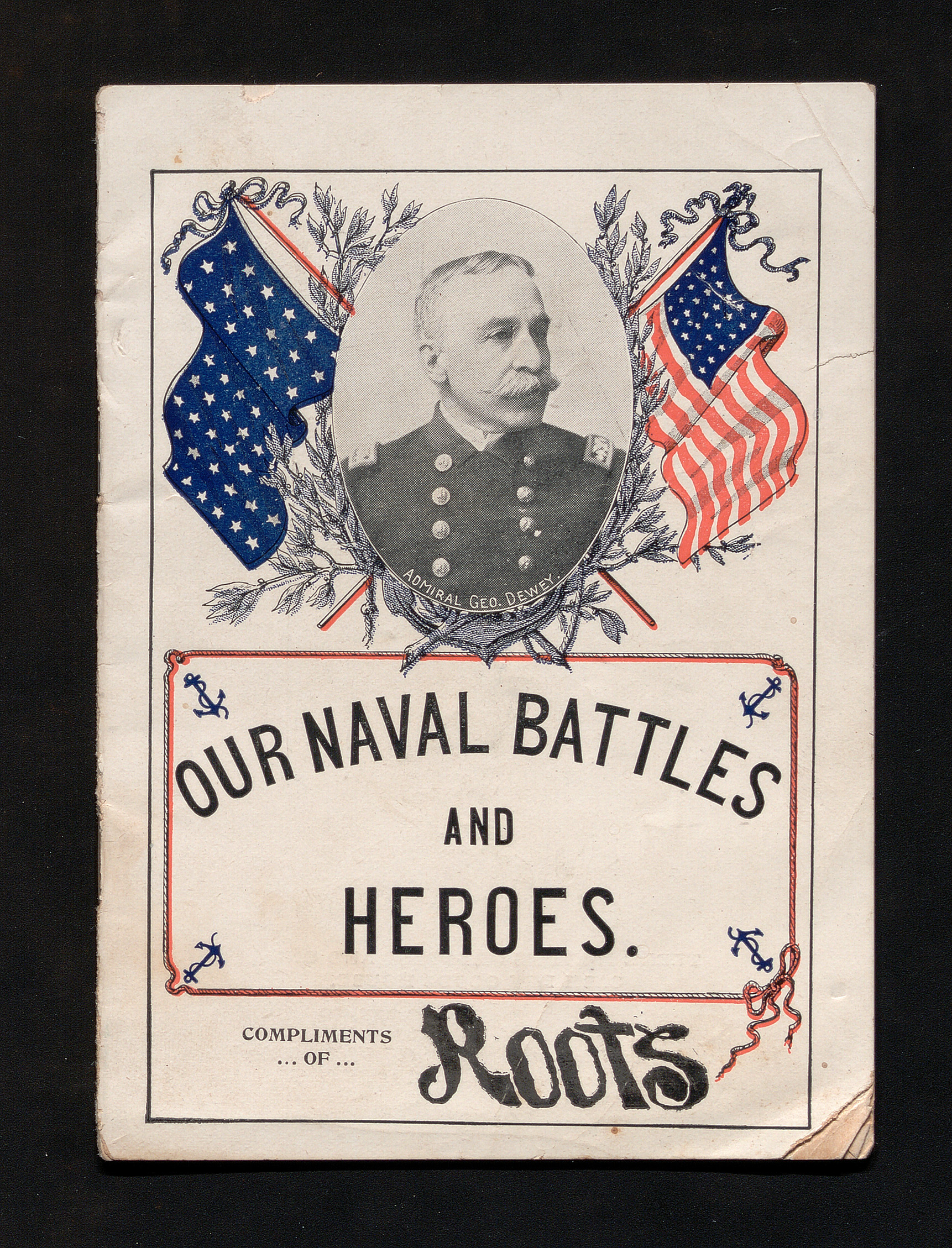
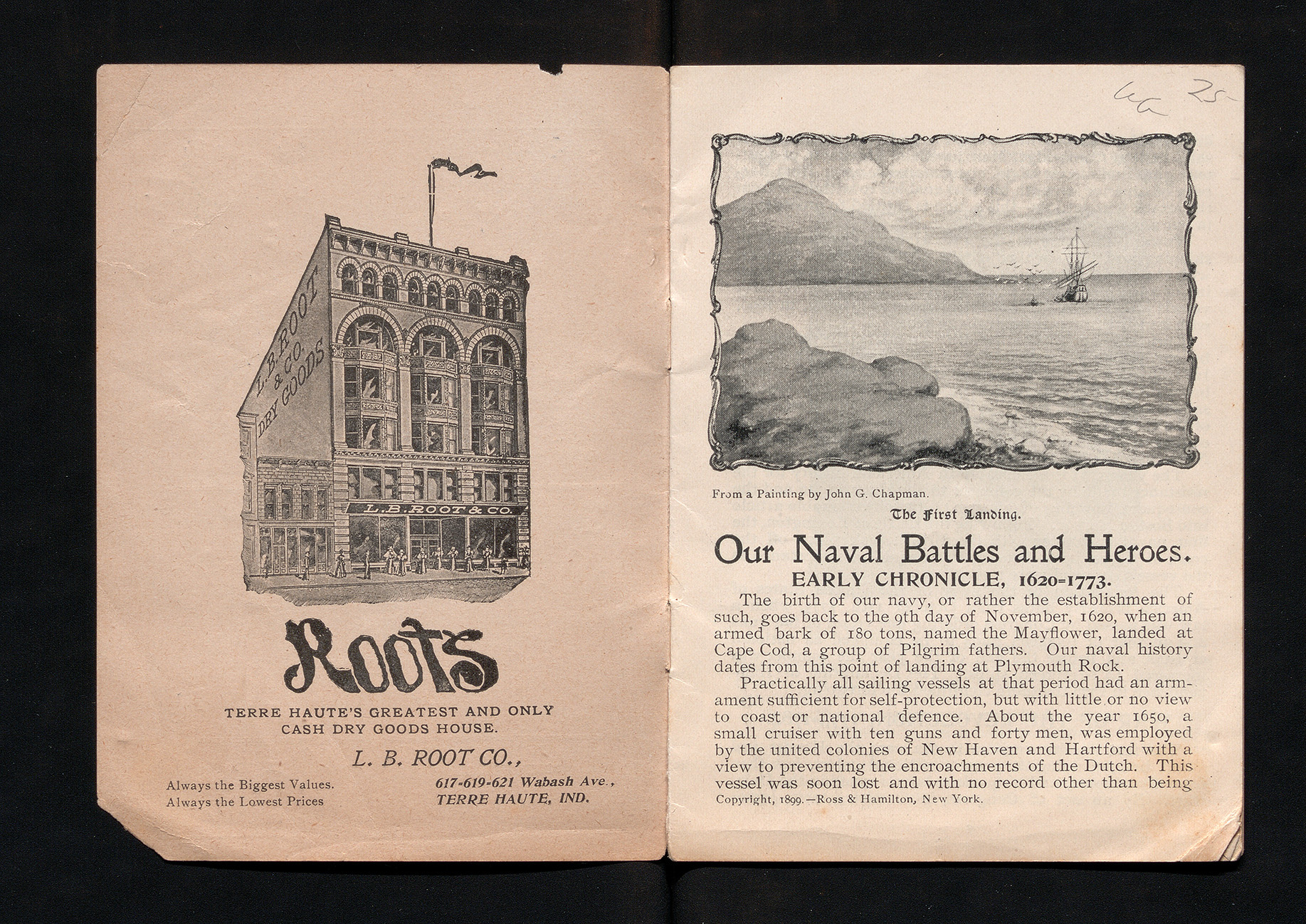
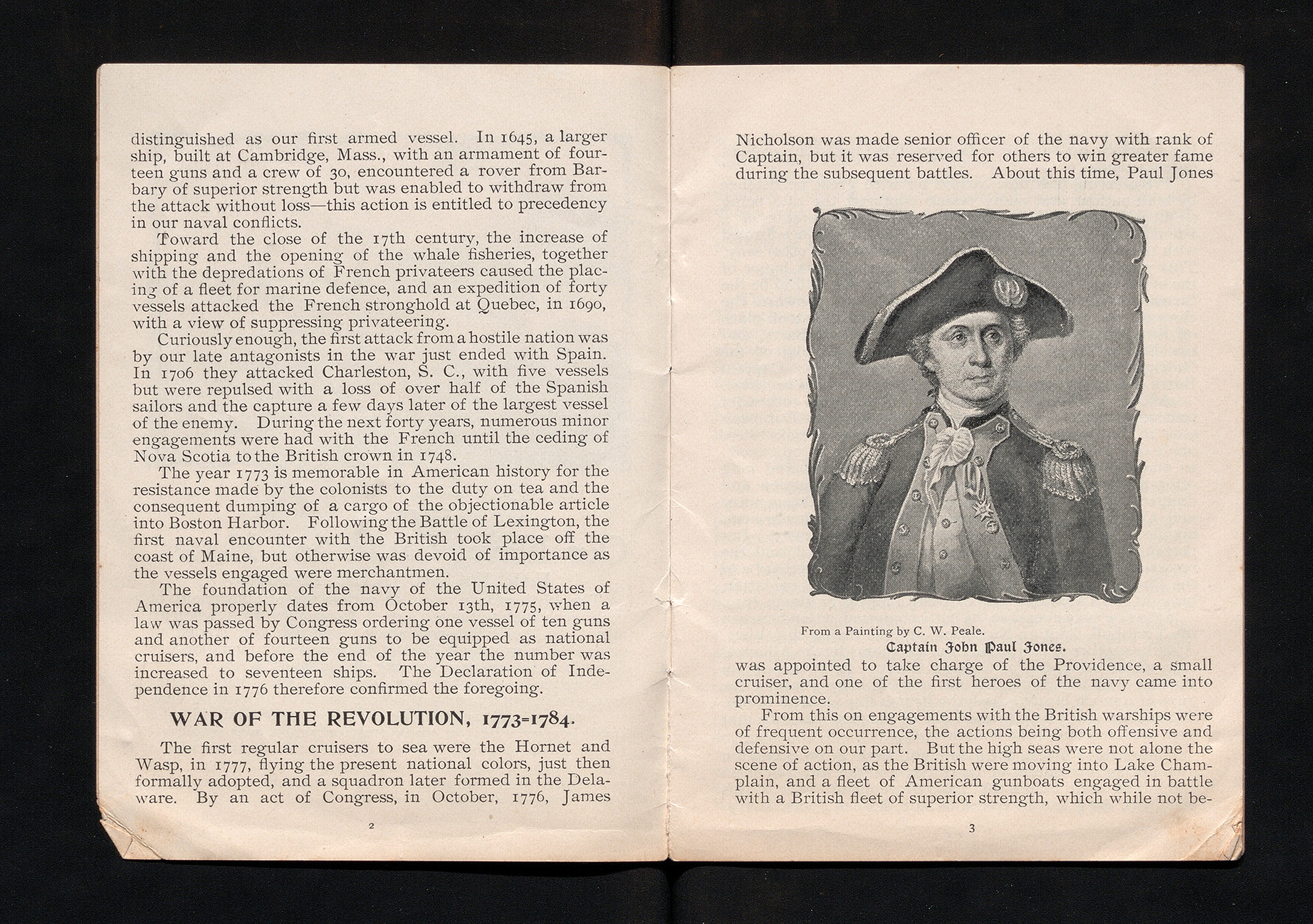
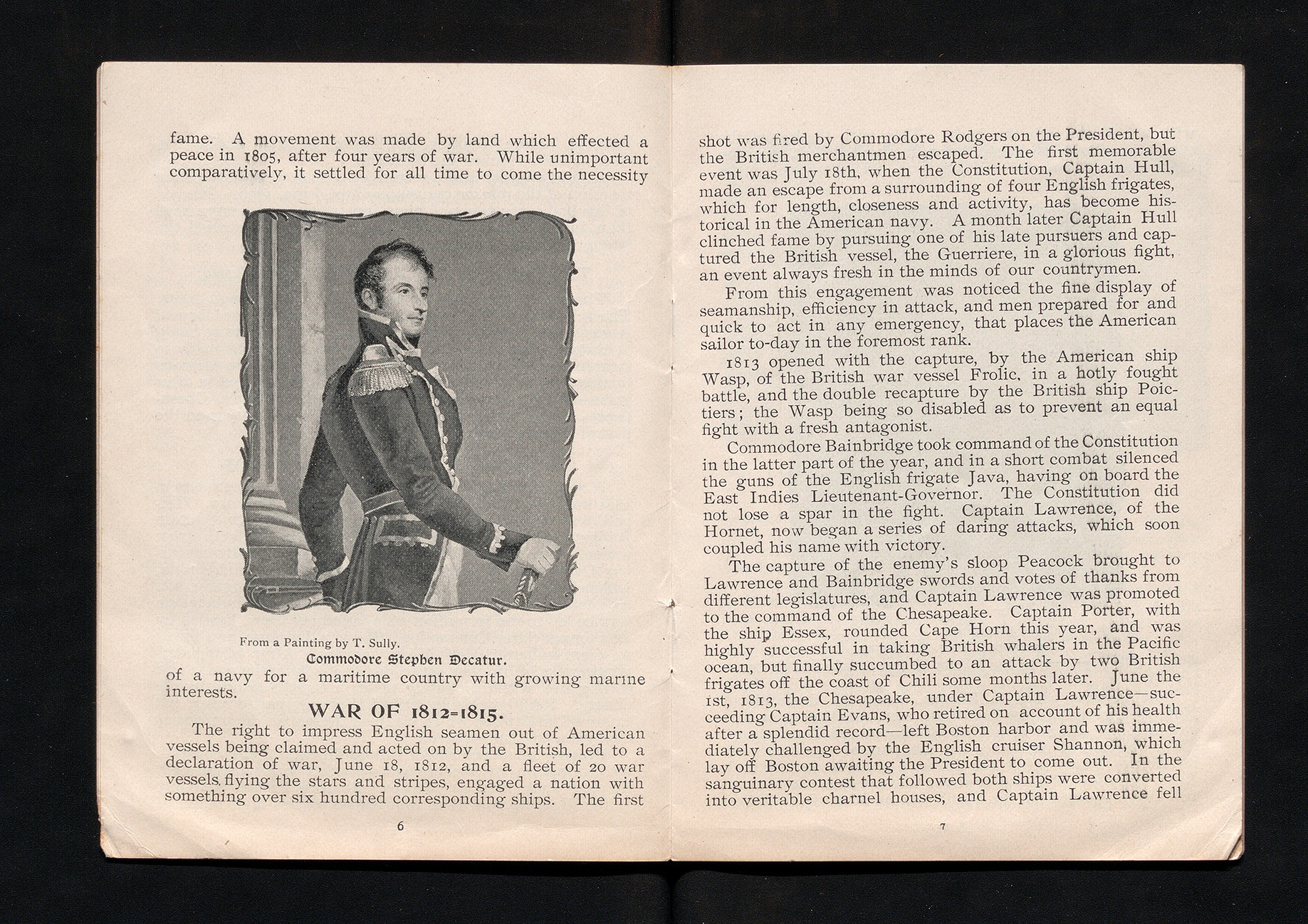
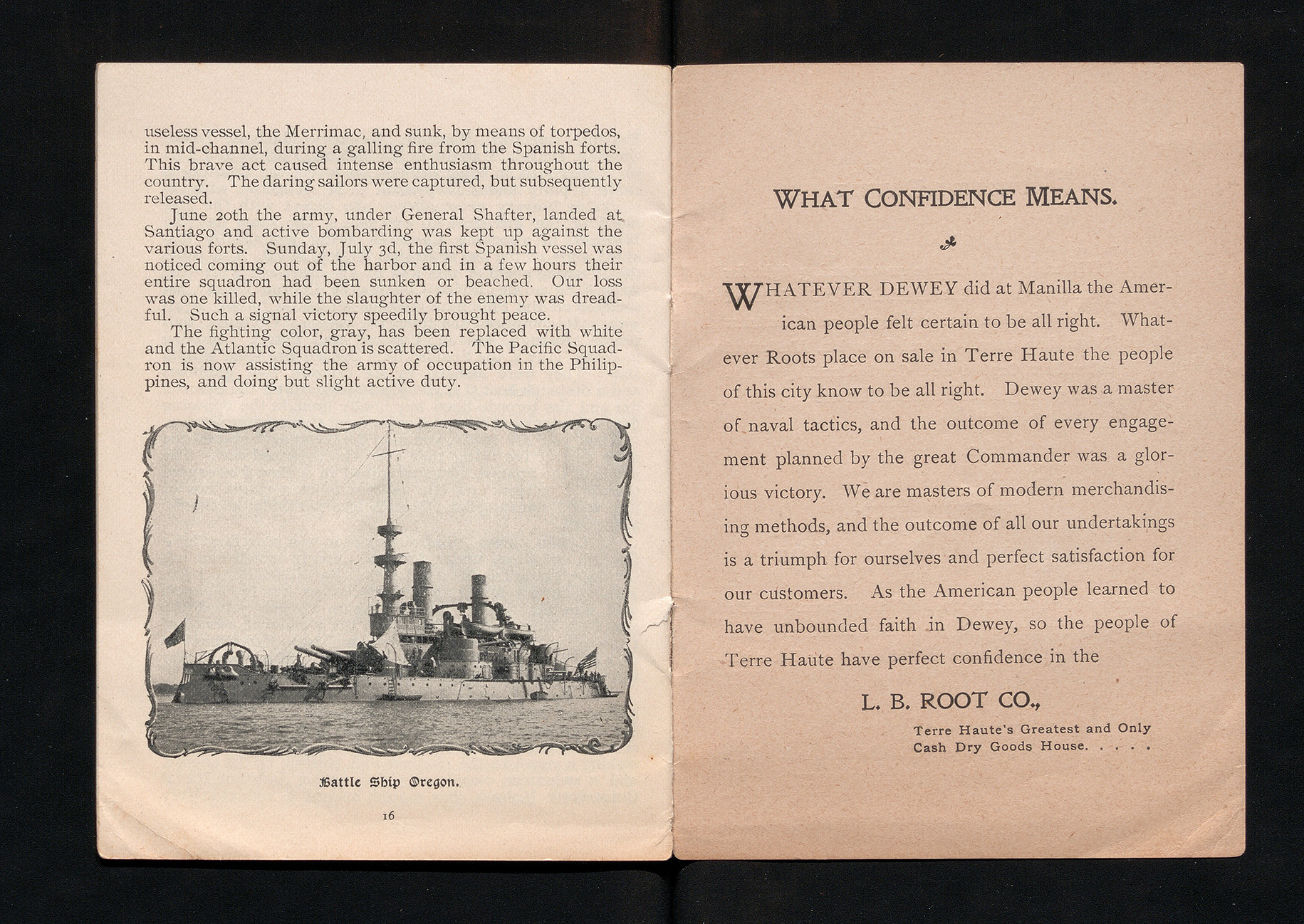
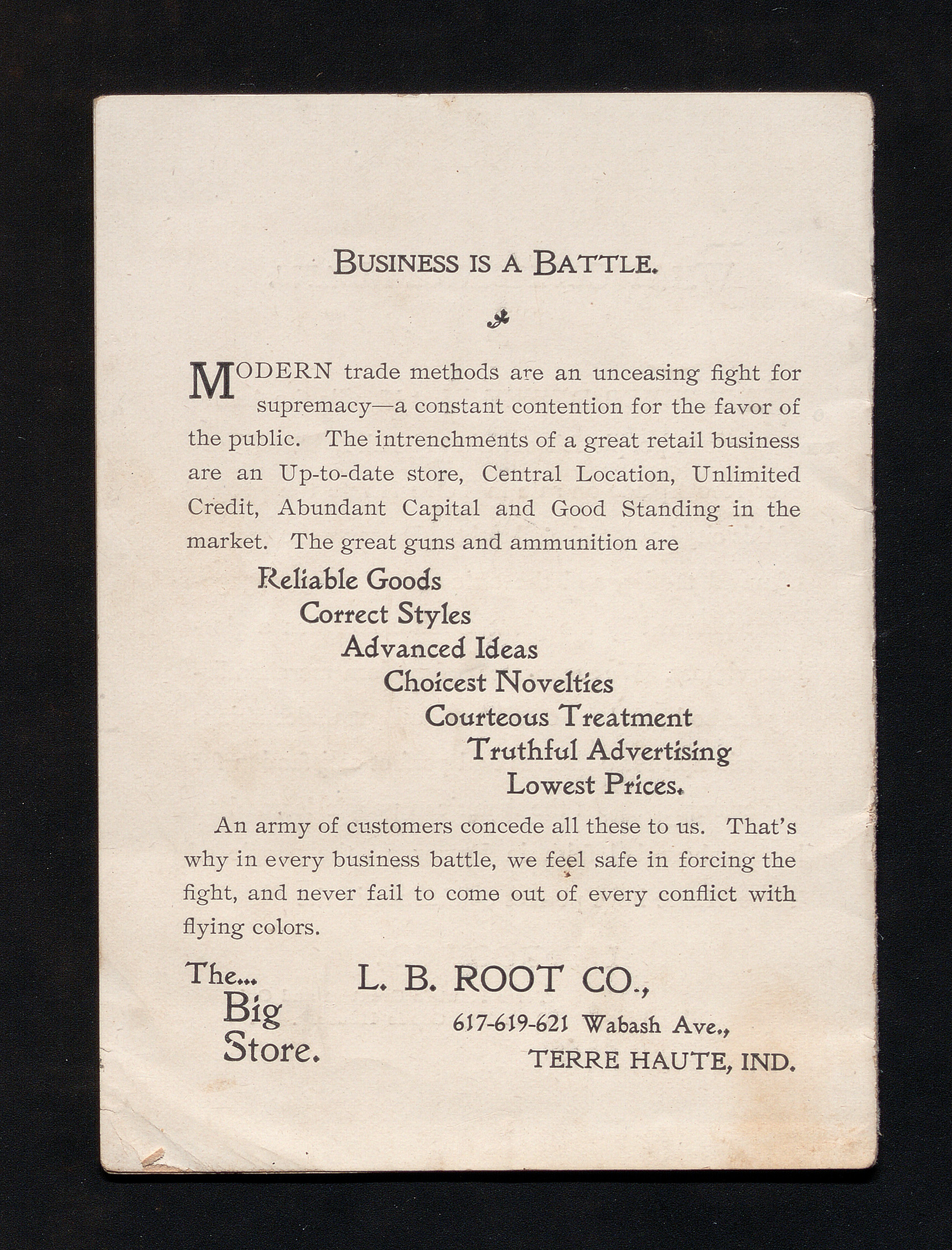
L.B. Root & Co., Our Naval Battles and Heroes (New York, 1899).

“Whatever Dewey did at Manilla the American people felt certain to be all right. Whatever Roots place on sale in Terre Haute the people of this city know to be all right. ... As the American people learned to have unbounded faith in Dewey, so the people of Terre Haute have perfect confidence in the L.B. Root Co., Terre Haute’s greatest and only cash dry goods house.” Merchants of all types were eager to attach themselves to the “new navy” with advertisements like this one for a dry goods store.

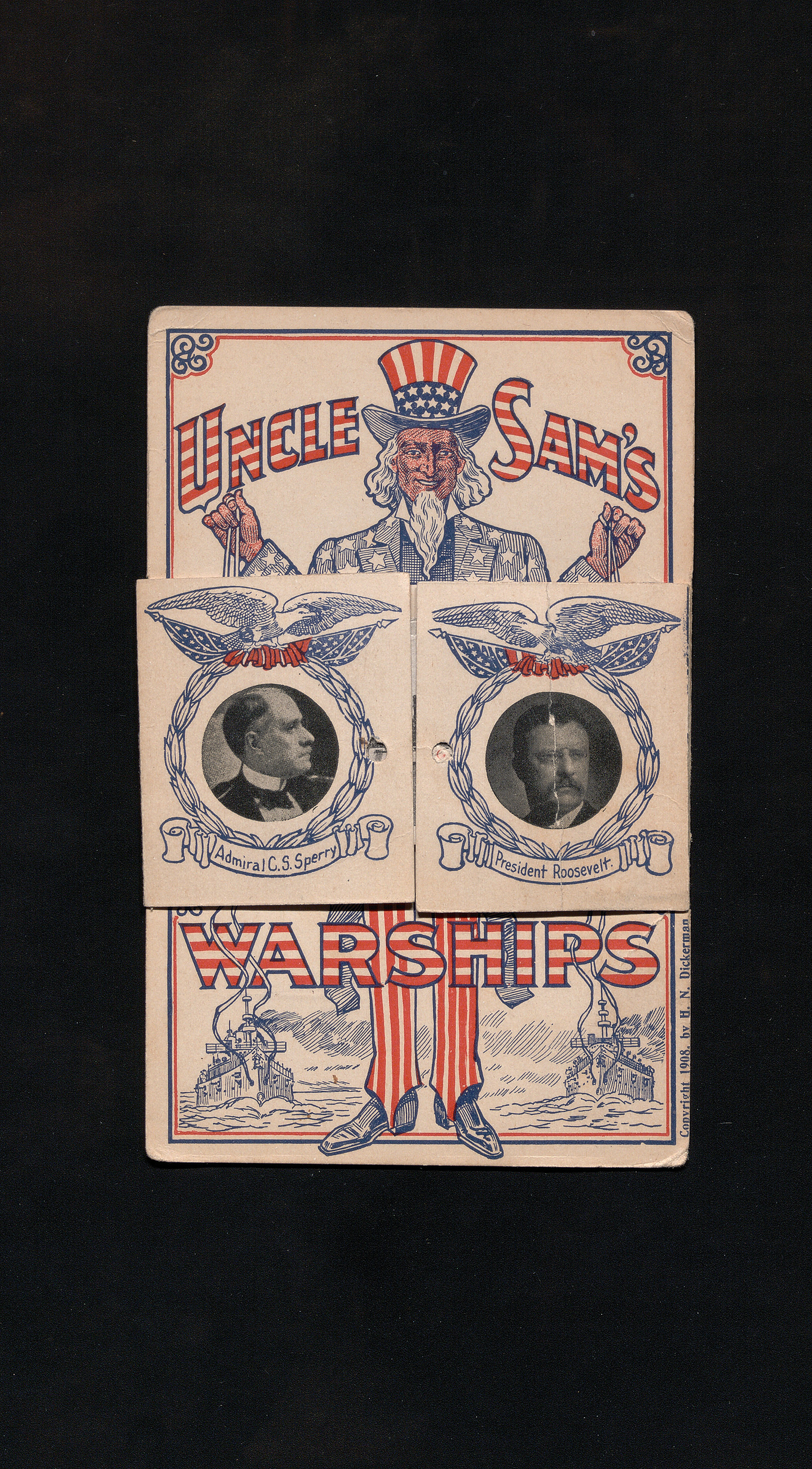
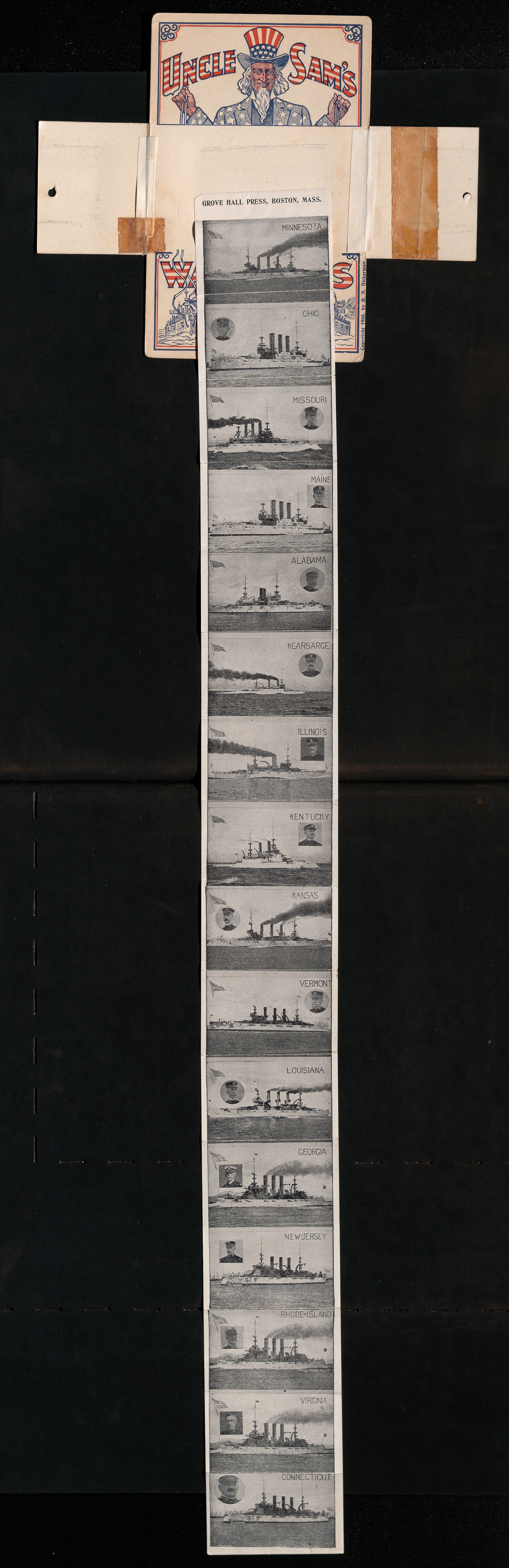
Uncle Sam’s Warships (Boston?, 1908). Fold-out postcard. Robert Staples Metamorphic Collection.

When Spain ceded the Philippines to the United States after the Spanish-American War in 1898, it became imperative for the U.S. to demonstrate the strength and reach of its navy. To this end, President Theodore Roosevelt (1858-1919) conceived of a tour around the world for sixteen new battleships, built with the latest technological advancements. The tour of the “Great White Fleet” garnered widespread acclaim both domestically and internationally, inspiring the creation of keepsakes such as this postcard.

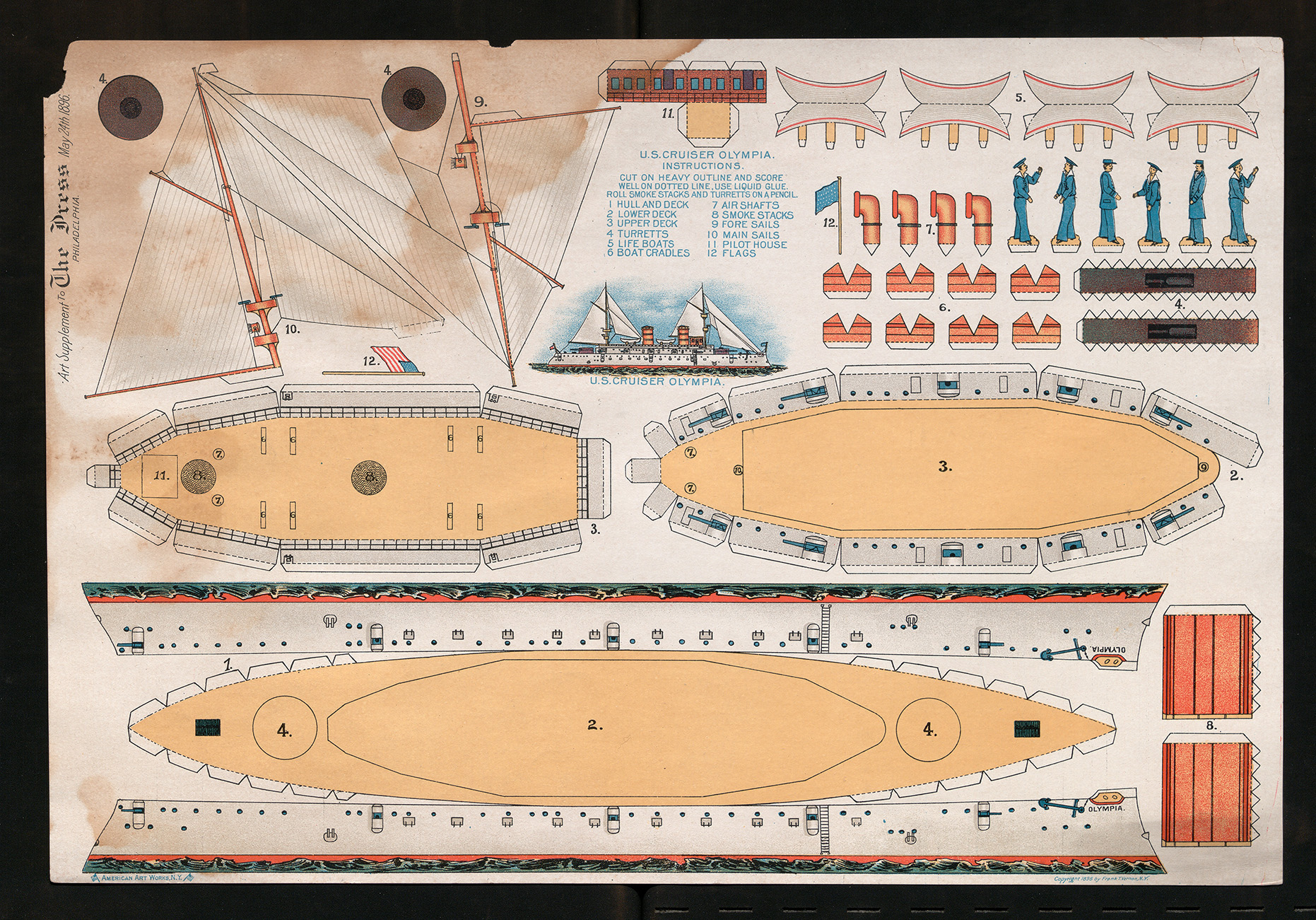
U.S. Cruiser Olympia, Art Supplement to The Philadelphia Press (May 24, 1896). Chromolithograph.

At the turn of the last century, newspapers would occasionally issue “art supplements.” Printed on thick paper, these would typically show a charming scene and could be hung for decoration. The one shown here, however, is much more fun. By cutting out and assembling the parts, one can construct the U.S.S. Olympia, complete with tiny sailors! Olympia was commissioned just one year earlier and was not yet famous as Commodore Dewey’s flagship at the Battle of Manila Bay in 1898.

Today, the Olympia is the oldest steel warship still afloat, is docked in Philadelphia, and is open for tours through the Independence Seaport Museum.