Celebrity

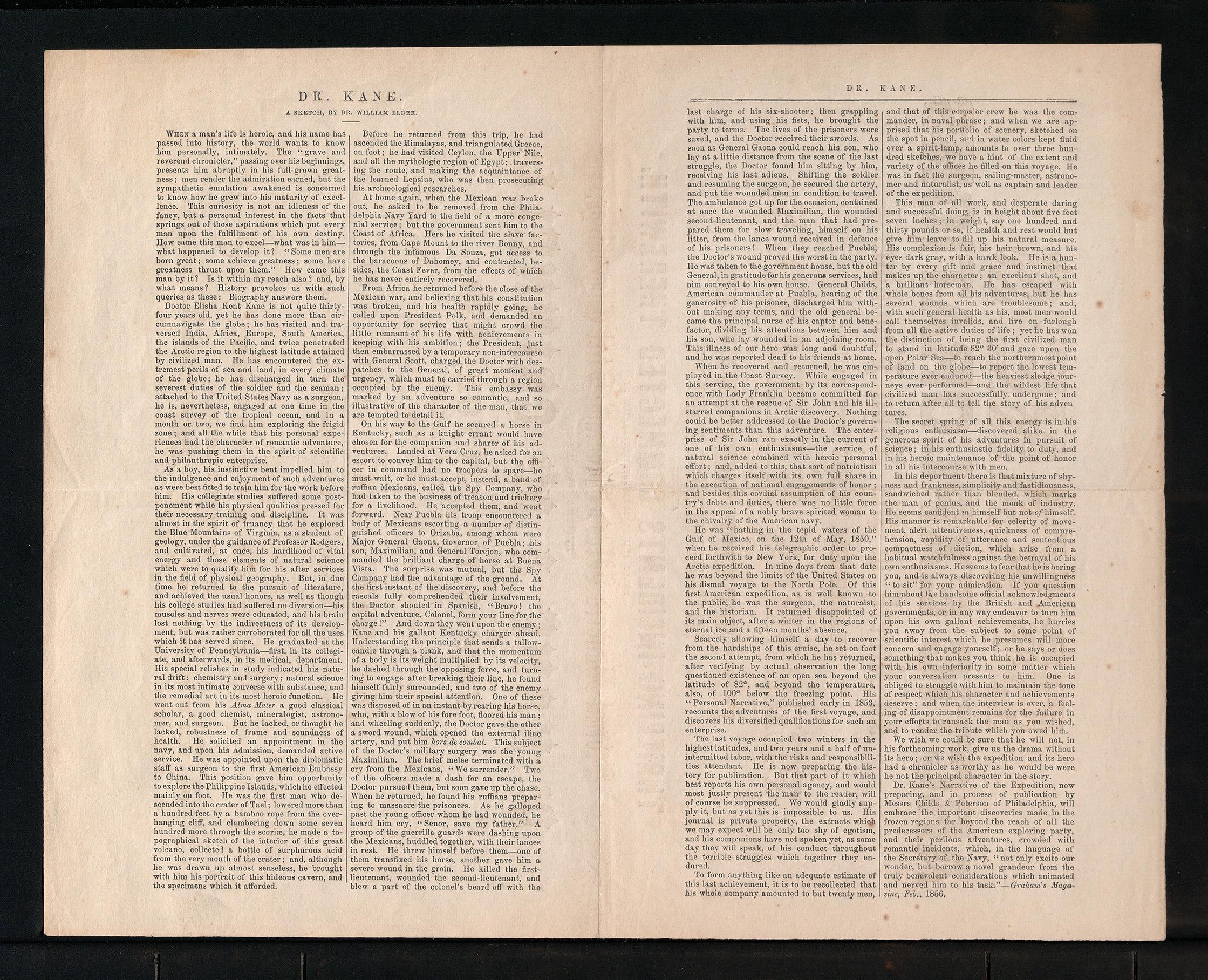
The success of the various naval expeditions, and their extensive coverage in news sources, led to the lionizing of some of their central figures. Such was the case for USN surgeon and Philadelphian Elisha Kent Kane (1820-1857). Kane was a bold adventurer, a charismatic and dynamic speaker, and dashingly handsome. He joined the first American attempt to locate and rescue the members of the lost British Franklin Expedition, and then was tapped to lead the second attempt. Both attempts at rescue failed, but Kane survived and a young nation chose him as their hero. His death just a short time later solidified his place in the American pantheon.
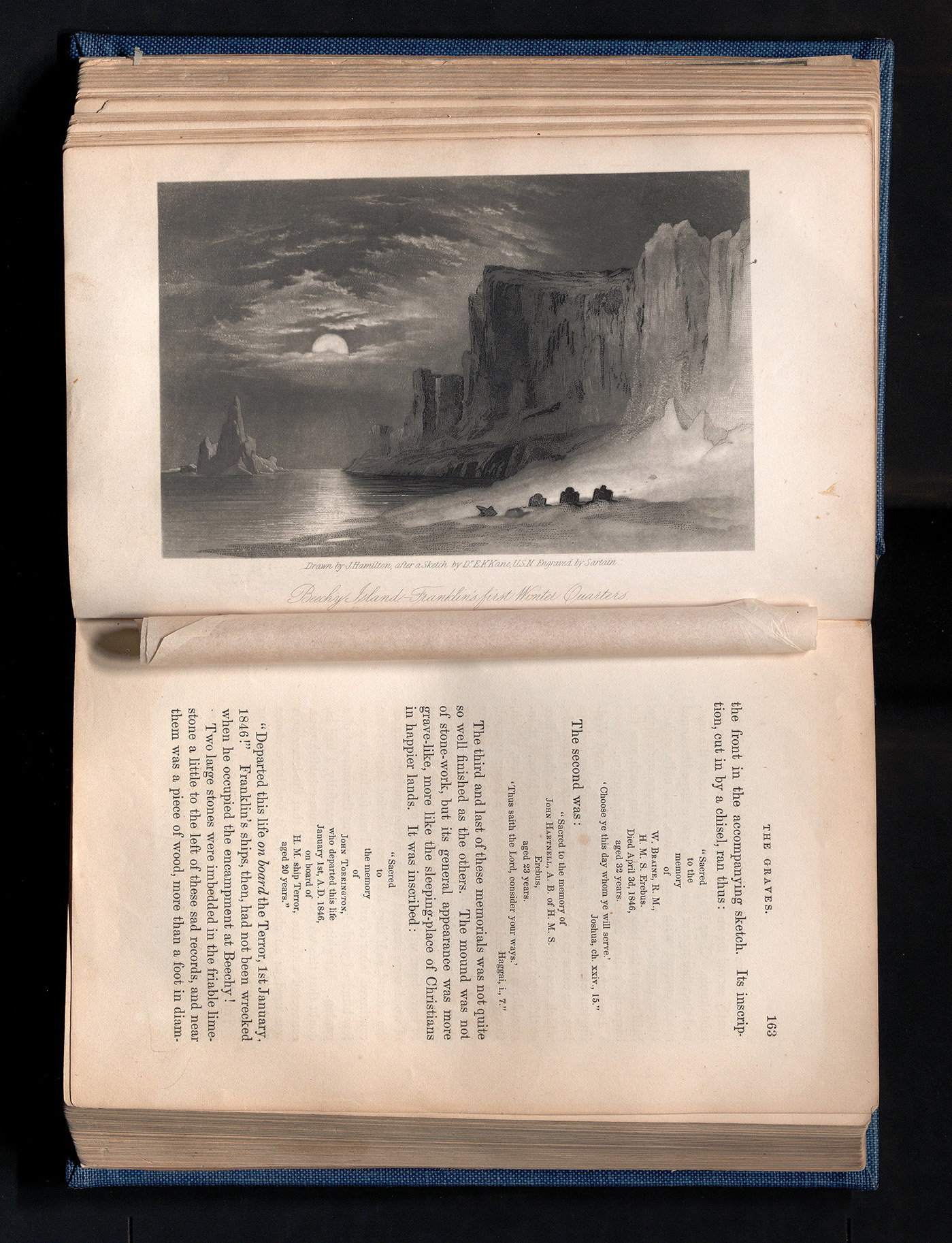
“Beechey Island—Franklin’s First Winter Quarters” in Elisha Kent Kane, The U.S. Grinnell Expedition in Search of Sir John Franklin: A Personal Narrative (New York, 1853). Engraving after a sketch by Elisha Kent Kane.

In December 1853, a devastating fire swept through the storehouses of Harper & Brothers, publisher of this Narrative on the first Grinnell expedition by Navy surgeon Elisha Kent Kane. Nearly the entire edition of Kane’s account was lost. Only presentation copies, already sent to the author, survived. One of these copies, shown here, was gifted to the Library Company with Kane’s personal regards.

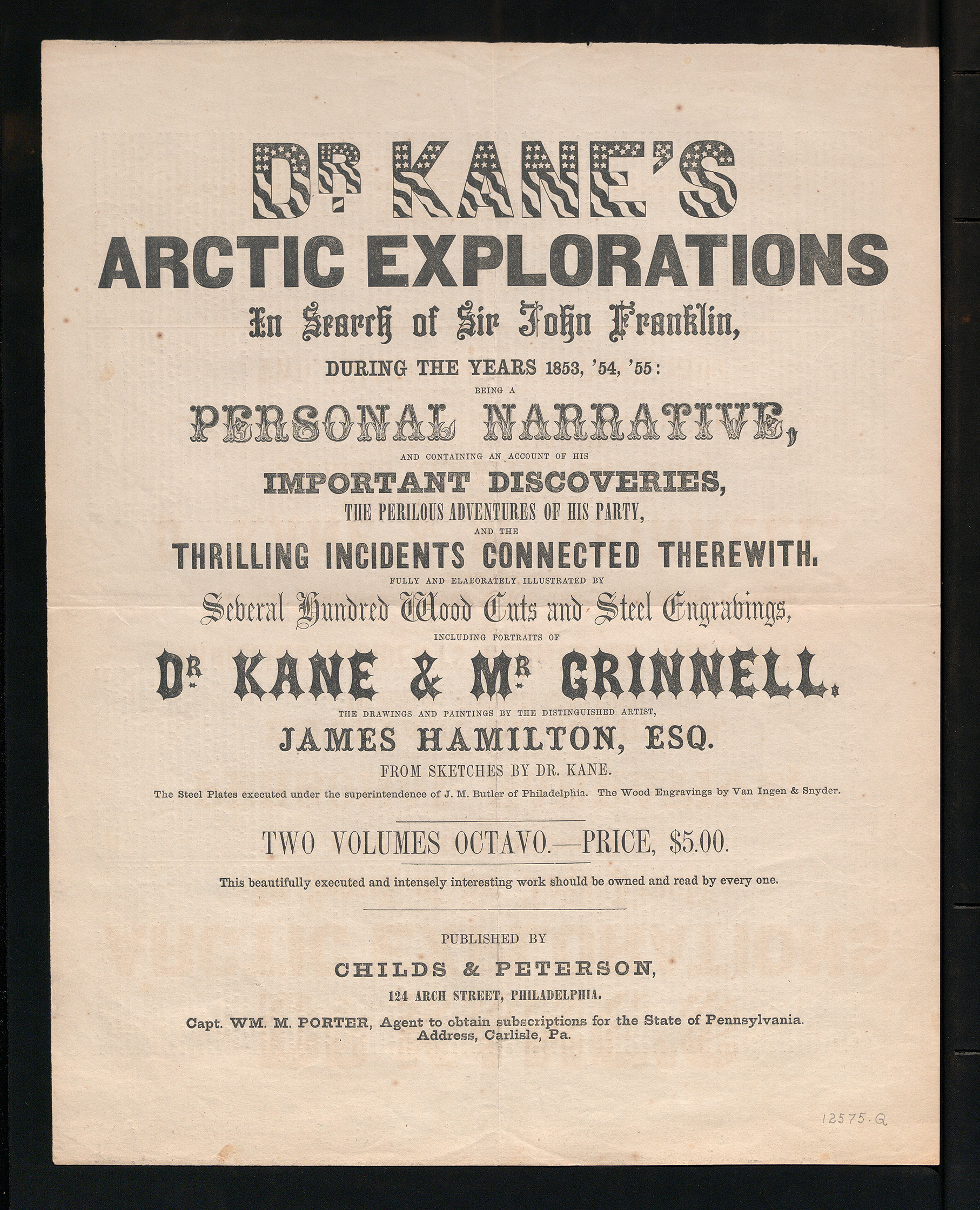
Publisher’s Advertisement for Elisha Kent Kane, Arctic Explorations: The Second Grinnell Expedition in Search of Sir John Franklin, 1853, ‘54, ‘55 (Philadelphia: Childs and Peterson, 1856).

The publishers of Elisha Kent Kane’s account of his second expedition to rescue Sir John Franklin (1786-1847) were certainly aware of the public’s keen interest. They attempted to stir up even more with this advertisement for Kane’s book, which is also featured in the exhibition.

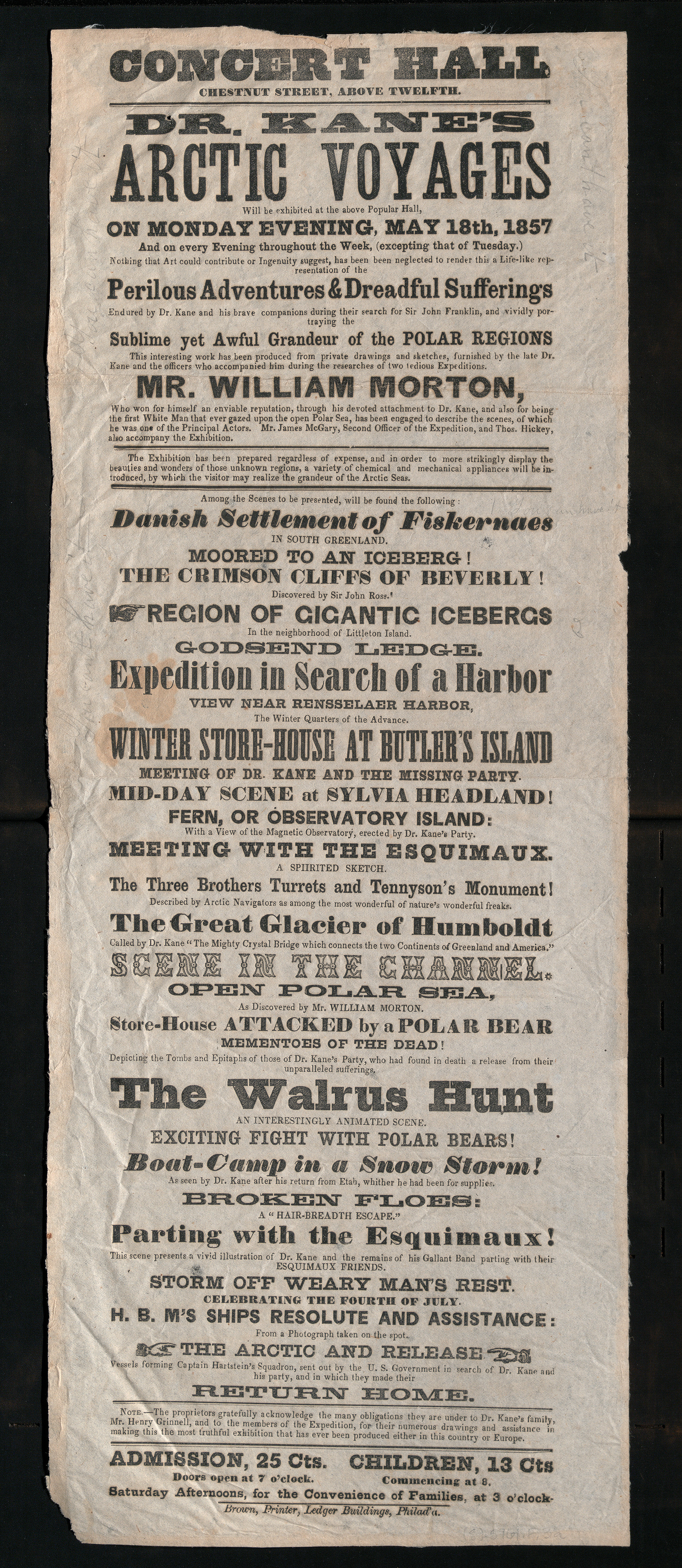
Dr. Kane’s Arctic Voyages Will be Exhibited ... Monday Evening, May 18th, 1857 and on Every Evening throughout the Week (Philadelphia, 1857). Playbill. McAllister Collection.

Beyond reading about naval expeditions, audiences were eager to engage with these stories through other mediums as well. This playbill advertises a theatrical reenactment of Elisha Kent Kane’s Arctic adventures, to be held at the Concert Hall on Chestnut Street in Philadelphia.

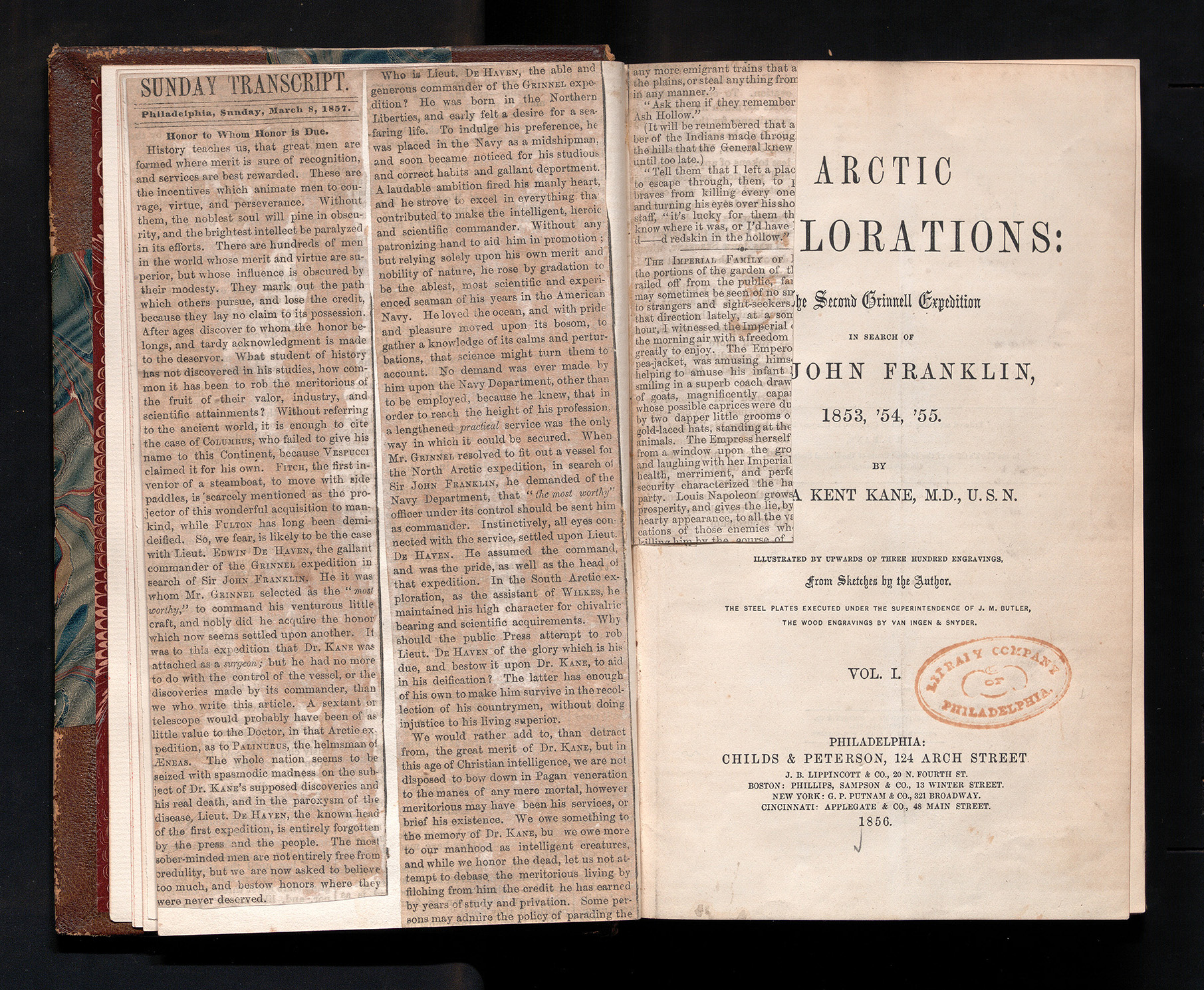
Elisha Kent Kane, Arctic Explorations: The Second Grinnell Expedition in Search of Sir John Franklin, 1853, ‘54, ‘55 (Philadelphia, 1856).

Elisha Kent Kane died in February 1857, due in part to the accumulated stress of Arctic exploration. Just weeks after his death, the Sunday Transcript, a Philadelphia newspaper, published a scathing anonymous article criticizing the city’s residents for deifying Kane while overlooking others more deserving of recognition, and more humble. Library Company staff promptly pasted the article into our copy of Kane’s account of the second Grinnell expedition. This preserved editorializing is all the more striking given Kane’s status as a Library Company shareholder at the time of his death. An advertisement for this book is also featured in the exhibition.

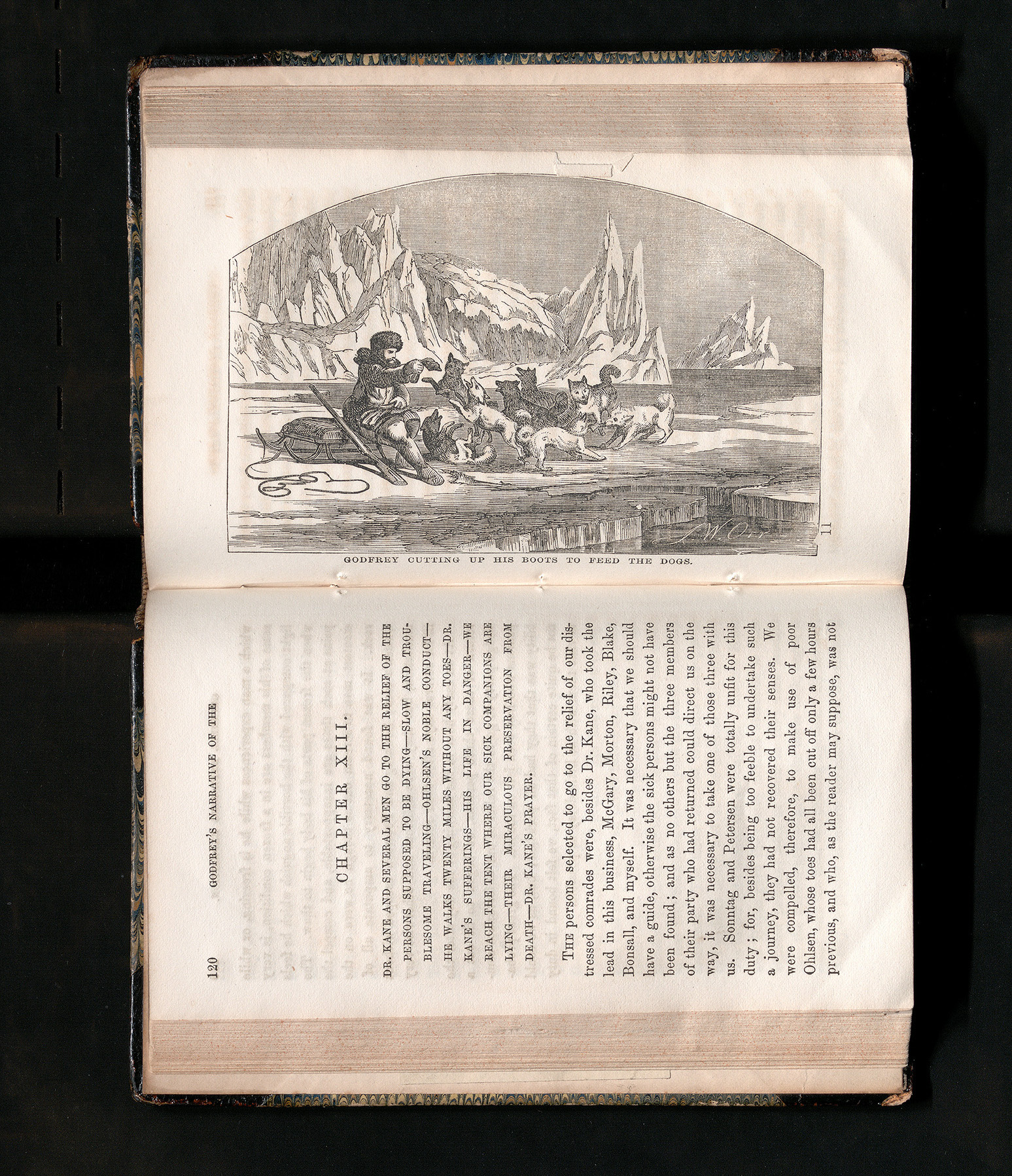
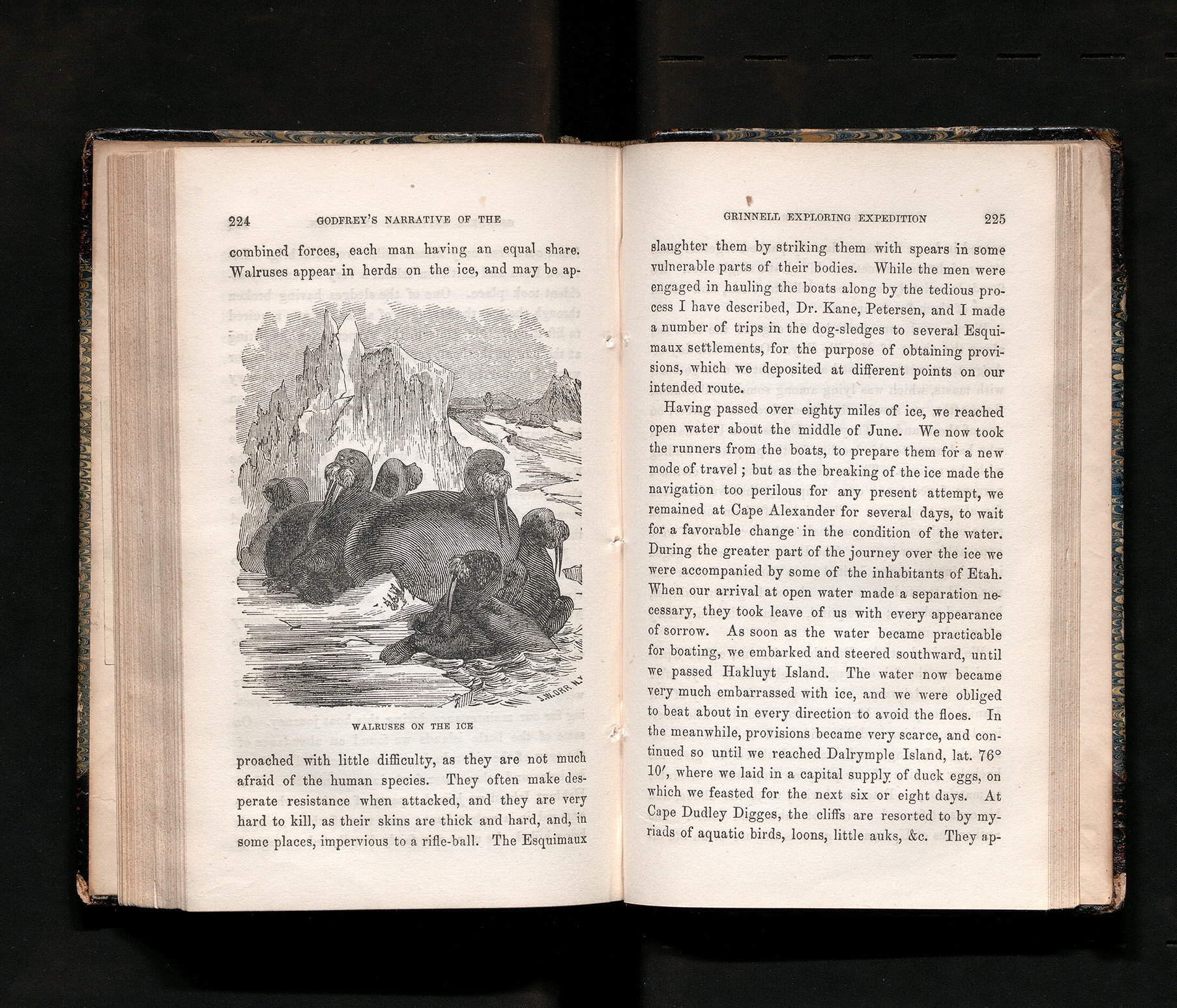
William C. Godfrey, Godfrey’s Narrative of the Last Grinnell Arctic Exploring Txpedition [sic], in Search of Sir John Franklin, 1853-4-5. With a Biography of Dr. Elisha K. Kane, from the Cradle to the Grave (Philadelphia, 1857).

As leader of the second Grinnell expedition, Elisha Kent Kane found himself challenged by problematic crew members. The worst offender was William Godfrey. Kane struggled to control him and contemplated extreme measures. In his diary, Kane explained why Godfrey was still alive to write his Narrative: “My conscience tells me that almost any measure against him would be justifiable ... but an instinctive aversion to extreme measures (and an ignorance of what may be legal) binds my hands.” Godfrey prefaced his highly critical Narrative by lamenting that Kane was no longer around to defend himself.

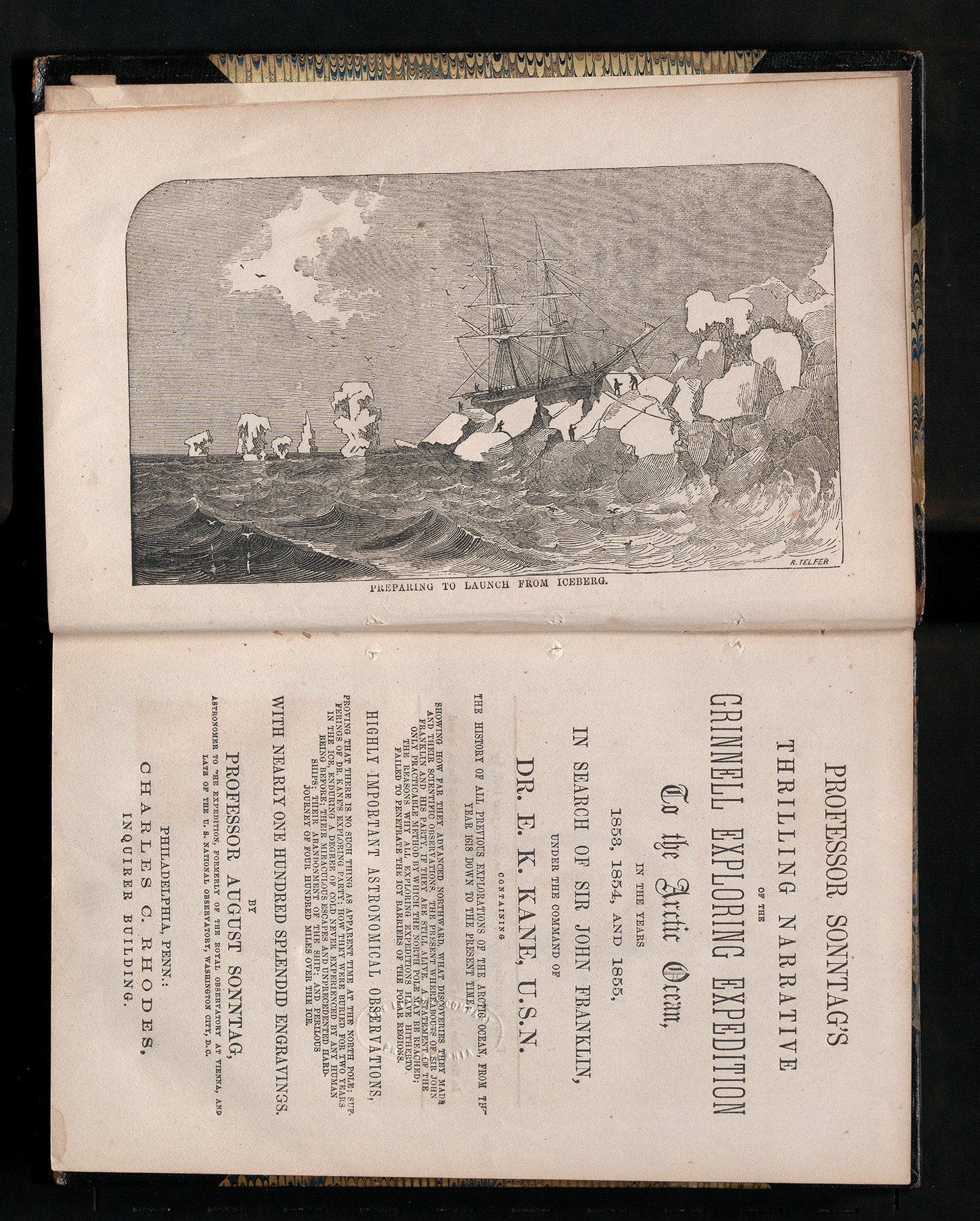
Charles C. Rhodes (publisher), Professor Sonntag’s Thrilling Narrative of the Grinnell Exploring Expedition to the Arctic Ocean, in the Years 1853, 1854, and 1855, in Search of Sir John Franklin, under the Command of Dr. E.K. Kane (Philadelphia, 1857).

August Sonntag (1832-1860) was a German explorer who accompanied Elisha Kent Kane on the second Grinnell expedition to rescue Sir John Franklin (1786-1847). After returning from the Arctic, Sonntag joined another expedition in Mexico. During his absence, publisher Charles Rhodes released this literary imposture in his name. Sonntag disavowed the work, referring to it as “a shameful imposition,” and other members of the expedition refuted its authenticity. Despite the controversy, readers were captivated, leading to strong sales and multiple reprints.

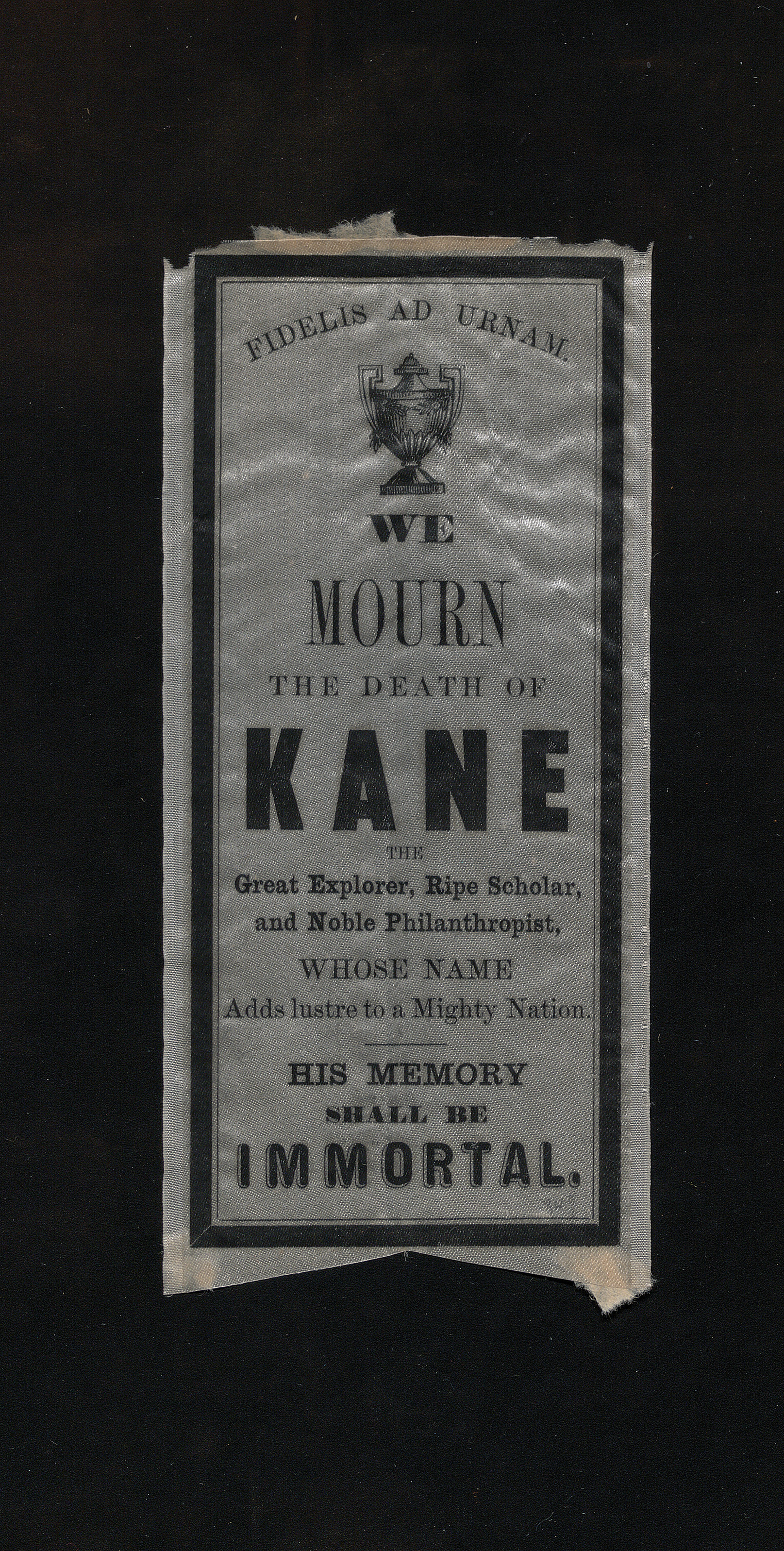
Fidelis Ad Urnam. We Mourn the Death of Kane (Philadelphia, 1857). Mourning ribbon. McAllister Collection.

Elisha Kent Kane was in Havana, Cuba, attempting to recover his health when he died. His body was transported back to Philadelphia by boat and funeral train, and mourners gathered along the route to pay their respects. His funeral in Philadelphia was the largest the nation had seen to that point. His mourners could wear ribbons like this one to demonstrate their feelings toward the departed.