Shipboard Life

Shipboard life rarely met the romantic ideals of the popular imagination. What was daily life actually like onboard? Friendships were formed and stories shared. Merriment was made and bread broken. Accidents happened and losses were mourned. The USN and USMC tried to supply all the needs of their men, but other supports were put in place as well, to ensure the physical and spiritual health of its crews, both on sea and on land. All in all, shipboard life in peacetime very much mirrored life on land, with some necessary accommodations for the unpredictable nature of the wide open sea.
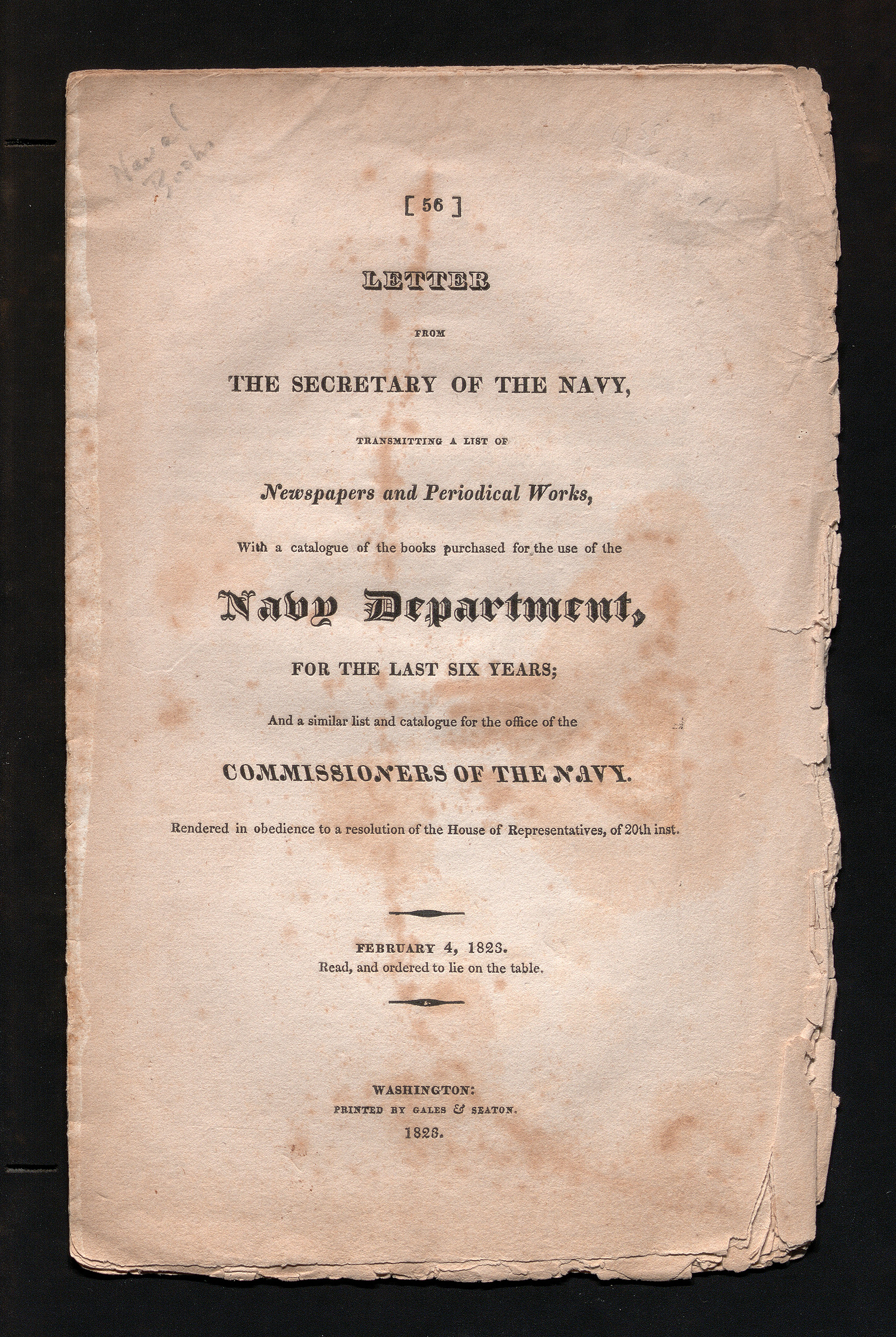
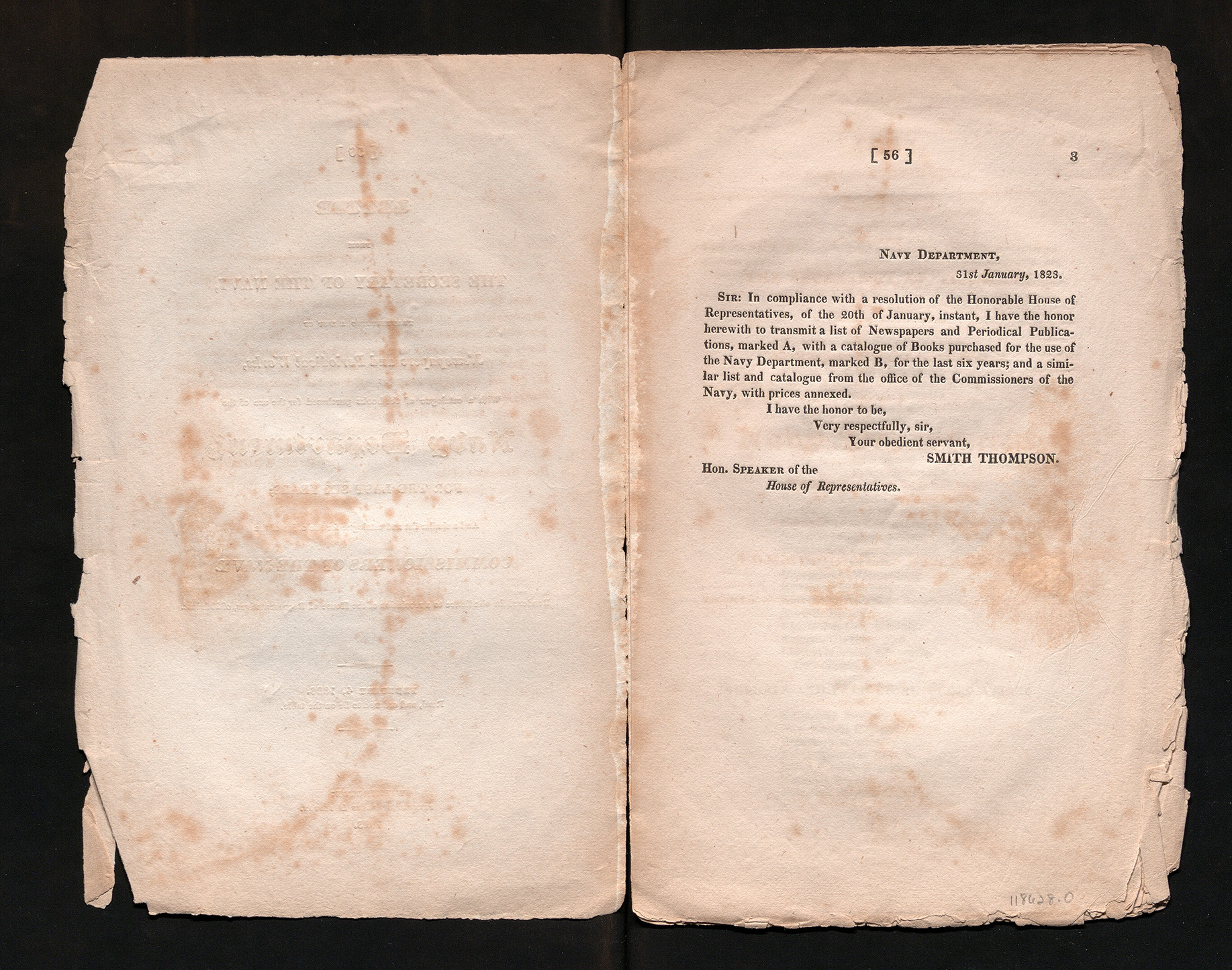
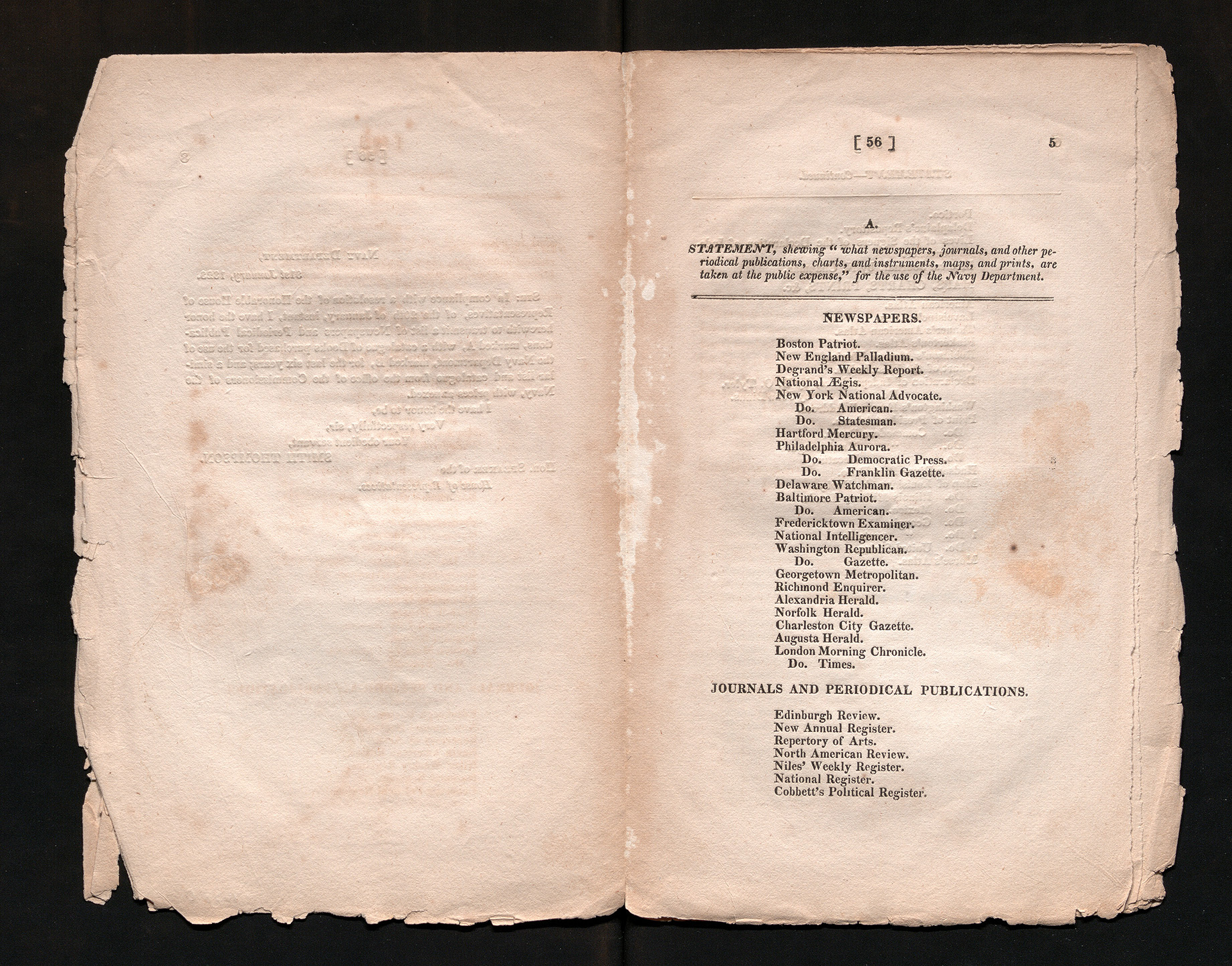
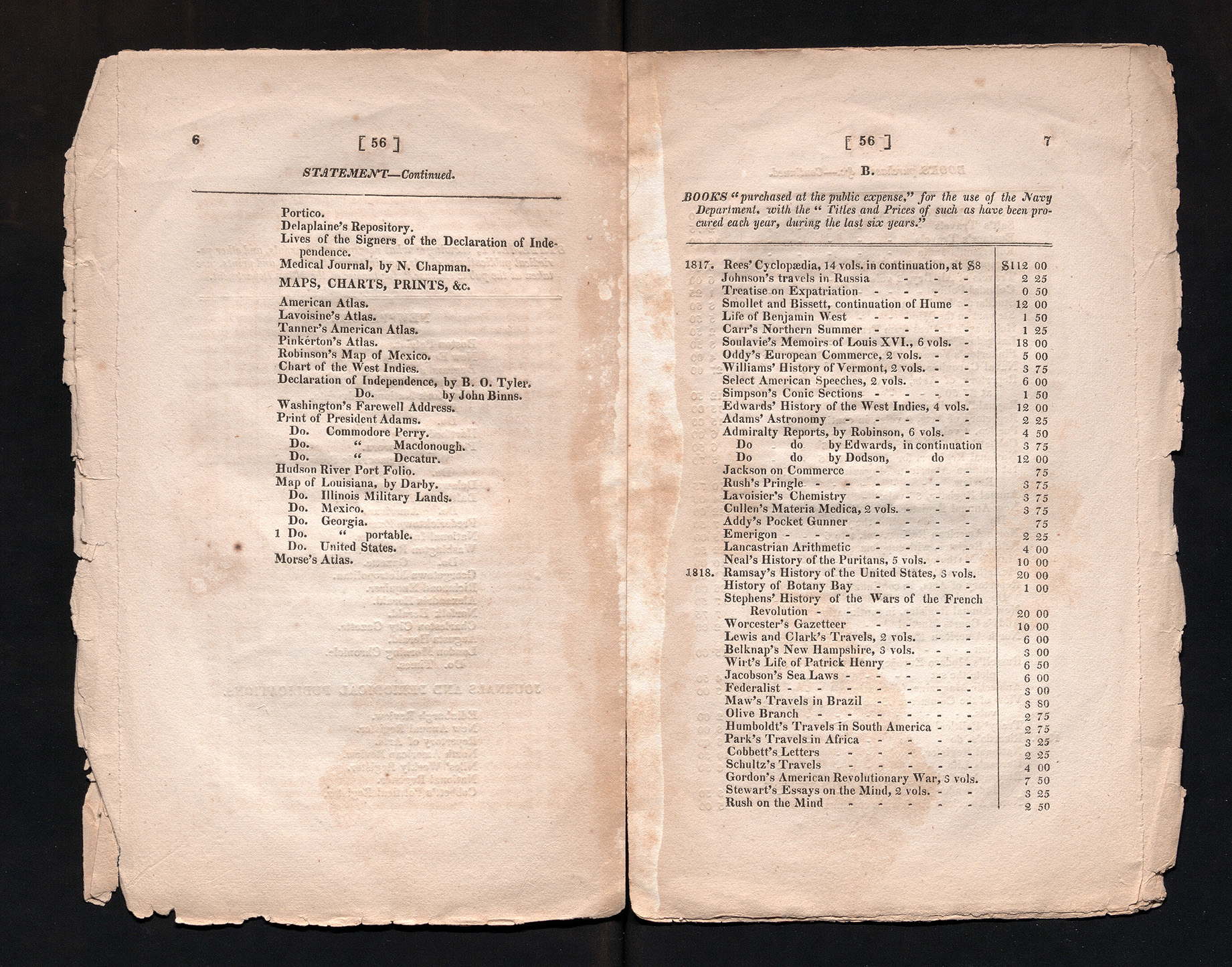
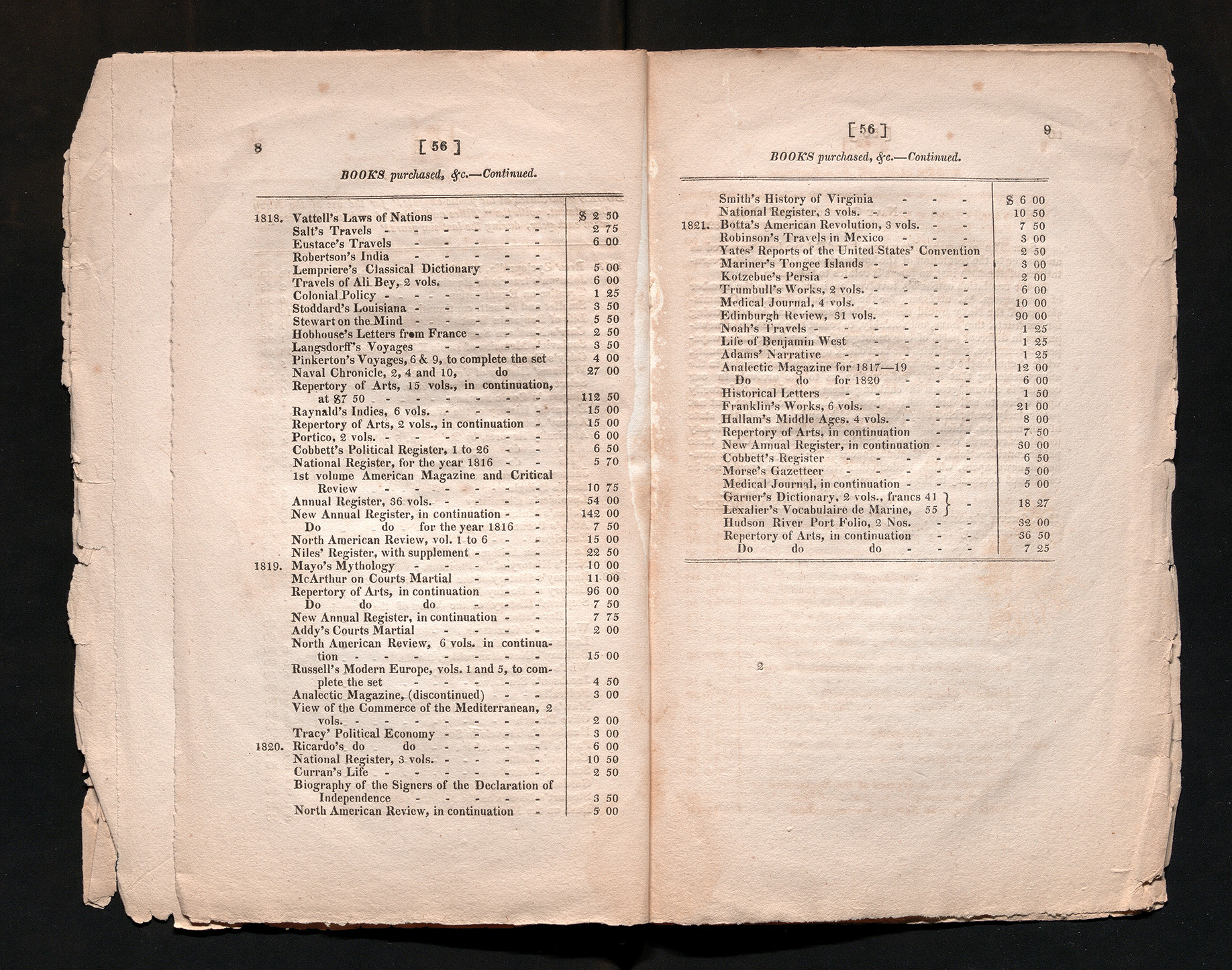
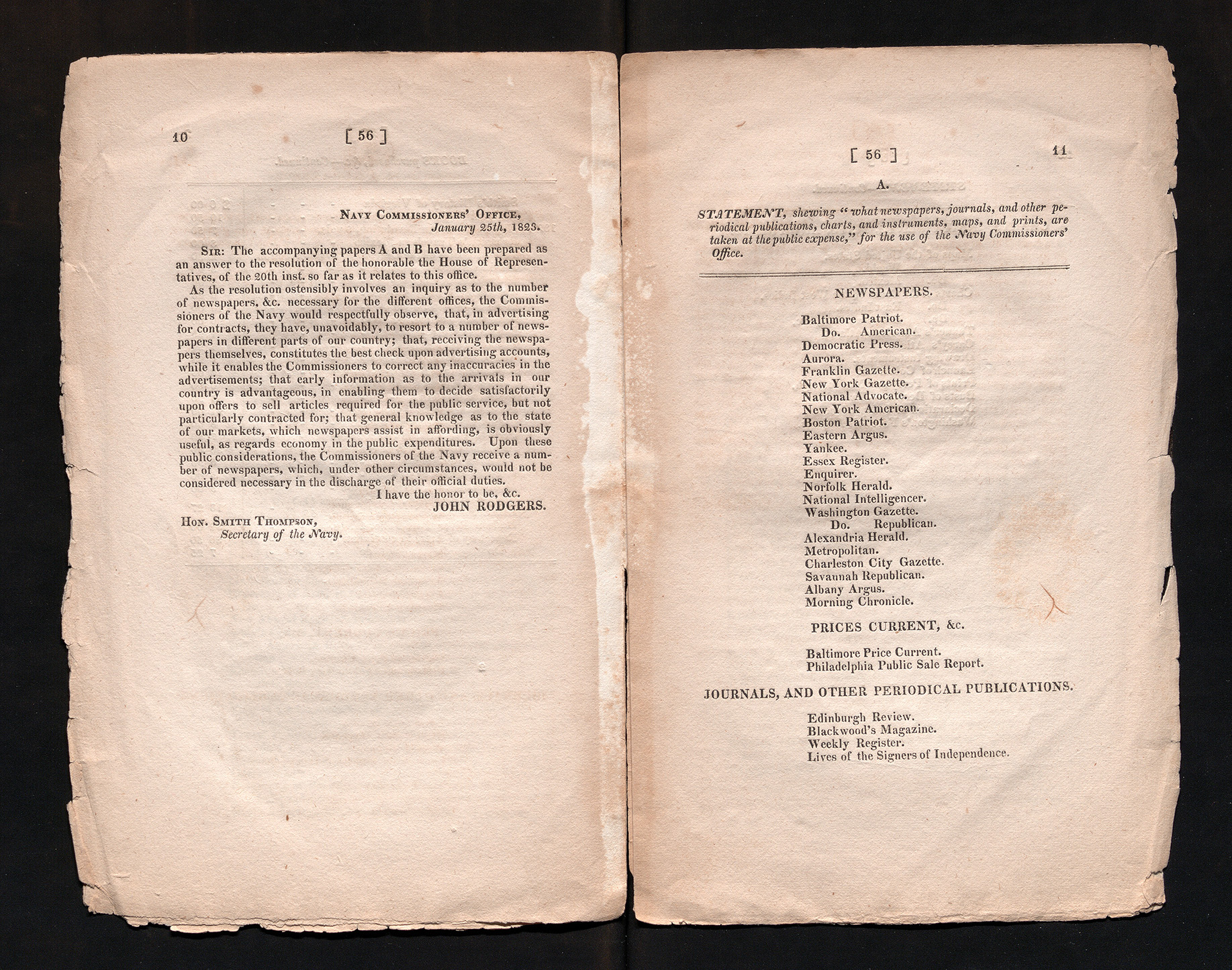
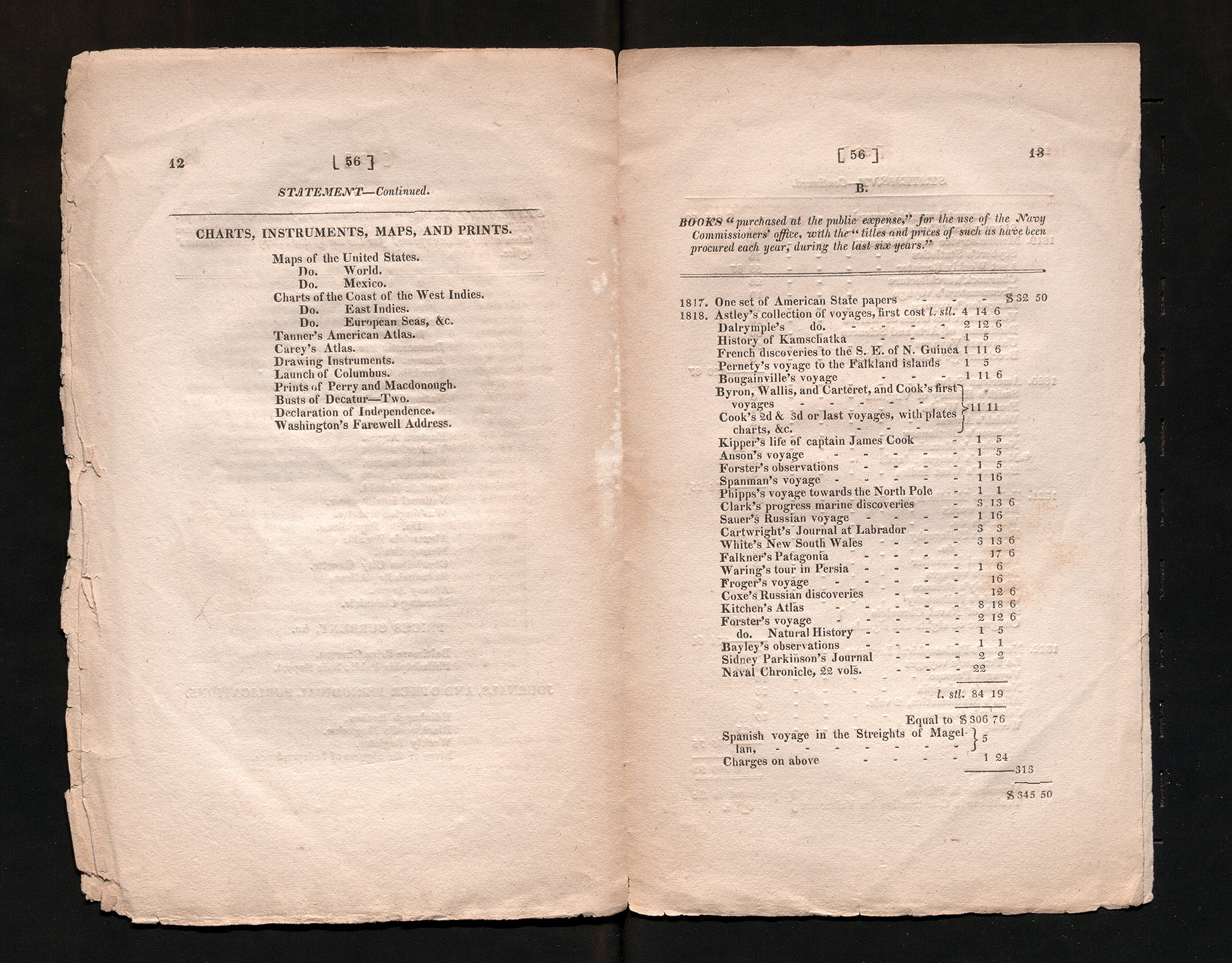
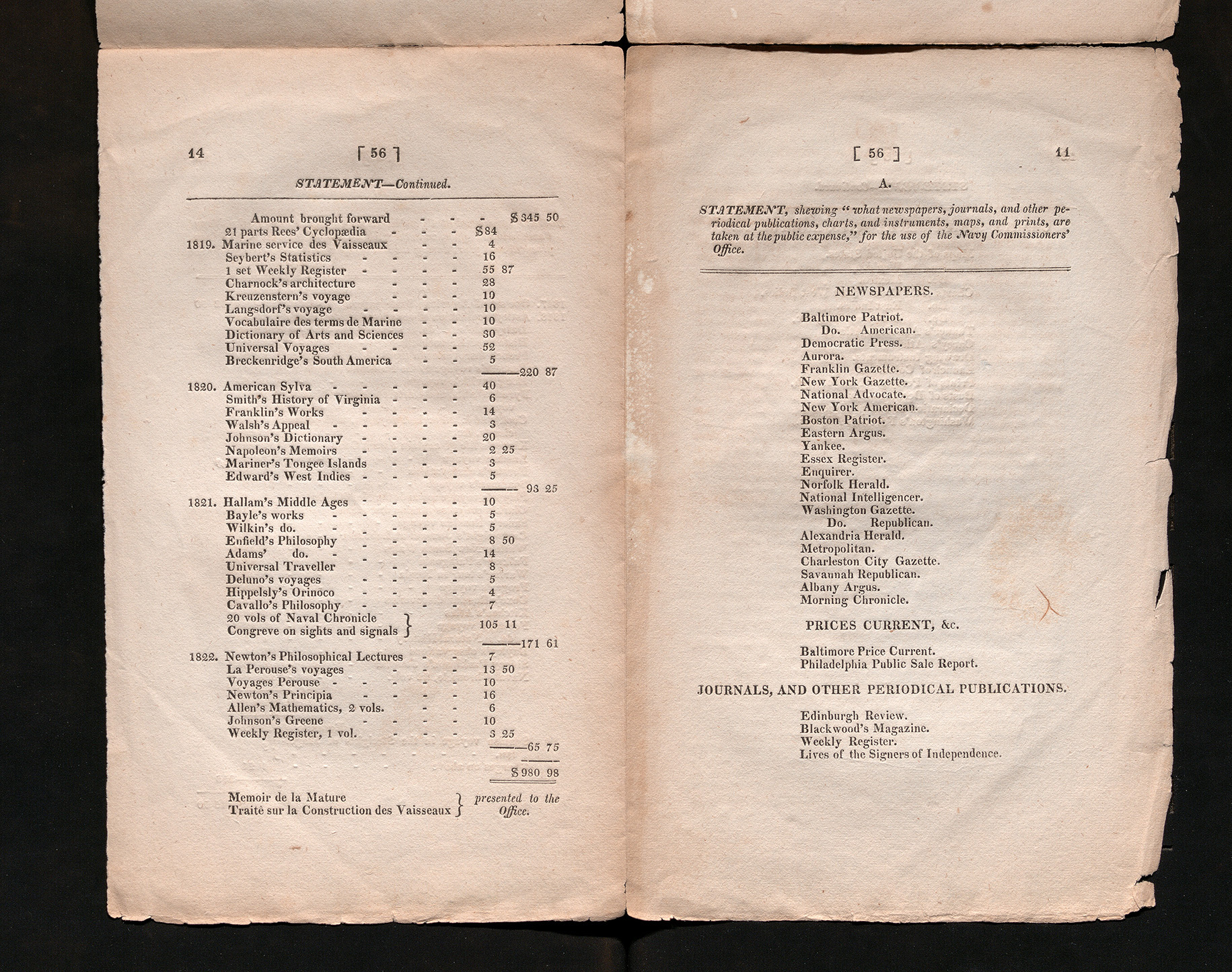
Letter from the Secretary of the Navy Transmitting a List of Newspapers and Periodical Works, with a Catalogue of the Books Purchased for the use of the Navy Department for the Last Six Years... (Washington, D.C., 1823).

Naval ships were outfitted with books and other reading material that might be useful or diverting to the crew members. This item lists materials bought for the use of the Navy over a six-year period, to 1823. Numerous newspapers, periodicals, maps, and charts were purchased, along with the most important works on science, exploration, medicine, and law. Works of history were also well-represented, whereas fiction barely registered in these early years.

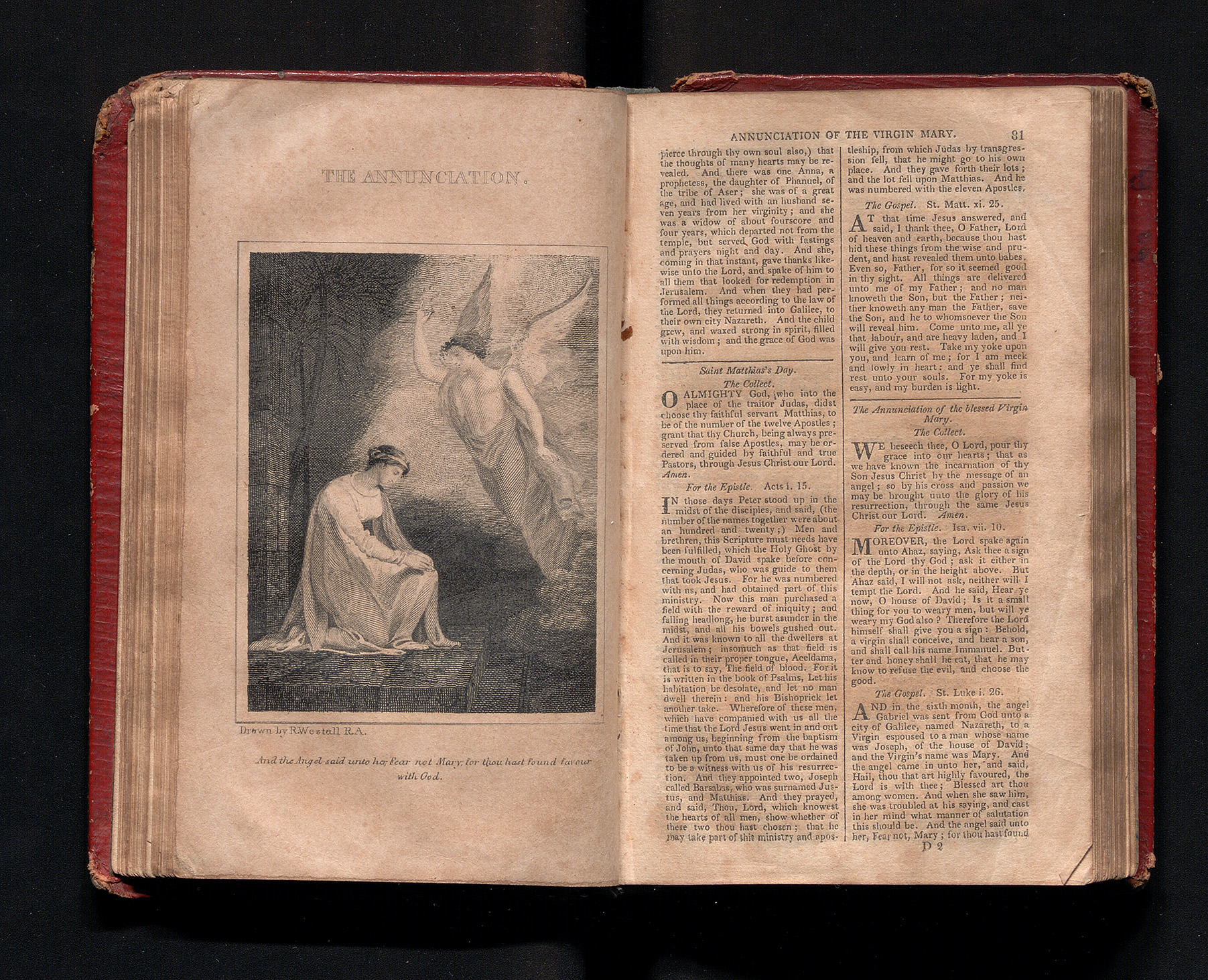
Episcopal Church, The Book of Common Prayer, and Administration of the Sacraments ... Together with the Psalter, or Psalms of David (New York, 1823). Matthew Calbraith Perry’s copy.

Life onboard ship was a cramped affair. While the Navy would provide texts it deemed essential for the journey, any personal items would need to be as compact as possible. This beautiful but tiny volume, measuring just 12 cm. tall, belonged to Matthew C. Perry (1794-1858), credited with the “opening of Japan” discussed elsewhere in this exhibition.

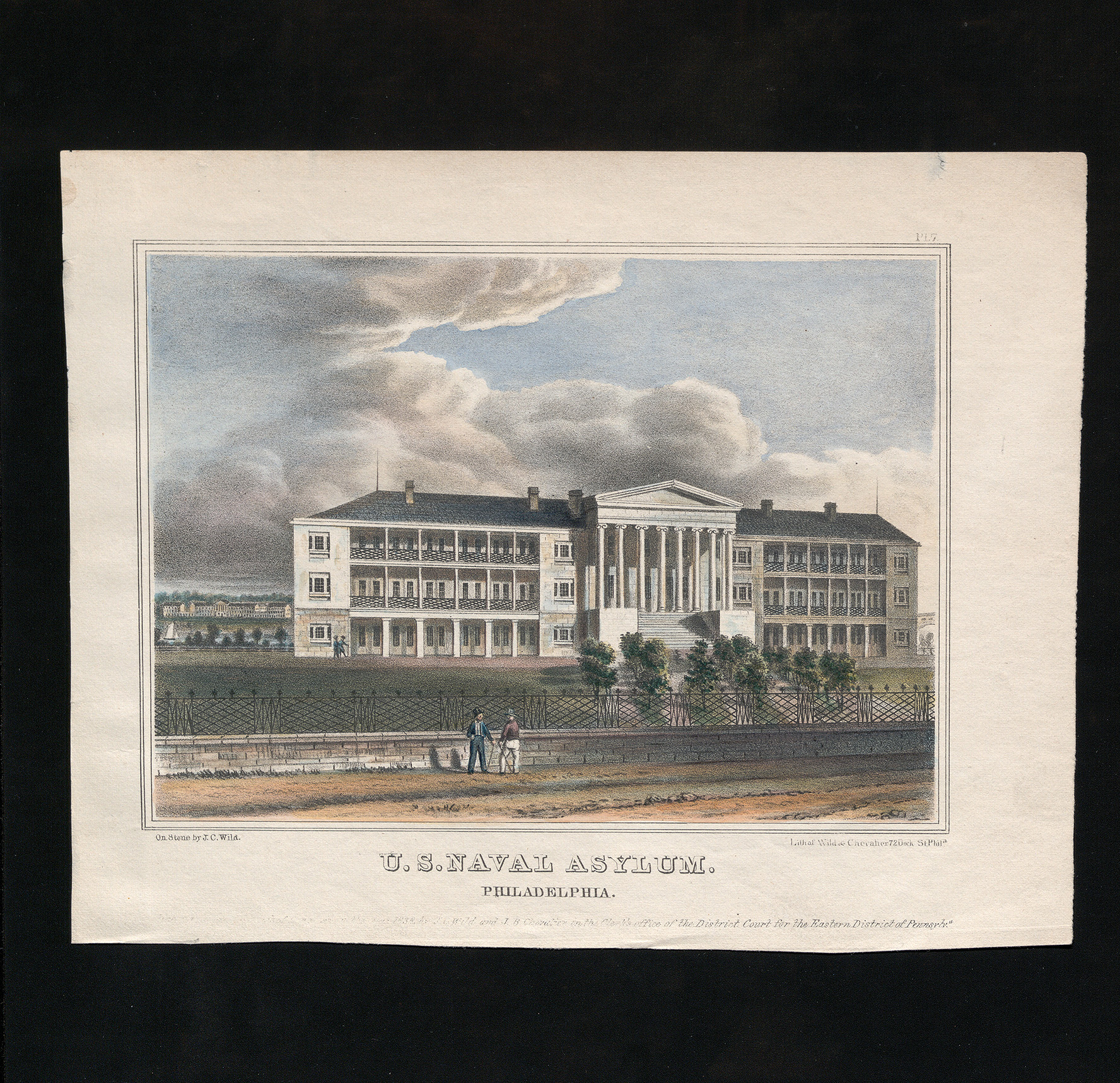
“U.S. Naval Asylum” from J.C. Wild, Views of Philadelphia, and its Vicinity (Philadelphia, 1838). Hand-colored lithograph.

Opened in 1838, the U.S. Naval Asylum was commissioned by Congress to care for “disabled and decrepit Navy officers, seamen, and marines,” making it the first federal institution in the U.S. to provide such care to veterans. The complex also housed the Naval Academy from 1839 to 1845, before the school moved to Annapolis. Designed by architect William Strickland, the Asylum still stands in the Gray’s Ferry neighborhood, and is now a gated community of luxury condominiums.

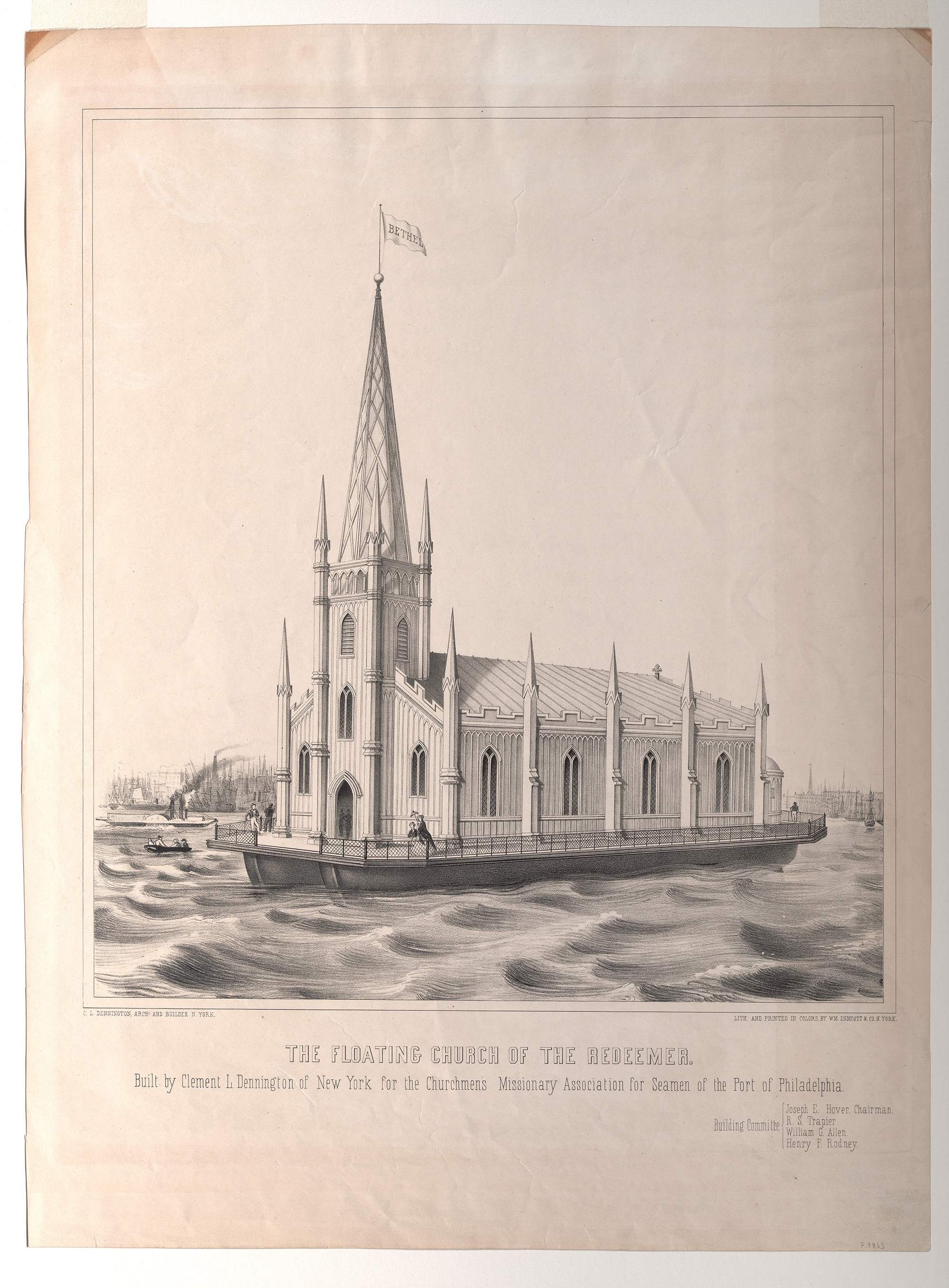
The Floating Church of the Redeemer, Philadelphia. Built by Clement L. Dennington of New York for the Churchmen’s Missionary Association for Seamen (New York, 1853). Lithograph.

With room to seat 600, the Floating Church of the Redeemer opened in 1849 on a large barge in the Delaware River. It was intended to meet the spiritual needs of mariners docked in Philadelphia. When the chapel sank after a few years, it was salvaged and placed on dry land in Camden, New Jersey, only to be destroyed by fire in 1868. However, the church’s bell was found in 2009 and can be viewed at the offices of the Seaman’s Church Institute at the Philadelphia Navy Yard.

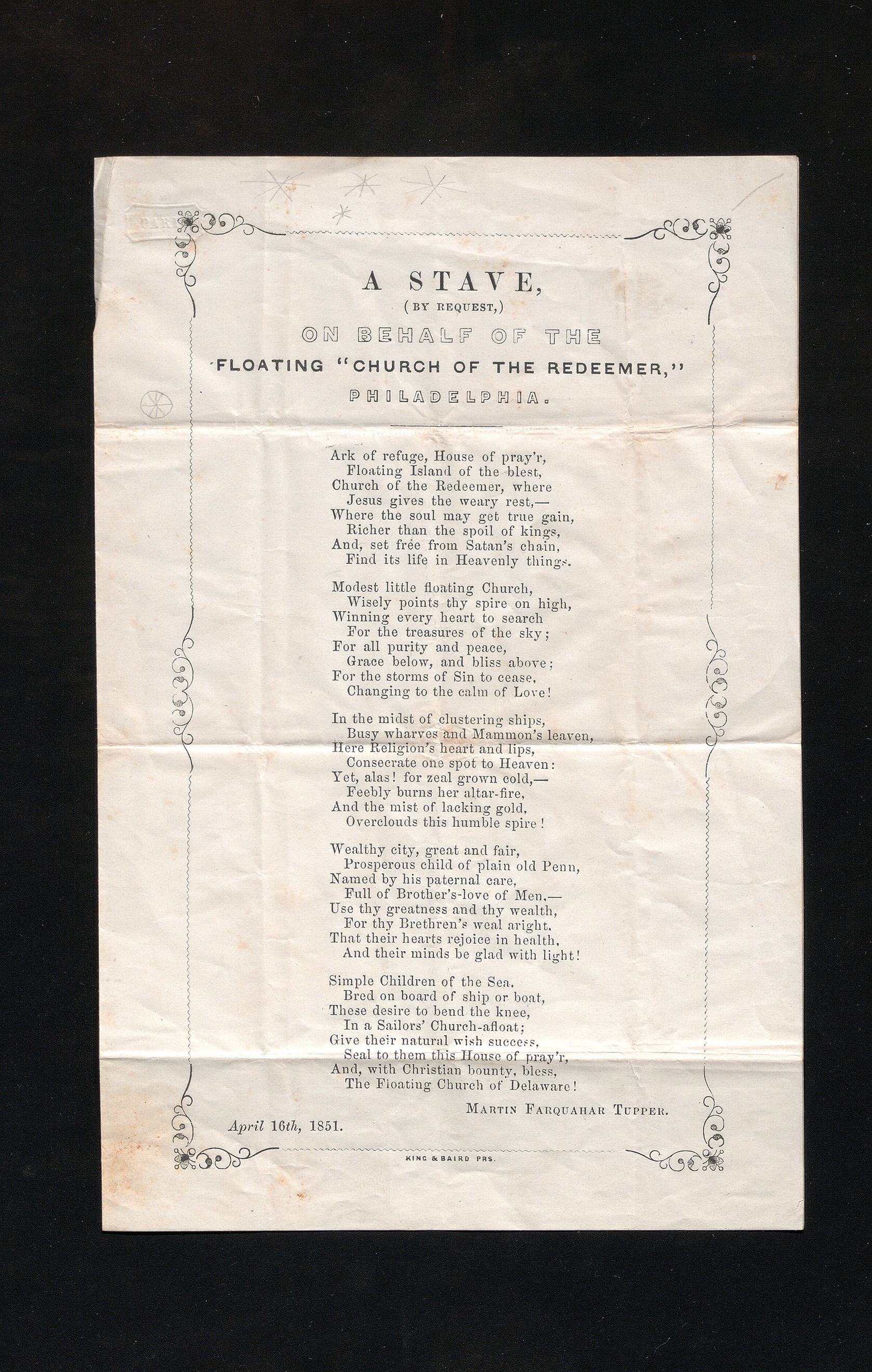
Martin Farquhar Tupper, A Stave, By Request, on Behalf of the FloatingChurch of the Redeemer” (Philadelphia, 1851).

This poem, known in only two copies, was written by Martin Farquhar Tupper (1810-1889), by request, while he was touring the U.S. in 1851. The church had achieved a level of fame by that point, such that a model of it was exhibited in the American section of London's Great Exhibition later that same year. Tupper wrote: “simple children of the sea / bred on board of ship or boat / these desire to bend the knee / in a Sailor's church afloat.”

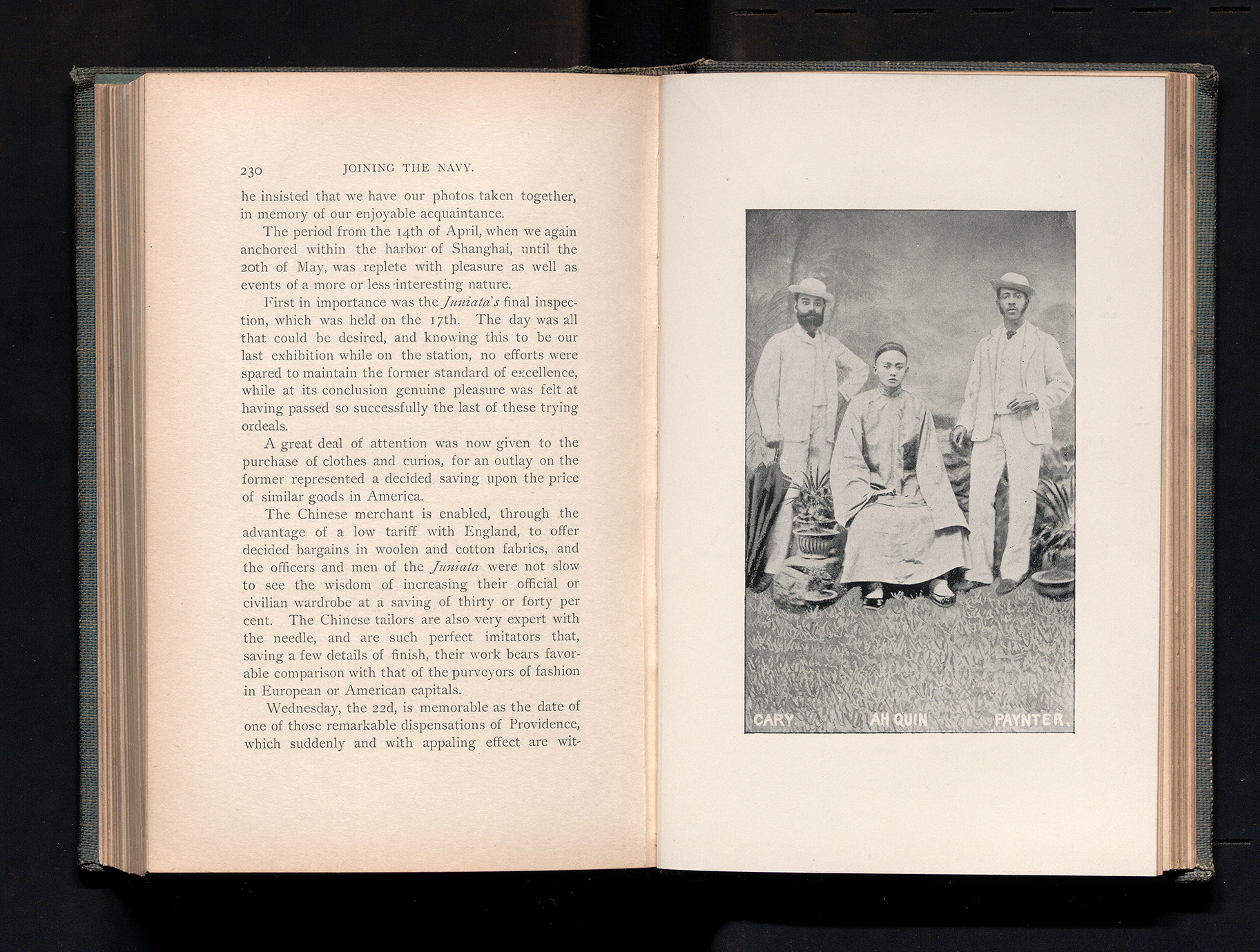
John H. Paynter, Joining the Navy, or, Abroad with Uncle Sam (Hartford, 1895).

John Henry Paynter (1862-1947) graduated from Lincoln University and planned to study medicine at Howard University until vision problems made that impossible. Instead, he and his friend Wilson L. Cary joined the U.S.S. Ossipee as cabin-boy and steward. Paynter later published a rare firsthand account of African American life aboard a naval vessel in the late 19th century. Here, Paynter is photographed along with Cary and fellow steward Ah Quin in Fuzhou, China.

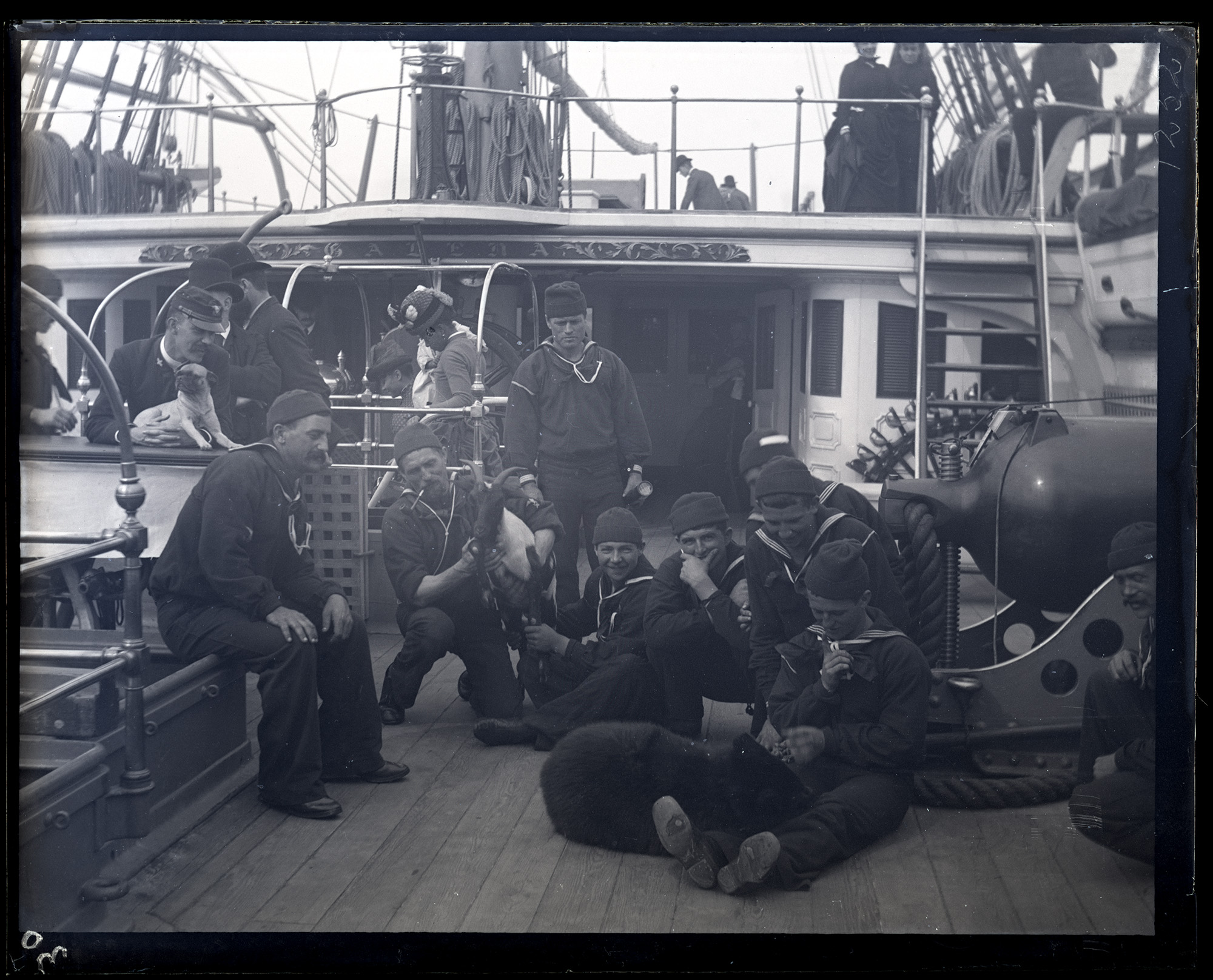
Marriott Canby Morris, Group of Sailors on the U.S.S. Galena with a Bear and a Goat (1887). Reproduction from original glass negative. Marriott C. Morris Collection.

The wooden steamship Galena arrived at Philadelphia on September 12, 1887, joining other Navy ships in celebrating the centennial of the adoption of the U.S. Constitution. This photograph shows a group of sailors gathered on the deck of the ship, accompanied by a dog, a goat, and a baby bear, resting its head in a sailor's lap. Organized by representatives from the various states and territories, the festivities included a military display, orations and concerts, and an industrial parade.

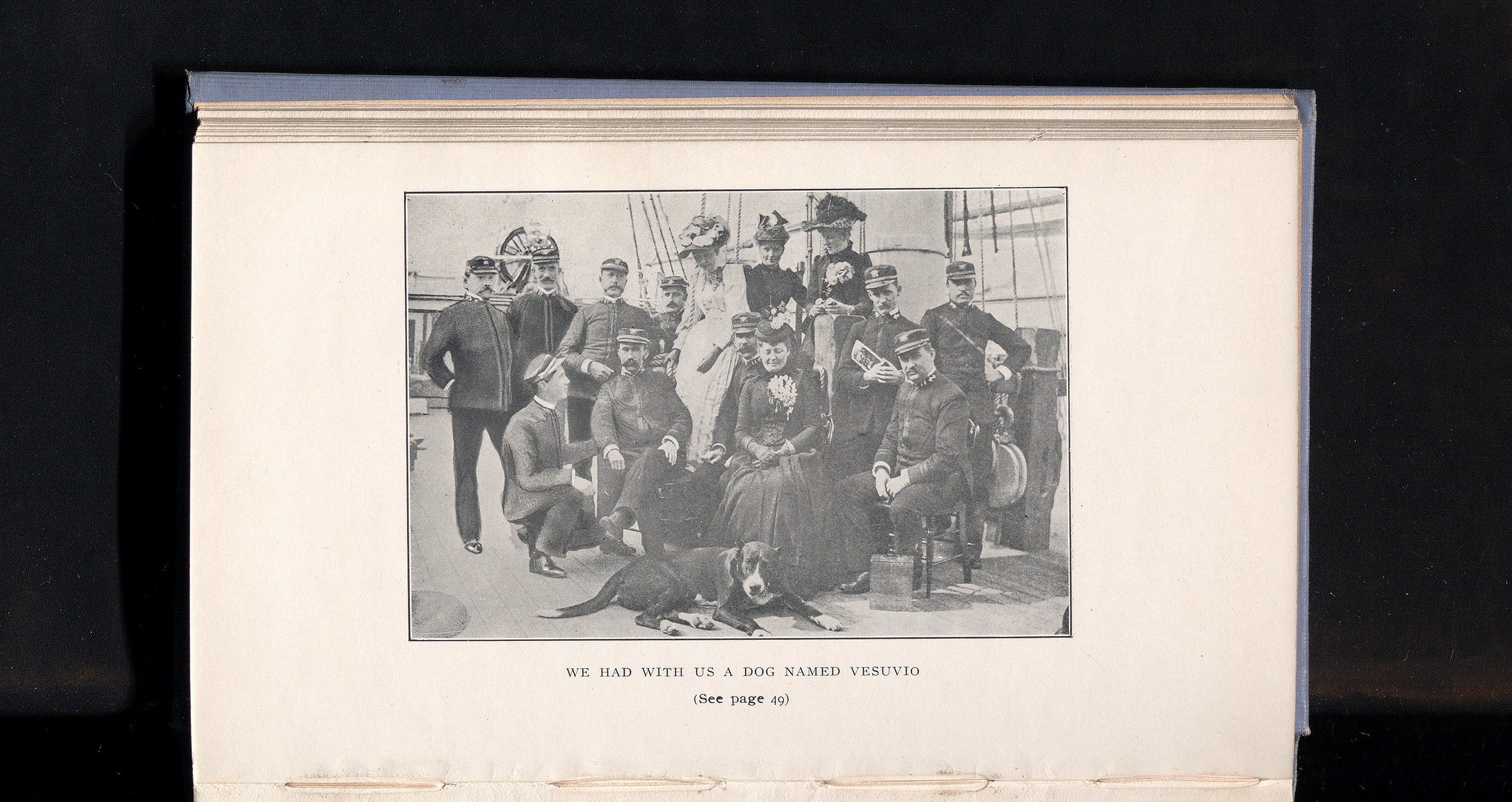
Mary E. Hitchcock, Tales Out of School about Naval Officers (and Others) by a Woman Who Has Lived on a Man-of-War (New York, 1908).

Wives and children of senior naval officers occasionally accompanied them on expeditions, with the understanding that they provided a domesticating presence among the men. Such was the case with Mary Hitchcock (1849-1920), who joined her husband Roswell D. Hitchcock when he commanded expeditions to Japan and elsewhere. She documented that experience in the volume shown here. After her husband died, Hitchcock continued her life of adventure, most notably exploring the Klondike region in northwestern Canada with her friend, socialite and fellow explorer Edith Van Buren (1858-1914).

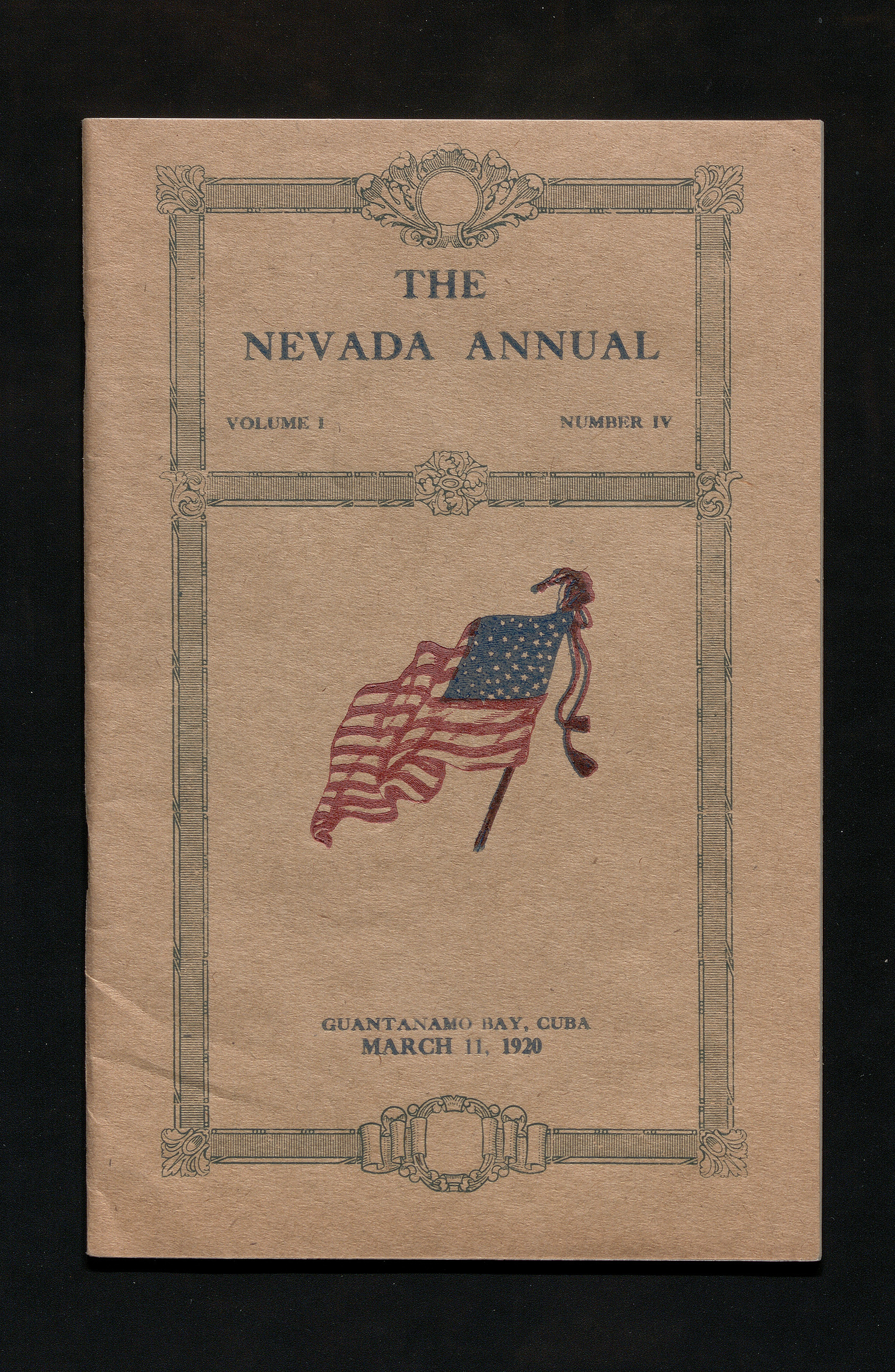
The Nevada Annual, Vol. I, Number IV (1920). Printed on board the U.S.S. Nevada while docked in Guantanamo Bay, Cuba.

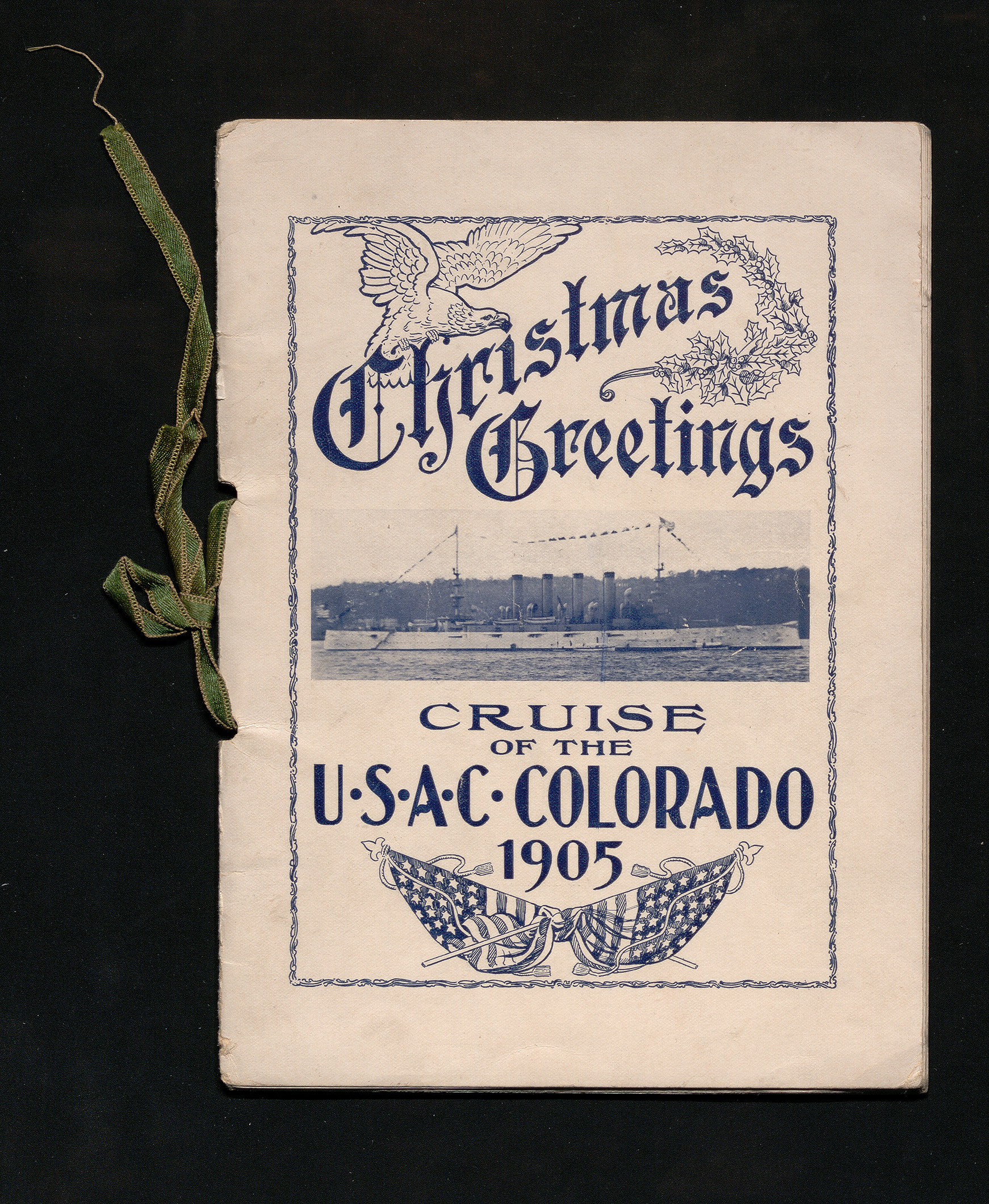
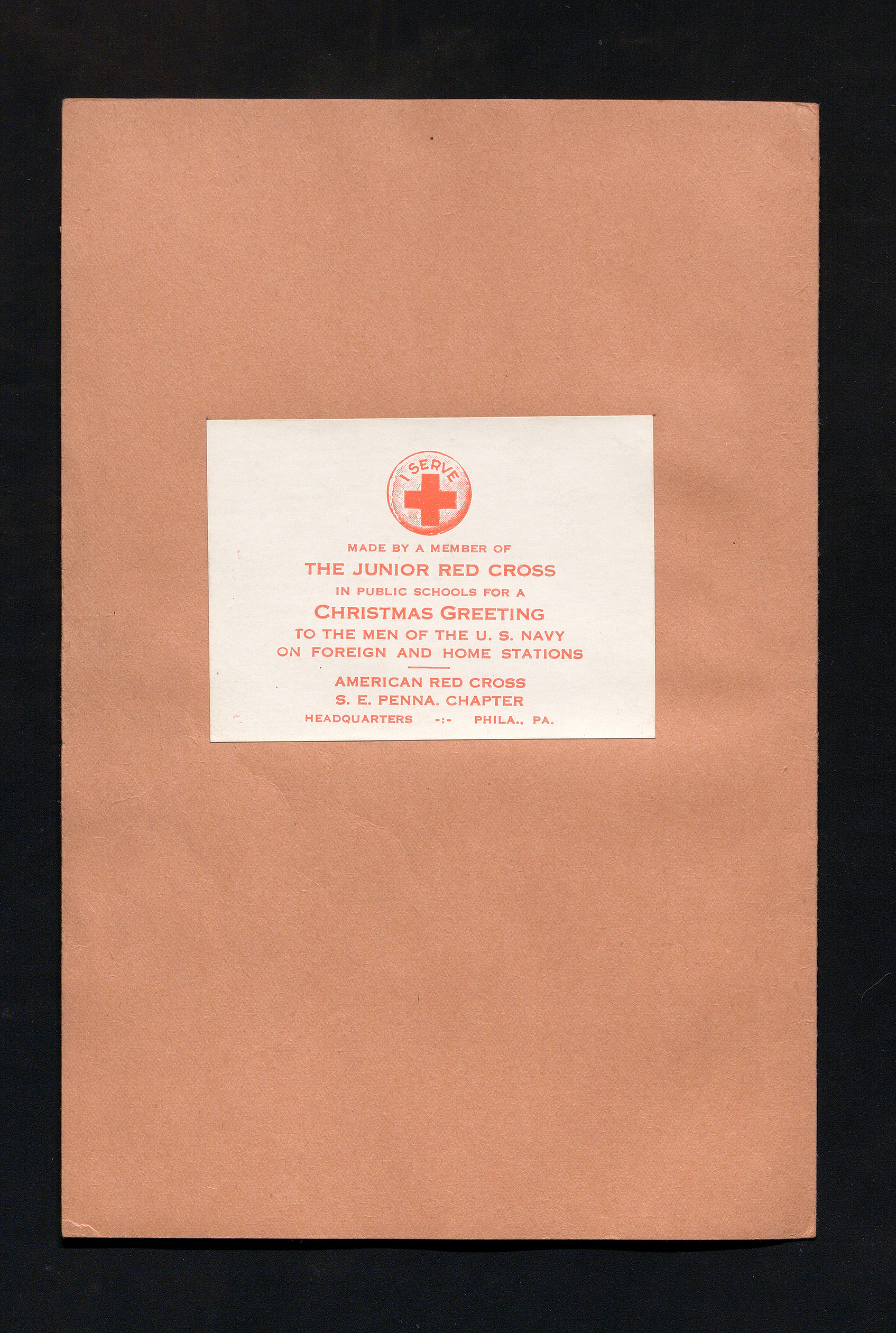
Christmas Greetings. Cruise of the USAC Colorado 1905 (1905). Printed on board the U.S.S. Colorado.

In the 19th and early 20th centuries, many naval ships had printing presses on board. These were used to produce a variety of materials both for the use of the crew and for distribution on land. These are two examples of shipboard printing. The lighthearted Nevada Annual included reports from all departments, fun activities, and comics. Christmas Greetings from the U.S.S. Colorado was a more somber production, told in one voice, minimally illustrated, and including a list of shipmates lost in the past year.

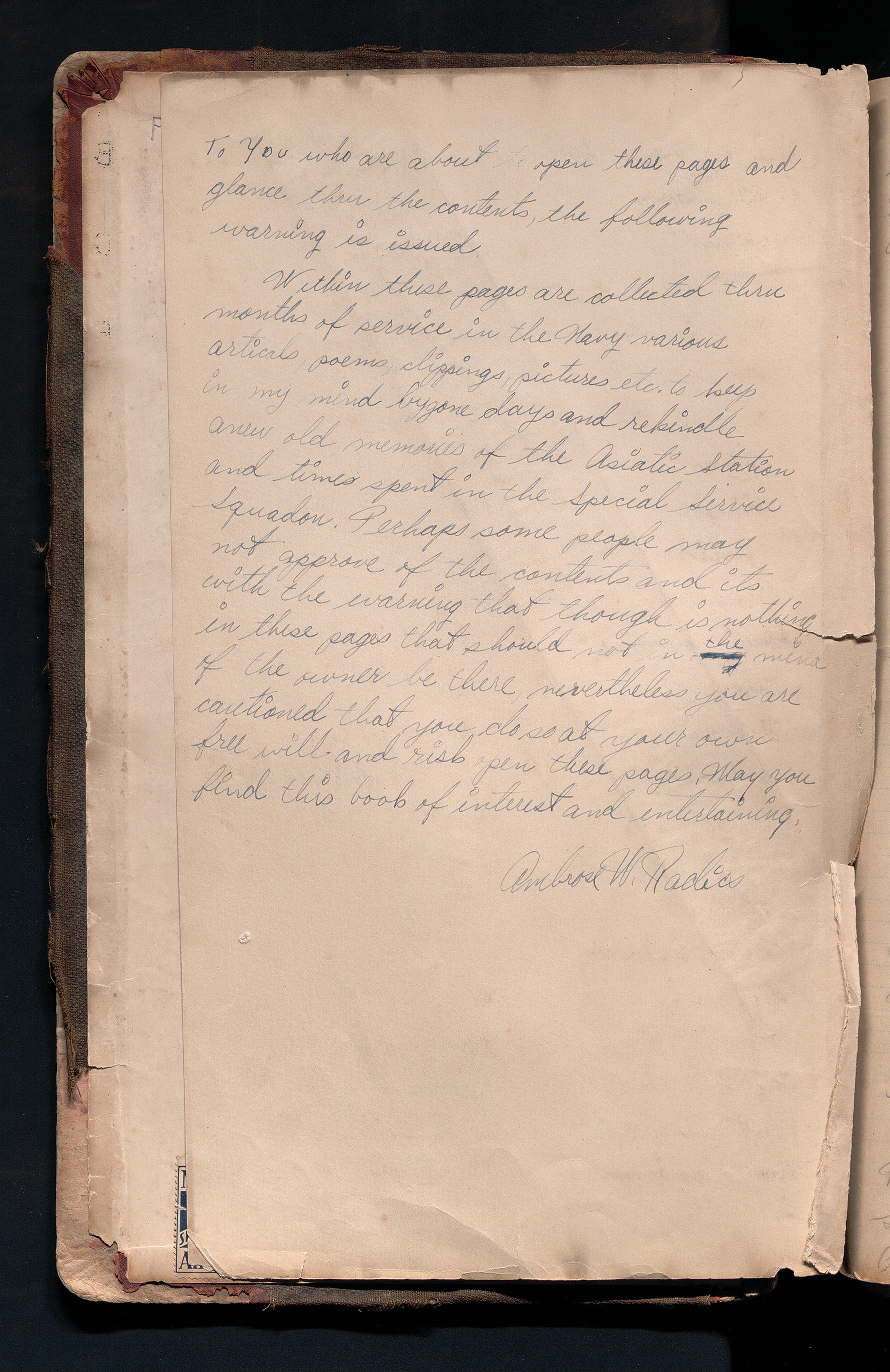
Warning Note to Readers of the Ambrose W. Radics Scrapbook (ca. 1931-1932). Reproduction of the original in the Library Company collection.

Ambrose W. Radics (1912-1965) created a sizable scrapbook to document his time spent in the Asiatic Fleet in the 1930s. It includes many artifacts from his time on shore, including much that is inappropriate to show in this exhibition. Radics warned the reader in advance, as seen in this reproduction of a note at the front of the book.

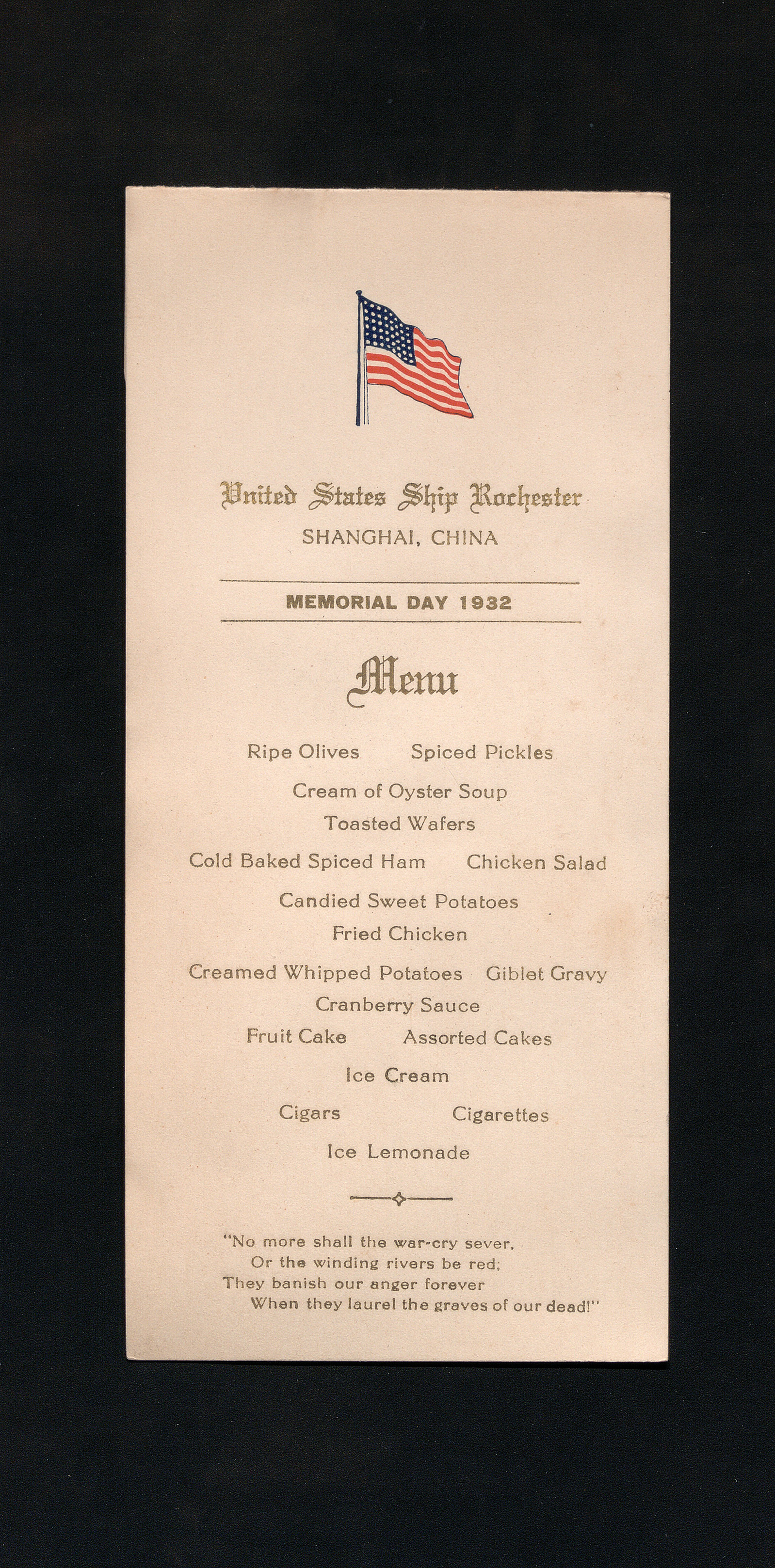
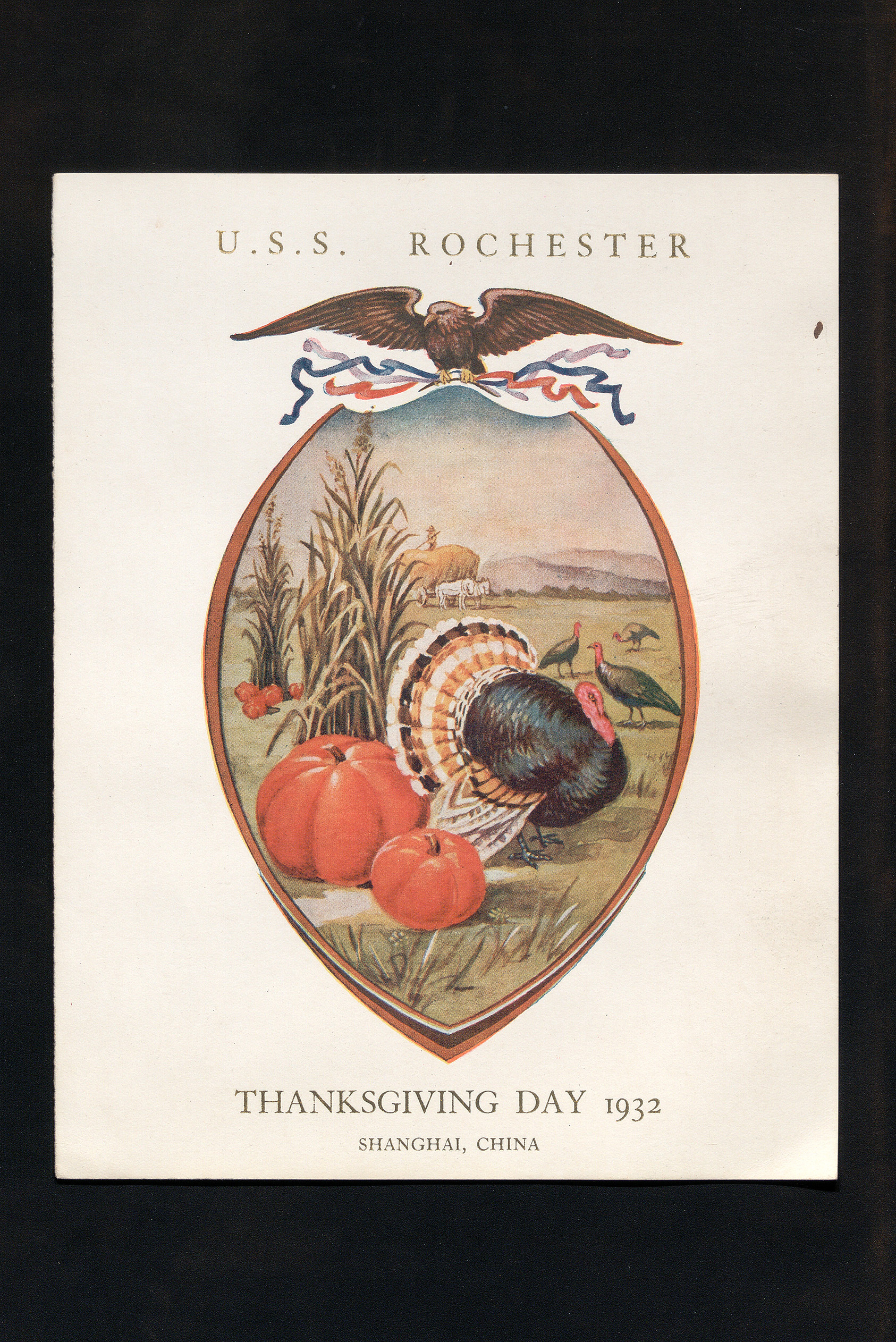
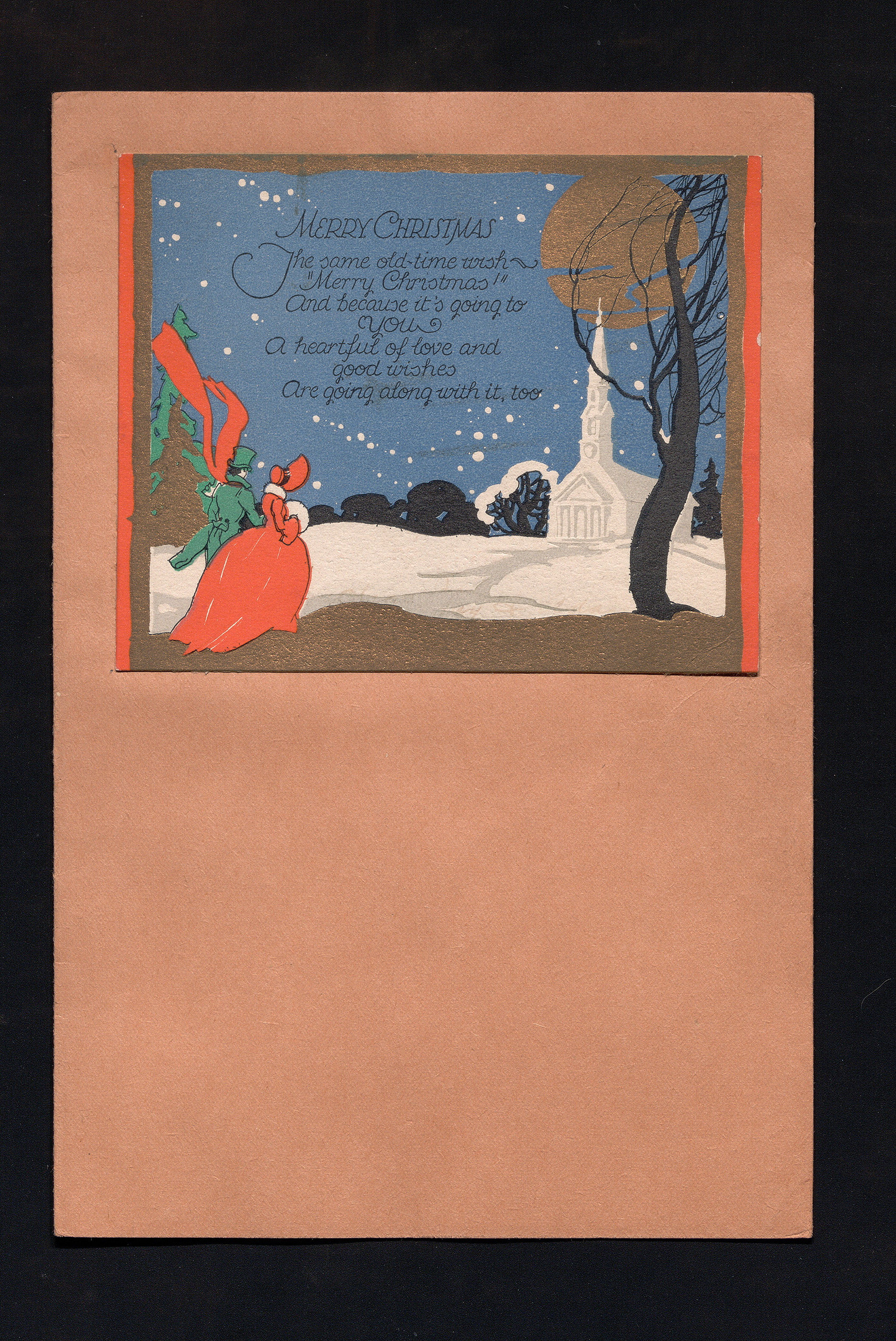
Menus from the U.S.S. Rochester during its deployment to Shanghai, China, in 1932. From the Scrapbook of Ambrose Radics.

These menus are among the very few items in the Scrapbook of Ambrose Radics that would be considered inoffensive today. Most pages contain racist and misogynist material, as well as many items relating to sex work. A warning note from Radics to readers of his scrapbook is also in this exhibition.