Our Place in the World

In the years immediately following the Civil War, the United States had little appetite for building up its peacetime navy. Rebuilding the Union and expanding westward took precedence. Expeditions continued but were underfunded and reliant upon outdated ships crewed by a large number of non-English-speaking persons from other countries. However, America’s expansionist ambitions were not checked for long. Inspired by the work of those at the newly-formed U.S. Naval Institute and, later, the Naval War College, the country’s leaders came to believe that a modern and robust navy, managed strategically, was necessary for America to achieve its promise and claim its place alongside European powers on the global stage.
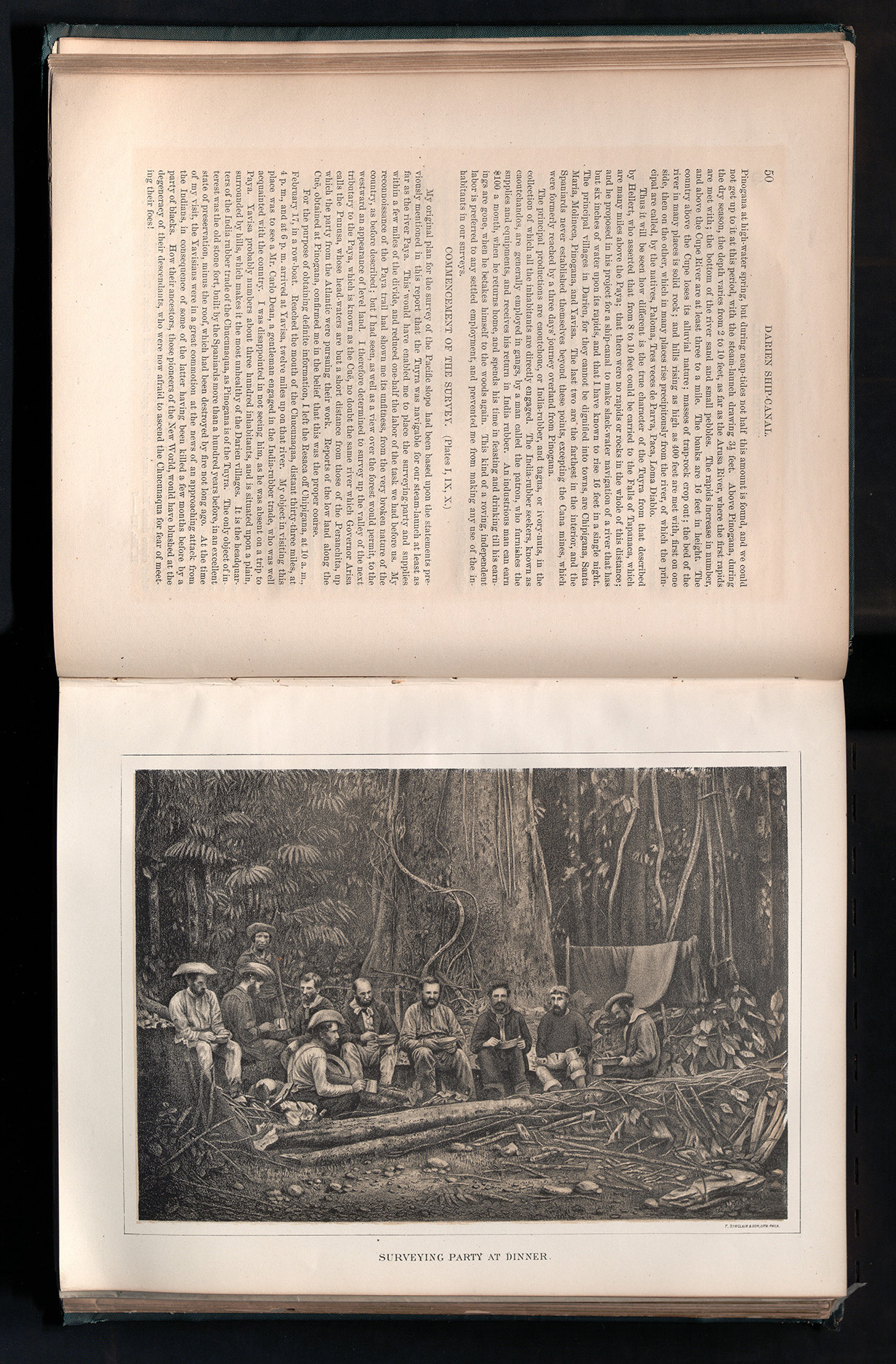
Thomas O. Selfridge, Jr., Reports of Explorations and Surveys to Ascertain the Practicability of a Ship-Canal between the Atlantic and Pacific Oceans by the Way of the Isthmus of Darien (Washington, D.C., 1874).

The U.S. Navy declined in the years after the end of the Civil War—ships were mothballed, budgets were slashed, and technological innovation slowed. Yet as the U.S. looked to expand its global influence, a canal linking the Atlantic and Pacific became a strategic priority, promising faster military and commercial shipping routes. The 1870 Darien Expedition, led by Thomas Selfridge (1836-1924), explored possible routes through the Isthmus of Darien (now Panama). Though ultimately unsuccessful, the mission reflected America’s growing naval ambitions and its desire to claim a stronger role on the world stage.

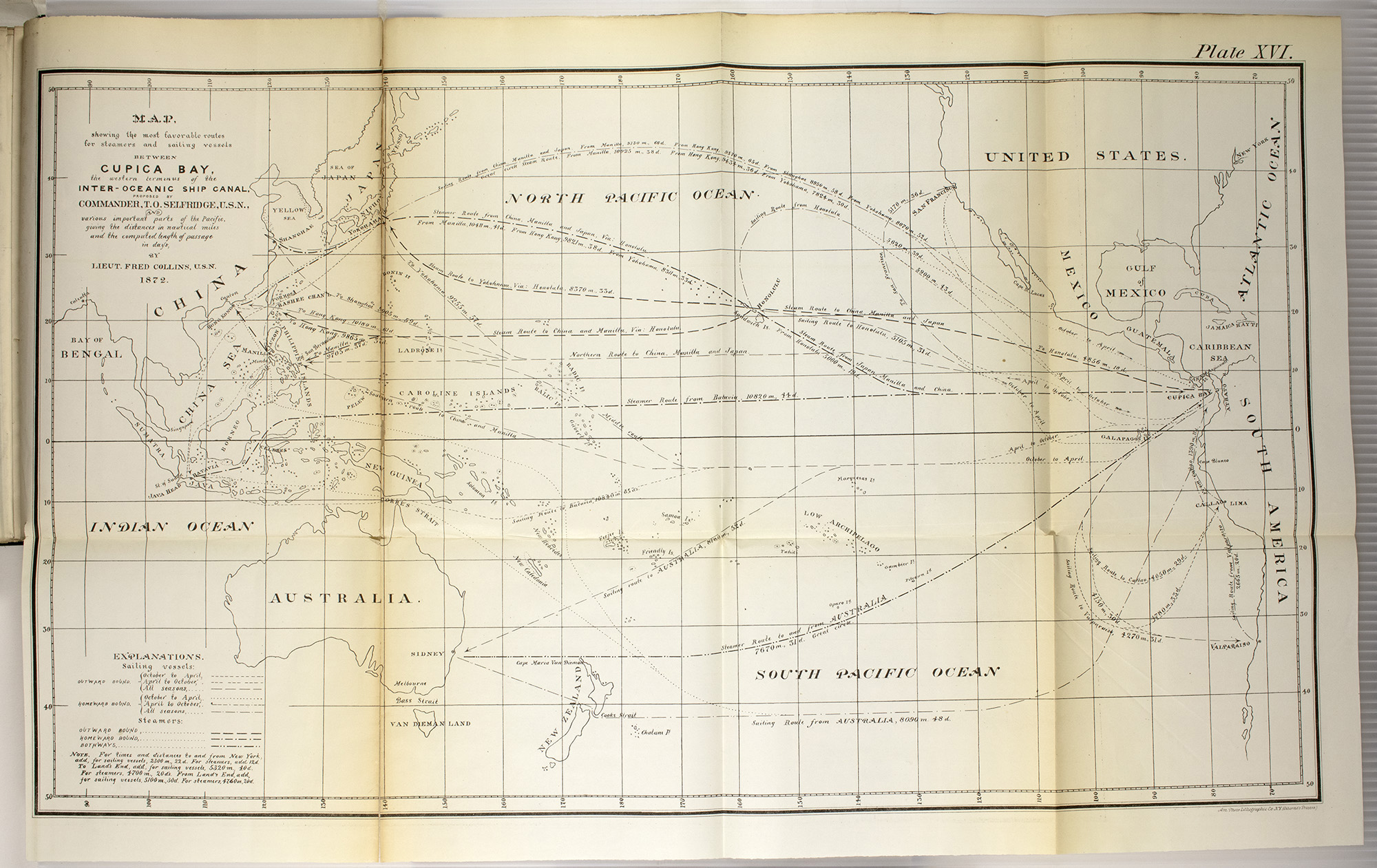
Frederick Collins, “Map Showing the Most Favorable Routes for Steamers and Sailing Vessels between Cupica Bay... and Various Important Parts of the Pacific” from Thomas O. Selfridge, Jr., Reports of Explorations and Surveys to Ascertain the Practicability of a Ship-Canal between the Atlantic and Pacific Oceans by the Way of the Isthmus of Darien (Washington, D.C., 1874).

Frederick Collins (1847-1881) created this map following his involvement in Thomas O. Selfridge’s Darien Expedition to identify a route that might connect the Atlantic and Pacific Oceans. He later led another Navy expedition through the same region. The hazardous conditions of these missions ultimately led to his death at age thirty-five from tropical disease.

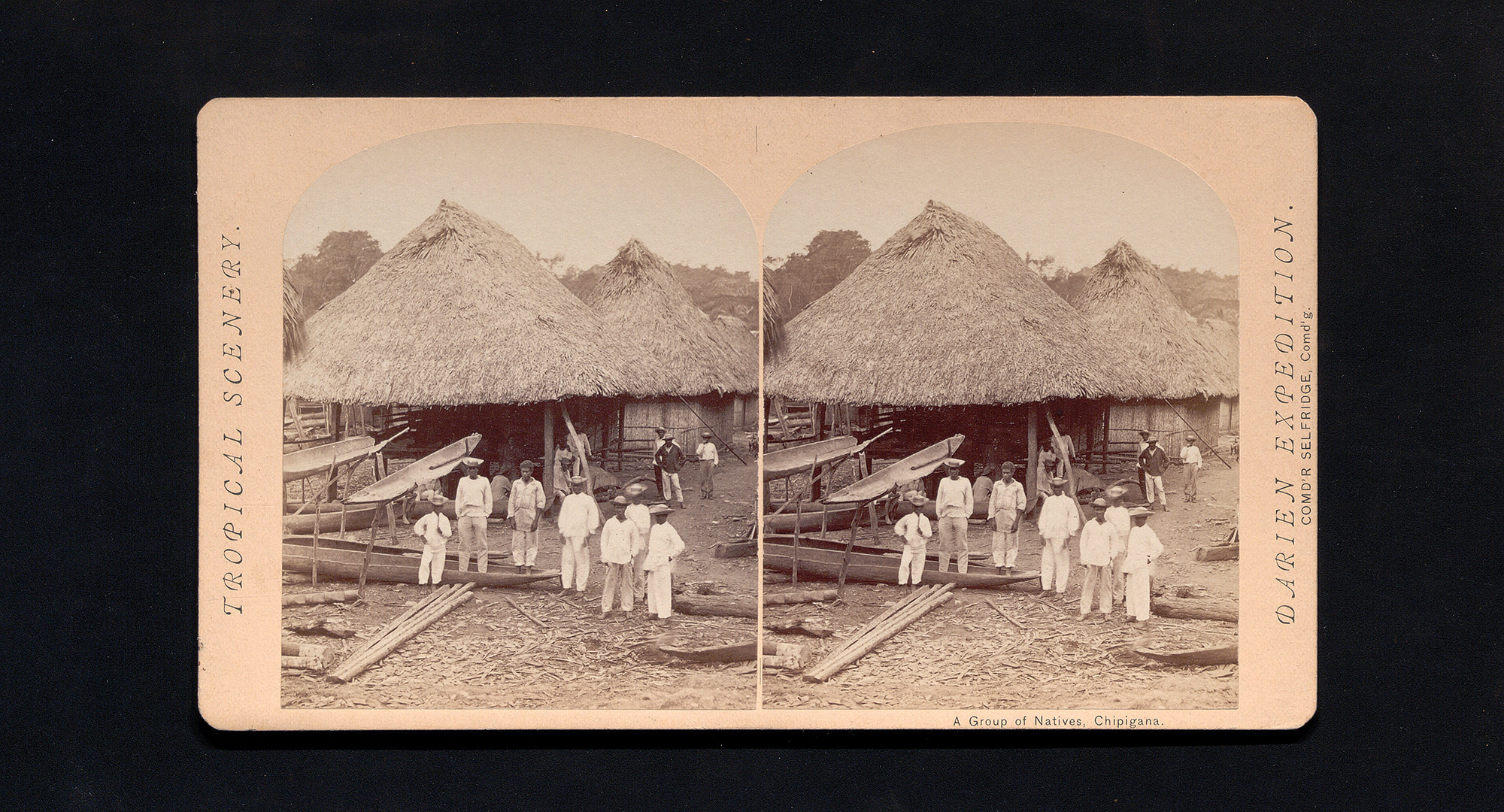
A Group of Natives, Chipigana. Tropical Scenery. Darien Expedition (Washington, D.C.: J.F. Jarvis, 1870 or 1871). Albumen print on stereograph mount. Gift of Eleanor Smith.

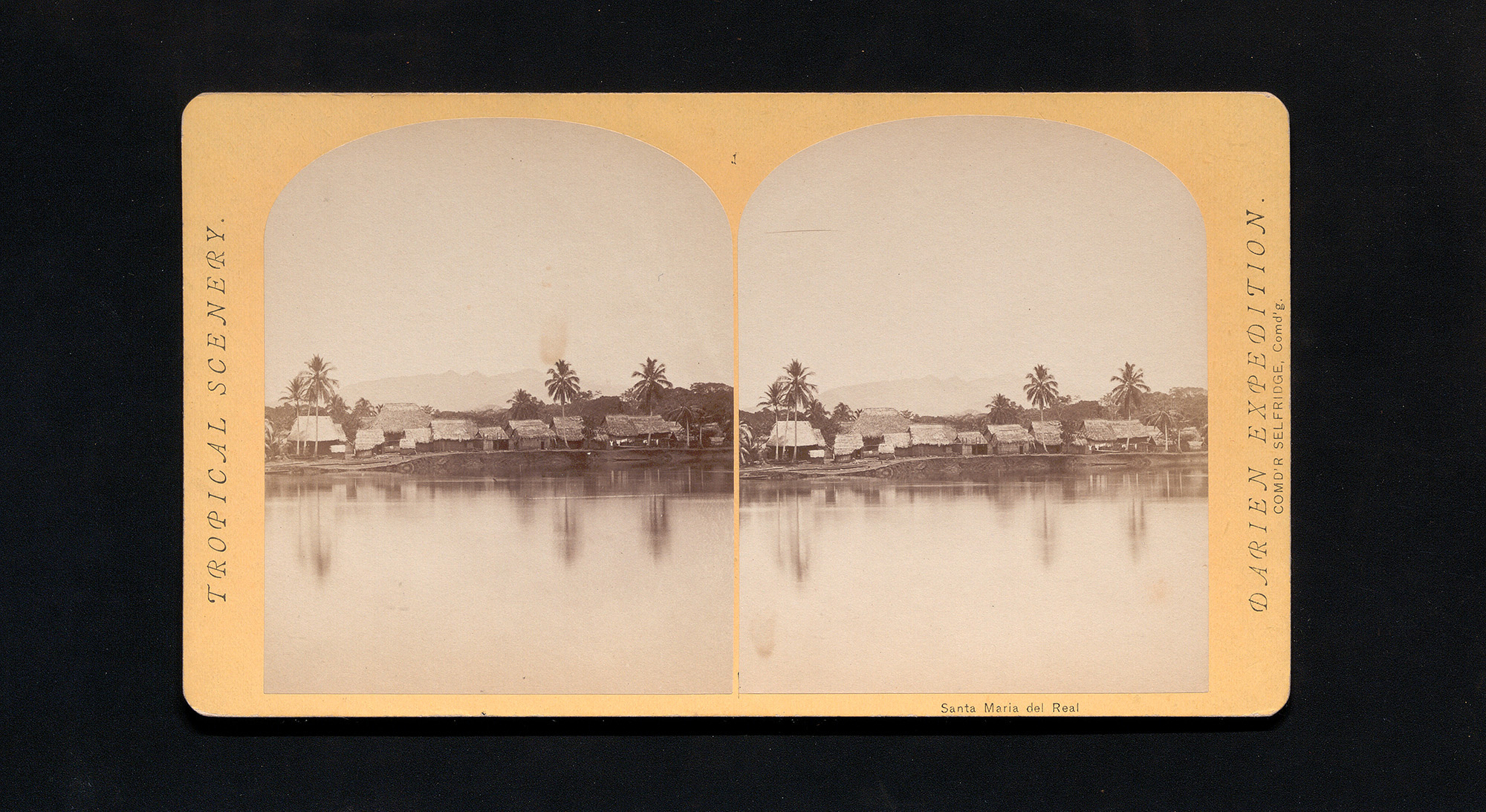
Santa Maria del Real. Tropical Scenery. Darien Expedition (Washington, D.C.: J.F. Jarvis, 1870 or 1871). Albumen print on stereograph mount. Gift of Eleanor Smith.

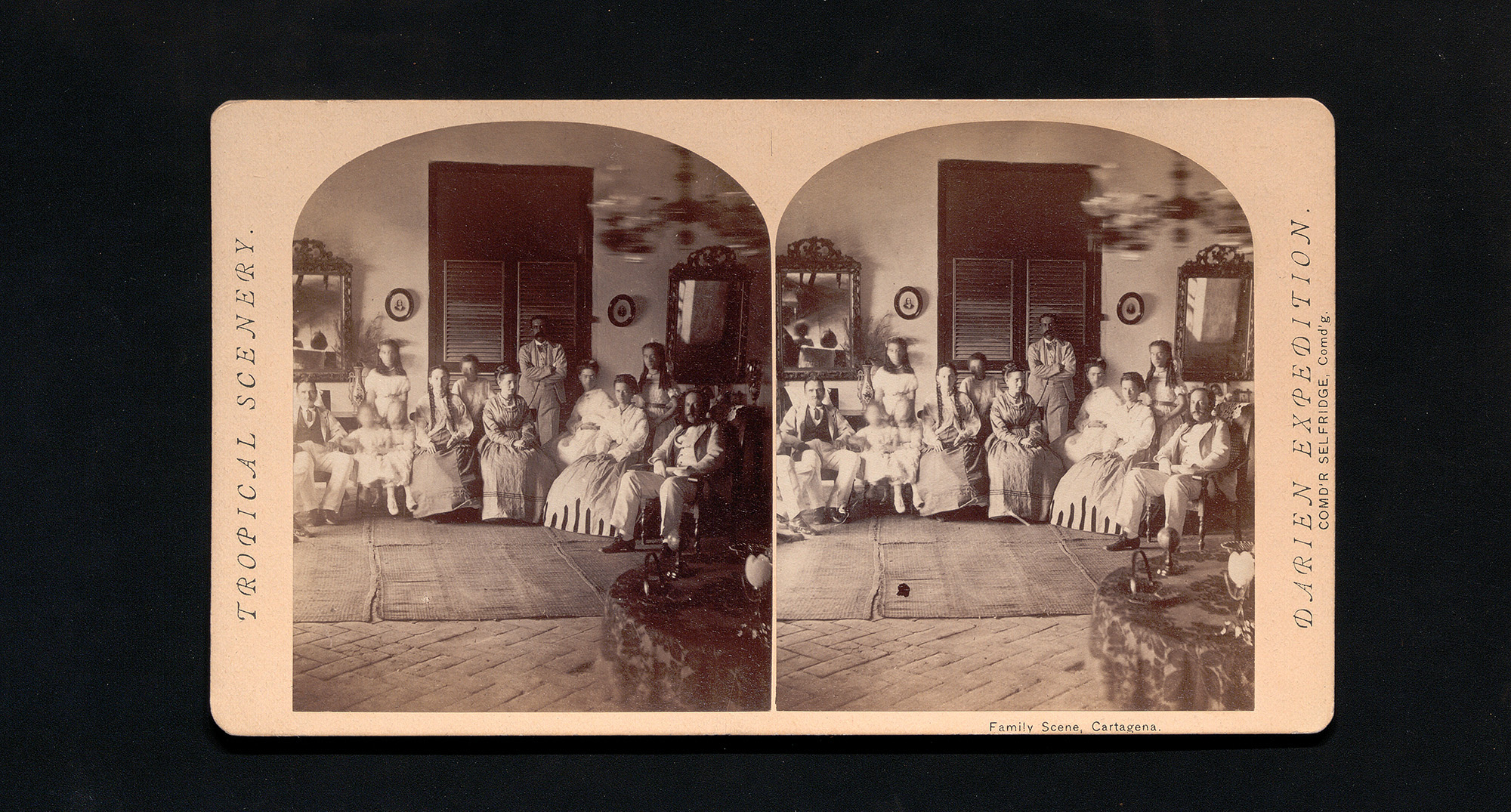
Family Scene, Cartagena. Tropical Scenery. Darien Expedition (Washington, D.C.: J.F. Jarvis, 1870 or 1871). Albumen print on stereograph mount. Gift of Eleanor Smith.

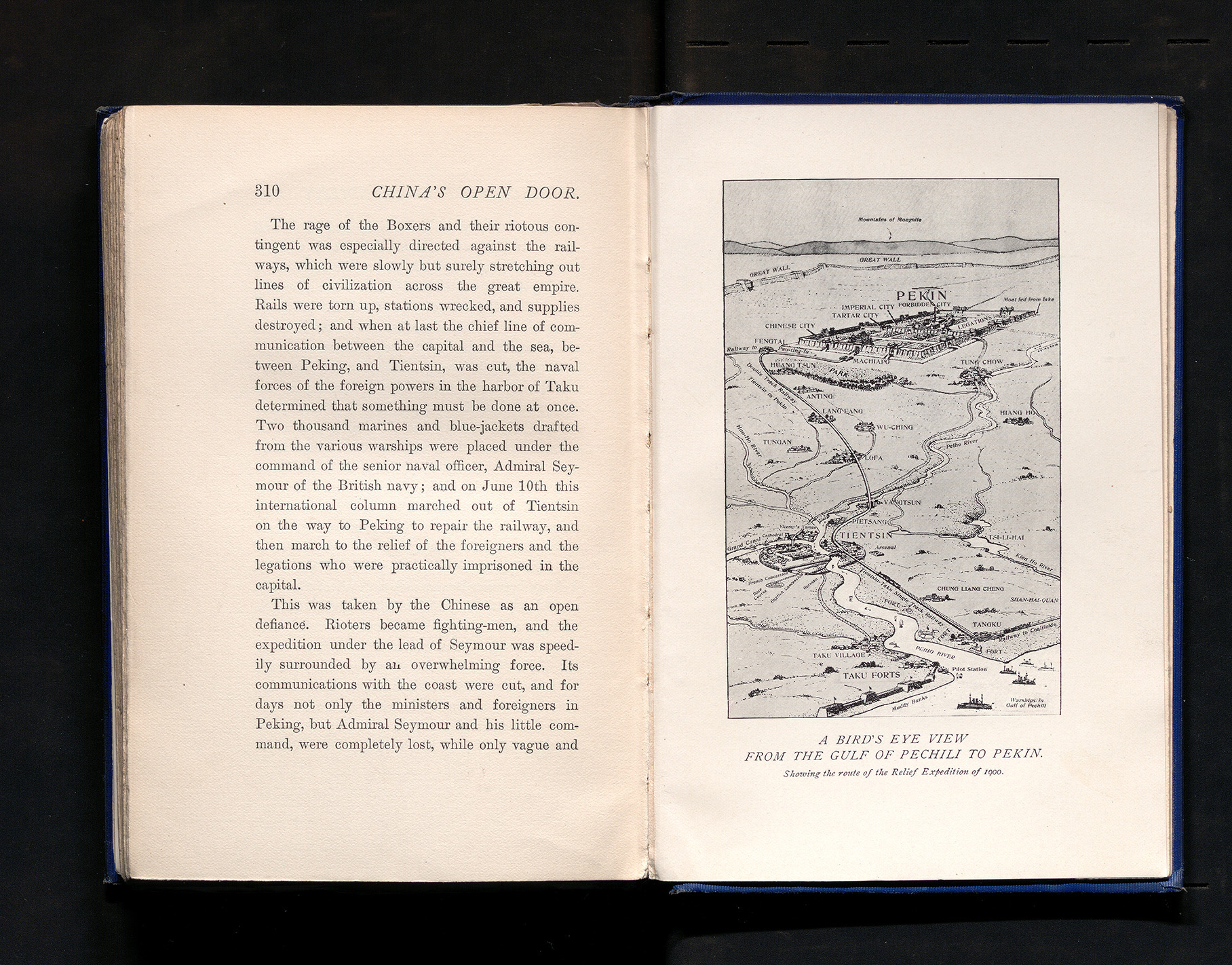
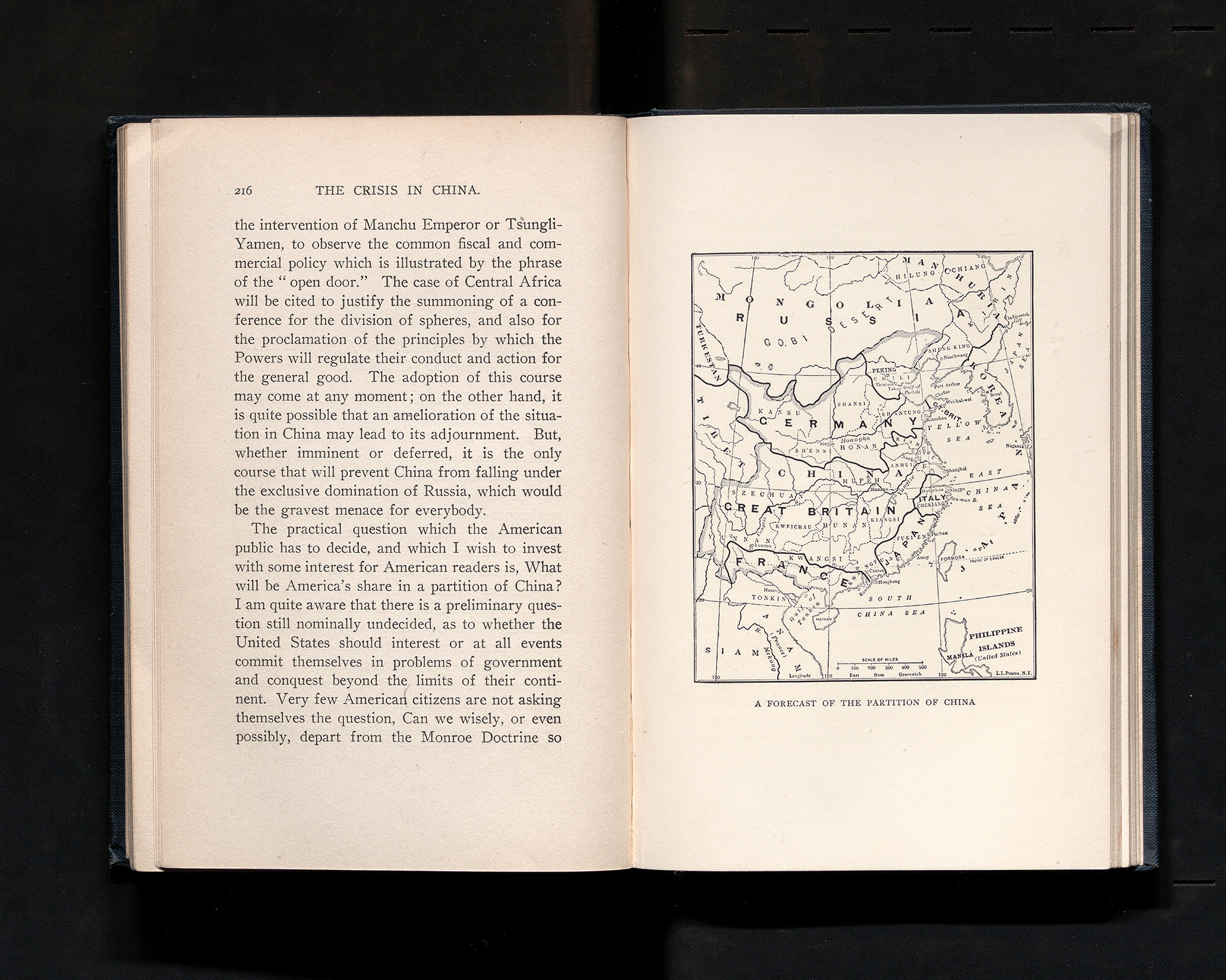
Rounsevelle Wildman, China’s Open Door: A Sketch of Chinese Life and History (Boston, 1900).

In the 1890s, several powerful nations—including Russia, Japan, and various European countries—actively discussed plans to partition and colonize China. Some in America were concerned that such a plan would cut out U.S. interests. However, U.S. Navy and U.S. Marine Corps involvement in defending the foreign legations in China helped elevate America’s status, placing it alongside other major world powers.

George B. Smyth, et al., The Crisis in China, Reprinted by Permission from the North American Review (New York, 1900).

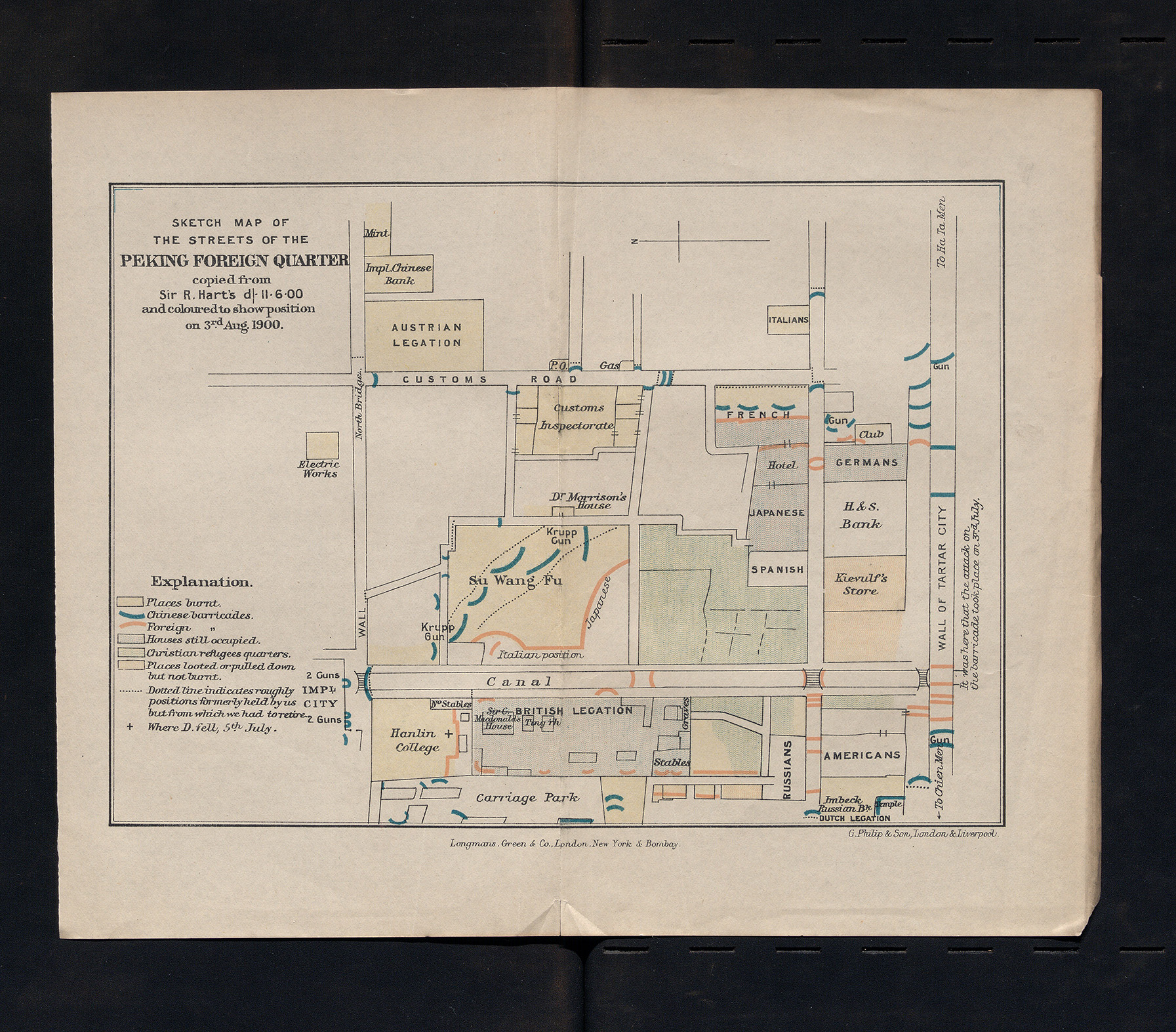
The Boxer Rebellion in China was a violent uprising fueled by decades of foreign interference and unwelcome missionary activity. The Boxers reached the foreign legation quarter in Peking (now Beijing) in the early summer of 1900. The quarter was besieged for 55 days until an international military force—the “Eight-Nation Alliance”—arrived to relieve the embattled foreigners and Chinese Christians within the walls. America was one of the eight, joining major western powers including Britain, France, and Germany.

“Sketch Map of the Streets of the Peking Foreign Quarters” from Nigel Oliphant, A Diary of the Siege of the Legations in Peking during the Summer of 1900 (London, 1901).

American Marines held one of the most critical, and vulnerable, defensive positions on the Tartar Wall during the Boxer Rebellion in China. Their contribution to ending the siege was crucial, and it was here that U.S. Marine Daniel Daly (1873-1937) earned his first of two Medals of Honor. Stories of the bravery and tenacity of the Marines spread around the world along with news of the rebellion in China. For many foreigners, published accounts like this one were their first introduction to U.S. Marines.