To Japan

With several successful expeditions under its belt and armed with a growing sense of its own importance, in 1853 the United States set out to compel Japan to open diplomatic and trade relations. Through the use of “gunboat diplomacy” under Commodore Matthew Calbraith Perry (1794-1858), the Japanese were persuaded to negotiate and effectively end their two-century period of isolation from the West. The Convention of Kanagawa, (also known as the Japan-US Treaty of Peace and Amity) was signed in March 1854 and led to a restructuring of Japanese governance and the development of diplomatic relations between various other Eastern and Western nations.
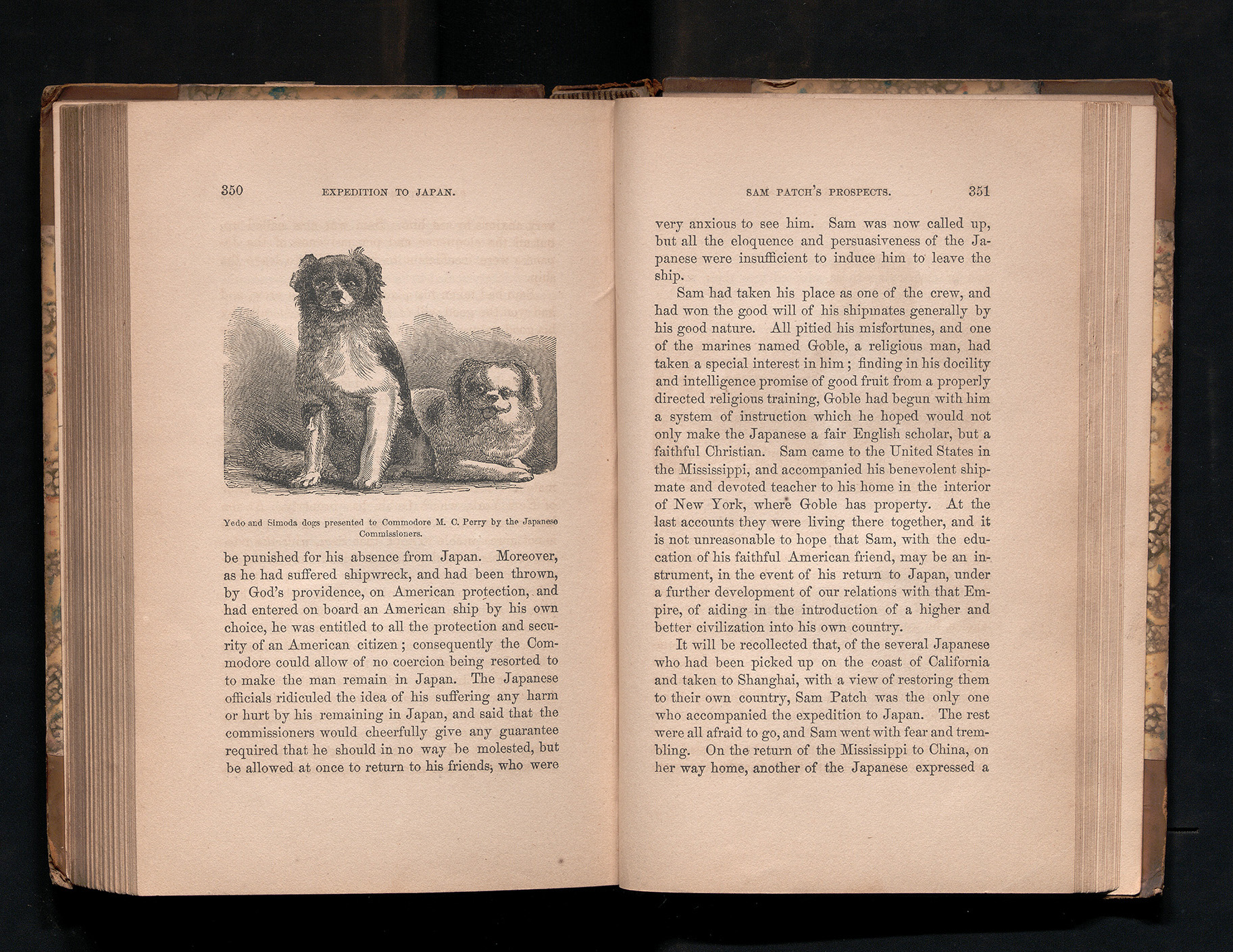
Robert Tomes, Japan and the Japanese: A Narrative of the U.S. Government Expedition to Japan under Commodore Perry (London, 1859).

As part of their diplomatic efforts, the Japanese and American envoys exchanged many gifts, including the two dogs pictured here, which were given to expedition leader Matthew Calbraith Perry. The Americans gifted items that showcased the accomplishments of the young nation, including a model of a steam locomotive, telegraph equipment, and liquor. The Japanese gifted items that demonstrated the pinnacle of traditional Japanese crafts, including lacquerware, paper, and silks.

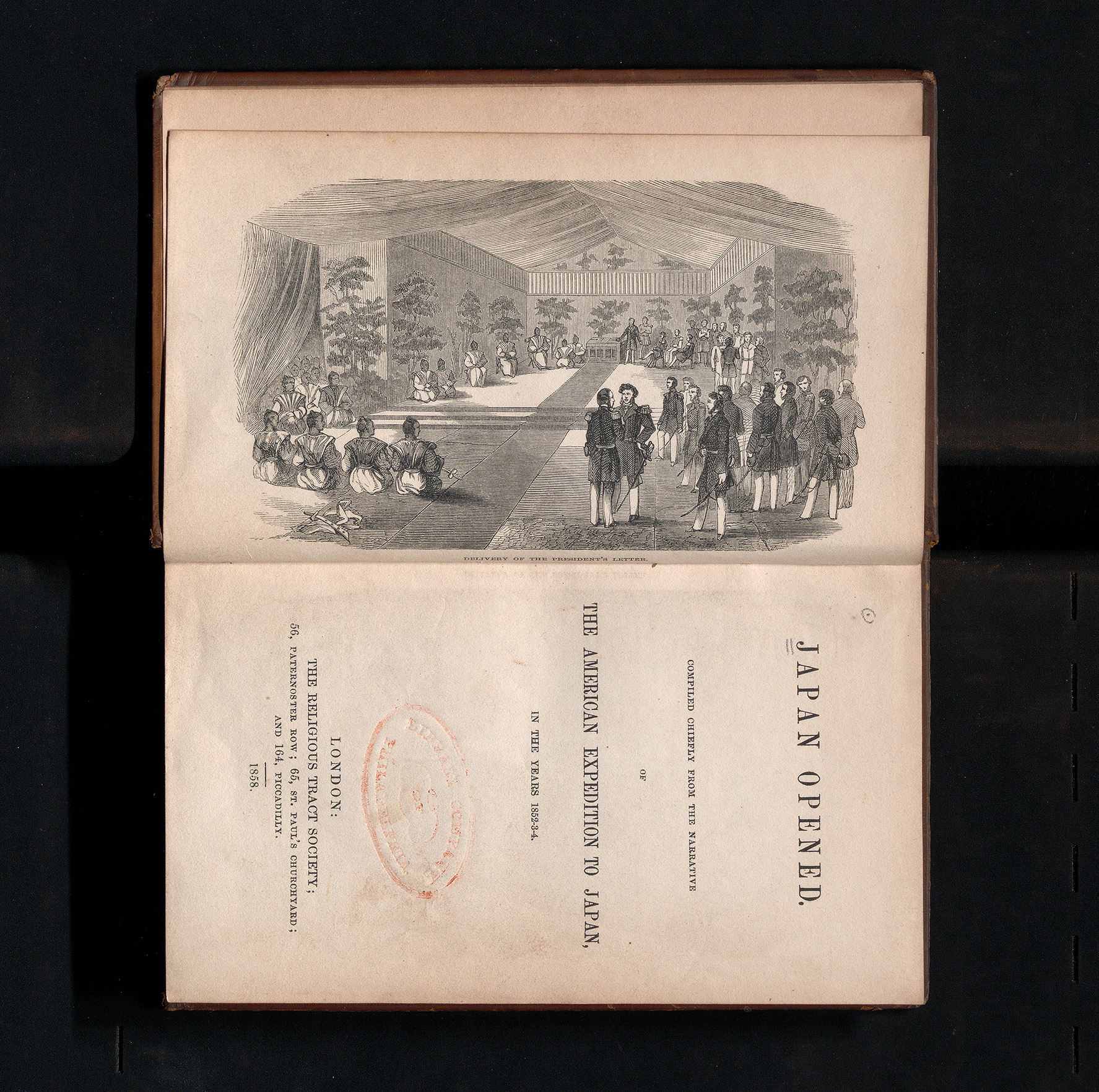
Japan Opened, Compiled Chiefly from the Narrative of the American Expedition in Japan, in the Years 1852-3-4 (London: Religious Tract Society, 1859).

This abridgement of the official report of Matthew Perry’s expedition was prepared for a British audience. This edition would have been more affordable than others in this section thanks to its small size and cheap paper.

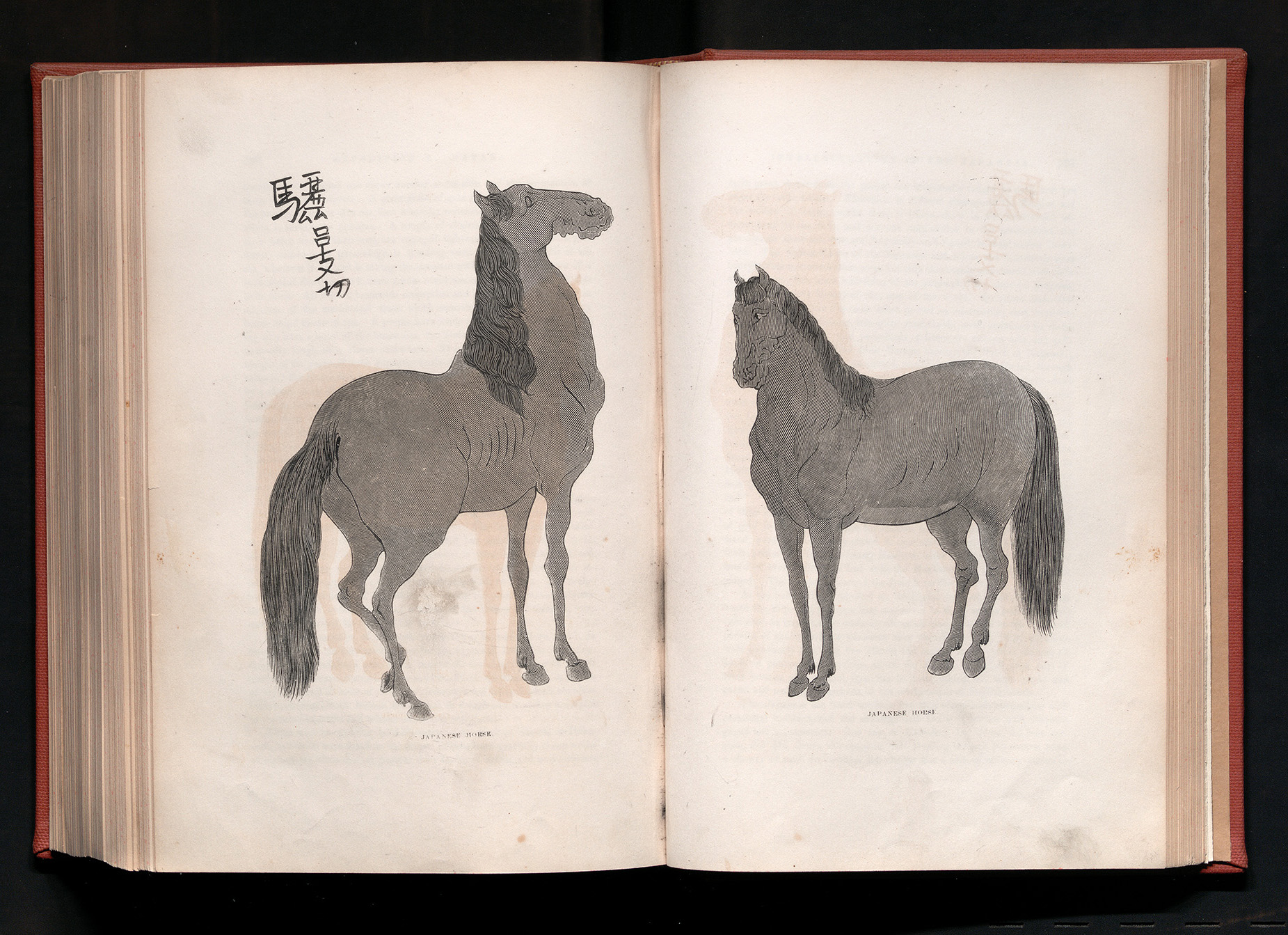
Francis L. Hawks, Narrative of the Expedition of an American Squadron to the China Seas and Japan, Performed in the Years 1852, 1853, and 1854, under the Command of Commodore M.C. Perry, United States Navy (New York, 1856).

This volume is the official expedition report prepared from expedition commander Perry’s notes. It is rich in detail and includes many illustrations and maps. Reproduced here are pages from a Japanese book that was gifted to Perry, on “the points of a horse.”

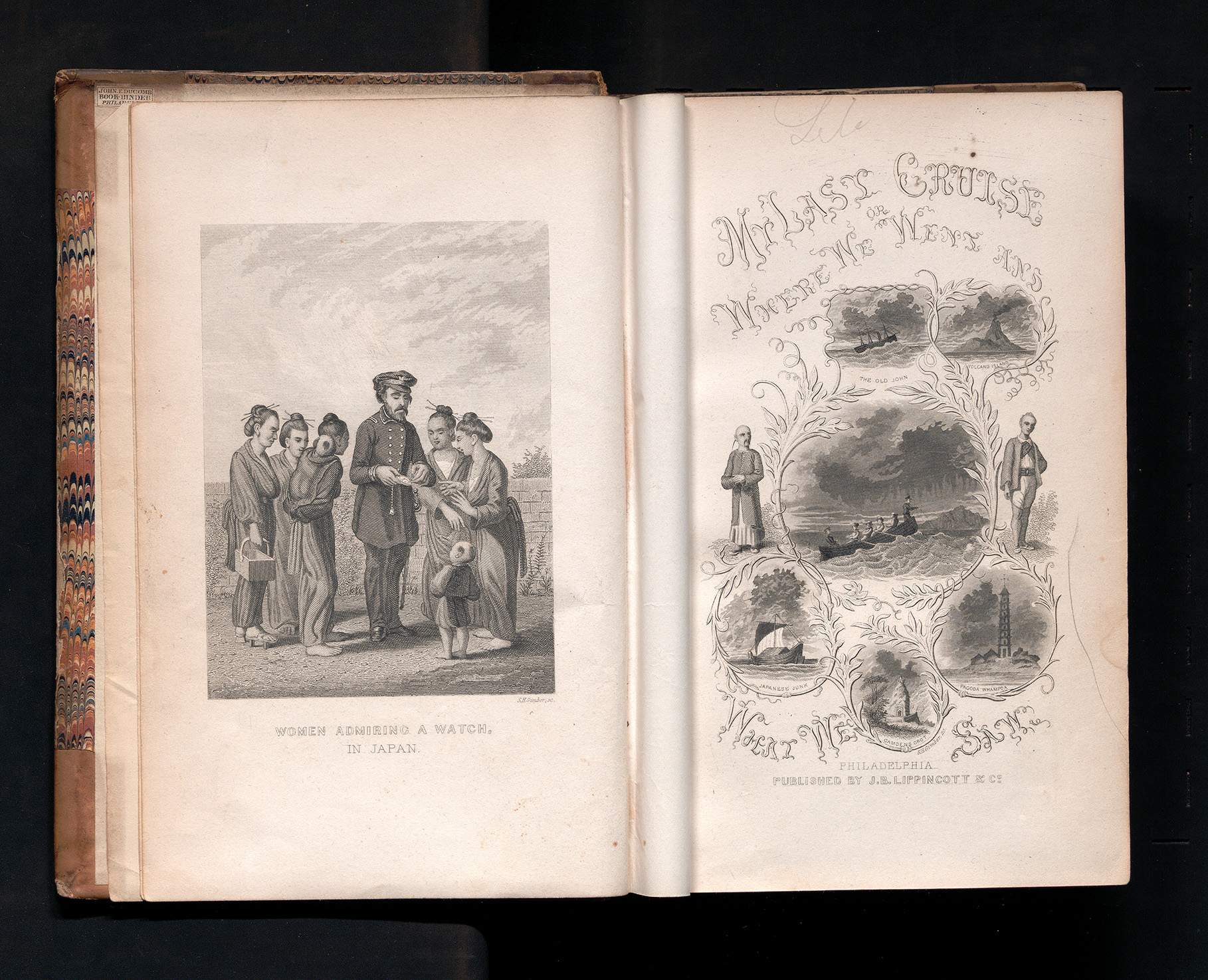
Alexander W. Habersham, My Last Cruise; or, Where We Went and What We Saw, Being an Account of Visits to the Malay and Loo-Choo Islands, the Coasts of China, Formosa, Japan, Kamtschatka, Siberia, and the Mouth of the Amoor River (Philadelphia, 1857).

Alexander Habersham (1826-1883) served in the North Pacific Surveying and Exploring Expedition under Cadwalader Ringgold (1802-1867), which operated in Asian waters during Matthew Perry’s mission to Japan. Immediately after the signing of the treaty, Americans were permitted to visit Japan, and members of Ringgold’s expedition were among the first to do so. Upon his return, Habersham contributed to the growing body of American accounts describing this unfamiliar land.

Robert Tomes, The Americans in Japan: An Abridgement of the Government Narrative of the U.S. Expedition to Japan, under Commodore Perry (New York, 1857).

Expedition narratives remained immensely popular following Matthew Perry’s return from Japan. In 1857, author Robert Tomes (1817-1882) issued this abridgement of the official narrative with the title seen here. However, Tomes recognized that the appeal of such tales extended beyond American audiences. When he reissued this work in England two years later, the reference to “Americans” was eliminated from the title, which was changed to Japan and the Japanese—a change likely intended to make the book more broadly appealing.

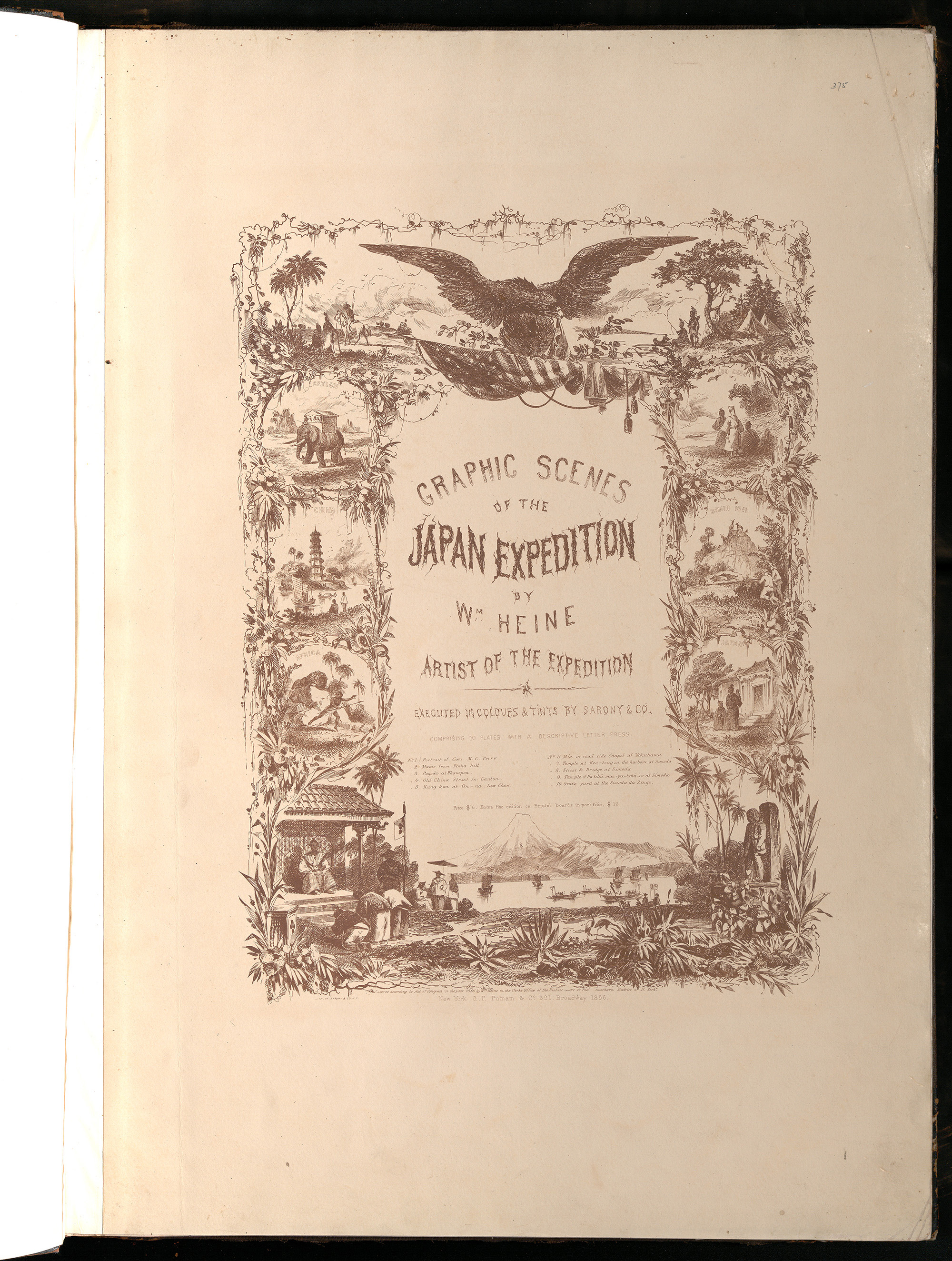
Wilhelm Heine, Graphic Scenes in the Japan Expedition (New York, 1856). Illustrated title page.

William Heine (1827-1885) served as the official artist on Matthew Perry’s expedition to Japan. Upon returning to the United States, he created several series of prints commemorating the journey. His illustrations played a key role in shaping American perceptions of Japanese culture and helped spark a widespread fascination with Japan.

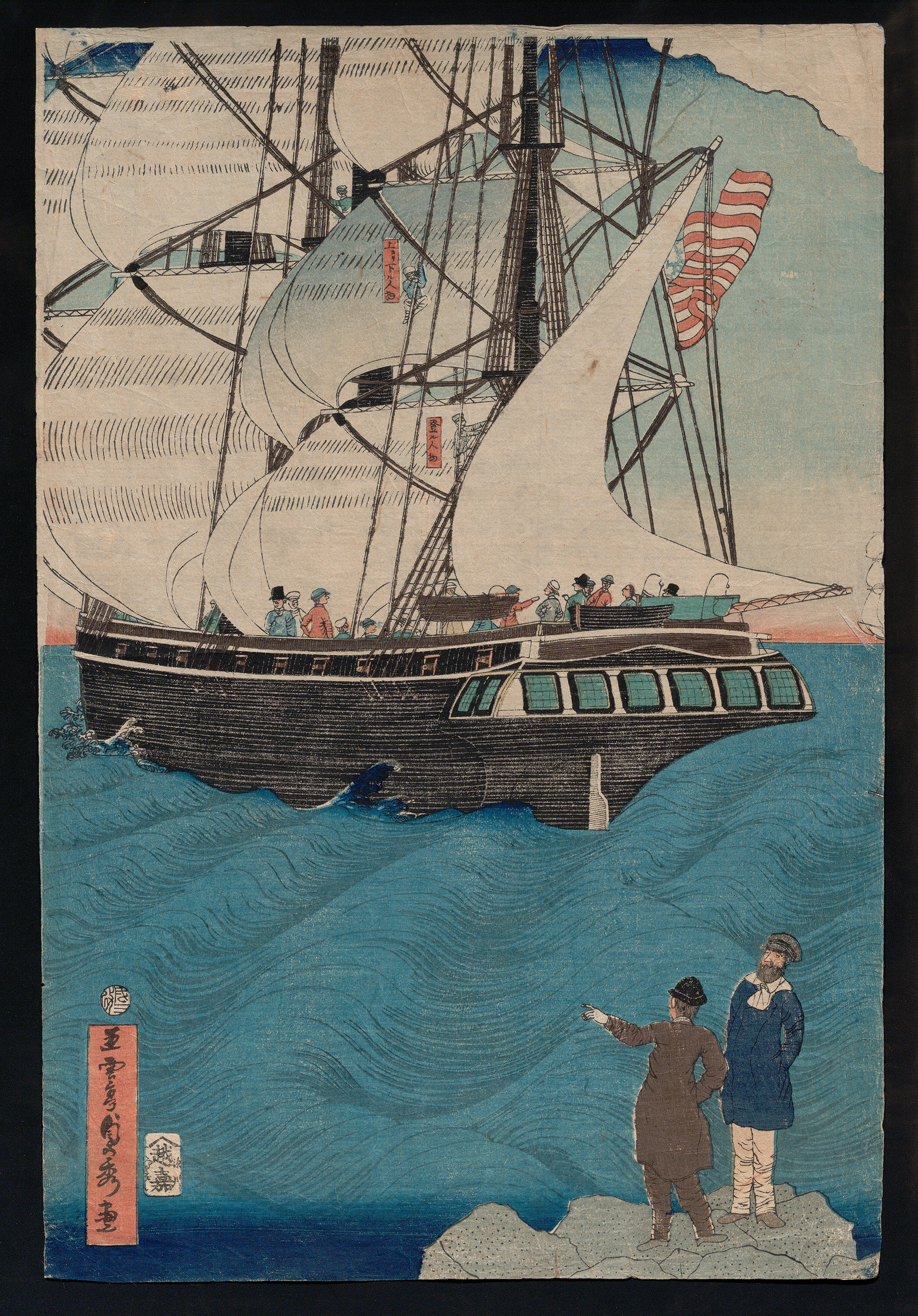
Utagawa Sadahide, Amerikashū Karuharunoyakō Shuppan no Zu [Ships Departing from California]. (Japan, 1862). Color woodblock print. Gift of Davida Tenenbaum Deutsch in memory of Molly Roth.

Utagawa Sadahide (1807-ca. 1879), also called Gountei Sadahide, was a prominent Japanese woodblock artist celebrated for his depictions of foreign people and places. This print, one panel from a triptych, shows the bustling port of San Francisco, where the first Japanese delegation to the United States had landed just two years earlier.

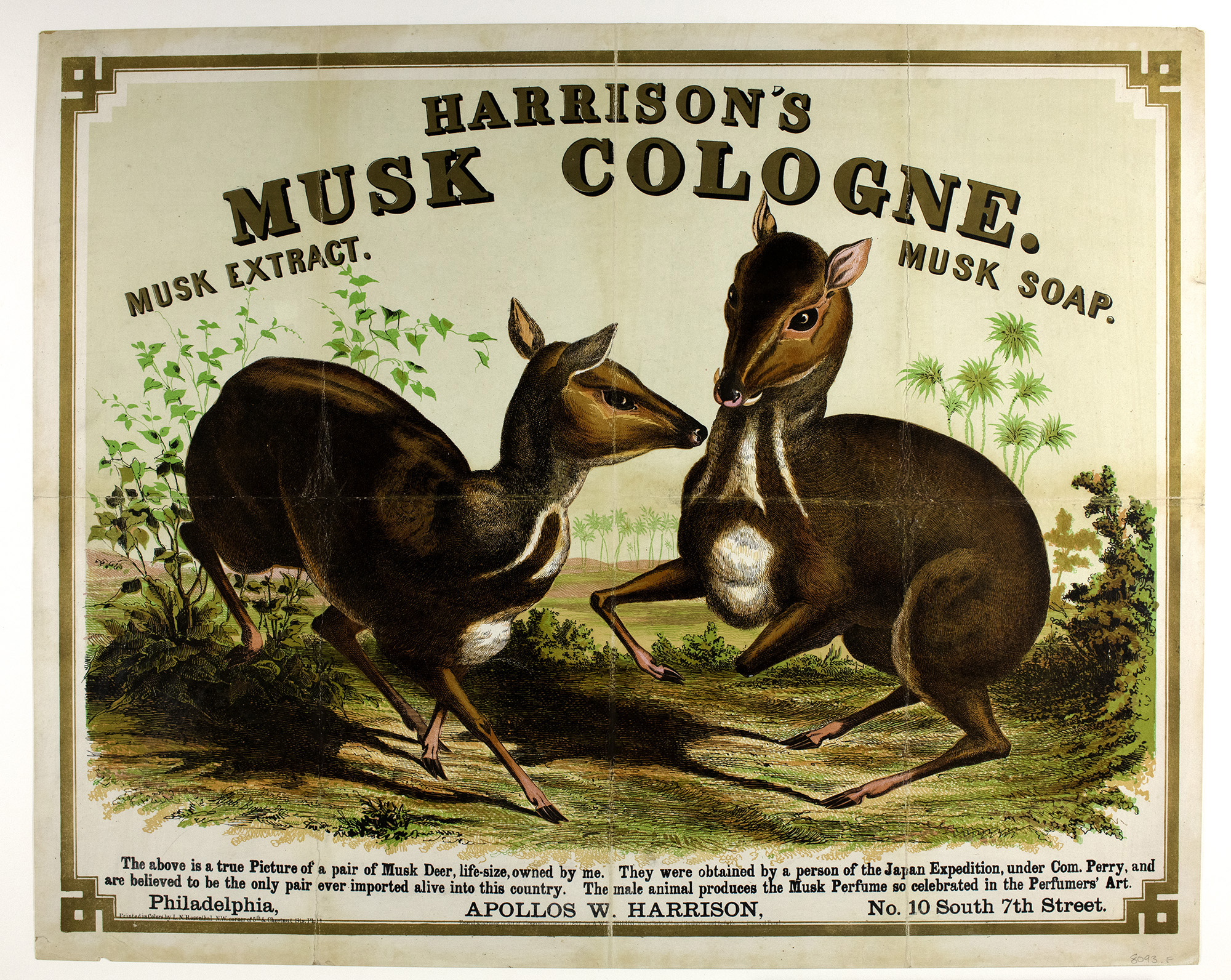
Advertisement for Harrison’s Musk Cologne (Philadelphia, 1857). Chromolithograph.

Harrison’s Columbian Perfumery opened in Philadelphia about 1853. By the late 1850s, it employed over eighty employees, including twenty-five traveling agents. Proprietor Appollos Harrison (1828-1872/3) took full advantage of the American fascination with Japan in this advertisement showing two musk deer at life size “obtained by a person of the Japan expedition, under Com. Perry.”