Motivations

Not all expeditions were as grounded in enlightenment principles as the Wilkes Expedition, which prioritized secular exploration and scientific discovery. Likewise, and unsurprisingly, not all motivations for 19th century expeditions would be considered appropriate today. In this regard, two expeditions especially stand out. In 1848, the Lynch expedition to the Jordan River and the Dead Sea attempted to establish the accuracy of the biblical tale of the destruction of Sodom and Gomorrah. In 1851, the Herndon expedition to the Amazon River valley explored the possibility of transplanting America’s plantation system to this region. It was hoped such an effort might help to preserve the union, which many people already perceived to be in jeopardy.
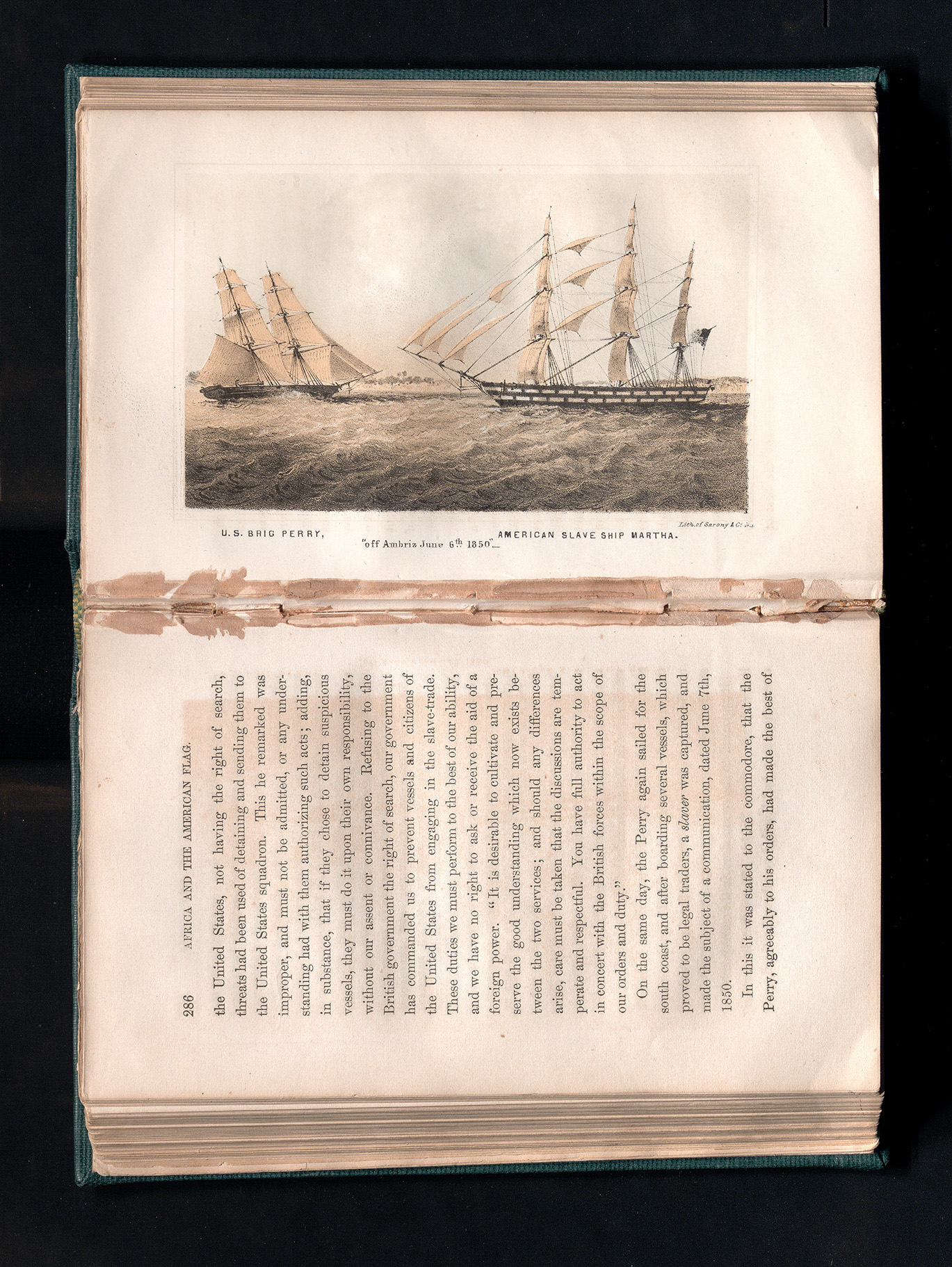
Andrew H. Foote, Africa and the American Flag (New York, 1854).

Andrew Foote (1806-1863) commanded the USS Perry in the Navy’s African Slave Trade Patrol when it seized the slaver Martha in 1850. This capture was one of the most significant in America’s attempt to suppress the African slave trade, but the patrol’s efforts were largely unsuccessful. Foote was an ardent abolitionist, but sentiments regarding slavery were divided within the Navy, reflecting the broader divisions in the nation.

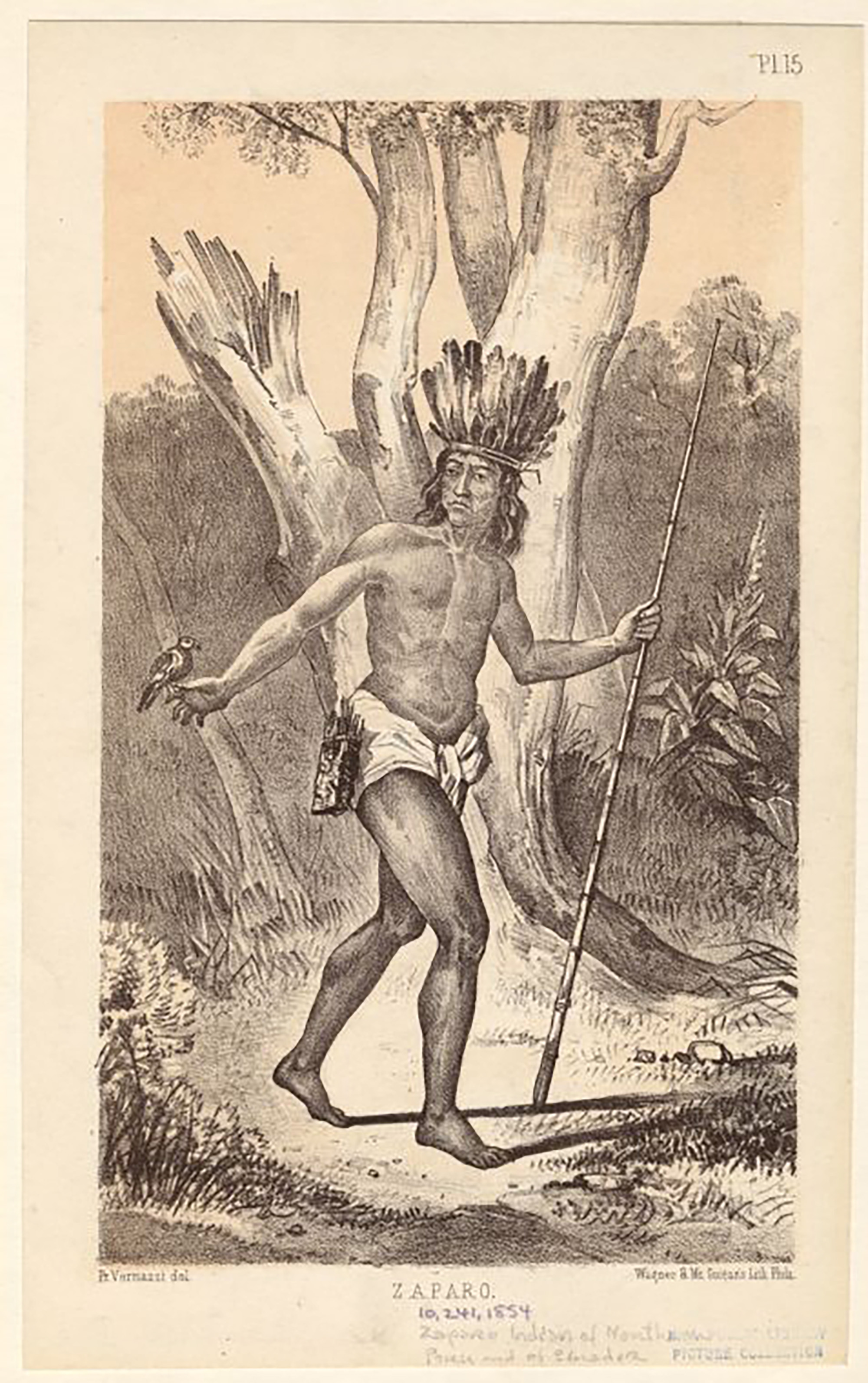
“Zaparo. Hunting Costume” in William Lewis Herndon and Lardner Gibbon, Exploration of the Valley of the Amazon, Made under the Direction of the Navy Department (Washington, D.C., 1854).

William Lewis Herndon and Lardner Gibbon documented the indigenous people they encountered on their expedition, including the Zápara. The Zápara still inhabit parts of the jungle in Ecuador and Peru, but there are estimated to be only a few hundred alive today, down from 200,000 before the cultivation of rubber led to the destruction of much of their land. The Zápara language is nearly extinct.

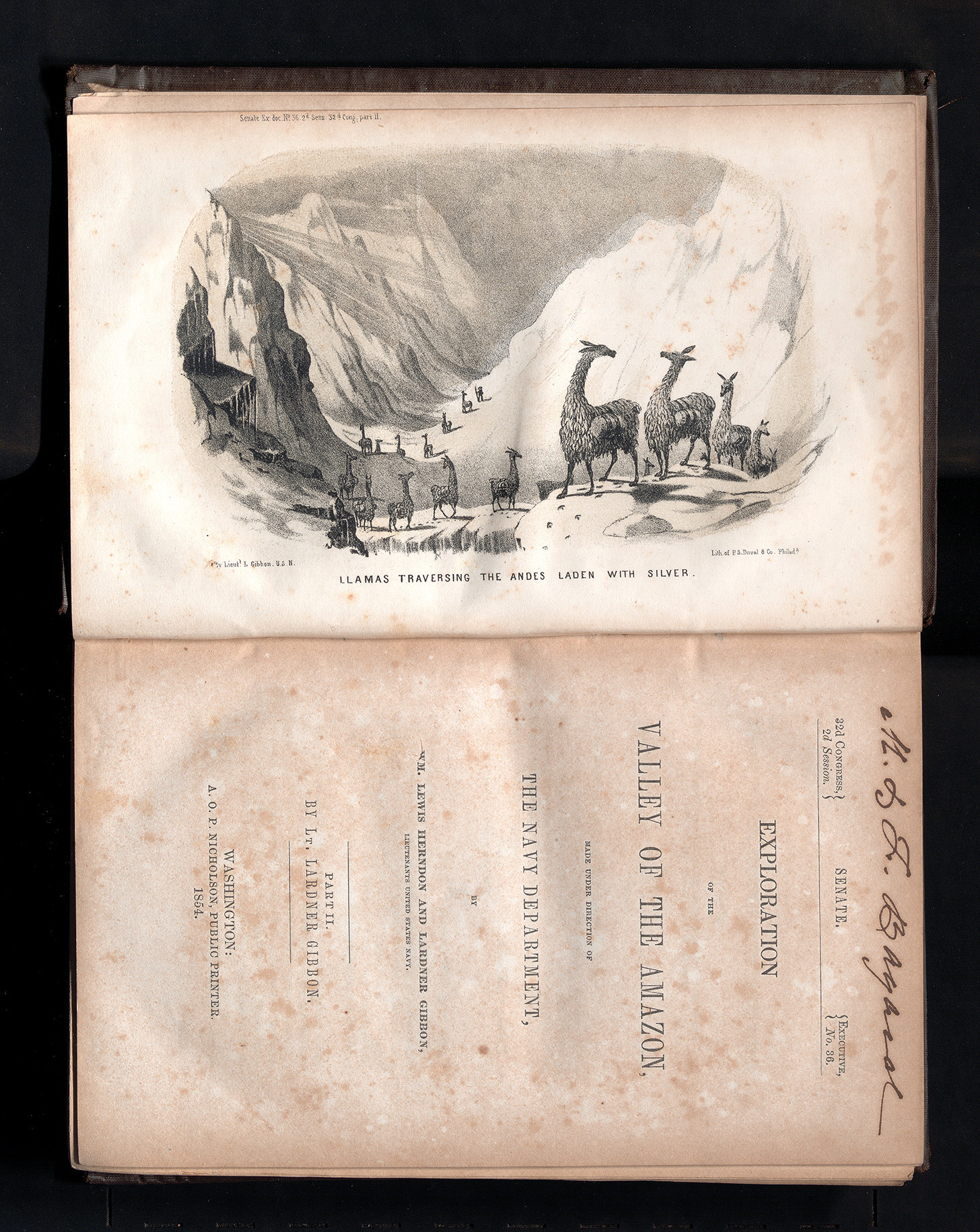
William Lewis Herndon and Lardner Gibbon, Exploration of the Valley of the Amazon, Made under the Direction of the Navy Department (Washington, D.C., 1853).

The Herndon expedition to the Amazon basin was the brainchild of Navy oceanographer Matthew Fontaine Maury (1806-1873). Maury feared that the issue of slavery would lead to an end to the United States and was hopeful that Brazil offered a “remedy for preserving the union.” It was Maury’s hope that plantation owners could either sell enslaved people to enslavers already established in the Amazon, or they could transplant their operations entirely. Ending slavery was never Maury’s goal. When the Civil War began, Maury resigned from the Navy and joined the Confederacy.

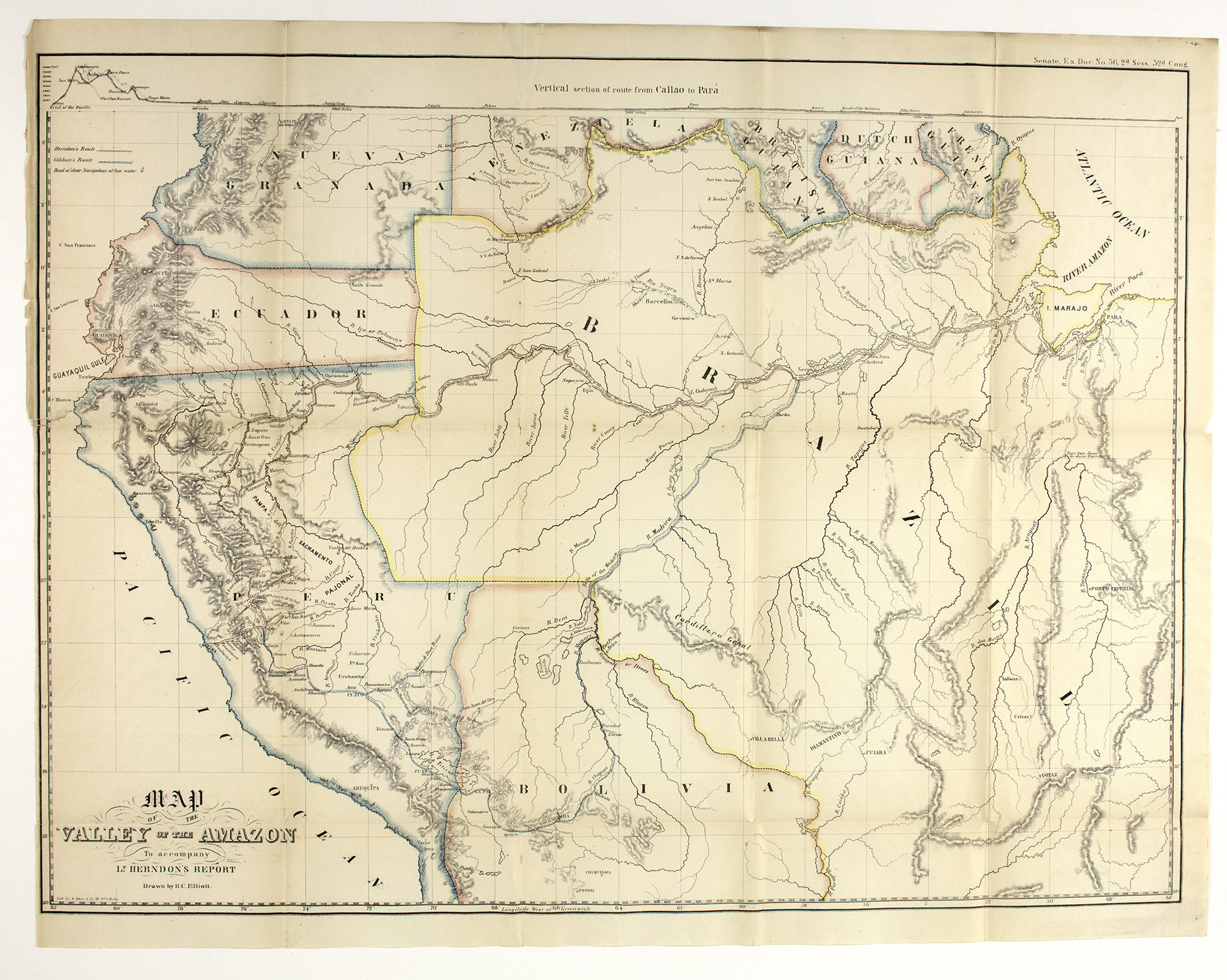
H.C. Elliott, “Map of the Valley of the Amazon” from William Lewis Herndon and Lardner Gibbon, Exploration of the Valley of the Amazon, Made under the Direction of the Navy Department (Washington, D.C., 1853).

In 1851, the U.S. Navy commissioned William Herndon (1813-1857) and Lardner Gibbon (1820-1910) to explore the interior of South America. Traveling separately to cover more ground, the two men navigated over 4,000 miles by mule and canoe. This map traces the ambitious routes they followed through diverse and often challenging terrain.

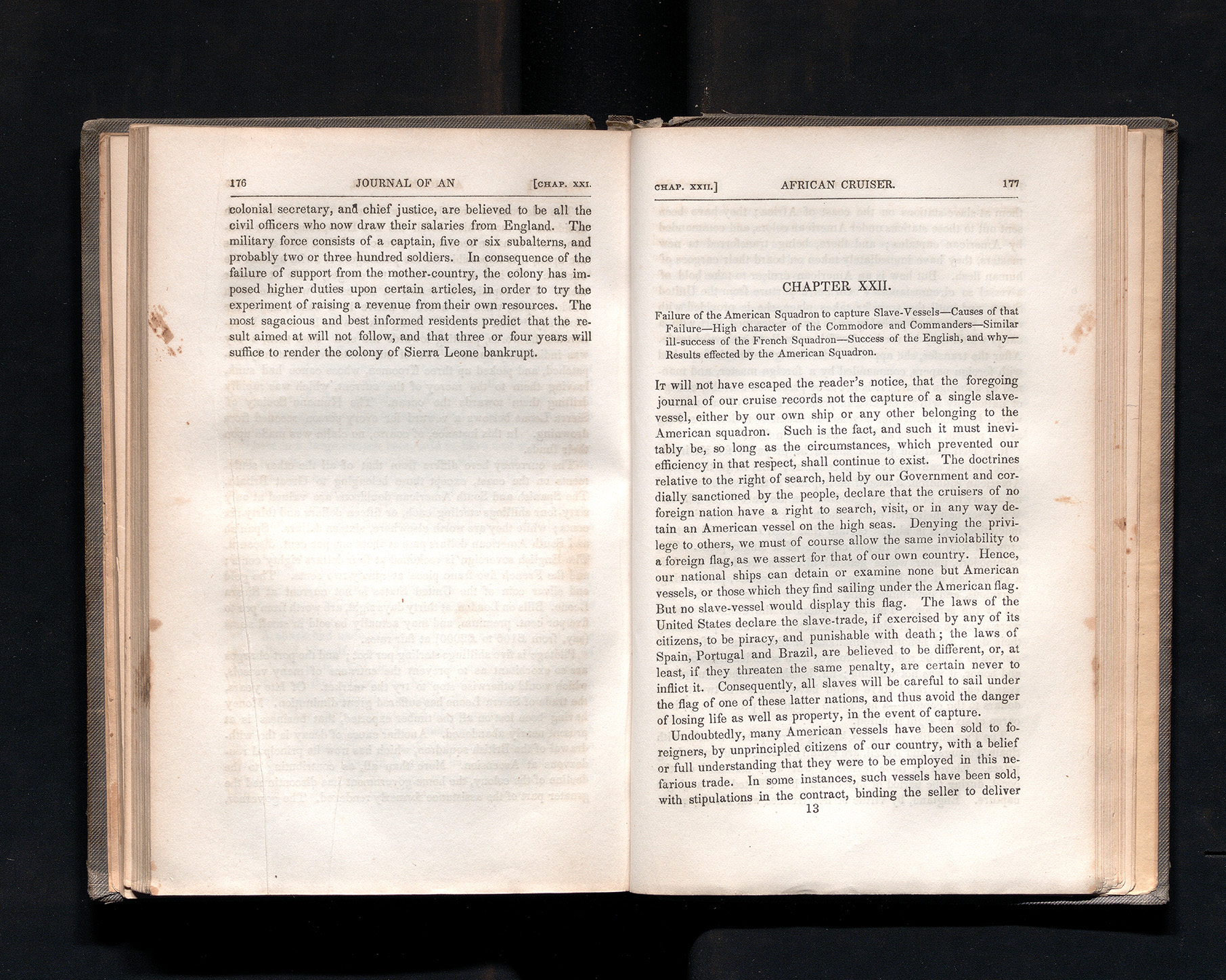
Horatio Bridge, Journal of an African Cruiser, Comprising Sketches of the Canaries, the Cape de Verds, Liberia, Madeira, Sierra Leone, and Other Places of Interest on the West Coast of Africa (New York, 1848).

The African Slave Trade Patrol’s limited success has been attributed to several factors, including the United States’ refusal to allow foreign nations to board and search ships flying American colors, as described here. However, statistics indicating the success of other nations’ efforts could also be misleading. The author of this work explains that captives “rescued” by British ships were often not returned to their homelands but instead sent to labor in distant British colonies—raising questions about the true humanitarian impact, and motives, of such interventions.

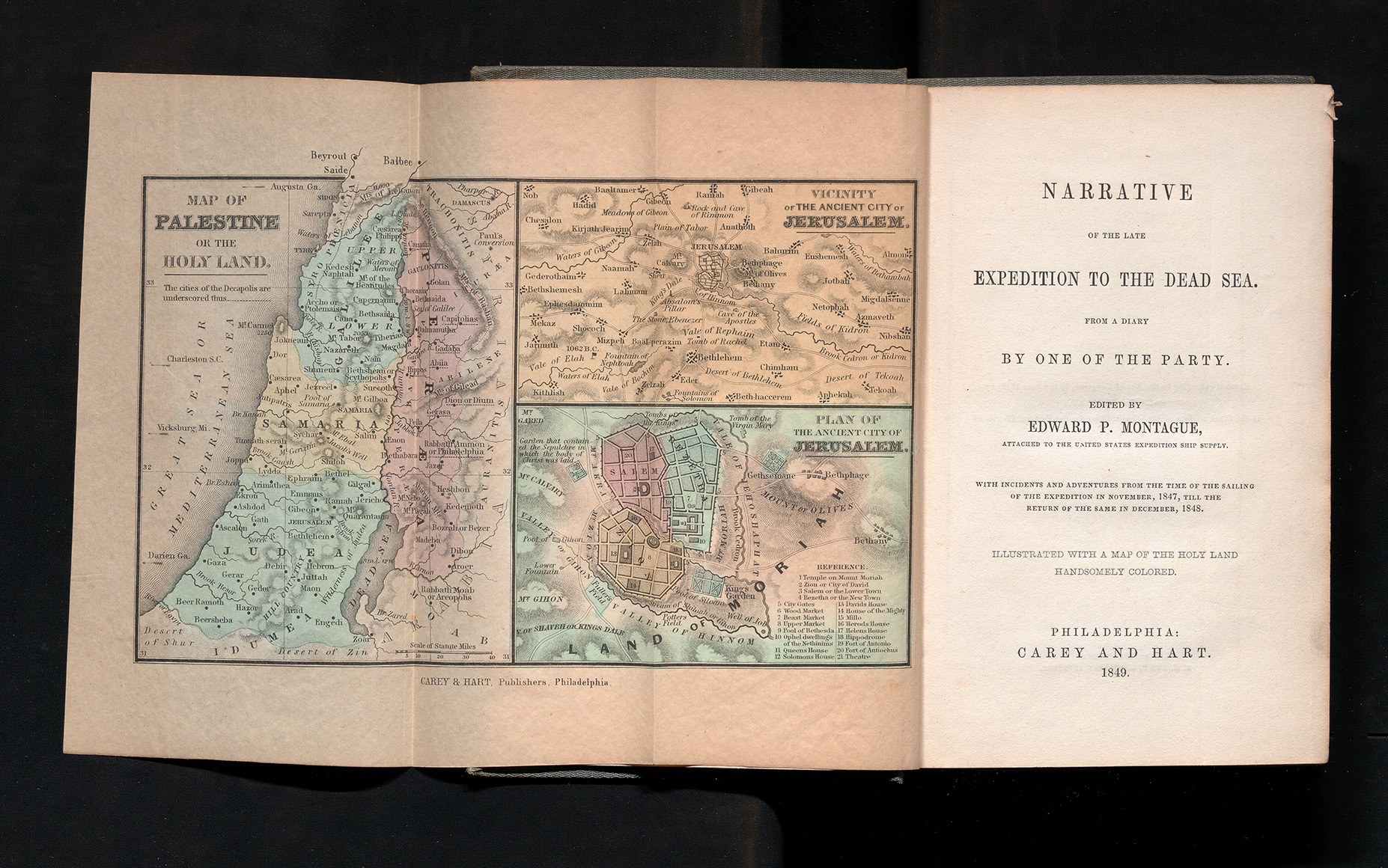
Edward P. Montague, Narrative of the Late Expedition to the Dead Sea, from a Diary by One of the Party (Philadelphia, 1849).

This account of the Navy’s Dead Sea expedition was published before that of its commander William F. Lynch—a breach of protocol driven by the public’s eager demand for such narratives. With a decidedly nativist bent, Montague’s Narrative was aimed at a broader, more populist audience than the refined readership who could afford Lynch’s more elegant publication. Yet both authors agreed that the expedition was a fitting endeavor for the United States, which they regarded as a distinctly Christian nation.

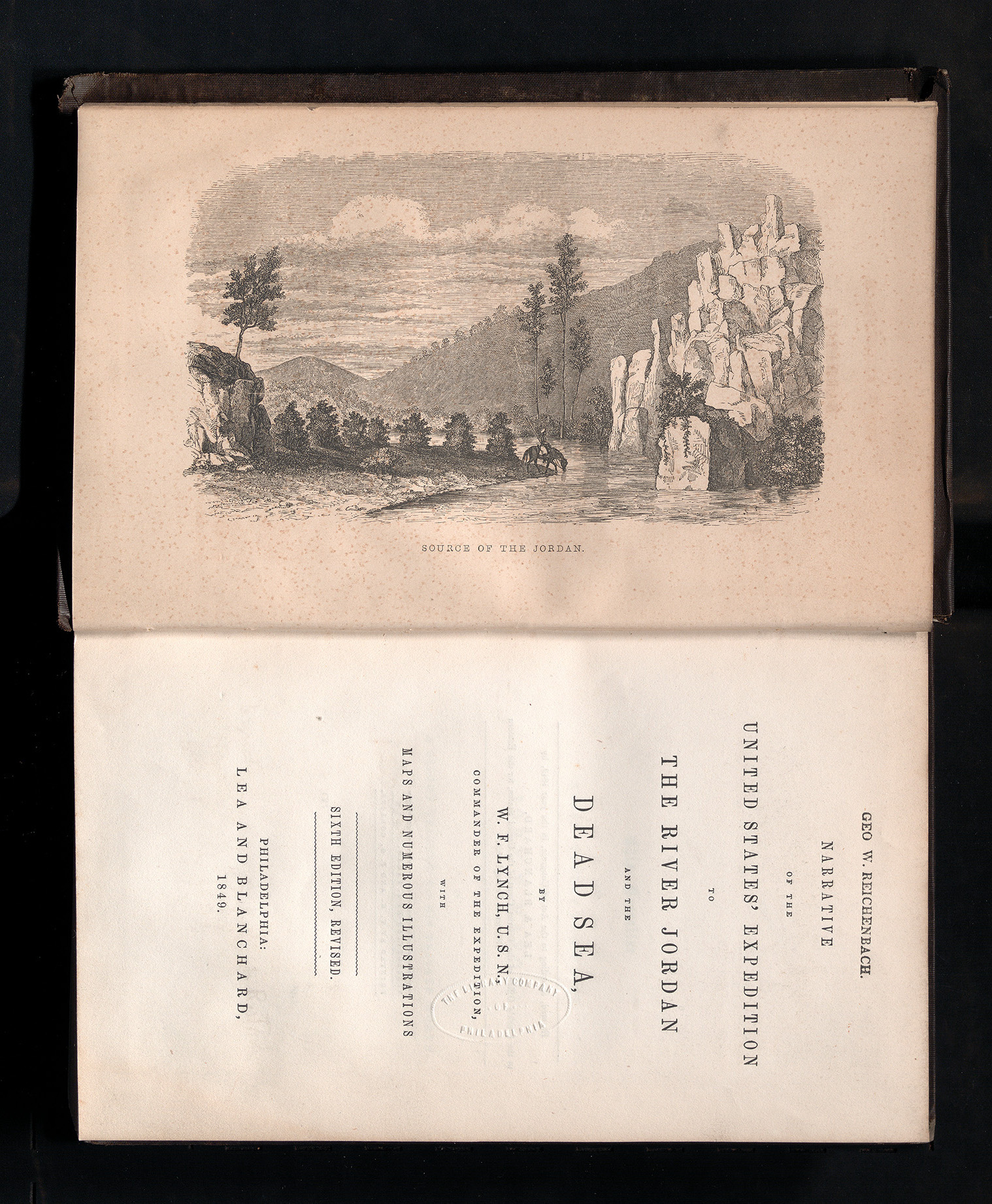
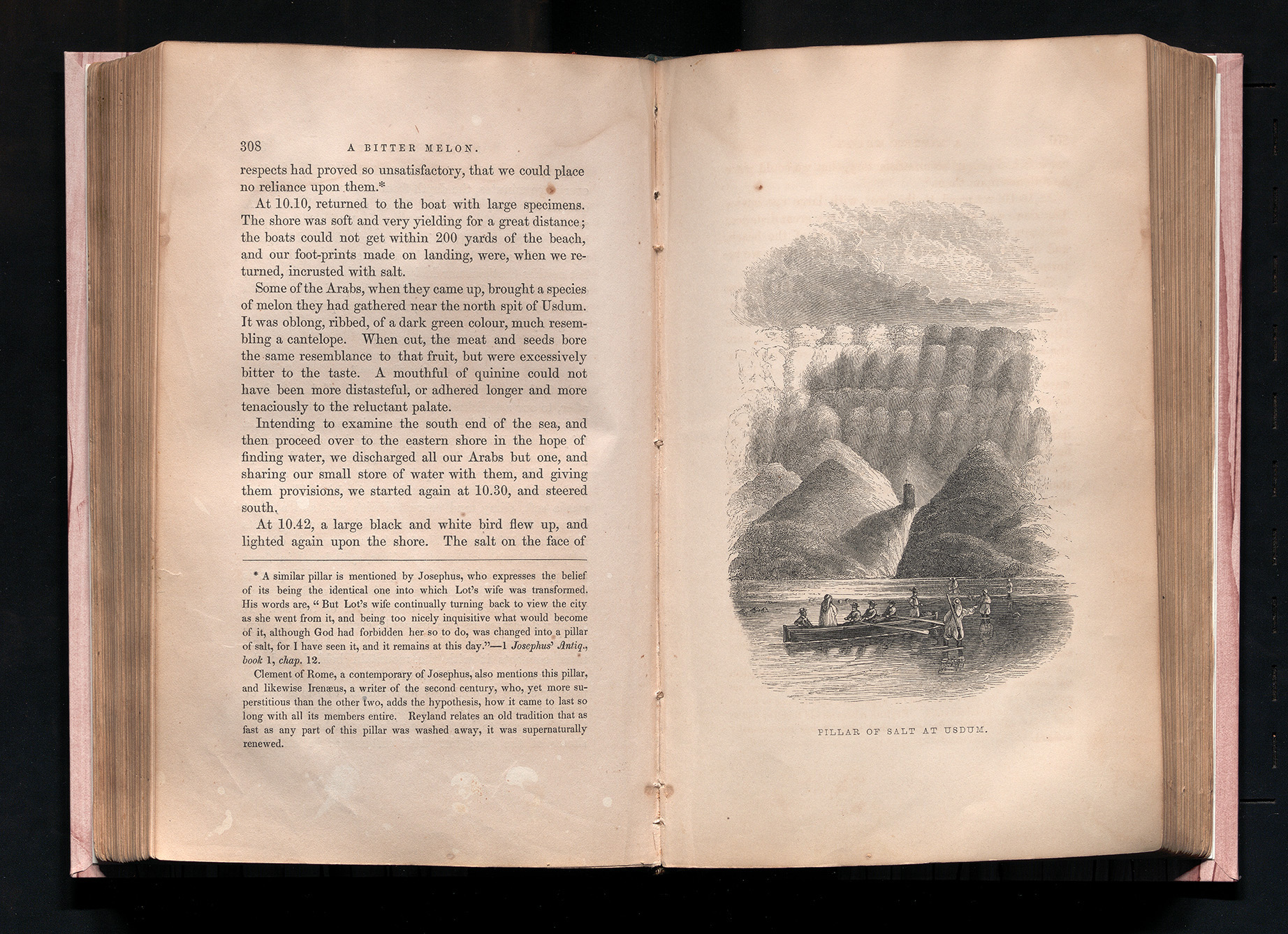
William Francis Lynch, Narrative of the United States’ Expedition to the River Jordan and the Dead Sea (Philadelphia, 1849).

William F. Lynch (1801-1865) commanded the Navy’s expedition to the Dead Sea. He opens his Narrative by noting that, when the public learned of the object of his expedition, “indications were such as to induce me to apprehend that it was not appreciated.” While the journey to the Near East involved collecting scientific data and artifacts—standard practice for such missions—Lynch, an evangelical Christian, believed these findings could also validate biblical accounts. His dual aim of scientific inquiry and religious affirmation reflects the complex motivations behind some 19th-century expeditions.