
Mellon Scholars Summer Program – Subject Guides
African American Missionaries from Independent Black Churches to the African Diaspora
Overview:
Throughout the late eighteenth and nineteenth centuries, African Americans formed new independent Black churches and denominations, often rejecting unfair racial hierarchies and segregation in White-led churches. Philadelphia is the birthplace of independent African American churches, as, in the late eighteenth century, minister Richard Allen founded Mother Bethel African Methodist Episcopal Church (and later the African Methodist Episcopal (AME) denomination) and Absalom Jones founded the African Episcopal Church of St. Thomas. Independent Black churches were spaces where Black communities could organize religiously, socially, and politically. In the early nineteenth century, for example, Black Philadelphians united at Mother Bethel AME to reject the American Colonization Society, an organization founded to resettle African Americans in West Africa.
Throughout the nineteenth century, independent Black churches became increasingly involved in missionary work, especially to Africa and African diasporic communities in the Americas. Though many Black Christians rejected forced African American emigration to West Africa or the Caribbean, many also believed that African-descended Christians had a unique ability and responsibility to Christianize Africa and Afro-diasporic communities. Though independent Black religious communities had rejected racial discrimination in White-led American churches, in their framing of the African and African diasporic mission field, African American missionaries adopted White Christians’ racist constructions and discourses about Black religiosity and civility. How did African American missionary work look similar to that of White missionaries? How did it look different? How did African American missionaries describe their imagined mission field? How have Black missionaries’ conceptions evolved over time?

About the Author:
Alison Fortenberry is an incoming PhD student in the Department of Religion at Princeton University, and she recently completed her BA in African American Studies at Princeton. Alison is working on a community archive project, cataloging and digitizing the historic records of a Philadelphia church. She is passionate about African American religious history, and in her free time she enjoys reading and doing jigsaw puzzles.
Keywords
Contributors:
- Coker, Daniel, 1780-1846
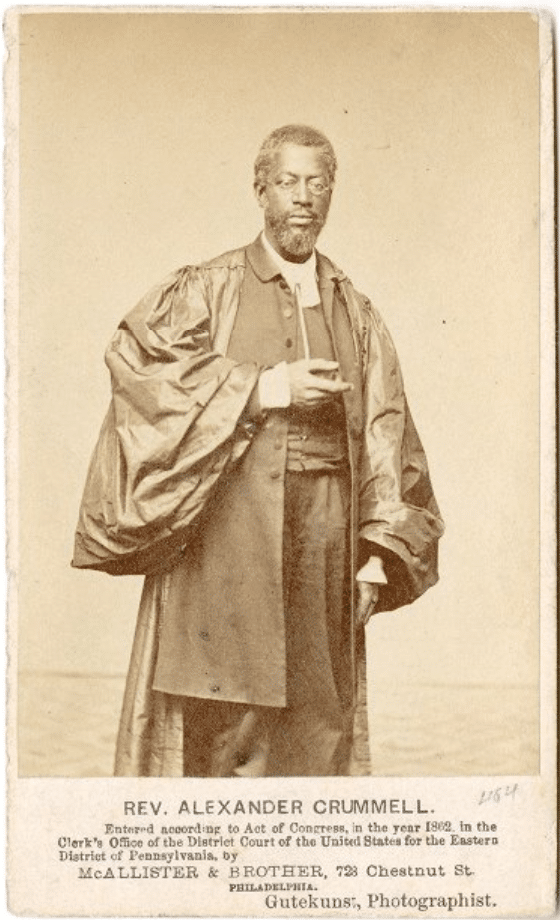
- Crummell, Alexander, 1819-1898
- Cornish, Samuel E. 1795?-1858
- American Colonization Society
- African Methodist Episcopal Church (Philadelphia, Pa.)
- Allen, Richard, 1760-1831
- Jones, Absalom, 1746-1818
- Forten, James, 1766-1842
- Carey, Lott, 1780-1828
- Holly, James Theodore, 1829-1911
Subject Headings:
- African American missionaries
- African Americans –Missions — Liberia
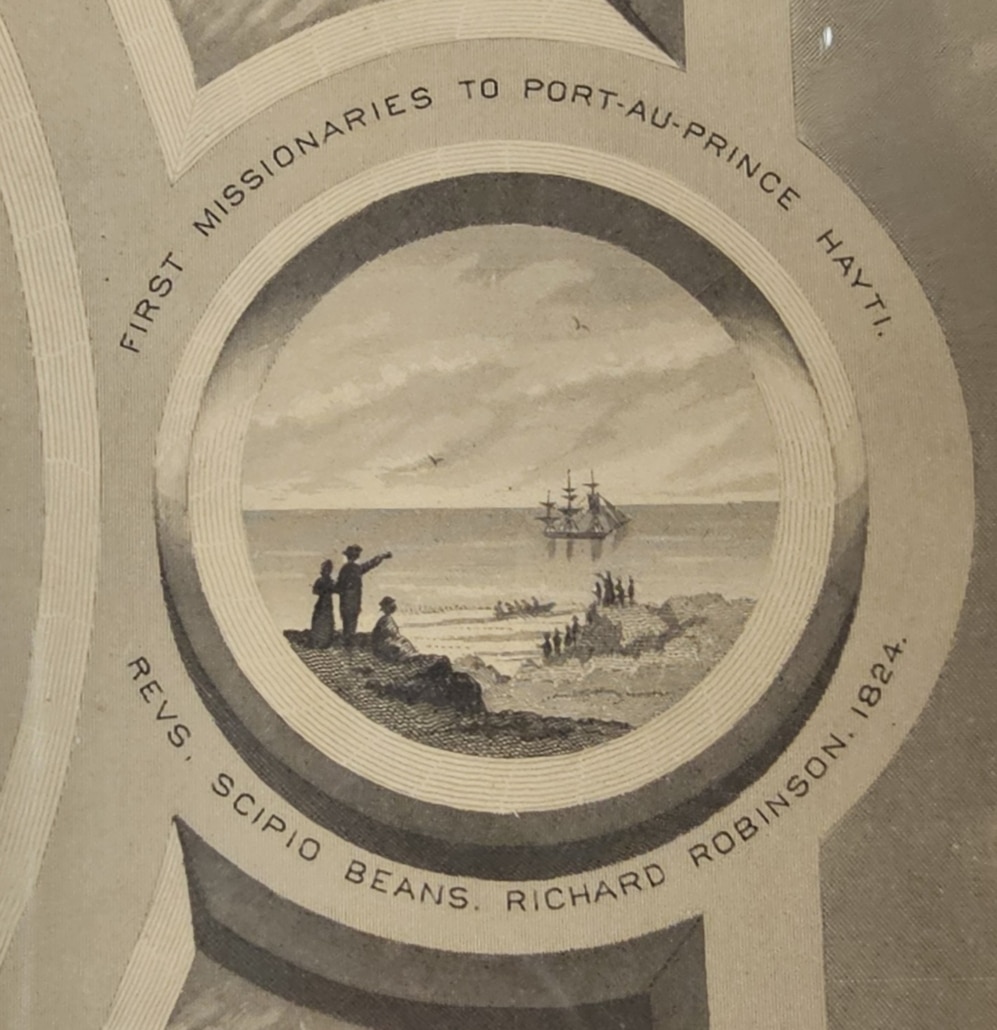
- African Americans – Missions — Haiti
- Missions — History
- African Americans — Relations with Africans
- African Americans — Colonization — Africa
- African Americans — Colonization — Africa, West
- African Americans — Colonization — Liberia
- American Colonization Society
- African American churches — Pennsylvania — Philadelphia
- African Methodist Episcopal Church — History
- St. Thomas’ Church (Philadelphia, Pa.)
- African Americans — Pennsylvania — Philadelphia
- Antislavery movements — Pennsylvania — History
- Free African Americans — Pennsylvania — History
Access Terms:
- Sermons
- Letters (Correspondence)
- Speeches
- Biographies
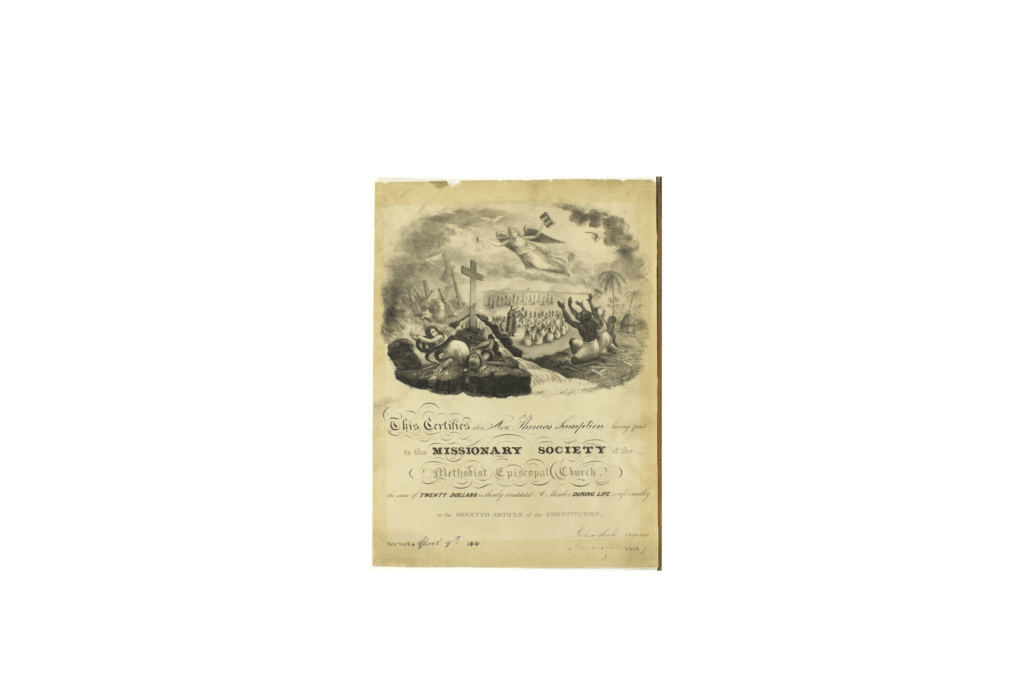
- Certificates
Annotated Bibliography
Resources at LCP:
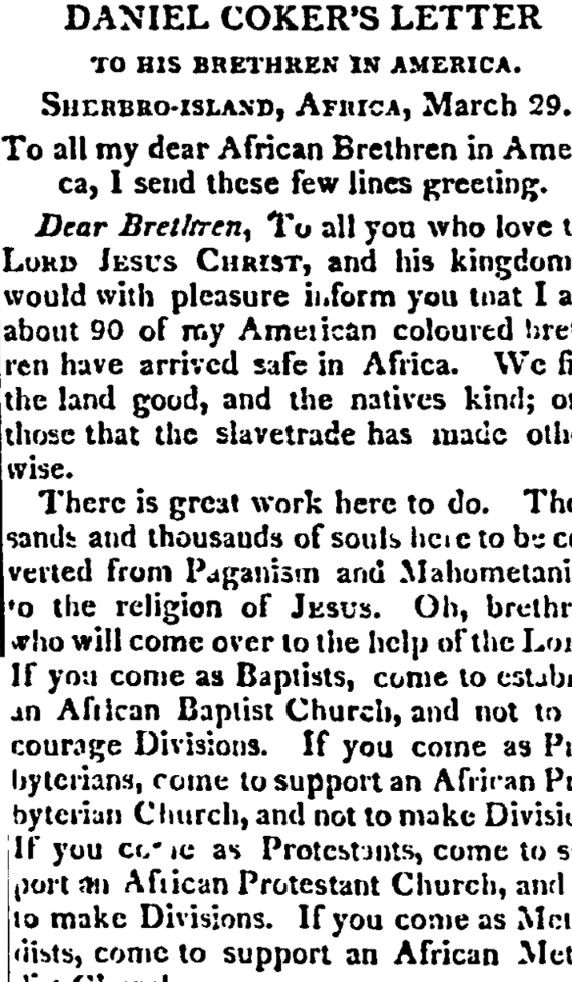
Daniel Coker, “Daniel Coker’s Letter to His Brethren in America,” Washington Review and
Examiner (July 10, 1820).
Daniel Coker is one of the founders of the AME Church who was sponsored by the American Colonization Society to work as a missionary in Liberia. In this letter, which was published in local presses, Coker encourages African American Christians to shed their sectarian divisions and come to Africa to help convert the “Heathens” from “Paganism and Mahometanism to the religion of Jesus.”
William Lloyd Garrison, Thoughts on African Colonization, or, An Impartial Exhibition of the Doctrines, Principles and Purposes of the American Colonization Society (Boston, 1832).
This refutation of African colonization, written by White abolitionist William Lloyd Garrison, contains a compendium of anti-colonization appeals by African Americans. Black Philadelphians, led in part by local Black religious leaders, met at Mother Bethel AME church to reject African colonization, staking a claim to American identity and arguing that, if African Americans were forcibly sent en masse “into the savage wilds of Africa” (9), many African Americans would lose their Christian faith. Though Black Philadelphians rejected African colonization, they accepted racially informed religious beliefs that cast Africa and African people as “savage,” “heathenistic,” and in need of Christianization.
James A. Thome, Samuel H. Cox, Samuel E. Cornish, and Henry B. Stanton, Debate at the Lane Seminary, Cincinnati: Speech of James A. Thome of Kentucky, Delivered at the Annual Meeting of the American Anti-Slavery Society, May 6, 1834. Letter of the Rev. Dr. Samuel H. Cox, Against the American Colonization Society (Boston, 1834).
Local Resources:
Muslim Charm (Fort Shirley, Huntingdon County, PA, c.a. 1760). Copper Charm. Museum of the American Revolution.
This charm, which may have belonged to an enslaved African American, is engraved with the Islamic symbol, the Shahada. Many enslaved Africans brought Islamic faith with them, though both White and Black Christian missionaries sought to convert them to Christianity.
Frederick H. Talbot, “Partners in Mission” (1974). Record Slipcover. Courtesy of the Richard Allen Museum.
This record was produced by the 16th District of the AME, which contains the Caribbean and South America. The slipcover calls the Afro-diasporic people of the 16th AME District “the sons and daughters of Richard Allen” and describes them as partners in mission. Missionary efforts in the AME led to large international branches of the independent Black denomination.
Ethel H. McNair, The Reflector: The First Episcopal District Women’s Missionary Society Newsletter (July 31, 1979). Courtesy of the Richard Allen Museum.
A local branch of the AME’s Women’s Missionary Society produced this newsletter in 1979, which outlined the AME Women’s Missionary Society’s present work and continued efforts in global missionary work. This document shows the enduring focus on international missionary work among independent Black churches.
Reference Books:
Lum, Kathryn Gin. Heathen: Religion and Race in American History. Cambridge, Harvard University Press, 2022.
In Heathen, religious historian Kathryn Gin Lum traces the concept of “heathen” from the colonial era to the present, arguing that racialization and religious othering are co-constitutive processes used in the construction of the “heathen.” Lum argues that White Americans constructed the “heathen” as a non-Protestant, generally non-White, recipient of White Christian evangelism and aid. Lum further explores how African American missionaries who had been converted to Christianity adopted similar rhetorics around heathenism, often describing Africa as a heathen continent in need of Christianization.
Andrews, Edward E. Native Apostles: Black and Indian Missionaries in the British Atlantic World. Cambridge, Harvard University Press, 2013.
Additional Sources:
LCP SOURCES
Mathew B. Brady [photographer], John Chester Buttre [engraver], Middleton Strobridge and Co. [printer], Rev. Francis Burns: Missionary Bishop of the M.E. Church in Western Africa (Cincinnati, 1859. Engraving.
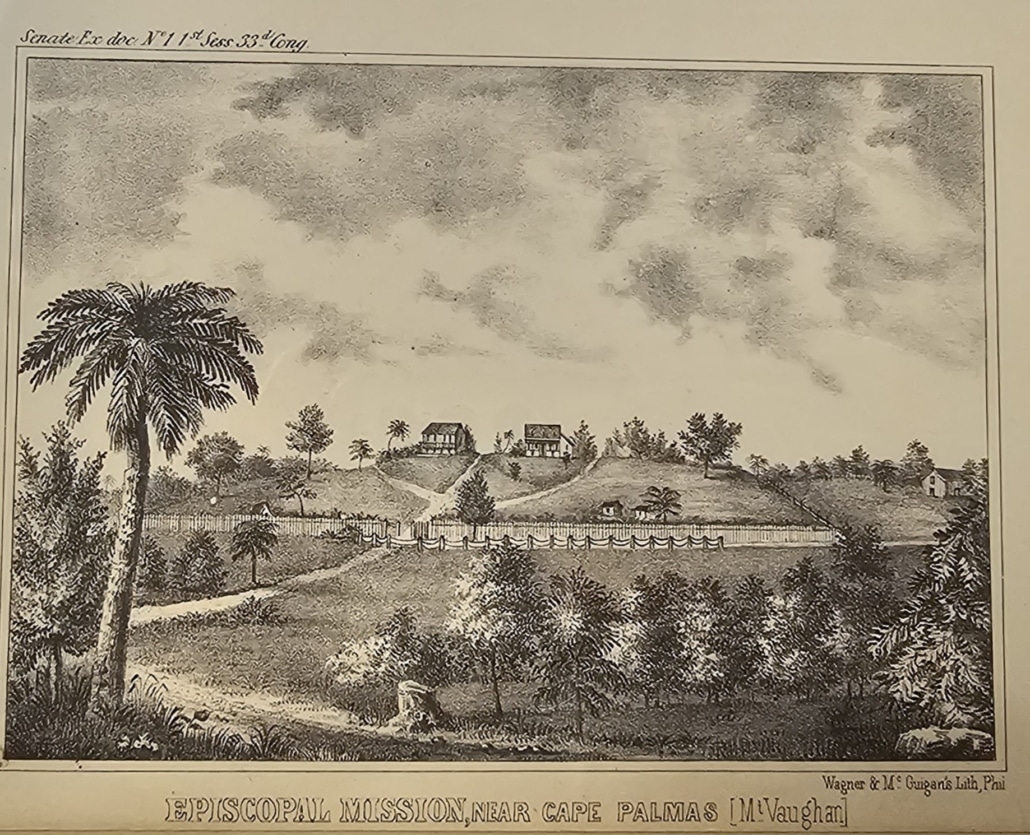
William L. Breton and Peter S. Duval, Mount Vaughan: Scite of Protestant Episcopal Mission, Cape Palmos, West Africa (Philadelphia, 1838). Lithograph.
Alexander Crummell, Africa and America: Addresses and Discourses by Alex Crummell, Rector of St. Luke’s Church, Washington D.C. (Springfield, MA, 1891).
Alexander Crummell, Civilization the Primal Need of the Race (Washington D.C., 1898).
Alexander Crummell, The Duty of a Rising Christian State to Contribute to the World’s Well-Being and Civilization, and the Means by Which it May Perform the Same (London and Boston, 1857).
Alexander Crummell, The Future of Africa: Being Addresses, Sermons, Etc. Delivered in the Republic of Liberia (New York, 1862).
The American Colonization Society and Daniel Coker, The Fourth Annual Report of the American Society for Colonizing the Free People of Colour of the United States (Washington D.C., 1821).
William Douglass, Annals of the First African Church, in the United States of America, Now Styled the African Episcopal Church of St. Thomas (Philadelphia, 1862).
Frederick Gutenkunst, Rev. Alexander Crummell (Philadelphia, 1862). Photograph.
Lambert Hollis [illustrator], John Chester Buttre [engraver], and George Edward Perine [printer], American Methodism (New York, 1872). Engraving.
William J. Keubler, Rev. C. M. Tanner, Philadelphia, PA, April 17, 1896 (Philadelphia, 1896). Photograph.
John H. B. Latrobe, William S. Seager, and Wagner and McGuigan [Wagner and McGuigan are lithographers], Views of Liberia from “W. F. Lynch Report of Mission to Africa” (Philadelphia, 1853). Lithograph.
John Marrant and William Aldridge, A Narrative of the Lord’s Wonderful Dealings with John Marrant, a Black: (Now Going to Preach the Gospel in Nova-Scotia) born in New-York, in North-America (London, 1785).
St. Mark’s Hospital (Harper, Liberia), Alexander Crummell, and Alexander Anderson, Laying of the Corner Stone, of St. Mark’s Hospital: Harper: Cape Palmas, Liberia, West Coast of Africa, 24th, April, 1859. With the Addresses and Speeches Delivered on the Occasion (New York, 1860).
Benjamin Tanner and William R. Jones, Revd. John Gloucester: Late Pastor of the First African Presbyterian Church in Philadelphia (Philadelphia, 1828). Engraving.
William Walker, The Missionary Pioneer, or, A Brief Memoir of the Life, Labours, and Death of John Stewart, (Man of Colour,) Founder, Under God of the Mission Among the Wyandotts of Upper Sandusky, Ohio (New York, 1827).
REFERENCE BOOKS
Tomek, Beverly C. Colonization and Its Discontents: Emancipation, Emigration, and Antislavery in Antebellum Pennsylvania. New York, New York University Press, 2011

