
• Link to Facebook
  • Link to Instagram
  • Link to Youtube
  • Link to Mail
  • Link to Rss this site
  • Shopping Cart Shopping Cart
    0Shopping Cart
The Library Company of Philadelphia
  • Home
  • Search Collections
    • Search Library Catalog
    • Search Manuscripts
    • Search Digital Collections
    • How to Search the Collections
      • Subject Guides
      • Access Terms used in our Catalogs
    • Potentially Harmful Materials and Descriptions Statement
  • Academic Programs
    • Overview
    • Fellowships
    • Awards
      • LCP First Book Award
      • Innovation Award
    • Program in African American History
    • Program in Early American Economy & Society
    • The Davida Tenenbaum Deutsch Program in Women’s History
    • Visual Culture Program
  • Research
    • Overview
    • Subject Guides
    • Finding Aids
    • Online Exhibitions
    • Online Resources
  • Using the Library
    • Overview
    • Hours, Access, & Location
    • Appointments
    • Rights & Reproductions
  • Events
    • Upcoming Events
    • Fireside Chats
    • LCP News
    • LCP Press Resources
  • Projects
    • Beyond Glass Cases
    • Library Company Papers Project
  • Join & Support
    • Overview
    • Donate Online!
    • Join & Renew Membership Online!
    • Support: Shareholding
    • Annual Dinner 2026
    • Lecture in Honor of John C. Van Horne
    • The Junto
    • Gifts in Kind
    • Membership Benefits
    • Planned Giving
  • About LCP
    • Annual Reports
    • Staff
    • Academic Program Directors
    • Board of Trustees
    • Library Company Ambassadors
    • Employment
    • Affiliations
    • LCP Blog
    • Press Resources
    • LCP Privacy Policy
    • Overview & History
    • LCP FAQ Sheet
  • Click to open the search input field Click to open the search input field Search
  • Menu Menu

Shareholder Spotlight: Mr. Robert Grace
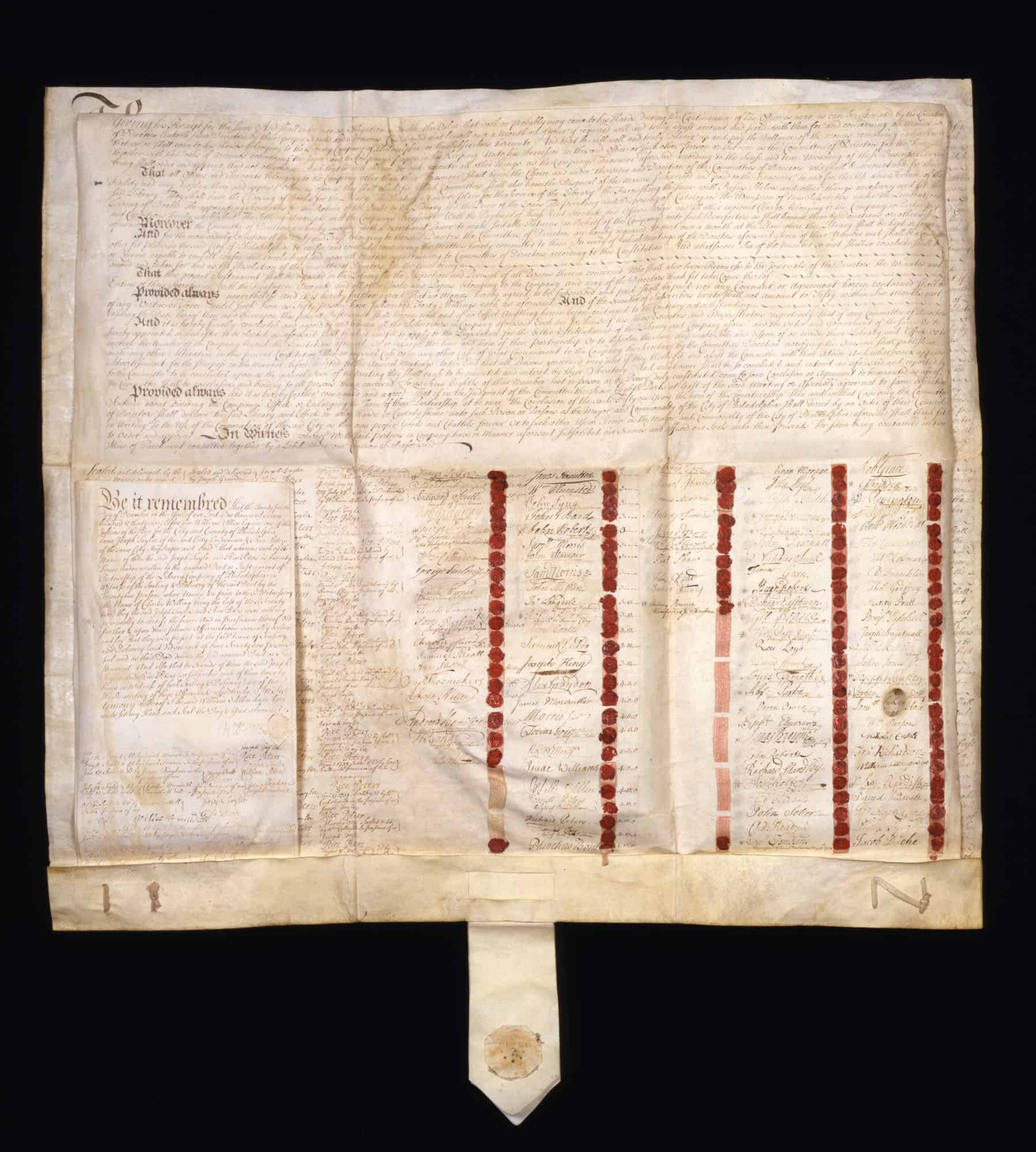
Articles of Association. Manuscript on vellum, Philadelphia, July 1, 1731.

Articles of Association. Manuscript on vellum, Philadelphia, July 1, 1731.

Imagine you’re hanging out with a group of friends at a bar, engaged in a conversation about a current topic. When half of your friends begin disagreeing with the other half over a point, what resources do you consult to settle the matter? Chances are everyone at your table has a smartphone, some may even refer to a podcast, or a few books or articles they’ve read recently.

In our current state of information-overload, it can be difficult to imagine a time when reliable resources were not so accessible.

In the autumn of 1727, Benjamin Franklin and eleven Philadelphian tradesmen formed the Junto, a club for civil discussion and mutual improvement. The Junto met weekly (at a bar!), with members taking turns introducing topics on morals, politics, natural philosophy, and other business of the day. When they foundered on a point, they longed for a printed authority to settle the divergence of opinion.

There were not many books in colonial Pennsylvania at the time, as they were expensive and difficult to obtain. Franklin and the members of the Junto viewed knowledge as necessary to the process of nation building, and resolved to pool their resources to start a communal library. They eventually secured the support of fifty shareholders in 1731, and the first order of books was sent to London on March 31, 1732. And so was born the Library Company of Philadelphia.

In our new Shareholder Spotlight series, we highlight the lives and contributions of the men and women who were instrumental in the creation and sustainability of the Library Company over the last 287 years.

To kick off this new series, we’re taking a look at the Library Company’s first shareholder: Mr. Robert Grace.

Mr. Grace was an iron-maker and one of Ben Franklin’s earliest friends and benefactors. In addition to being the first shareholder and a founding member of the Junto, Mr. Grace claimed many other Library Company firsts. He was the first signer of the Articles of Incorporation of the Library Company in 1733, he sponsored the first trip to London, during which the first set of books was acquired for the library, and he was the first Library Company director. Perhaps most importantly, the Library Company’s first location was within Mr. Grace’s home, where it remained for nine years.

Grace was orphaned at an early age and raised by his grandmother, Constance, who was a widow. She married Hugh Lowden, who raised him in a house on Pewter Platter Alley, the future site of the first Library Company. Constance died in 1725 when Grace was 17, and he then inherited not only the house, but also a great deal of money. In 1741, he married a wealthy widow, Mrs. Rebecca Nutt, a close personal friend of Franklin.

Rebecca was the owner of a half interest in the Warwick Furnace Farms and the Forge at Coventry, both in Chester County, Pennsylvania. Her former mother-in-law, Anna Nutt, was the owner of the remaining half interest. After Rebecca’s marriage to Grace, the Warwick Furnace Farms and Coventry Forge were merged into a new company, Anna Nutt and Company, and Grace was appointed as manager. Soon after, the letter “G” was forged into the cannons made at the forge. After the revolutionary war, a cannon was discovered in a dig on Market Street, with the letter “G” forged in its trunnion, from the forge at Warwick.

Robert Grace died in 1766, but his importance lived on. Franklin spoke of him in his own will with gratitude and love. When Franklin was on his deathbed years after Grace had died he called for Rebecca, who was one of the last non-family members to see Franklin before his death.

The Library Company of Philadelphia would not be here today if not for our shareholders, past and present. By becoming a shareholder, you help to preserve our history and secure our future.

Learn more about becoming a shareholder here: http://librarycompany.org/development/shareholding/

Search

Search Search

LCP News Home

Categories

  • All News
  • Announcements
  • Artist at LCP
  • Beyond Glass Cases
  • Beyond the Reading Room
  • Bookbinding Research
  • Curator's Favorites
  • Current Exhibition
  • Featured Collections
  • Graphic Art Department News
  • Imperfect History
  • LCP in the Press
  • LCP News
  • Library Company Papers Project
  • Marriott C. Morris Collection
  • Mellon Scholars Program
  • PAAH
  • Pandemic Reading
  • Podcasts
  • Popular Medicine
  • Program in Women's History
  • Receipts from “The Larder Invaded”
  • Redrawing History
  • Seminars
  • Shareholder Spotlight
  • Talking in the Library Podcast
  • The Living Book
  • Uncategorized
  • VCP News

Archive

© Copyright 2024 - The Library Company of Philadelphia, 1314 Locust Street, Philadelphia, PA 19107. TEL (215) 546-3181
  • Link to Facebook
  • Link to Instagram
  • Link to Youtube
  • Link to Mail
  • Link to Rss this site
Link to: Positively Philadelphia: New Art Exhibit Looks At 18th Century Philadelphia (KYW News Radio) Link to: Positively Philadelphia: New Art Exhibit Looks At 18th Century Philadelphia (KYW News Radio) Positively Philadelphia: New Art Exhibit Looks At 18th Century Philadelphia... Link to: Wedding Industry, Victorian-Style Link to: Wedding Industry, Victorian-Style Printed in color and selling for a dollar wholesale, the “orange blossom” certificate was the preference of the about twenty-five-year-old Thomas Radle (b. 1861) and teen-aged Mary Dasher (b. ca. 1867-1894). Containing their portrait photographs, the certificate documents that D.W. Proffitt (1841-1913) of the United Memorial Brethren Church married the couple in September 1885 in Pittsburgh. Thomas appears in a suit, derby hat, and with a cigarette in his mouth. Mary wears a long-sleeve, dark-colored dress with a bustle. Although used in a marriage certificate, and especially given Radle’s pose, the photographs, as with the previous couple, were probably ones the couple already possessed. They had not acquired them for the occasion, although possibly for the certificate. A genealogical record, the certificate’s content also provides a trail of evidence for more concrete information about the couple. Mary, likely a domestic servant before her marriage, passed away in 1894. As traced in census and marriage documents, Thomas, a railroad laborer, then farmer, later marries her sister Clara Dasher (1872-1960). He is listed as widowed and she as his housekeeper in the 1900 census. By the summer of 1900, a Pennsylvania marriage license has been issued to the couple. And in the 1910 census, Clara is described as Thomas’s wife. Weddings are history-making events for the couple married. In the modern era, they can also be history making in terms of cost. The Crider & Brother prints and ephemera are humble, yet symbolic artifacts of wedding commercialization. They are captivating mementoes of wedding practices of the past, while also perspicacious harbingers of wedding practices of today. Erika Piola Associate Curator, Prints and Photographs and Director, Visual Culture Program Sources: Ancestry.com accessed April 16 and 17, 2018. Crider & Brother, Publishers and Proprietors of the Original Photograph Marriage Certificates, York, Pa. (York, Pa., 1884). George Reeser Prowell, History of York County, Pennsylvania (Chicago: J. H. Beers, 1907), vol. 2, 497-498.Wedding Industry, Victorian-Style
Scroll to top Scroll to top Scroll to top

This site uses cookies. By continuing to browse the site, you are agreeing to our use of cookies.

OKLearn more

Cookie and Privacy Settings


How we use cookies

We may request cookies to be set on your device. We use cookies to let us know when you visit our websites, how you interact with us, to enrich your user experience, and to customize your relationship with our website.

Click on the different category headings to find out more. You can also change some of your preferences. Note that blocking some types of cookies may impact your experience on our websites and the services we are able to offer.

Essential Website Cookies

These cookies are strictly necessary to provide you with services available through our website and to use some of its features.

Because these cookies are strictly necessary to deliver the website, refusing them will have impact how our site functions. You always can block or delete cookies by changing your browser settings and force blocking all cookies on this website. But this will always prompt you to accept/refuse cookies when revisiting our site.

We fully respect if you want to refuse cookies but to avoid asking you again and again kindly allow us to store a cookie for that. You are free to opt out any time or opt in for other cookies to get a better experience. If you refuse cookies we will remove all set cookies in our domain.

We provide you with a list of stored cookies on your computer in our domain so you can check what we stored. Due to security reasons we are not able to show or modify cookies from other domains. You can check these in your browser security settings.

Google Analytics Cookies

These cookies collect information that is used either in aggregate form to help us understand how our website is being used or how effective our marketing campaigns are, or to help us customize our website and application for you in order to enhance your experience.

If you do not want that we track your visit to our site you can disable tracking in your browser here:

Other external services

We also use different external services like Google Webfonts, Google Maps, and external Video providers. Since these providers may collect personal data like your IP address we allow you to block them here. Please be aware that this might heavily reduce the functionality and appearance of our site. Changes will take effect once you reload the page.

Google Webfont Settings:

Google Map Settings:

Google reCaptcha Settings:

Vimeo and Youtube video embeds:

Other cookies

The following cookies are also needed - You can choose if you want to allow them:

Accept settingsHide notification only
X