
• Link to Facebook
  • Link to Instagram
  • Link to Youtube
  • Link to Mail
  • Link to Rss this site
  • Shopping Cart Shopping Cart
    0Shopping Cart
The Library Company of Philadelphia
  • Home
  • Search Collections
    • Search Library Catalog
    • Search Manuscripts
    • Search Digital Collections
    • How to Search the Collections
      • Subject Guides
      • Access Terms used in our Catalogs
    • Potentially Harmful Materials and Descriptions Statement
  • Academic Programs
    • Overview
    • Fellowships
    • Awards
      • LCP First Book Award
      • Innovation Award
    • Program in African American History
    • Program in Early American Economy & Society
    • The Davida Tenenbaum Deutsch Program in Women’s History
    • Visual Culture Program
  • Research
    • Overview
    • Subject Guides
    • Finding Aids
    • Online Exhibitions
    • Online Resources
  • Using the Library
    • Overview
    • Hours, Access, & Location
    • Appointments
    • Rights & Reproductions
  • Events
    • Upcoming Events
    • Fireside Chats
    • LCP News
    • LCP Press Resources
  • Projects
    • Beyond Glass Cases
    • Library Company Papers Project
  • Join & Support
    • Overview
    • Donate Online!
    • Join & Renew Membership Online!
    • Support: Shareholding
    • Annual Dinner 2026
    • Lecture in Honor of John C. Van Horne
    • The Junto
    • Gifts in Kind
    • Membership Benefits
    • Planned Giving
  • About LCP
    • Annual Reports
    • Staff
    • Academic Program Directors
    • Board of Trustees
    • Library Company Ambassadors
    • Employment
    • Affiliations
    • LCP Blog
    • Press Resources
    • LCP Privacy Policy
    • Overview & History
    • LCP FAQ Sheet
  • Click to open the search input field Click to open the search input field Search
  • Menu Menu

African American Women and Historical Agency
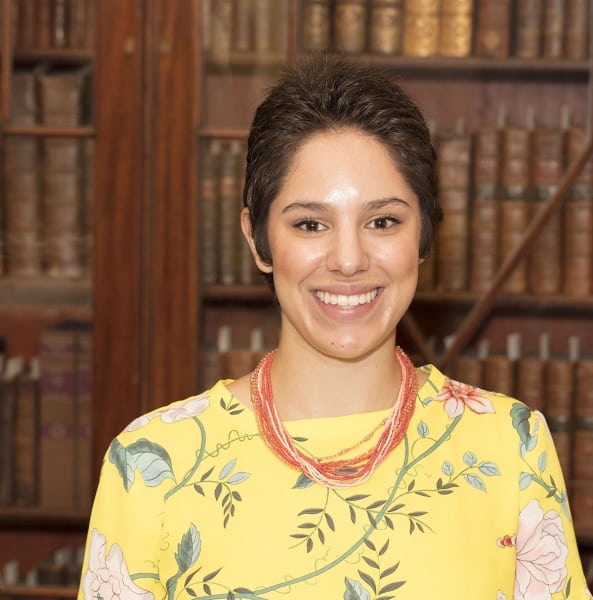
RayLee Otero-Bell

Growing up in Santa Fe, New Mexico I never imagined I would be here in Philadelphia at the Library Company.  I had never heard of the Library Company!  However, when I found out about the Mellon Scholars workshops and internships at the beginning of this year I felt compelled to come.  African American history is such an important, yet often underrated, area of study, and I am so honored to be here in Philadelphia researching the subject.

I spent the bulk of my undergraduate program researching the histories of science, slavery, and race/racism.  My thesis was about the Tuskegee Study.  The study occurred between approximately 1930 and 1972 and was a non therapeutic study of untreated syphilis in Black men.  However, rather than focusing on the ethical wrongs or the struggles the men faced (detailed in works such as James Jones’ Bad Blood), I decided to write about the wives of the study.  When researchers from the US Public Health Service chose to not tell the men they had syphilis, they effectively signed, in the most extreme cases, a death warrant for the wives of the men, and perhaps even more horribly, their children.  These women could not read and write and since they were so often ignored, little primary source material exists about them.  However, that does not completely explain why African American women are often left out of the history of the study.  My thesis was an attempt to detail not only the history that led to this de facto experimentation on Black women, but the history that caused them to be ignored, in the past and often today, as well.

For my research project at The Library Company, I am focusing on African American women’s views towards interracial marriage in Pennsylvania from approximately 1830 to 1860.  I am focusing on the Cogdell-Sanders family, composed of a white man and his slave who originally lived in Charleston, South Carolina.  The couple raised ten children, with Sarah (the enslaved woman) and Richard (her master) living as virtual, but not legal, man and wife.  The interracial, complex, and hopefully loving relationship between Sarah and Richard mirrors a common theme in literature by African American women at this time.  By comparing three generations of the Cogdell-Sanders family (and their primary sources) to those found in Pennsylvania school teacher Julia Collins’ The Curse of Caste, or, The Slave Bride, I will both detail the history of the family and the lives of their mixed race children and make a case for the importance of legal rights, especially marriage, to African American women at this time.

I see African American women’s history as one of the most crucial fields of study today, as it is the story of a large group of women which is often not told.  Society would greatly benefit from seeing African American women as historical actors with agency, individuality, and most importantly, humanity.  I am so grateful to the Library Company for allowing me to study African American women’s history through primary sources and guided research.

Ms. RayLee Otero-Bell
Mellon Internship Program
6-14-18

Search

Search Search

LCP News Home

Categories

  • All News
  • Announcements
  • Artist at LCP
  • Beyond Glass Cases
  • Beyond the Reading Room
  • Bookbinding Research
  • Curator's Favorites
  • Current Exhibition
  • Featured Collections
  • Graphic Art Department News
  • Imperfect History
  • LCP in the Press
  • LCP News
  • Library Company Papers Project
  • Marriott C. Morris Collection
  • Mellon Scholars Program
  • PAAH
  • Pandemic Reading
  • Podcasts
  • Popular Medicine
  • Program in Women's History
  • Receipts from “The Larder Invaded”
  • Redrawing History
  • Seminars
  • Shareholder Spotlight
  • Talking in the Library Podcast
  • The Living Book
  • Uncategorized
  • VCP News

Archive

© Copyright 2024 - The Library Company of Philadelphia, 1314 Locust Street, Philadelphia, PA 19107. TEL (215) 546-3181
  • Link to Facebook
  • Link to Instagram
  • Link to Youtube
  • Link to Mail
  • Link to Rss this site
Link to: Intern Spotlight: Lydia Shaw Link to: Intern Spotlight: Lydia Shaw Intern Spotlight: Lydia ShawIntern Spotlight: Lydia Shaw Link to: Shareholder Spotlight: Ms. Mary Jeanes Link to: Shareholder Spotlight: Ms. Mary Jeanes From the First Annual Report of the Home for Destitute Children. Philadelphia : Crissy & Markley, 1856. Arrow added digitally.Shareholder Spotlight: Ms. Mary Jeanes
Scroll to top Scroll to top Scroll to top

This site uses cookies. By continuing to browse the site, you are agreeing to our use of cookies.

OKLearn more

Cookie and Privacy Settings


How we use cookies

We may request cookies to be set on your device. We use cookies to let us know when you visit our websites, how you interact with us, to enrich your user experience, and to customize your relationship with our website.

Click on the different category headings to find out more. You can also change some of your preferences. Note that blocking some types of cookies may impact your experience on our websites and the services we are able to offer.

Essential Website Cookies

These cookies are strictly necessary to provide you with services available through our website and to use some of its features.

Because these cookies are strictly necessary to deliver the website, refusing them will have impact how our site functions. You always can block or delete cookies by changing your browser settings and force blocking all cookies on this website. But this will always prompt you to accept/refuse cookies when revisiting our site.

We fully respect if you want to refuse cookies but to avoid asking you again and again kindly allow us to store a cookie for that. You are free to opt out any time or opt in for other cookies to get a better experience. If you refuse cookies we will remove all set cookies in our domain.

We provide you with a list of stored cookies on your computer in our domain so you can check what we stored. Due to security reasons we are not able to show or modify cookies from other domains. You can check these in your browser security settings.

Google Analytics Cookies

These cookies collect information that is used either in aggregate form to help us understand how our website is being used or how effective our marketing campaigns are, or to help us customize our website and application for you in order to enhance your experience.

If you do not want that we track your visit to our site you can disable tracking in your browser here:

Other external services

We also use different external services like Google Webfonts, Google Maps, and external Video providers. Since these providers may collect personal data like your IP address we allow you to block them here. Please be aware that this might heavily reduce the functionality and appearance of our site. Changes will take effect once you reload the page.

Google Webfont Settings:

Google Map Settings:

Google reCaptcha Settings:

Vimeo and Youtube video embeds:

Other cookies

The following cookies are also needed - You can choose if you want to allow them:

Accept settingsHide notification only
X