
Mellon Scholars Summer Program – Subject Guides
The Hidden Architects of Public Education – Black Educators during the Activities of the Freedmen’s Bureau


Overview:
The origins of the public education system can be traced to 17th century Massachusetts, where by unanimous vote, taxes funded the first public school in the country. While this was monumental to the history of education, it didn’t proliferate across the country much at all. This changed following the American Civil War.
A call to educate the newly freed population rang clearly, much like a church bell, across the nation. Free Afro-Americans were not new to the cause of education, and had formed several institutions and communities across the country dedicated to teaching enslaved and newly free Black people how to read and write, viewing it as the key to freedom and self-determination. These institutions were run and supported by anti-slavery societies that comprised mostly Northern white abolitionists. The Society of Friends, a Quaker organization, was one of the most prominent organizations helping to fund and support these institutions.
The Bureau of Refugees, Freedmen, and Abandoned Lands, colloquially known as the Freedmen’s Bureau, was established as a government agency following the end of the war, serving as a means of providing relief to newly freed individuals and refugees. The Hidden Architects of Public Education explores the activities of Black educators who chose both to work independently from the Freedmen’s Bureau like Rufus Perry, superintendent of the schools of the African Civilization Society, and those who decided to lend their talents with the National Freedmen’s Relief Associations, not only helping teach at these new Freedmen’s schools, but contributing to the education philosophies as they were being built, like Mary Smith Peake. Education was a realm in which there was a lot of intellectual real estate for free Afro-Americans to make a lasting imprint on. With the brief presence of the Freedmen’s Bureau from 1865 to 1872, it is interesting to examine how Black educators navigated both the private and public spaces in which education practices for freedmen were being shaped all while the social fabric of the United States was being rewoven.
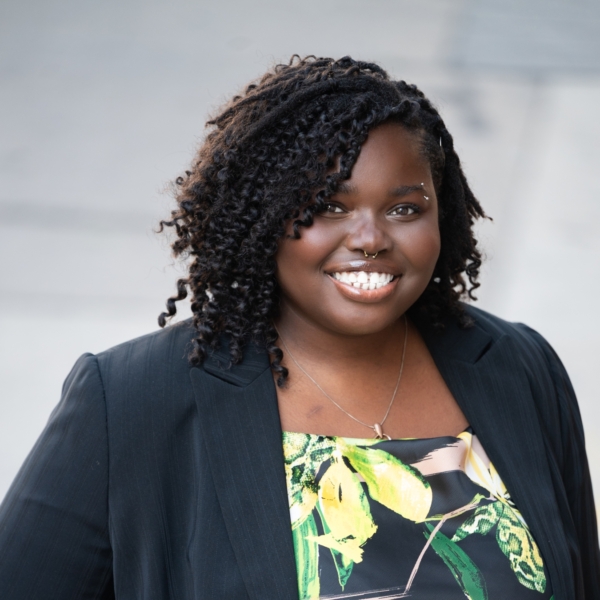 About the Author:
Shaney Cadet is a junior at Rutgers University pursuing a degree in Sociology with minors in Africana Studies and Women, Gender, and Sexuality Studies. She has aspirations of pursuing a master’s degree in Library Sciences due to their passion for public history and education, and hopes to aid in building digital infrastructures that make the internet more people centered. In their free time, they enjoy dancing, singing, and reading.
Keywords
Contributors:
- Catto, Octavius V, 1839-1871
- Child, Lydia M, 1802-1880
- Perry, Rufus L, 1834 – 1895
- Institute for Colored Youth – Pennsylvania
- Mother Bethel African Methodist Episcopal Church – Pennsylvania
Subject Headings:
- Post-Civil War Reconstruction — Legislation — Freedmen’s Bureau
- African Americans — Emancipation — Education — Teaching
- Christianity — Protestant Denominations — Quakers
- Philosophy — Education — Public Schools
- Afro-American writers — Philadelphia
- Antislavery Movements — Pennsylvania
- Abolitionists — Pennsylvania — Societies, etc.
- Education — Teachers — Writing
- Slaves — Emancipation — Reconstruction
- Teaching — Training — Normal Schools
Access Terms:
- Speeches
- Reports
- Religious Texts
- Short Stories
- Hymns
Annotated Bibliography
Resources at LCP:
Local Resources:
African Methodist Episcopal Church, Hymns for the Sabbath School of the Fifth St. M.E. Church, property of Richard Allen Museum of Mother Bethel A.M.E. Church Philadelphia, PA (1853)
Depicted is a hymn book that was commonly used by members of the church. Members would engage in “lining the hymns”, where those who knew how to read would recite hymns and have those who couldn’t repeat. This was a method for folks to learn how to read.

