Reflections from the Mellon Scholars Summer Program, 2026


Photo Credits: @Jaci Downs Photography
This summer, from June 7th – 17th, the Library Company of Philadelphia was proud to host a cohort of talented students from across the country for the 2026 Mellon Scholars Summer Program in African American History. Marking the 14th anniversary of the program’s inauguration, we combined research, professional development, tours, and robust workshops, inviting our scholars to explore the stories, people, and places that illuminate our collections’ purpose.
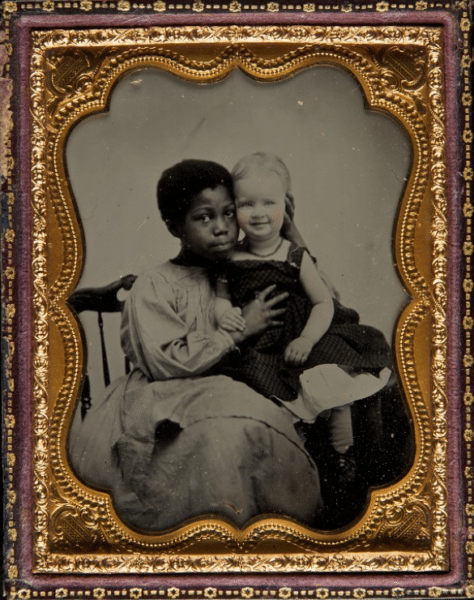
Entering the Archive
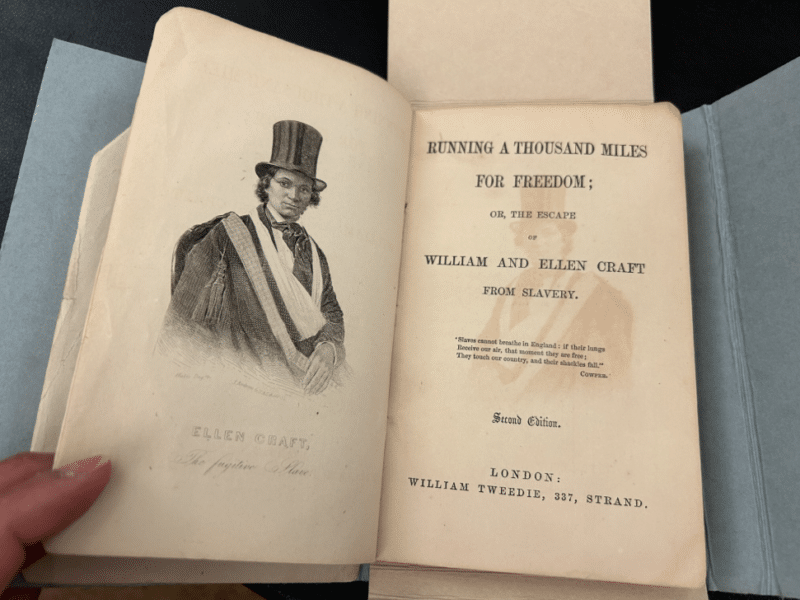
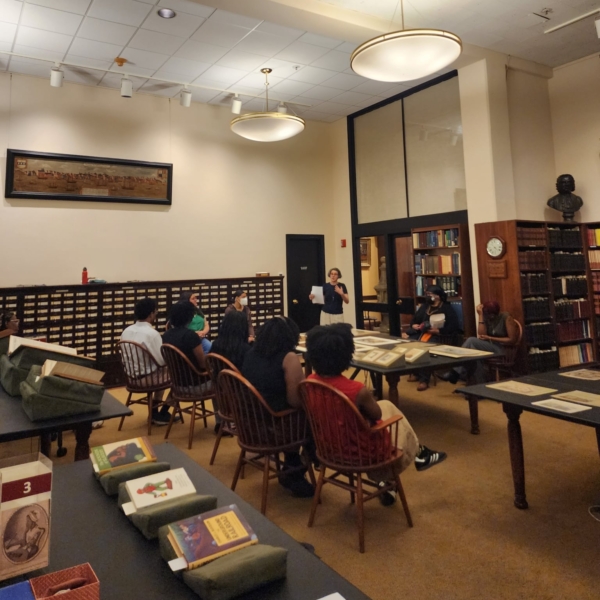
During the first two days of the program, students were introduced to the Library Company’s African American History collections through curated collection reviews with staff and detailed walkthroughs of our catalog, subject guides, digital collections, online exhibitions, and other resources. Scholars began their research through hands-on group work in our databases, learning how to navigate primary sources and find historic figures while better getting to know one another.
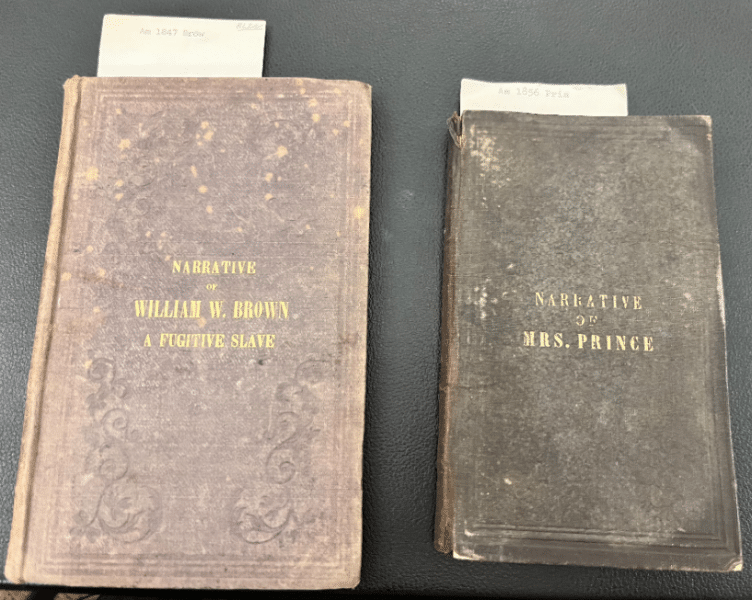
After building a foundation in basic handling and bibliographic practices, scholars transitioned into daily independent research. Dedicated time in both the Scheide Reading Room and the Graphic Arts Department allowed them to work directly with rare books, manuscripts, and visual materials. Throughout the process, scholars met one-on-one with Program Director Jim Downs, Reference Librarian and Afro-Americana Subject Specialist Wynn Eakins, and Program Coordinator Tamar Davis. This gave scholars the opportunity to consistently refine their research approaches, work through challenges, and think critically about the questions, subjects, and sources shaping their projects.
Tours and Field Experiences
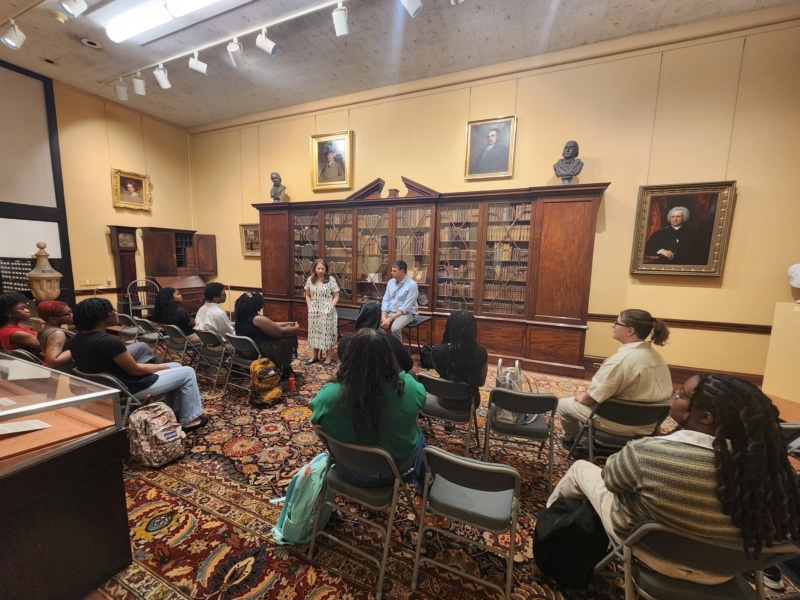
While in residence, scholars had the opportunity to explore the classroom that is Philadelphia. Tamar Davis and Wynn Eakins facilitated visits to peer institutions and historic sites that expanded upon core themes of the program, including Black Founders, Black Philadelphia in the eighteenth and nineteenth centuries, the afterlives of slavery, and the role of Black Philadelphians in contemporary public history.
A special thank you to the following friends and colleagues for welcoming our cohort and sharing your work with us!
- Richard Allen Museum at Mother Bethel AME: Rev. Carolyn Cavaness and Sharon Coleman
- Museum of the American Revolution: Mike Idriss and Matthew Skic
- Temple Special Collections Research Center: Melissa VandeBurgt, Brenda Galloway-Wright, and Josue Hurtado
- Paul Robeson House & Museum: Azsherae Gary, Vernoca Michael, and Terry Guerin
- Eastern State Penitentiary
- Hakim’s Bookstore
Seeing the breadth of spaces where Black history is preserved and interpreted expanded the scholars’ understanding of what constitutes a record and where archival information can be found. These visits offered a unique behind-the-scenes look at cultural work while also allowing students to consider the many possible career-paths connected to their interests.
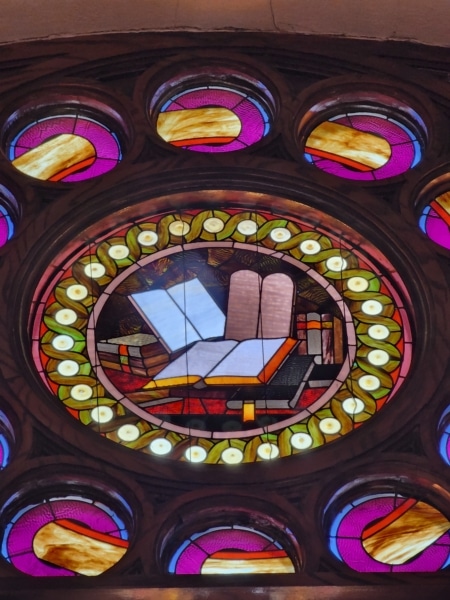
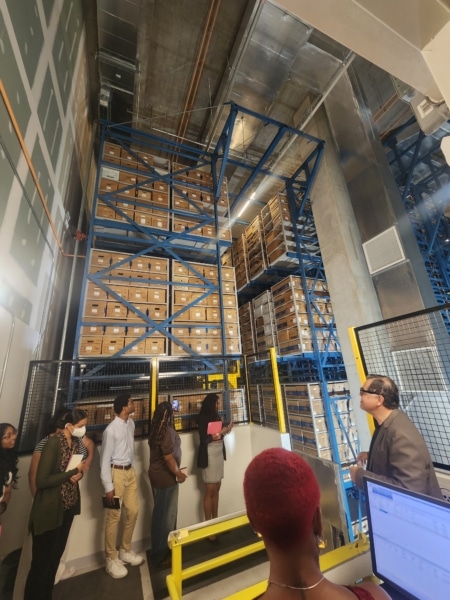
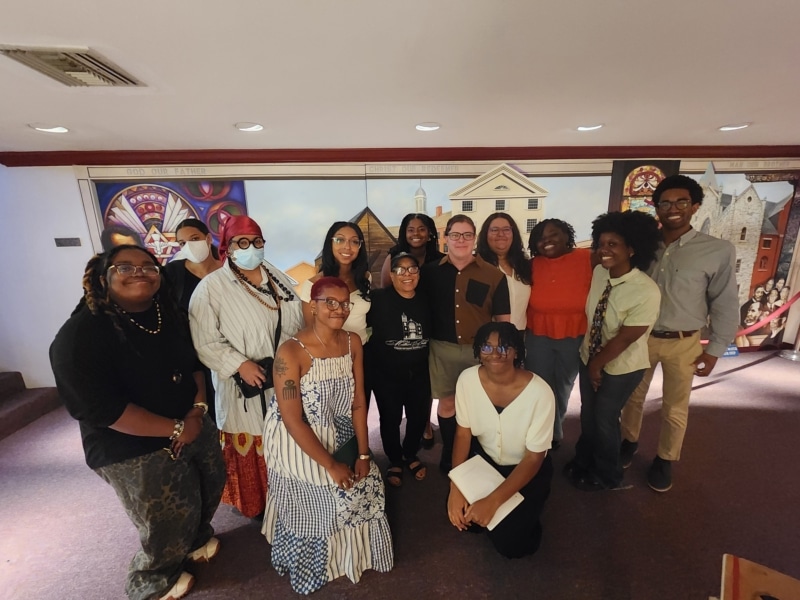
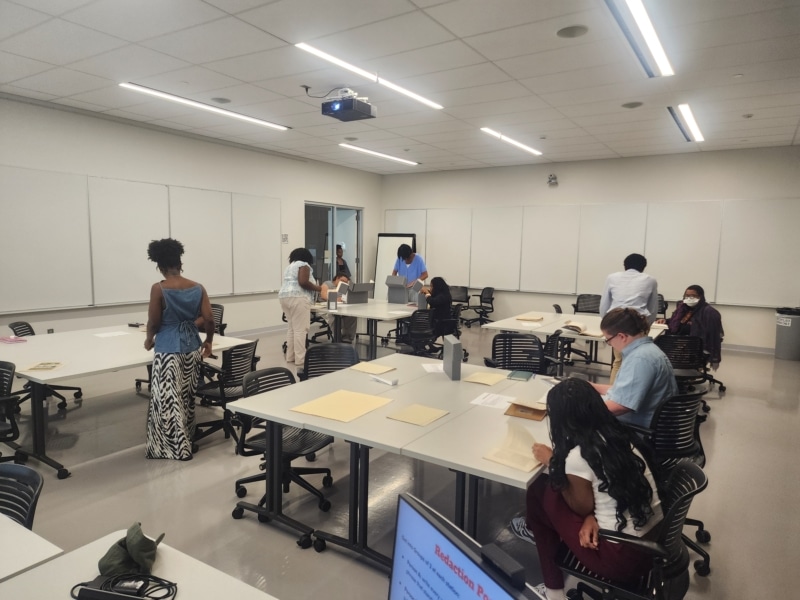
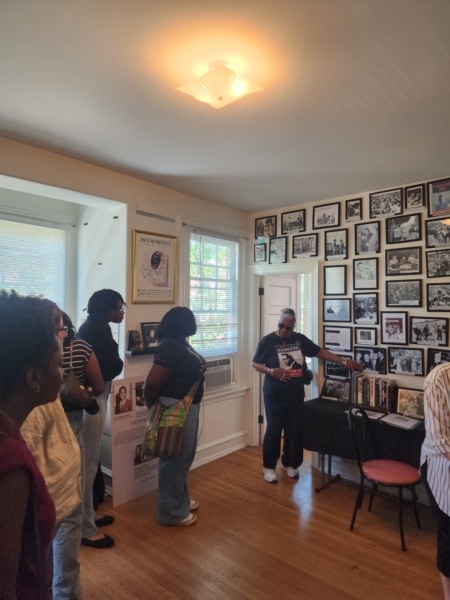
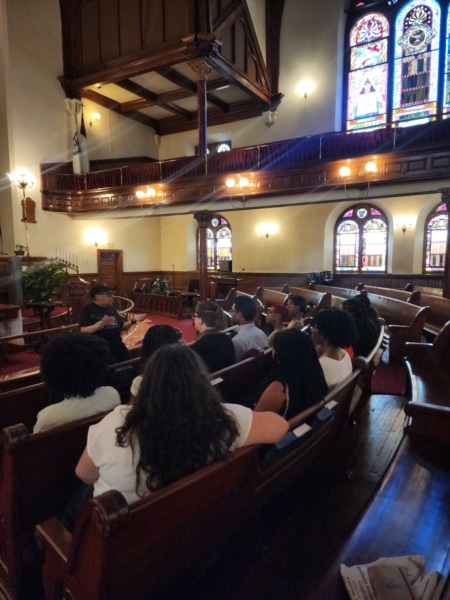
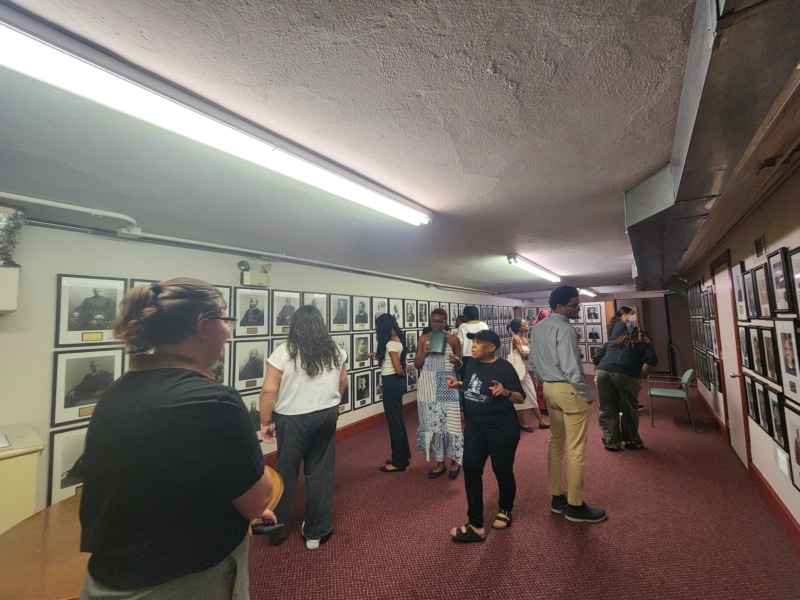
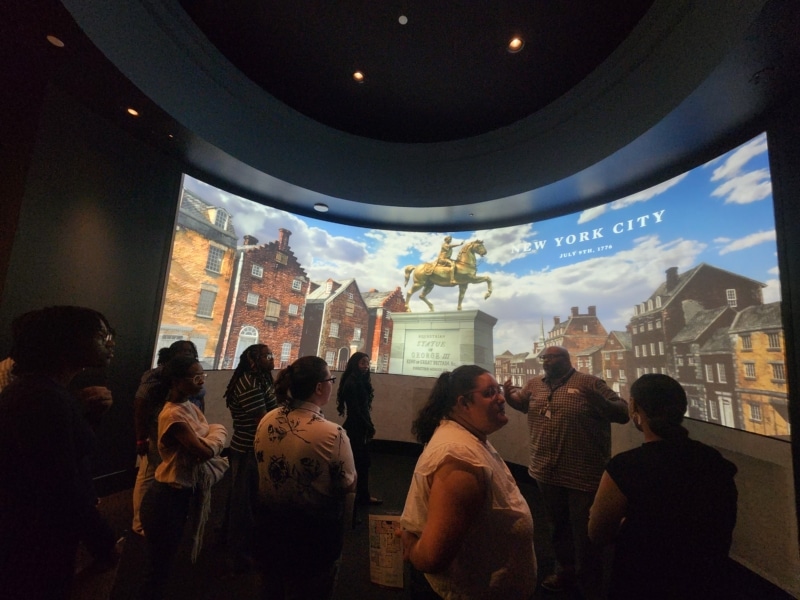
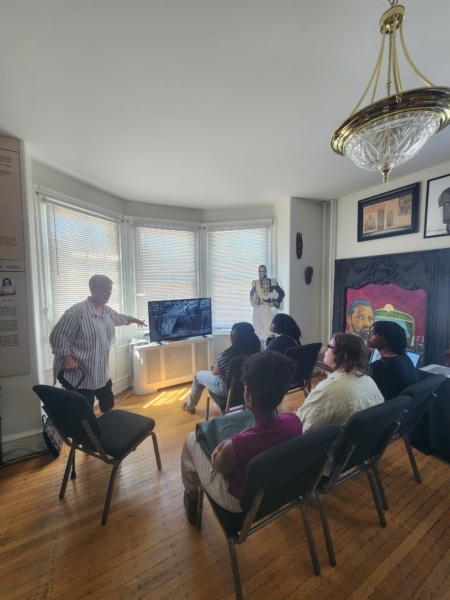
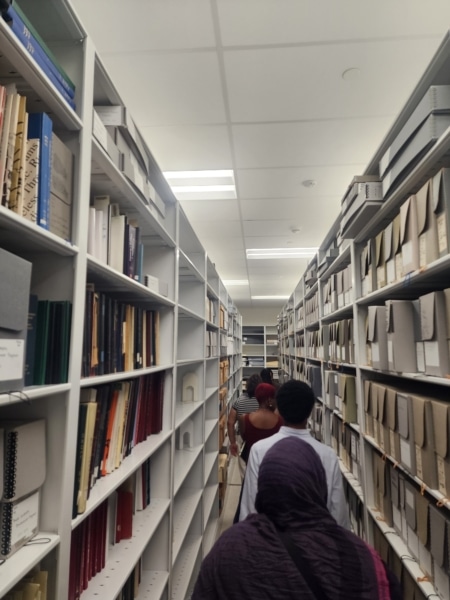
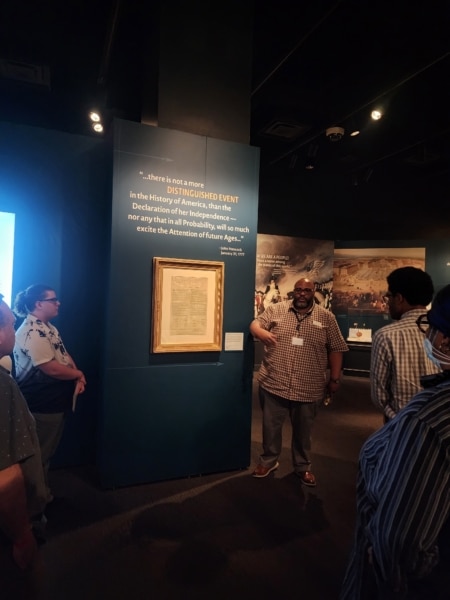
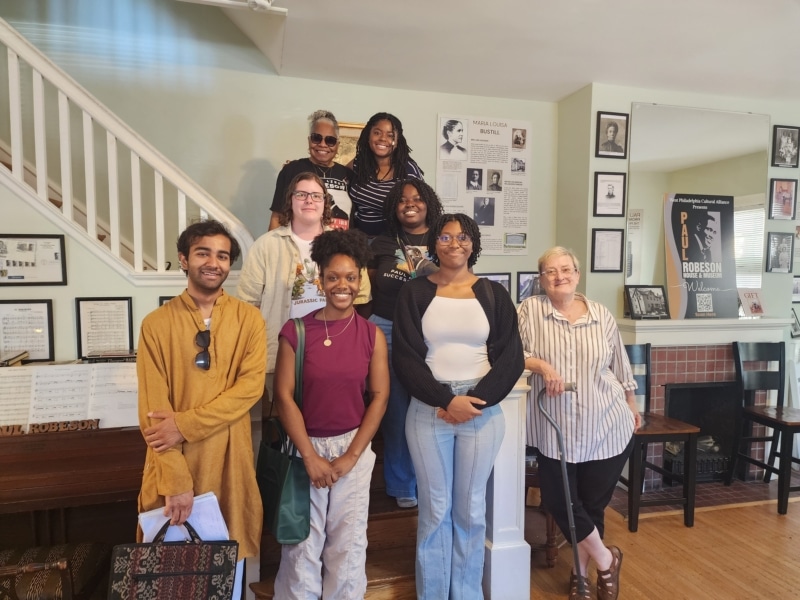
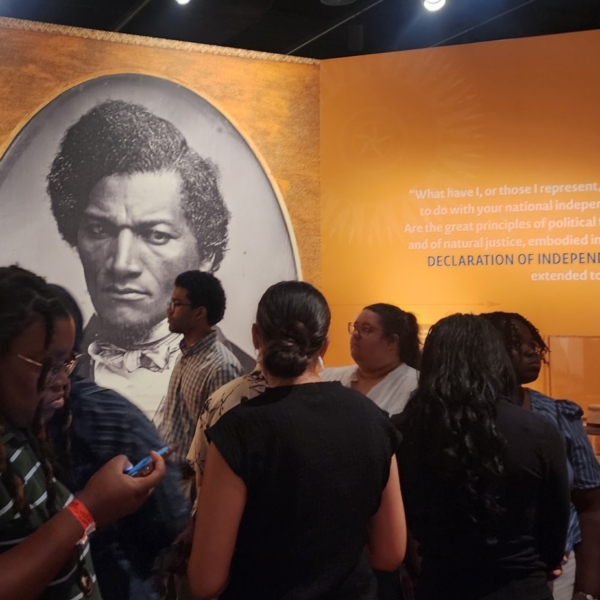
Photo Credits: Wynn Eakins
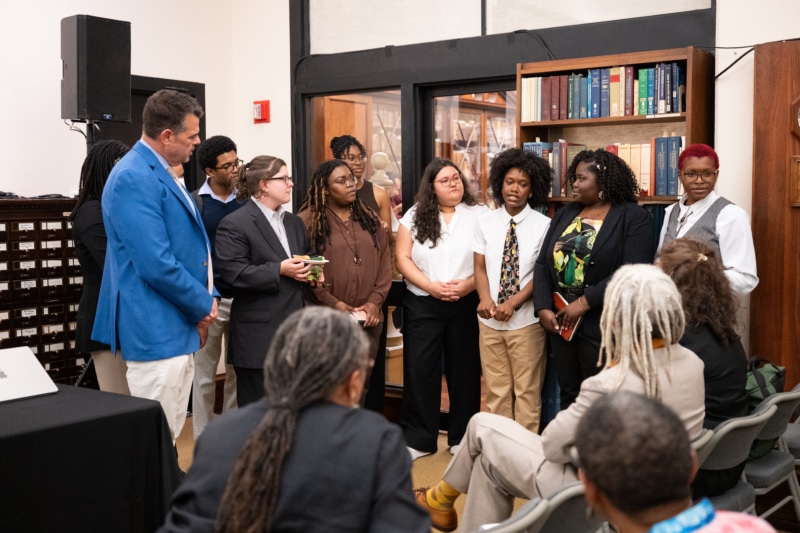
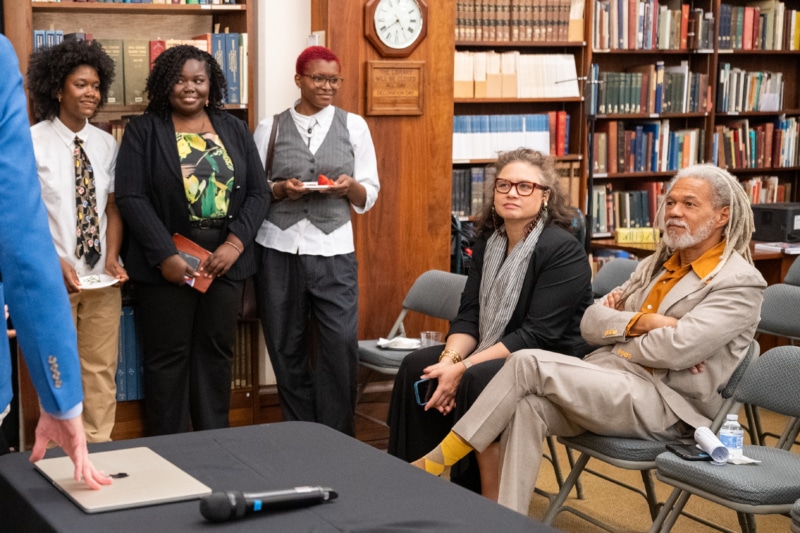
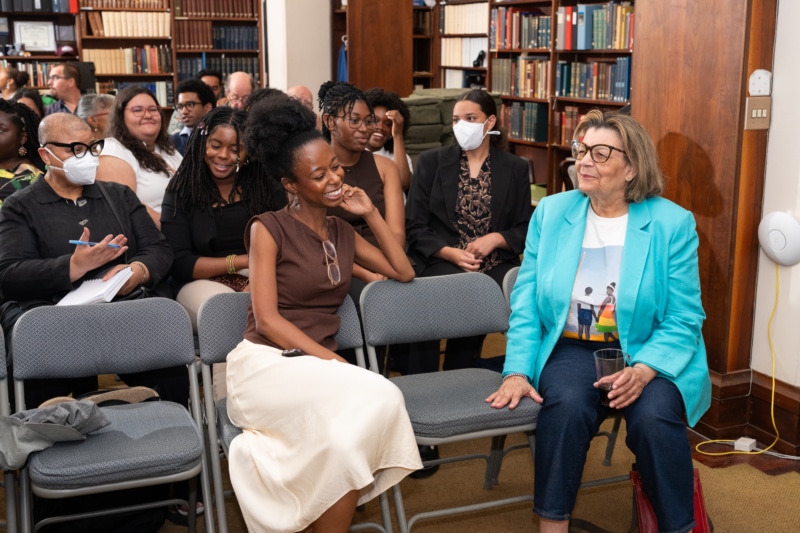
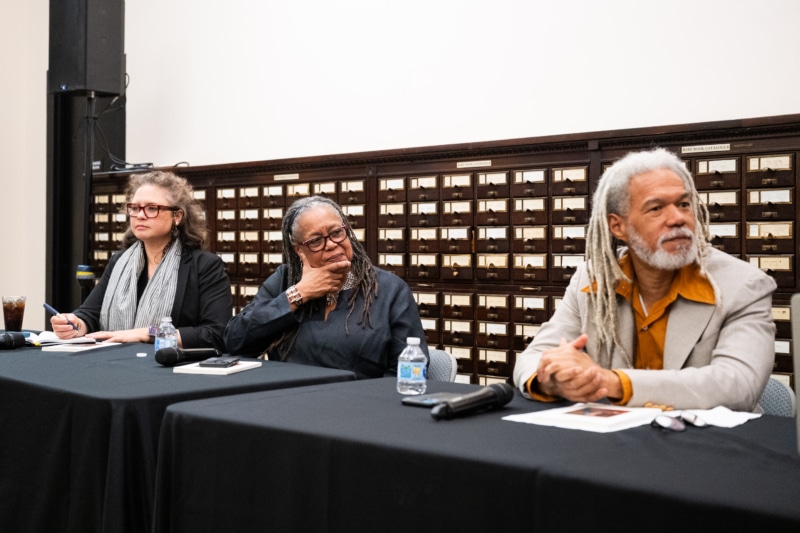
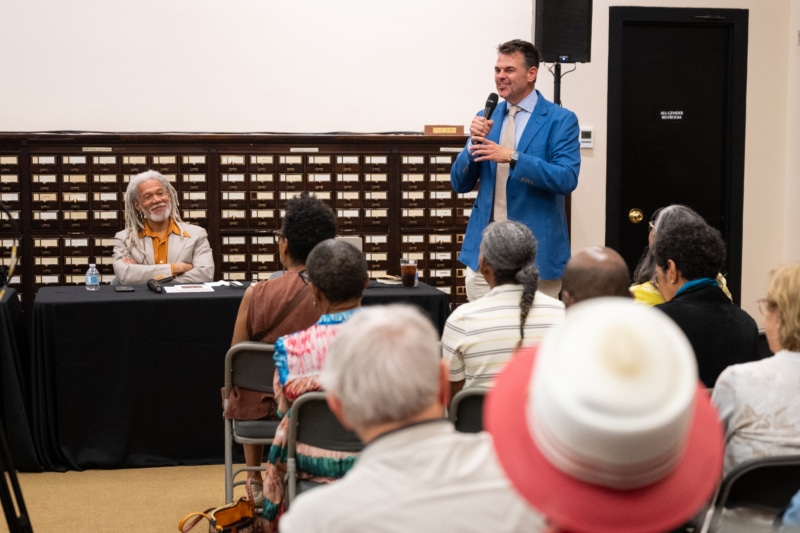
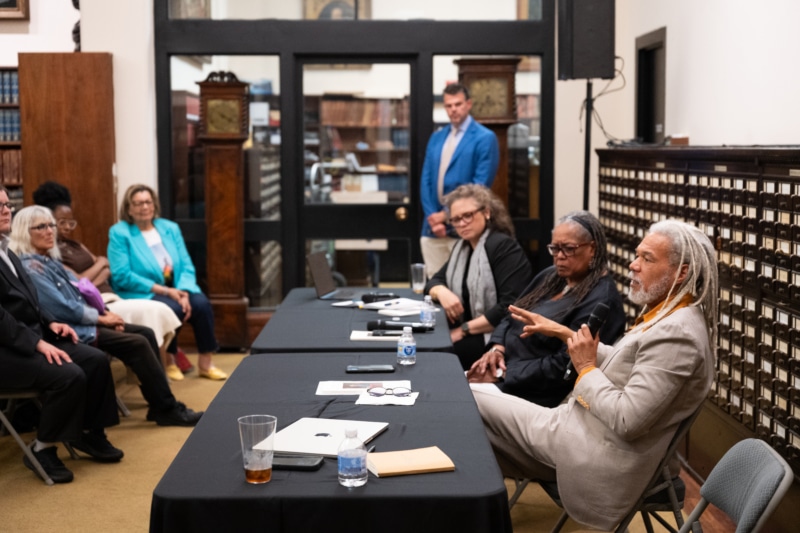
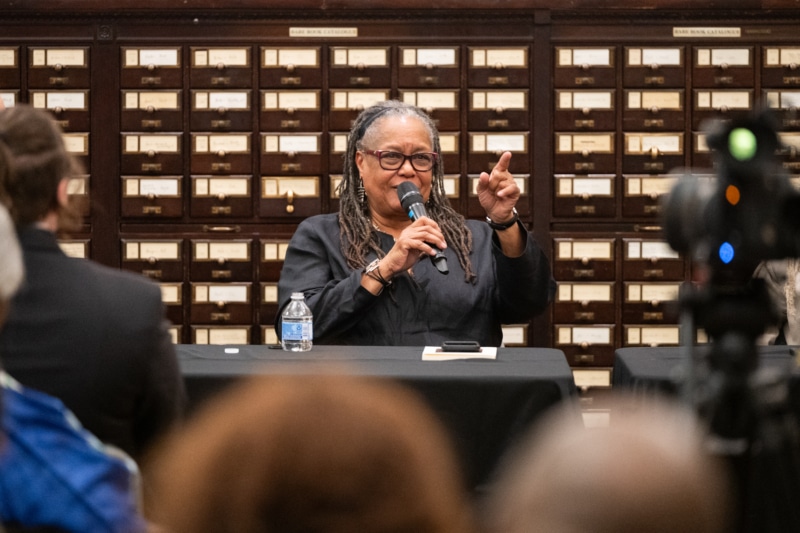
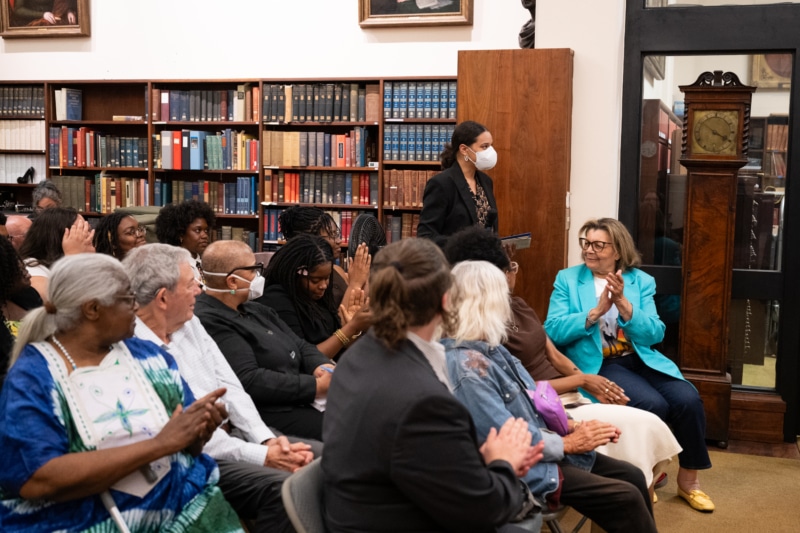
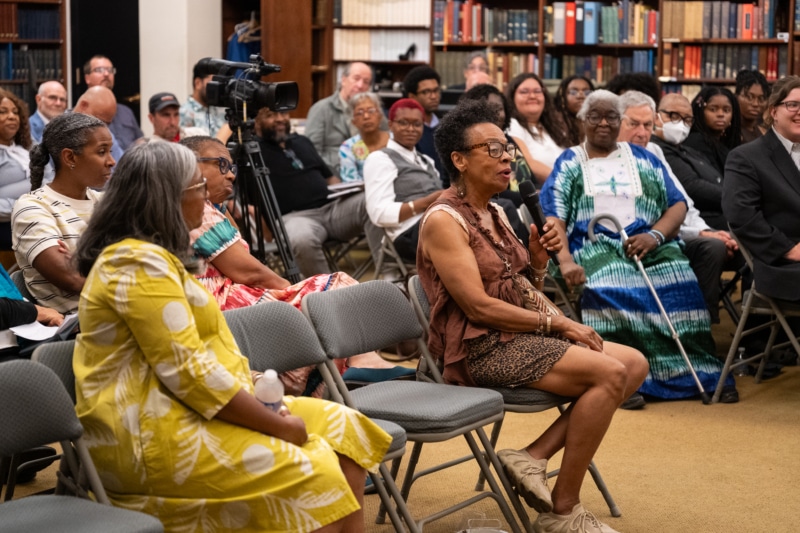
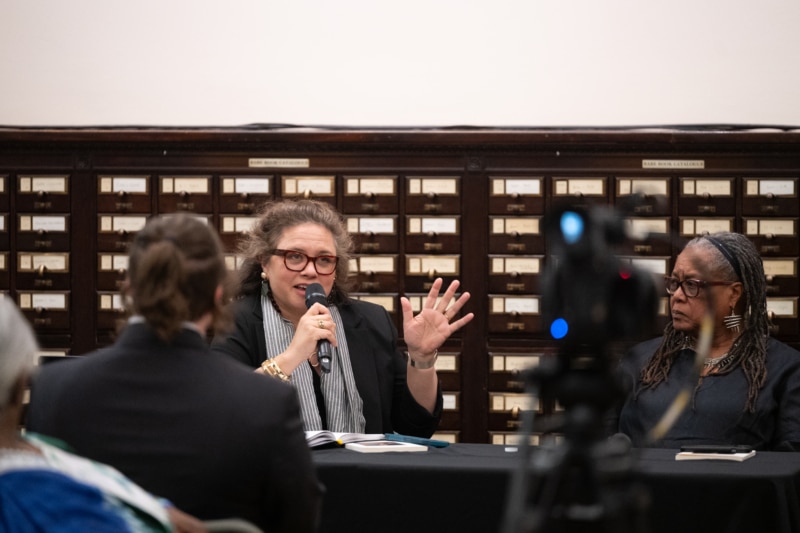
Photo Credits: @Jaci Downs Photography
Learning from Historians, Practitioners, and Special Guests
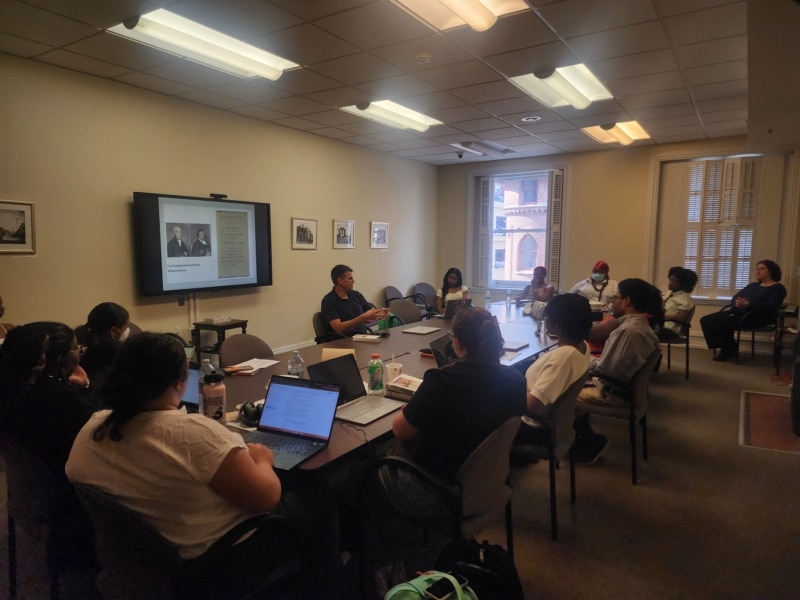
Professional development is a central component of the Mellon Scholars Program. Program Director Jim Downs led the scholars in several rigorous professional development sessions, and invited distinguished historians Dr. Rana Hogarth and Dr. John Garcia to facilitate additional workshops focused on research, graduate education, and career advancement.
Furthermore, the annual Juneteenth program, From Ledger to Genome: Data and the History of Black Life, brought celebrated authors Vincent Brown, Kendra Field, and Evelynn Hammonds into conversation with the students. Students were encouraged to engage directly through Q&A rather than simply observe. These exchanges emphasize the value of different approaches to Black history, and demonstrate what possibilities exist for junior scholars who choose to pursue their historical interests through advanced study.
Research Presentations and Subject Guides
This year, Reference Librarian Wynn Eakins introduced a new subject guide assignment in place of the program’s traditional blog posts. Subject Guides give scholars an opportunity to curate their research findings and add to their professional portfolio, while simultaneously creating a digital resource that serves the Library Company’s broader research community.
Our scholars flourished with this project. Drawing from various backgrounds, interests, and questions, they approached the same collections in wonderfully different ways, producing thoughtful investigations into Black history across time and place. Each scholar gave a ten-minute presentation on their work to staff and fellows-in-residence at the close of the program, leaving us all deeply impressed by the growth, curiosity, and intellectual generosity demonstrated in just ten days.
Read the scholars’ completed subject guides below, or view all here on our blog.
- Alison Fortenberry: African American Missionaries from Independent Black Churches to the African Diaspora
- Amirah Lockett: Propaganda and Picture of Self
- Aniyah Williams: Moving Against the Boundaries: Black Travel and Agency in the 19th Century
- Aselah Davy: Herbalism as a Form of Resistance, with Mentions of Obeah
- Birdie Bachman: From Object to Author: Black Female Caregivers, Self-Representation, and the Archive
- Caden Daubon: Reading Between the Lines: Queering Black American Fem(me) Intimacy
- Hanifa Savage: Black Foodways in Philadelphia, 1893–1930
- Kristiana Cheaye: Becoming Liberian: The Colonization of and Kinship Between African Americans and Liberians
- Ryan Melinn: Civil War Medical Ideas: African American Actors in Nineteenth-Century Medicine
- Shaney Cadet: The Hidden Architects of Public Education: Black Educators during the Activities of the Freedmen’s Bureau
- Wit Lopez: Arts as Abolition: 19th-Century African American Women Using Creativity as Resistance
- Yende Mangum: Tracing Contemporary Abolitionist Thought to Colonial and Early America
The People Behind the Program
A tremendous thank you to everyone who helped make this summer possible. Our core PAAH staff wore many hats throughout the program as mentors, teachers, research guides, hosts, and facilitators, and we extend our gratitude to Jess Roney, Esther Ellis, Dana Dorman, Max Moeller, Erika Piola, Amy Carson, Sharon Hildebrand, and Joe Placeres for assistance with preparation, logistics, and daily support. We are immensely proud of our entire staff for the leadership, care, creativity, and countless hours that went into creating an intellectually rigorous and welcoming experience for our scholars.
Most importantly, we celebrate the scholars themselves. Their questions, enthusiasm, and willingness to learn from one another defines the spirit of this program, and reminds us that the future of African American history is being shaped by an exciting new generation.
Lastly, but certainly not least, we thank the Mellon Foundation for generously supporting this vital work. We look forward to celebrating the 15th year of the Mellon Scholars Summer Program in 2027!